NASA Unveils Three Bold Designs for the Telescope That Could Finally Find Another Earth
NASA engineers are developing a next-generation space telescope designed to capture direct images of Earth-like planets orbiting distant stars.
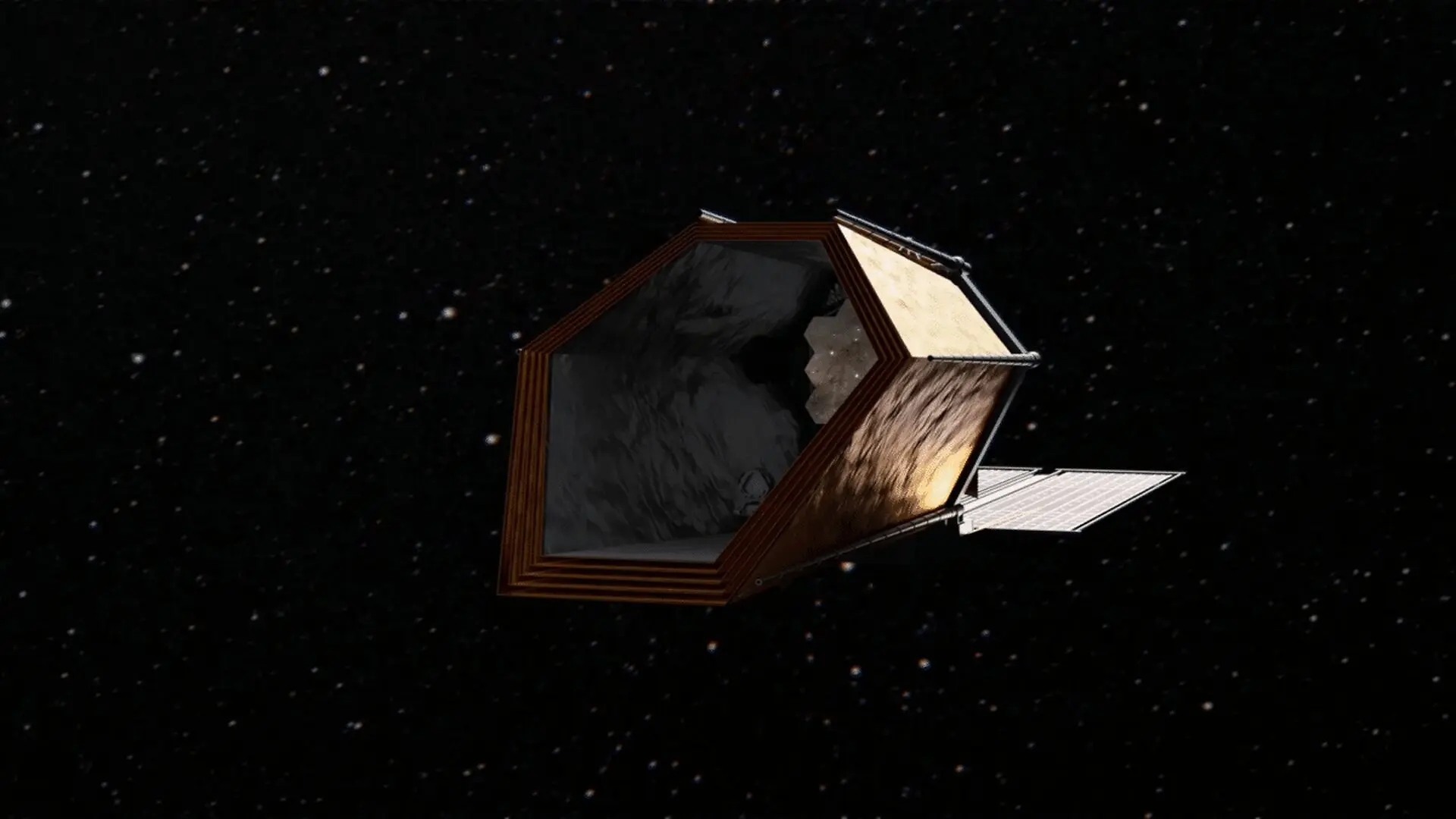
NASA is refining the foundational blueprints for the Habitable Worlds Observatory (HWO), a next-generation space telescope tasked with the monumental challenge of directly imaging Earth-like exoplanets orbiting distant, Sun-like stars. A recent analysis, published in the Journal of Astronomical Telescopes, Instruments, and Systems, evaluates how specific structural choices—ranging from mirror dimensions to optical layout and thermal management—will dictate the mission’s ultimate efficacy.
Engineering the Search for Earth 2.0
While modern astronomy has cataloged thousands of exoplanets, capturing a direct image of a terrestrial-sized world remains an immense technical hurdle. These planets are obscured by the blinding glare of their host stars, with the light from the star often drowning out the faint, reflected signal of the planet. To succeed, the HWO must master the art of high-contrast imaging, separating these minuscule light sources from their stellar neighbors.
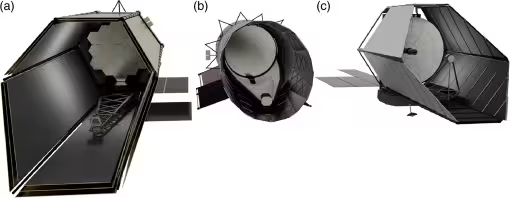
The research team has initiated five design investigations, three of which—labeled Exploratory Analytic Cases (EACs)—are currently being scrutinized. Each case tests a unique combination of aperture size and geometry to determine the best path forward for balancing complex scientific objectives with engineering reality.
The models under review include:
- EAC1: An off-axis telescope configuration featuring a 6-meter inscribed aperture and a 7.2-meter circumscribed diameter.
- EAC2: A 6-meter circular aperture utilizing an off-axis design.
- EAC3: An 8-meter outer-diameter telescope designed with an on-axis optical arrangement.
Selecting the Optimal Optical Geometry
A primary debate in the mission’s architecture concerns the choice between on-axis and off-axis designs. In an on-axis configuration, secondary mirrors and their support struts physically obstruct part of the incoming light path. This creates diffraction patterns that can complicate the sensitive process of high-contrast imaging.
Conversely, off-axis designs relocate these components outside the primary light beam. By providing an unobstructed view, this configuration is better positioned to suppress stellar interference. Furthermore, the study highlights that larger apertures, while increasing the complexity of manufacturing and deployment, provide the finer angular resolution and photon-collecting power essential for isolating small, distant worlds.
Thermal Stability and Starlight Suppression
The HWO will rely heavily on an advanced coronagraph, an instrument capable of blocking intense starlight to reveal the faint glow of orbiting planets. However, the coronagraph is only as effective as the optics feeding it. Even minute thermal fluctuations can warp mirrors or shift their alignment, causing the wavefront stability to degrade and potentially masking the planetary signal.
As noted by Universe Today, maintaining extreme thermal and structural precision is a core requirement of the mission. The current engineering effort is using model-driven development to ensure the observatory can maintain the necessary stability throughout its operational lifespan.
Leveraging Lessons from Webb and Roman
The development of the HWO benefits significantly from the legacies of the James Webb Space Telescope (JWST) and the Nancy Grace Roman Space Telescope. By utilizing parametric design tools and modeling practices derived from these programs, the Systems Engineering Team is able to simulate how design changes ripple through the entire mission architecture.
“The SET [Systems Engineering Team], composed of team members across NASA centers and JPL, successfully completed design architectures for EACs 1 to 3 and developed end-to-end modeling for EAC1. This team was established to support design explorations and formulating technology requirements. Using model-driven practices based on JWST heritage and enhanced by Roman experience, the team developed several tools to perform parametric design studies and trades. In parallel, the models were shared with industry partners to support their technology maturation efforts and independent architecture studies.”
With a projected launch date in the 2040s, the HWO represents a significant leap beyond the capabilities of current observatories. While JWST has excelled at atmospheric characterization, the HWO is being purpose-built for the direct imaging of potentially habitable planets. By analyzing the light reflected from these worlds, researchers hope to identify signatures of life and better understand the prevalence of life-sustaining conditions in the cosmos.
This article has been fact checked for accuracy, with information verified against reputable sources. Learn more about us and our editorial process.
Last reviewed on .
Article history
- Latest version
Reference(s)
- MSc, Laurence. “NASA Systems Engineering Team Details HWO Mission Architecture.”, October 28, 2026 Universe Today <https://www.universetoday.com/articles/nasa-systems-engineering-team-details-hwo-mission-architecture>.
Cite this page:
- Posted by Karan Das