NASA Just Hit A Major Milestone In The Assembly Of Its Most Powerful Moon Rocket Ever
NASA’s Artemis III mission reaches a major milestone as engineers successfully integrate the massive core stage and rocket boosters for the upcoming launch.
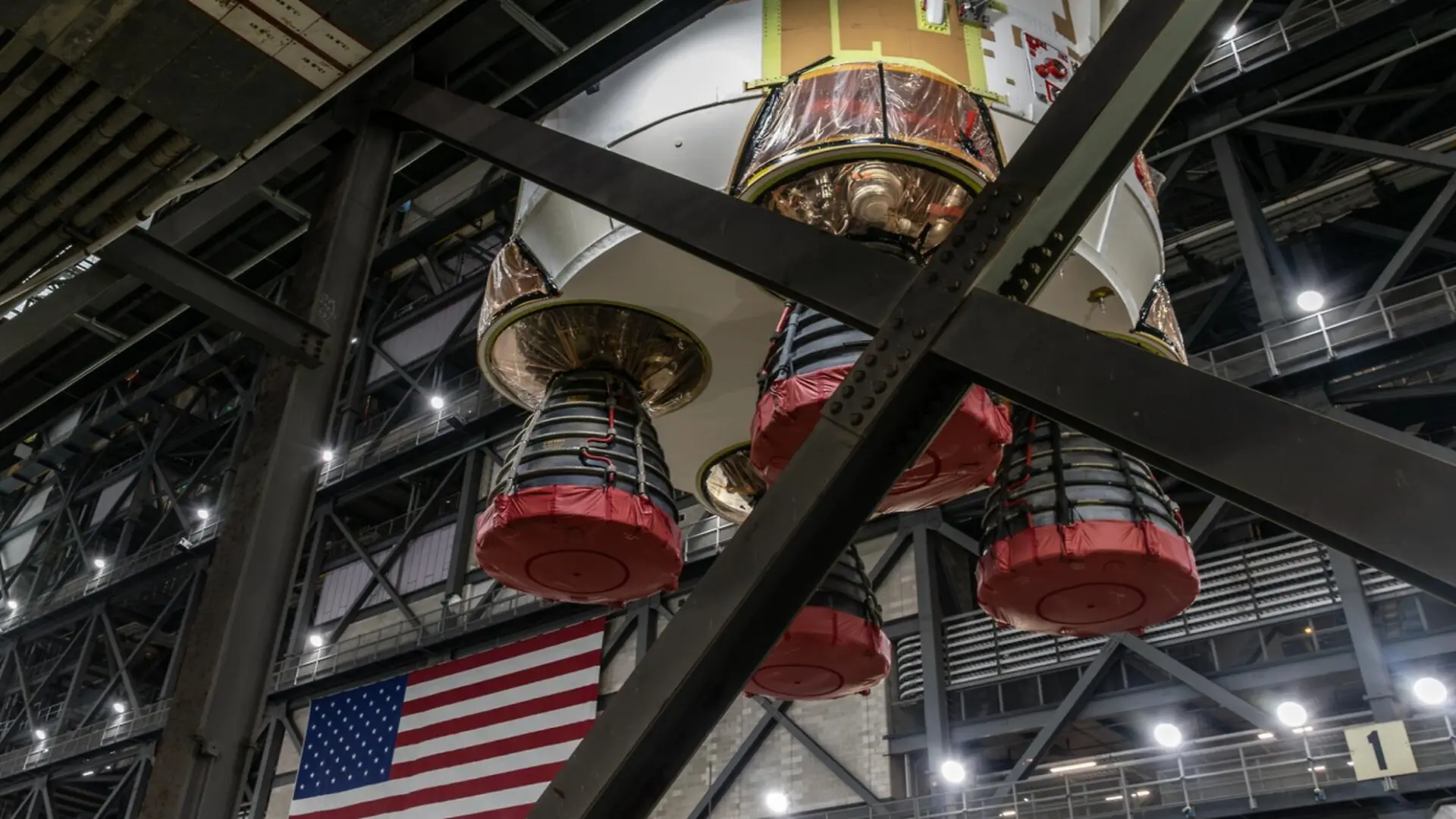
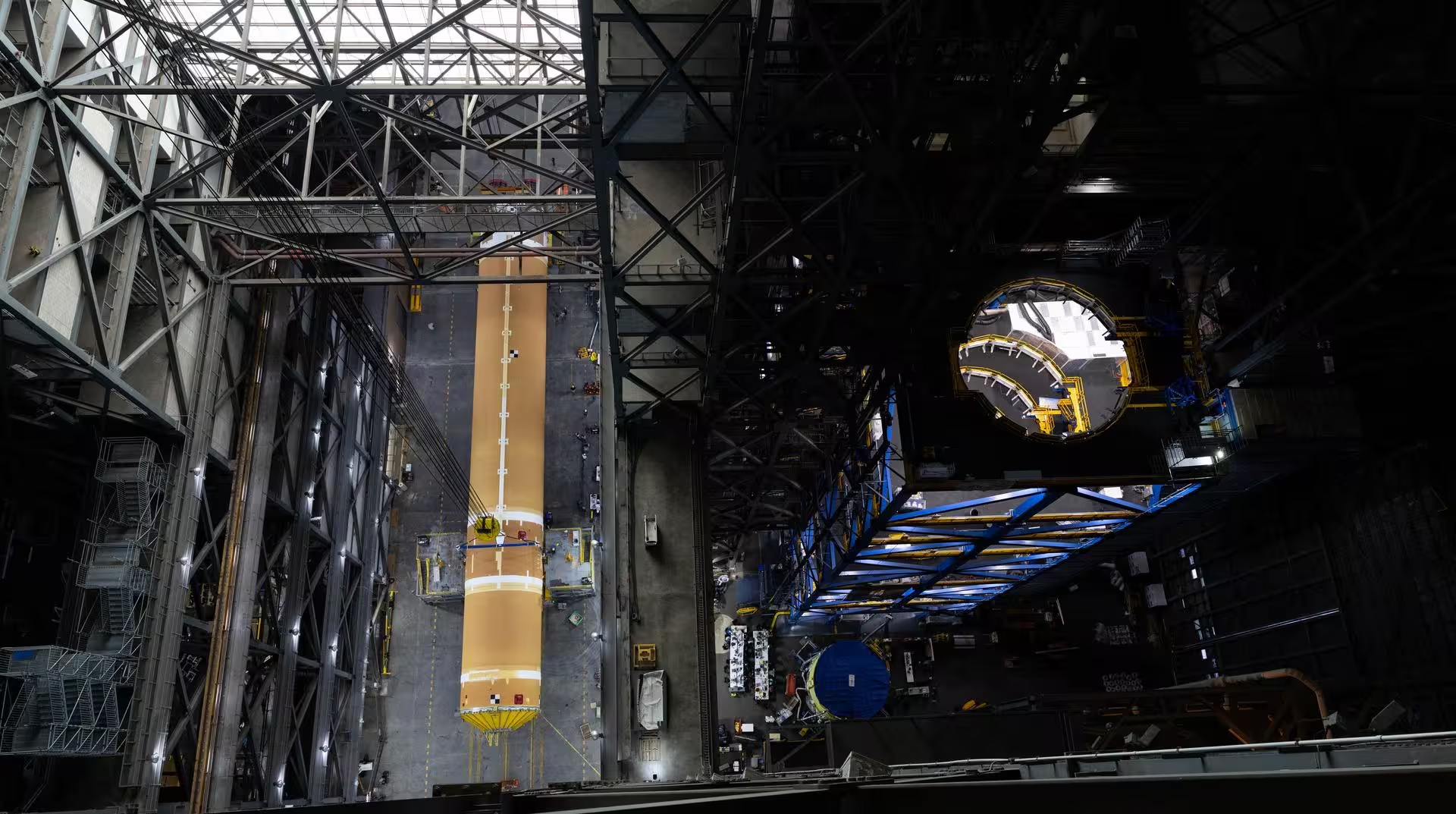
NASA engineers have achieved a pivotal assembly goal at the Kennedy Space Center in Florida, successfully integrating the core stage of the Space Launch System (SLS) with its twin solid rocket boosters. This structural milestone, carried out within the iconic Vehicle Assembly Building (VAB), marks a significant step forward in the preparations for the upcoming Artemis III lunar mission.
Building the Backbone of Lunar Transit
The assembly process, which transforms individual pieces of aerospace hardware into the unified foundation of a human-rated launch vehicle, demands extraordinary precision. The SLS core stage, a massive structure measuring approximately 212 feet (64.6 meters) in height, serves as the rocket’s central engine room. It relies on four liquid-fueled RS-25 engines, powered by gargantuan internal tanks of liquid oxygen and liquid hydrogen, to provide the sustained thrust required for the initial ascent.
Flanking this central core, the two solid rocket boosters contribute more than 75 percent of the total lift capacity during the first two minutes of flight. Together, this configuration is capable of generating roughly 8.8 million pounds of thrust at liftoff—a force that surpasses the historic output of the Apollo program’s Saturn V rocket.
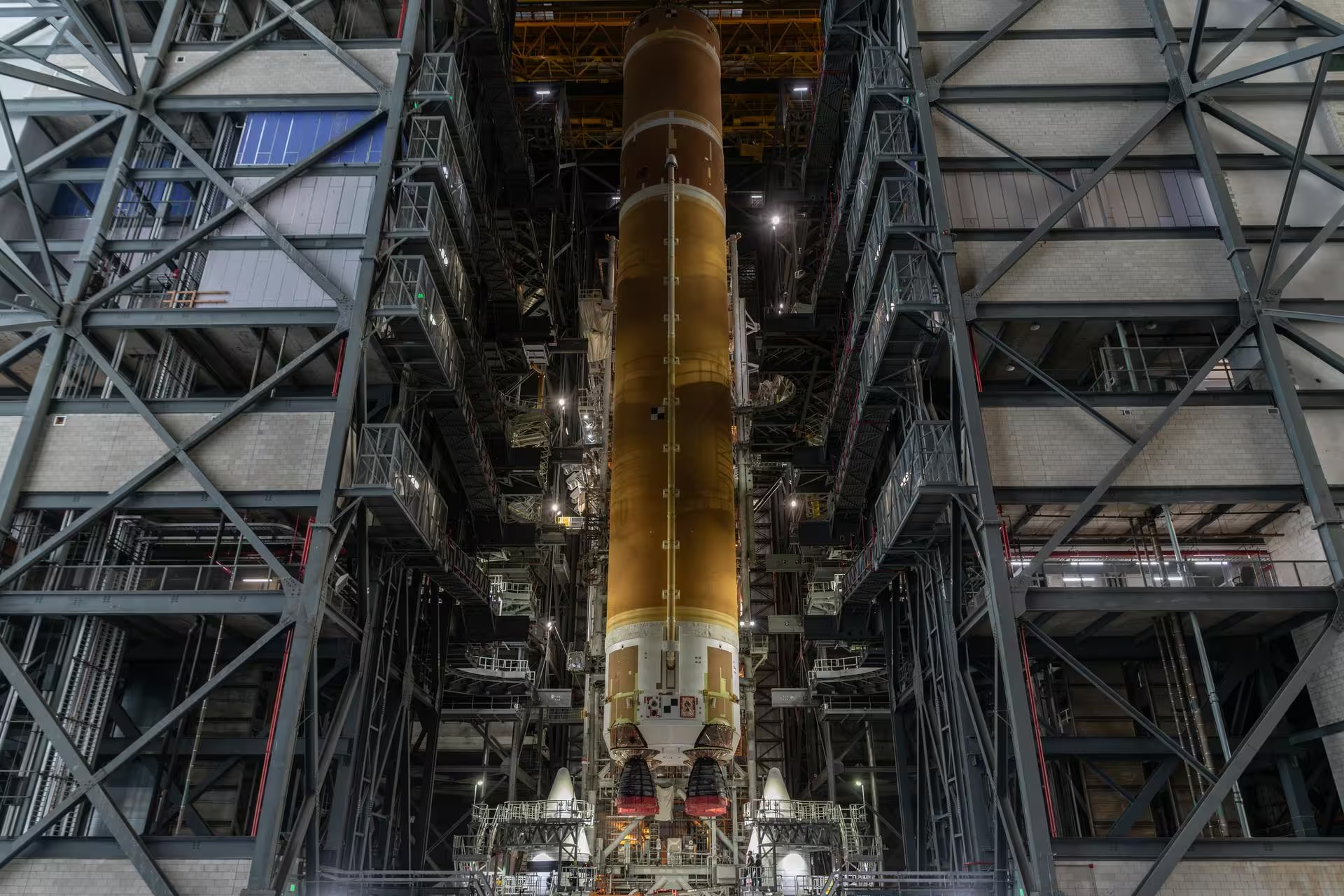
The successful mating of these components confirms that the primary structural and propulsion elements are correctly positioned and securely connected. However, as noted by NASA, this accomplishment is merely one chapter in a lengthy integration sequence. Before the rocket can be cleared for flight, teams must complete extensive electrical testing, system verification, and the final attachment of the upper stages and the Orion spacecraft.
The Road to a Sustained Lunar Presence
The Artemis program represents a strategic departure from the episodic lunar sorties of the 20th century. NASA is currently architecting a framework for a long-term human presence in deep space, with the Artemis III mission serving as a critical demonstration of the agency’s ability to return humans to the lunar surface. The focus is increasingly on the Moon’s south pole, where the presence of water ice in permanently shadowed craters offers a potential resource for future scientific and operational sustainability.
Beyond the immediate lunar objectives, the technologies currently being validated through the SLS and Orion systems provide the groundwork for future interplanetary travel. As engineers refine the assembly and launch capabilities needed to transport crews beyond Earth’s immediate orbit, they are simultaneously addressing the technical hurdles required for eventual missions to Mars. While the recent stacking of the SLS core stage is a tangible sign of progress, it also serves as a reminder of the massive engineering rigor required to bridge the gap between abstract design and operational spaceflight.
This article has been fact checked for accuracy, with information verified against reputable sources. Learn more about us and our editorial process.
Last reviewed on .
Article history
- Latest version
Reference(s)
- Fairley, Tiffany. “Artemis III SLS Core Stage Joins Boosters at Kennedy - NASA.” NASA <https://www.nasa.gov/image-article/artemis-iii-sls-core-stage-joins-boosters-at-kennedy/>.
Cite this page:
- Posted by Karan Das