Man Spent Years Trying to Break Open a Gold Nugget That Was Actually a 4.6 Billion Year Old Rock
A prospector thought a strange red rock held a fortune in gold, but its true identity left geologists stunned. Discover the secret behind this discovery.
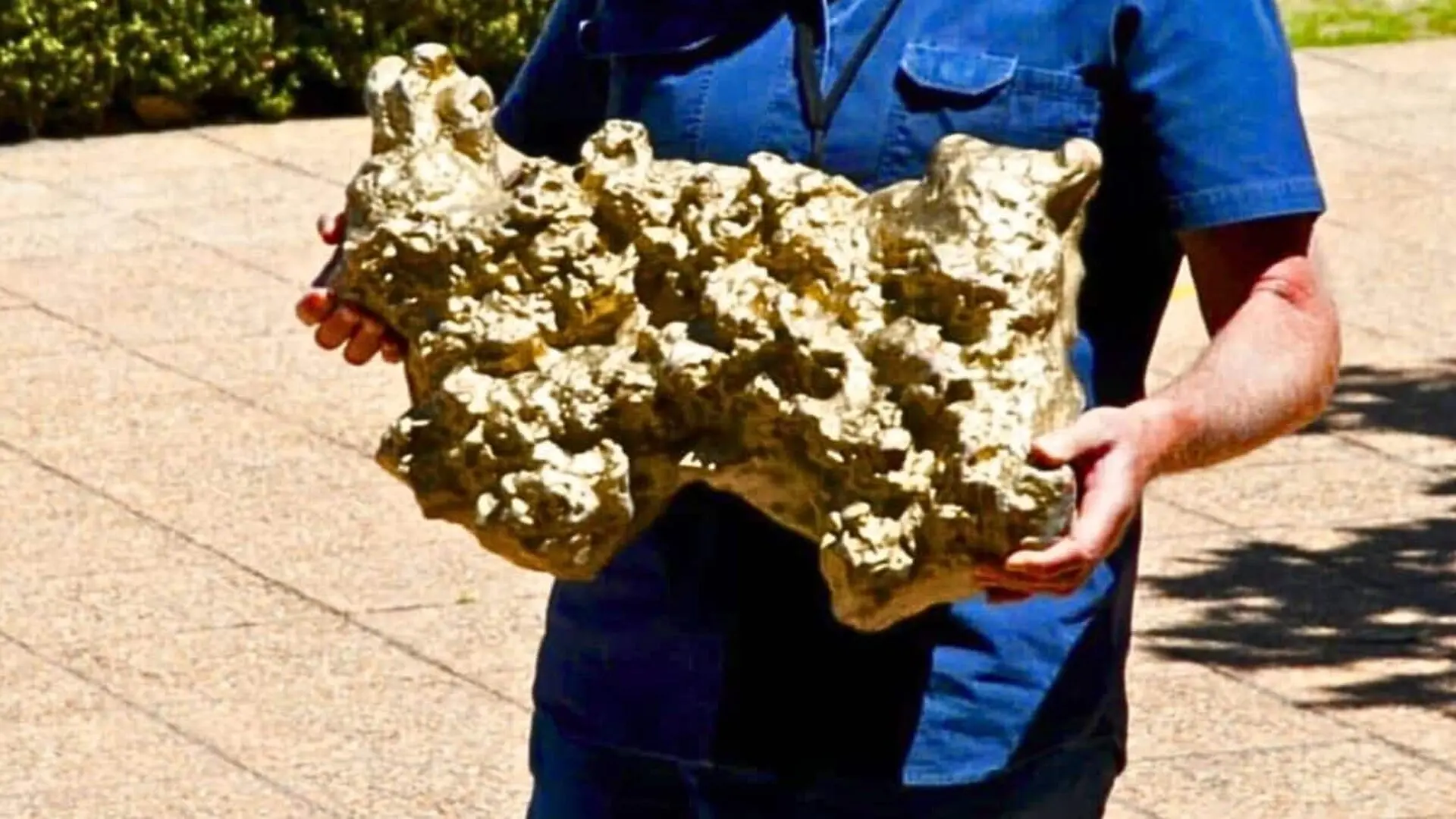
In 2015, while exploring the historic goldfields of Maryborough Regional Park in Victoria, Australia, David Hole discovered an unusually dense, reddish rock that triggered his metal detector. Expecting to find a gold nugget, he spent the next several years attempting to breach the object’s exterior using everything from diamond saws and angle grinders to heavy-duty power drills and industrial acid. None of his efforts managed to crack the dense material.
It was not until 2018 that Hole brought the 17-kilogram stone to the Melbourne Museum. There, geologists quickly realized that the prospector had not found gold, but rather a rare, 4.6-billion-year-old relic from the dawn of the solar system.
An Astronomical Case of Mistaken Identity
Geologists at the museum, who frequently evaluate rocks brought in by the public, are accustomed to identifying terrestrial stones, often jokingly referred to as “meteor-wrongs.” Dermot Henry, a geologist with 37 years of experience at the institution, noted that in all that time, he had confirmed only two genuine meteorites. Hole’s discovery became the second.
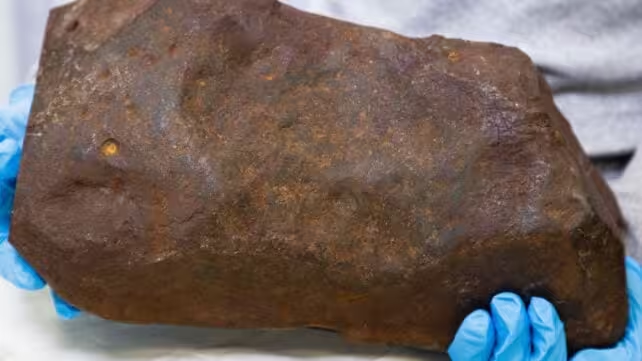
Two primary indicators alerted the experts to the object’s true nature. First, its mass was far higher than that of any common rock found in the region. Second, its surface was covered in distinctive, thumbprint-like indentations known as regmaglypts—a telltale sign caused by the intense heat and atmospheric pressure endured during a high-speed descent through Earth’s atmosphere.
A Pristine Glimpse Into the Early Solar System
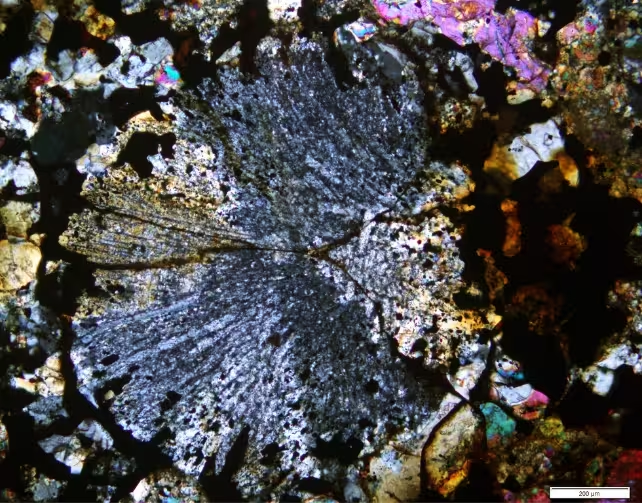
Upon slicing the meteorite with a diamond saw, researchers identified it as an H5 ordinary chondrite. The interior revealed a complex matrix of chondrules—microscopic, spherical grains that originated as molten droplets within the swirling cloud of gas and dust surrounding the nascent Sun. The “H” classification denotes high iron content, explaining why the stone initially registered on Hole’s metal detector, while the “5” signifies the degree of thermal processing the rock underwent within its parent asteroid.
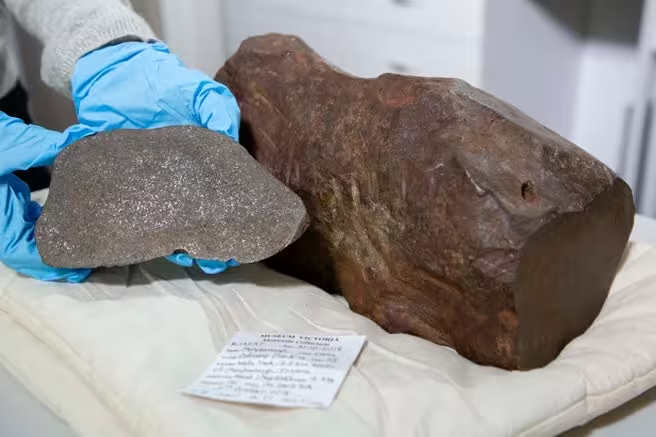
According to a 2019 scientific description, the meteorite likely originated from the asteroid belt situated between Mars and Jupiter. By utilizing carbon-14 dating to measure the radioactive decay of isotopes accumulated during the rock’s journey through space, researchers determined it landed on Earth between 100 and 1,000 years ago.
“Meteorites provide the cheapest form of space exploration,” Henry noted when the museum officially unveiled the specimen. Unlike Earth-bound rocks, this piece has remained largely unchanged since the formation of our planetary system.
A Rare Addition to Victoria’s Geological Record
Finding a meteorite in Victoria is a significant rarity, especially given the state’s storied history of gold prospecting. While thousands of gold nuggets have been recovered from the region, the Maryborough meteorite is only the 17th identified in the state. It stands as the second-largest single chondrite ever discovered in Victoria, surpassed only by the 55-kilogram Kulnine stone.
The state has a long-standing history of space-rock encounters, including the massive Cranbourne iron meteorites, some of which weigh over 3,000 kilograms. Perhaps the most scientifically significant find was the Murchison meteorite, which fragmented over northern Victoria in 1969. That specimen, which remains the only Victorian meteorite observed falling and subsequently recovered, provided researchers with crucial evidence of extraterrestrial water and amino acids.
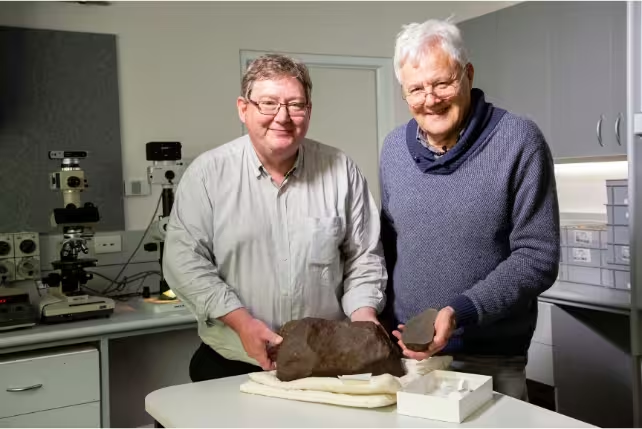
For David Hole, the journey from the soil of Maryborough to the display cases of the Melbourne Museum serves as a reminder that the hunt for treasure can sometimes yield findings far older and more mysterious than gold. As experts continue to catalogue these visitors from space, each find offers a fresh perspective on the materials that built our corner of the universe.
This article has been fact checked for accuracy, with information verified against reputable sources. Learn more about us and our editorial process.
Last reviewed on .
Article history
- Latest version
Reference(s)
- Birch, William D.., et al. “Maryborough, a new H5 meteorite find from Victoria, Australia.” Proceedings of the Royal Society of Victoria, vol. 131, no. 1, July 17, 2019, pp. 18-23. CSIRO Publishing, doi: 10.1071/RS19002. <https://doi.org/10.1071/RS19002>.
- <https://museumsvictoria.com.au/media-releases/meteorite-found-by-gold-prospector-the-first-found-in-victoria-since-1995-comes-to-museums-victoria/>.
- <https://museumsvictoria.com.au/article/victorian-meteorites/>.
Cite this page:
- Posted by Karan Das