Webb Reveals Hidden Structures Inside the Cat’s Head Nebula With New Infrared View
NASA’s James Webb Space Telescope has captured the Cat’s Head Nebula in stunning infrared detail, revealing hidden cosmic structures invisible to the eye.
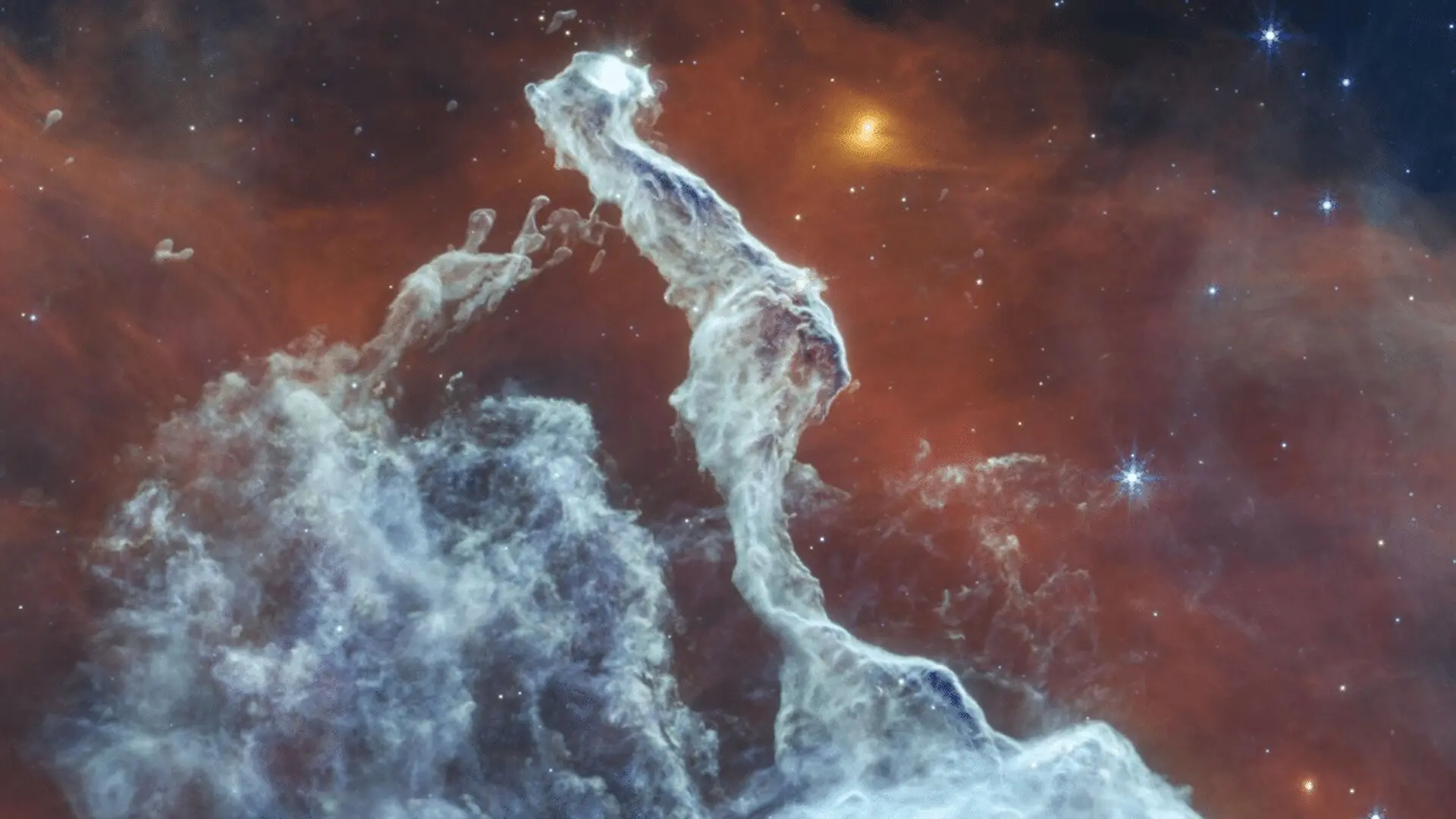
The James Webb Space Telescope (JWST) has peeled back the dense, obscuring layers of the Cat’s Head Nebula, utilizing its Mid-Infrared Instrument (MIRI) to expose the complex architecture hidden within the cosmic cloud. By peering into the mid-infrared spectrum, the telescope offers astronomers a unique view of the region’s dust and gas dynamics that remains largely invisible to traditional optical observatories.
Revealing the Hidden Dynamics of Space
While visible-light telescopes capture light reflected or emitted directly by stars and ionized gases, they often struggle to look through the thick curtains of dust that permeate nebulae. The Cat’s Head Nebula, documented in the NASA Science image archive, serves as a prime example of why multi-wavelength analysis is critical. By detecting light at wavelengths between 5 and 28 micrometers, MIRI tracks the thermal glow of dust grains as they absorb and re-emit energy from nearby radiation sources.
This capability allows researchers to map where material is concentrated and how it interacts with its environment. Rather than replacing previous optical data, the infrared view provides a vital layer of context, enabling scientists to reconstruct the physical conditions and evolutionary history of the nebula with greater precision.
The Power of Infrared Spectrometry
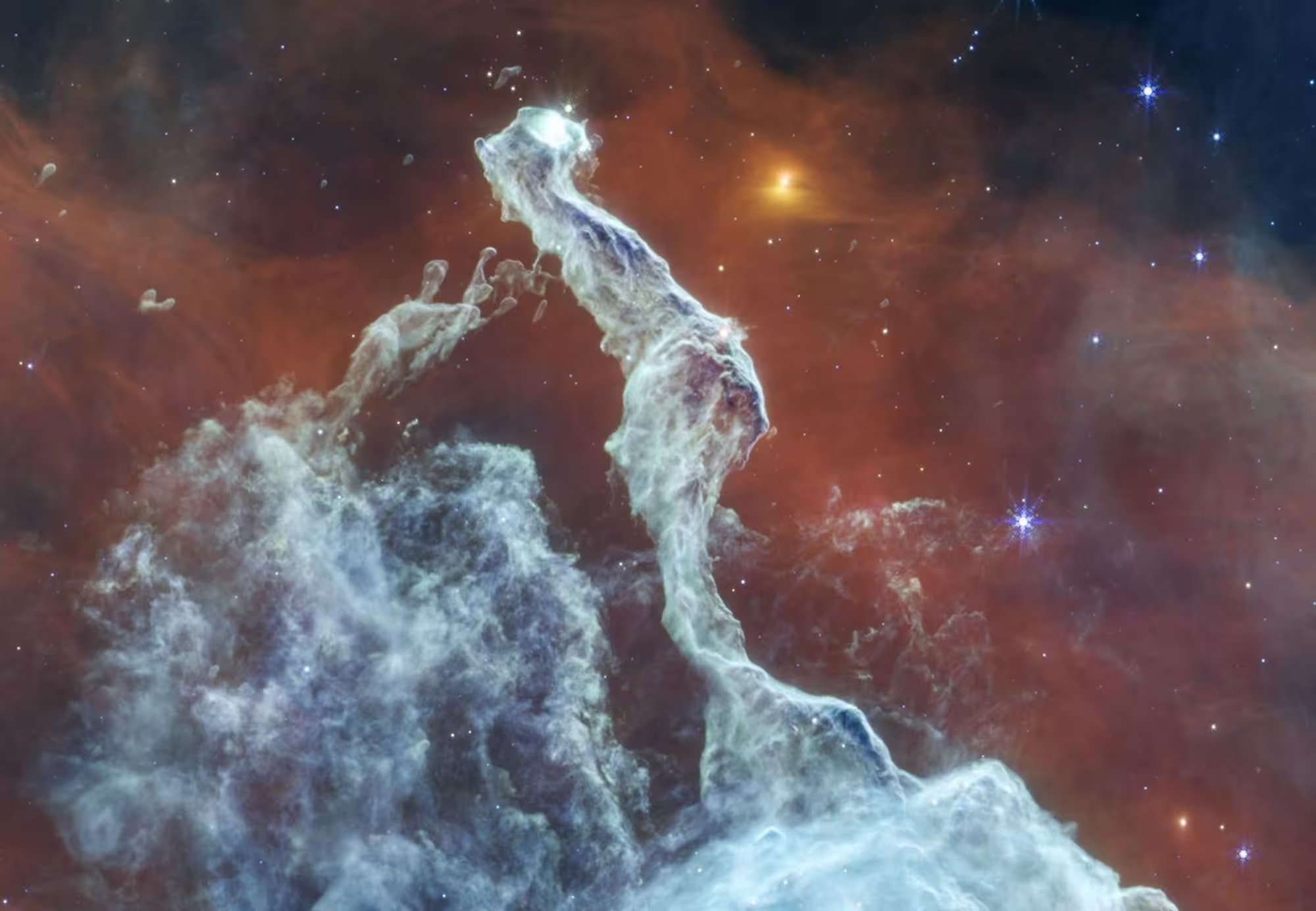
The Webb telescope’s proficiency in the mid-infrared range is essential for characterizing relatively cool material. Because dust acts as both a barrier to optical light and a source of infrared emission, it provides a unique signature that helps astronomers deduce the temperature and composition of interstellar clouds. However, this process is nuanced; since infrared radiation is invisible to the human eye, the striking imagery released to the public is the result of scientists assigning colors to specific infrared wavelengths to highlight different chemical and structural features.
Decoding the Life Cycle of Nebulae
Nebulae are far from static, featureless clouds. They are active laboratories where gravity, magnetic fields, and intense stellar radiation compete to shape the distribution of matter. By observing the Cat’s Head Nebula, researchers can better understand the feedback loops between stellar evolution and the surrounding interstellar medium.
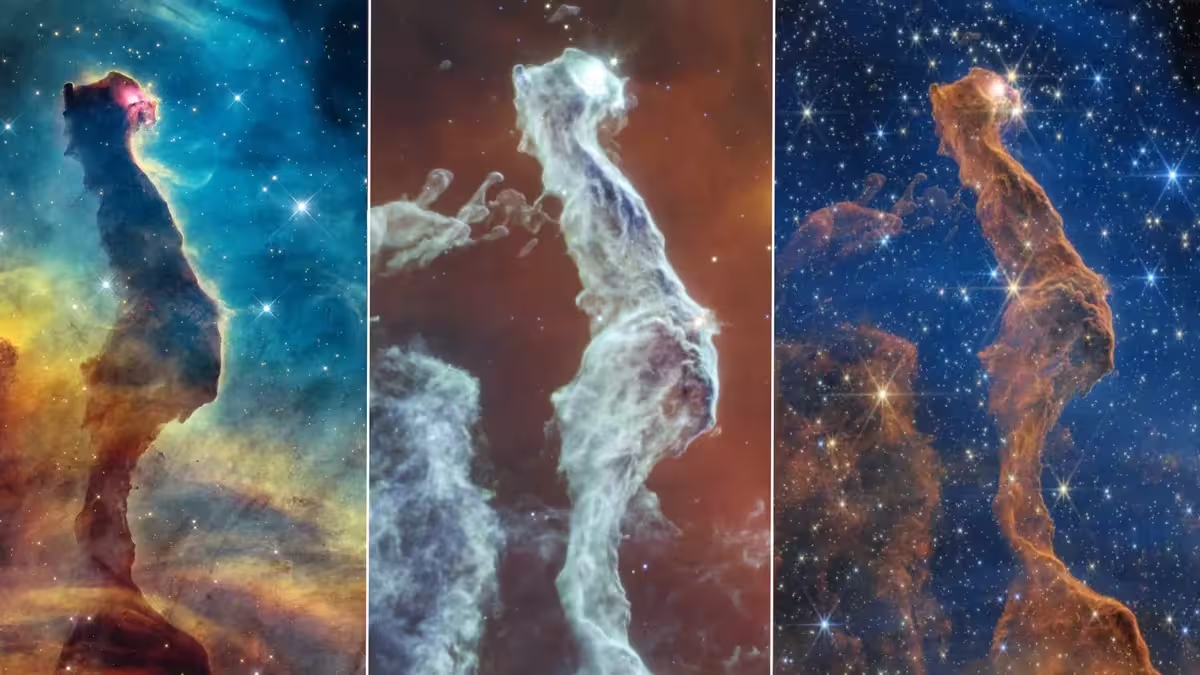
Dust grains are central to these processes, as they facilitate cooling and influence how energy propagates through space. By comparing MIRI data with near-infrared measurements and visible-light observations, the scientific community is building a more comprehensive model of how nebulae sustain the formation of new stars or preserve the remnants of past stellar activity. This multi-faceted approach remains the cornerstone of modern astrophysics, transforming our understanding of the universe one wavelength at a time.
This article has been fact checked for accuracy, with information verified against reputable sources. Learn more about us and our editorial process.
Last reviewed on .
Article history
- Latest version
Reference(s)
- Gianopoulos, Andrea. “Cat's Head Nebula (Webb MIRI Image) - NASA Science.”, October 29, 2026 NASA <https://science.nasa.gov/asset/hubble/cats-head-nebula-webb-miri-image/>.
Cite this page:
- Posted by Karan Das