NASA’s LINK Spacecraft Slows Spin, Clearing Path for Swift Observatory Boost
Katalyst Space’s LINK spacecraft hits a recovery milestone as it readies for a planned orbital boost to NASA’s Neil Gehrels Swift Observatory.
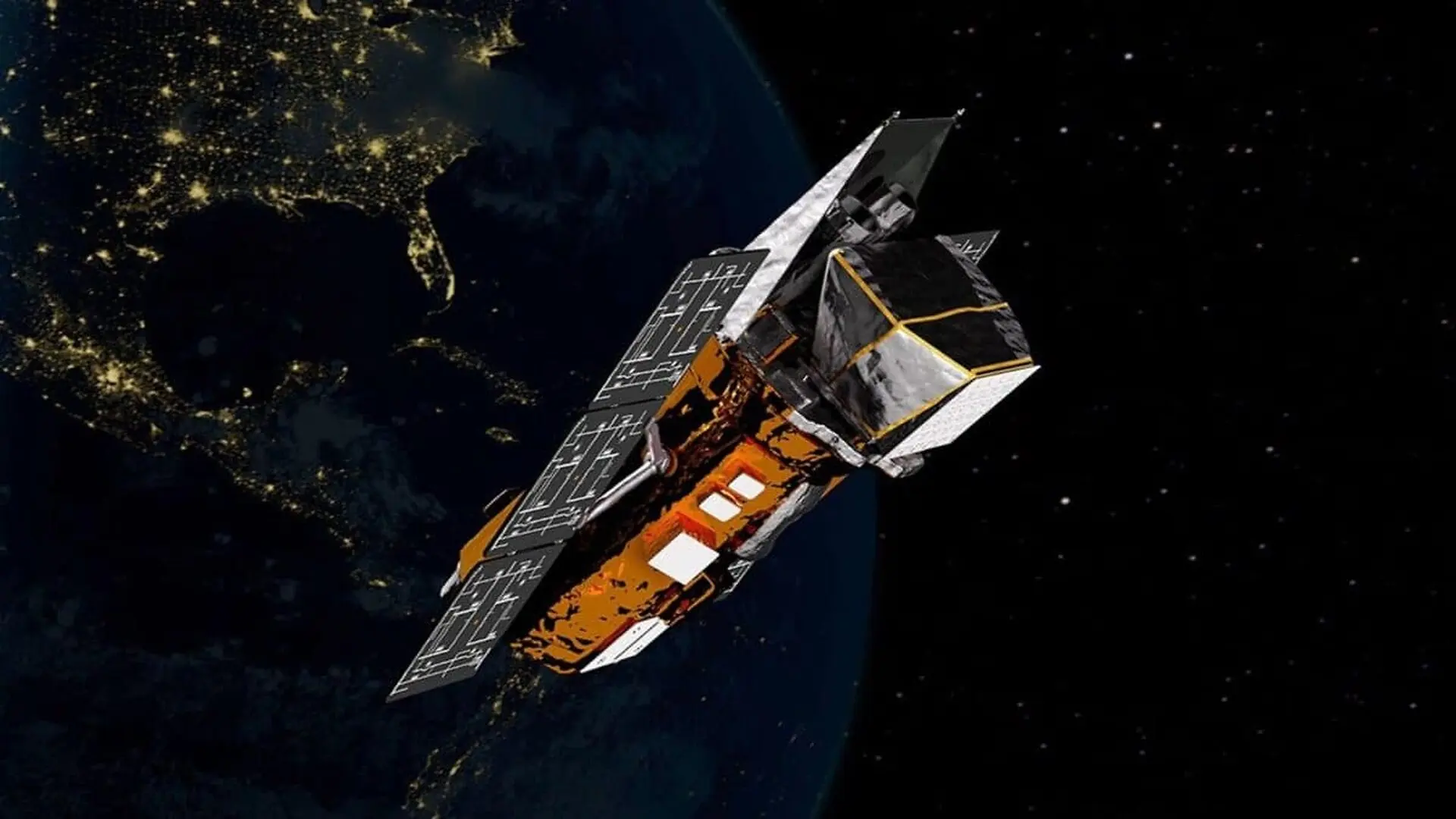
Katalyst Space announced that its LINK spacecraft has successfully slowed its uncontrolled spin, a critical step toward its goal of raising the orbit of NASA’s Neil Gehrels Swift Observatory.
After a series of burns from an electric‑propulsion thruster, the vehicle’s rotation dropped from roughly 9 degrees per second across multiple axes to about 1.47 degrees per second, restoring a level of stability that enables further mission operations.
Katalyst Space has slowed the spin of their LINK spacecraft and will continue to attempt to restabilize it in the coming days. There are still potential paths forward for the robotic spacecraft to boost our Swift observatory, and LINK is now expected to approach Swift around the…
— NASA Universe (@NASAUniverse) July 31, 2026
Next phase: software upgrade to tighten attitude control
Engineers are preparing to upload a new flight‑software package that will introduce updated attitude‑control algorithms, helping LINK maintain a steady orientation while it remains in its current configuration.
Achieving reliable attitude control is a prerequisite for the series of orbital maneuvers that will align LINK with Swift’s existing trajectory.
Why LINK matters for the Swift Observatory
The primary objective of the LINK mission is to deliver a propulsion boost to the Neil Gehrels Swift Observatory, allowing the space telescope to climb to a higher altitude and extend its scientific lifetime.
Swift has been a workhorse for high‑energy astrophysics, capturing data on distant explosions and energetic cosmic phenomena. A successful orbital boost would preserve its ability to collect valuable observations.
Looking ahead: upcoming milestones
Following the spin‑reduction, Katalyst Space will focus on completing the software upload, validating the spacecraft’s stability, and initiating navigation sequences that will bring LINK into a trajectory matching Swift’s orbit.
Mission teams will continue to monitor telemetry and performance metrics, determining the timing for the next set of propulsion burns required for the orbital transfer.
If LINK can meet its remaining technical checkpoints, the mission could pave the way for a higher‑orbit configuration of the Swift Observatory, ensuring continued contributions to astrophysical research.
This article has been fact checked for accuracy, with information verified against reputable sources. Learn more about us and our editorial process.
Last reviewed on .
Article history
- Latest version
Cite this page:
- Posted by Karan Das