Unlocking Plant Gluttony Gene Could Boost Nitrogen Uptake and Cut Fertilizer Waste
New findings could help engineer ’gluttonous’ crops that take up more nitrogen, boosting efficiency and yields.
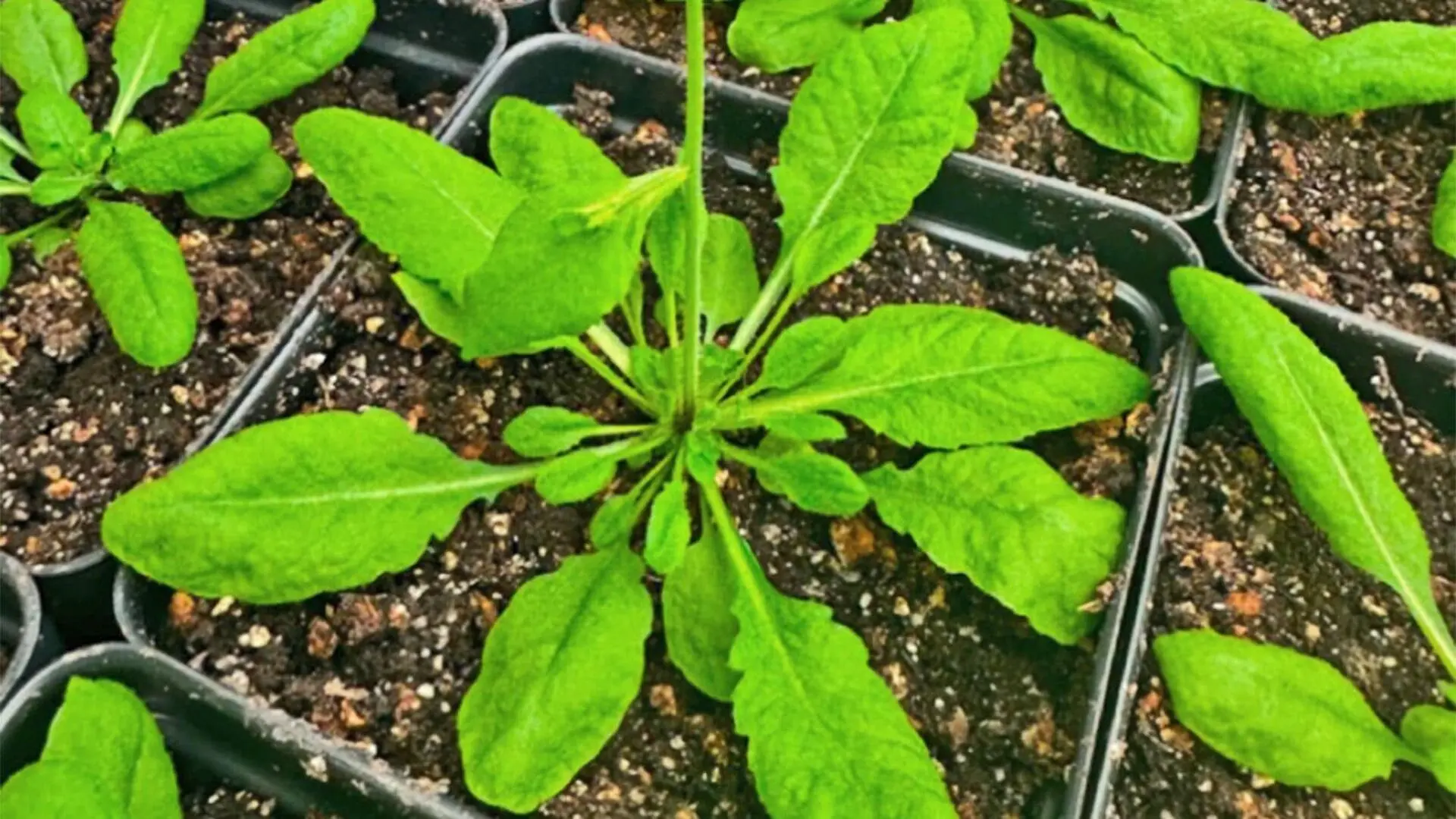
Widespread reliance on nitrogen fertilizers has lifted global crop productivity, yet plants typically capture only half of the applied nutrient. The surplus leaches into waterways, spurring algal blooms and threatening aquatic ecosystems, while the lingering nitrogen in soils fuels emissions of nitrous oxide—a greenhouse gas over 270 times more potent than carbon dioxide over a century. Production, transport, and storage of these fertilizers also carry substantial economic and geopolitical burdens.
Breakthrough Reveals Plant Mechanism That Signals Nitrogen Saturation
A research team led by Gloria Coruzzi of New York University and Mariana Obertello of Argentina’s INGEBI has pinpointed a molecular switch that tells plants when they have taken in enough nitrogen. Their findings, published in The Plant Cell, describe how the transcription factor HHO5 orchestrates a plant’s sense of nitrogen “fullness.”
HHO5 Governs a Dual‑Mode Response to Nitrogen Availability
By screening genes that react to varying nitrogen doses, the scientists isolated HHO5 as a central regulator. When organic nitrogen—used for long‑distance transport, storage, and synthesis of essential amino acids—reaches sufficient levels, HHO5 expression climbs. The protein then simultaneously boosts genes involved in organic nitrogen metabolism while repressing those that drive uptake of inorganic nitrogen from the soil, effectively signaling the plant to cease further absorption.
“Inorganic nitrogen uptake and its conversion into organic forms demand considerable energy,” explained lead author Will Hinckley, a doctoral candidate at NYU. “HHO5 appears to act as an energy‑saving checkpoint, telling the plant it has enough nitrogen and can redirect resources elsewhere.”
Partner Protein WRKY21 Switches HHO5’s Function
Further experiments revealed that HHO5’s role depends on its interaction partner. Alone, HHO5 silences genes for inorganic nitrogen transport. When paired with the regulatory protein WRKY21, HHO5 flips into an activator, enhancing expression of genes that respond to organic nitrogen and bolster defense pathways.
The team employed a technique called DoubleTARGET, tagging HHO5 and WRKY21 with distinct fluorescent markers and sequencing RNA from isolated plant cells. Cells abundant in both proteins showed heightened activity of organic‑nitrogen‑responsive and defense‑related genes, confirming the synergistic effect.
Removing the Satiety Signal Increases Nitrogen Uptake
Using Arabidopsis as a model, researchers generated plants lacking HHO5. Under specific nitrogen conditions, these mutants absorbed nearly three times more nitrogen than their wild‑type counterparts, underscoring HHO5’s role as a brake on inorganic nitrogen intake.
“Disabling HHO5 demonstrates a clear pathway to enhance nitrogen acquisition,” noted Obertello. “This insight could inform the development of crops that more efficiently harvest available nitrogen, reducing the need for excessive fertilizer applications.”
Implications, Patents, and Funding
The discovery opens avenues for engineering “nitrogen‑greedy” cultivars that maximize fertilizer efficiency, potentially easing environmental strain and lowering costs for growers. NYU has filed a patent covering the technology described in the study.
Funding for the project came from the National Institute of General Medical Sciences of the NIH, as well as Argentina’s ANPCyT and CONICET.
This article has been fact checked for accuracy, with information verified against reputable sources. Learn more about us and our editorial process.
Last reviewed on .
Article history
- Latest version
Reference(s)
- Hinckley, Will E., et al. “HHO5 orchestrates dose-dependent feedback regulation of organic versus inorganic nitrogen signaling in Arabidopsis.” The Plant Cell, vol. 38, no. 7, July 30, 2026 Oxford University Press (OUP), doi: 10.1093/plcell/koag201. <https://doi.org/10.1093/plcell/koag201>.
Cite this page:
- Posted by Elizabeth Taylor