New Blind Cavefish Genus Discovered in Secret WWII Chemical Weapons Site
Scientists unveil Demogorgonichthys arcanus, a new eyeless cavefish discovered in Alabama’s Bobcat Cave beneath Redstone Arsenal.
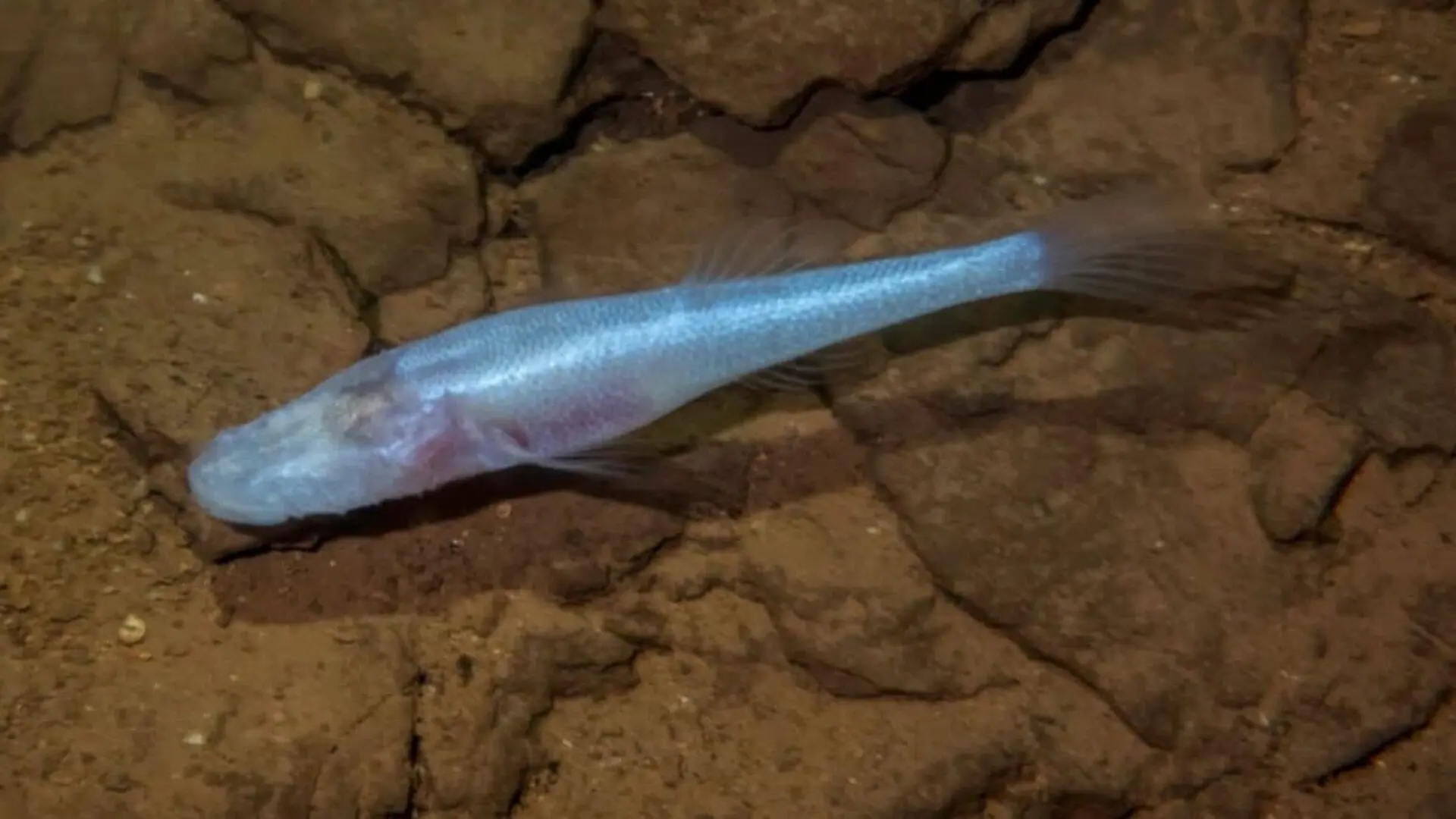
During a routine biological survey of the expansive “Shrimp Room” chamber inside Alabama’s Bobcat Cave in early 2025, researchers documented a blind fish that does not fit any known taxonomic group. The finding, detailed in Scientific Reports, was achieved through detailed anatomical study, high‑resolution CT scans, and DNA sequencing.
New Blind Fish Marks First New Genus from a Well‑Studied Cave
The specimen, now designated Demogorgonichthys arcanus, was encountered by Matthew L. Niemiller, associate professor of biological sciences and director of the Cave Bio Lab at The University of Alabama in Huntsville. Niemiller reported that he slipped into a deeper pool and inadvertently disturbed a rock ledge, revealing the previously unseen fish.
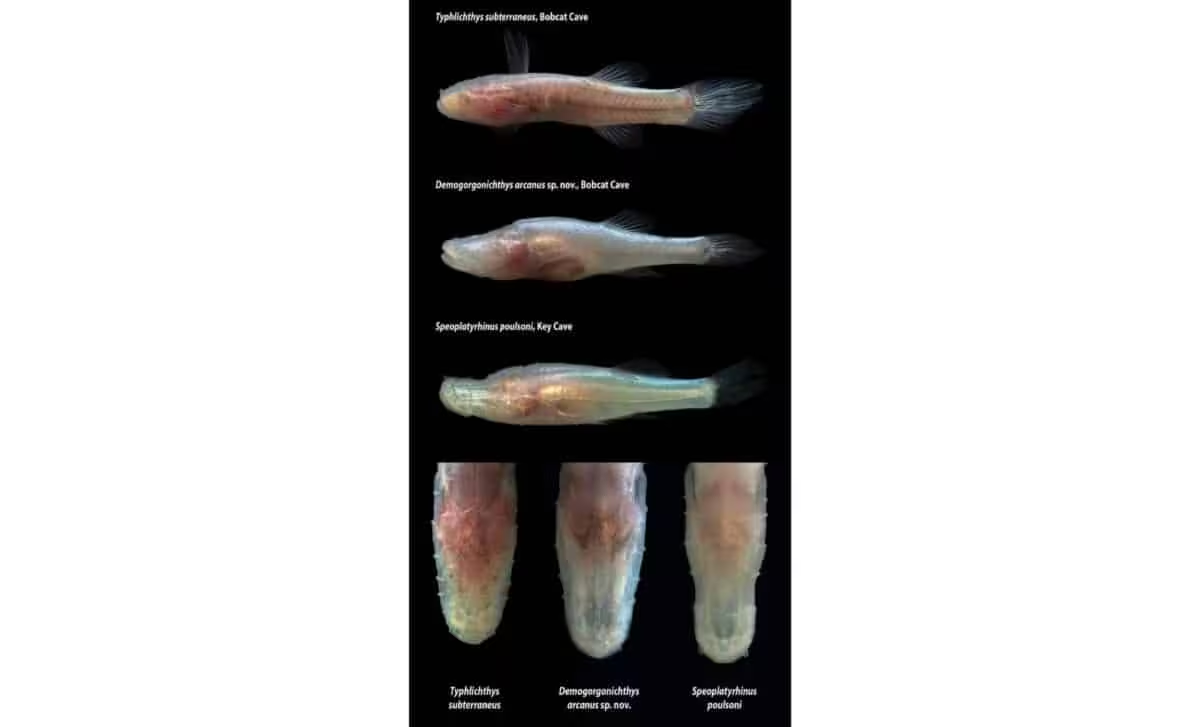
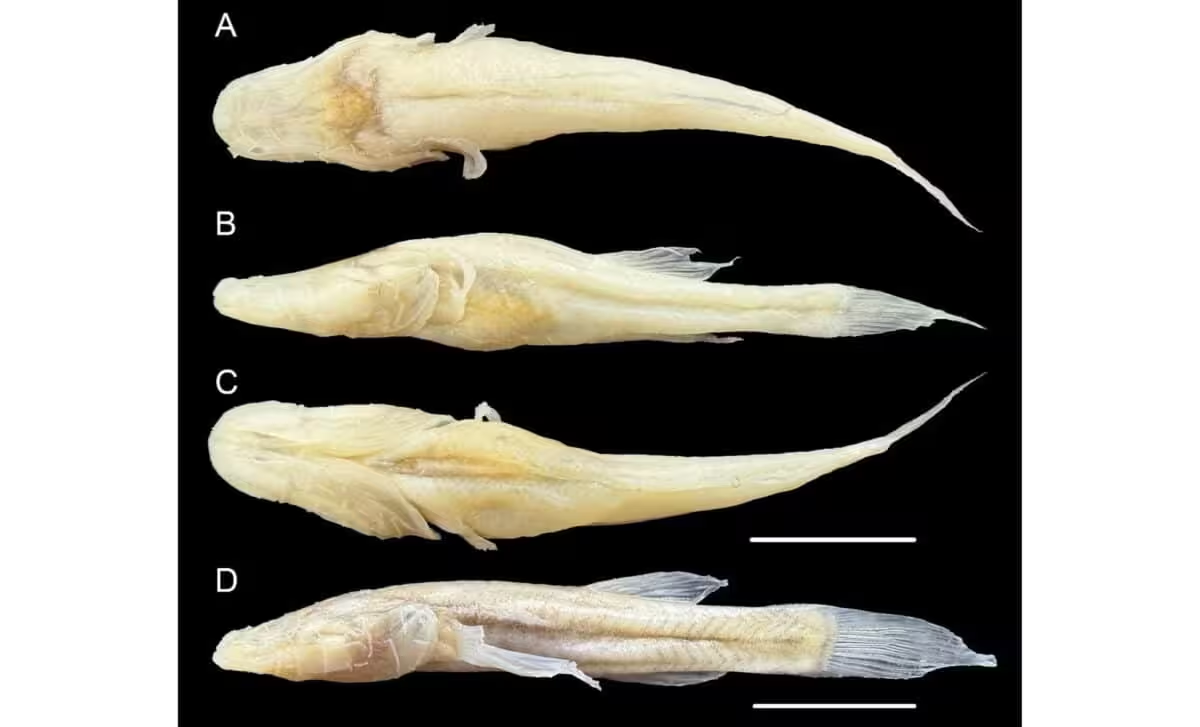
Morphologically, the new species diverges sharply from the already documented Southern Cavefish (Typhlichthys subterraneus). Key distinctions include a pronounced dorsal hump behind the head, an elongated and flattened snout, and fin rays that lack branching. Subsequent sampling indicated that roughly fifty percent of the cavefish captured in later surveys belonged to this newly identified taxon.
Molecular analyses demonstrated that Demogorgonichthys arcanus does not align with any existing cavefish lineage, prompting the authors to erect a new genus. The generic name draws on the mythological figure Demogorgon and contemporary pop‑culture references, while the species epithet “arcanus” (Latin for “hidden”) reflects its subterranean lifestyle and long‑standing elusiveness.
The discovery was surprising because Bobcat Cave, part of the Redstone Arsenal underground complex—a former World War II chemical‑weapons manufacturing site—has been surveyed continuously for more than three decades. The cave also supports the endangered Alabama Cave Shrimp, making its ecological importance well documented.
Live specimens exhibit a translucent, faint electric‑blue hue and lack functional eyes. Genetic testing revealed disabling mutations in the rhodopsin gene, indicating that vision loss occurred independently from that of the Southern Cavefish despite their shared habitat.
Parallel Evolution and Emerging Conservation Challenges
The coexistence of two unrelated, eyeless fish within the same aquifer provides a vivid example of convergent evolution, where distinct lineages develop similar adaptations in response to comparable environmental pressures.
Historical records note that Redstone Arsenal’s wartime activities left behind elevated concentrations of trace metals in the cave system. Although researchers have documented higher metal levels in Bobcat Cave compared with nearby karst environments, the specific effects on the newly discovered fish remain to be clarified.
Because the fish has so far been recorded only within Bobcat Cave and its connected groundwater system, its range is extremely restricted. Surface runoff, sediment, and potential contaminants can infiltrate the aquifer, posing a direct threat to the species’ survival.
The authors argue that the limited distribution and specialized habitat likely qualify the fish for “Critically Endangered” status under the IUCN Red List, although precise population estimates are still lacking. Protecting the integrity of the groundwater recharge zone and maintaining ongoing monitoring are identified as essential conservation measures.
The revelation underscores that even extensively studied subterranean ecosystems can harbor undiscovered biodiversity. Ongoing investigations aim to determine the size of the newly identified population and to develop long‑term management strategies for the species.
This article has been fact checked for accuracy, with information verified against reputable sources. Learn more about us and our editorial process.
Last reviewed on .
Article history
- Latest version
Reference(s)
- “UAH | College of Science | Departments | Biological Sciences | Faculty & Staff | The University of Alabama in Huntsville.” <https://www.uah.edu/science/departments/biology/faculty-staff/matthew-niemiller>.
- “Home page.” IUCN <https://iucn.org/>.
Cite this page:
- Posted by Elizabeth Taylor