Scientists Uncover Multi‑Centuries DNA Archive on the Shroud: Humans, Microbes, Crops and More
DNA analysis uncovers human, microbial, plant and animal traces on the Shroud of Turin, shedding fresh light on its complex biological history.
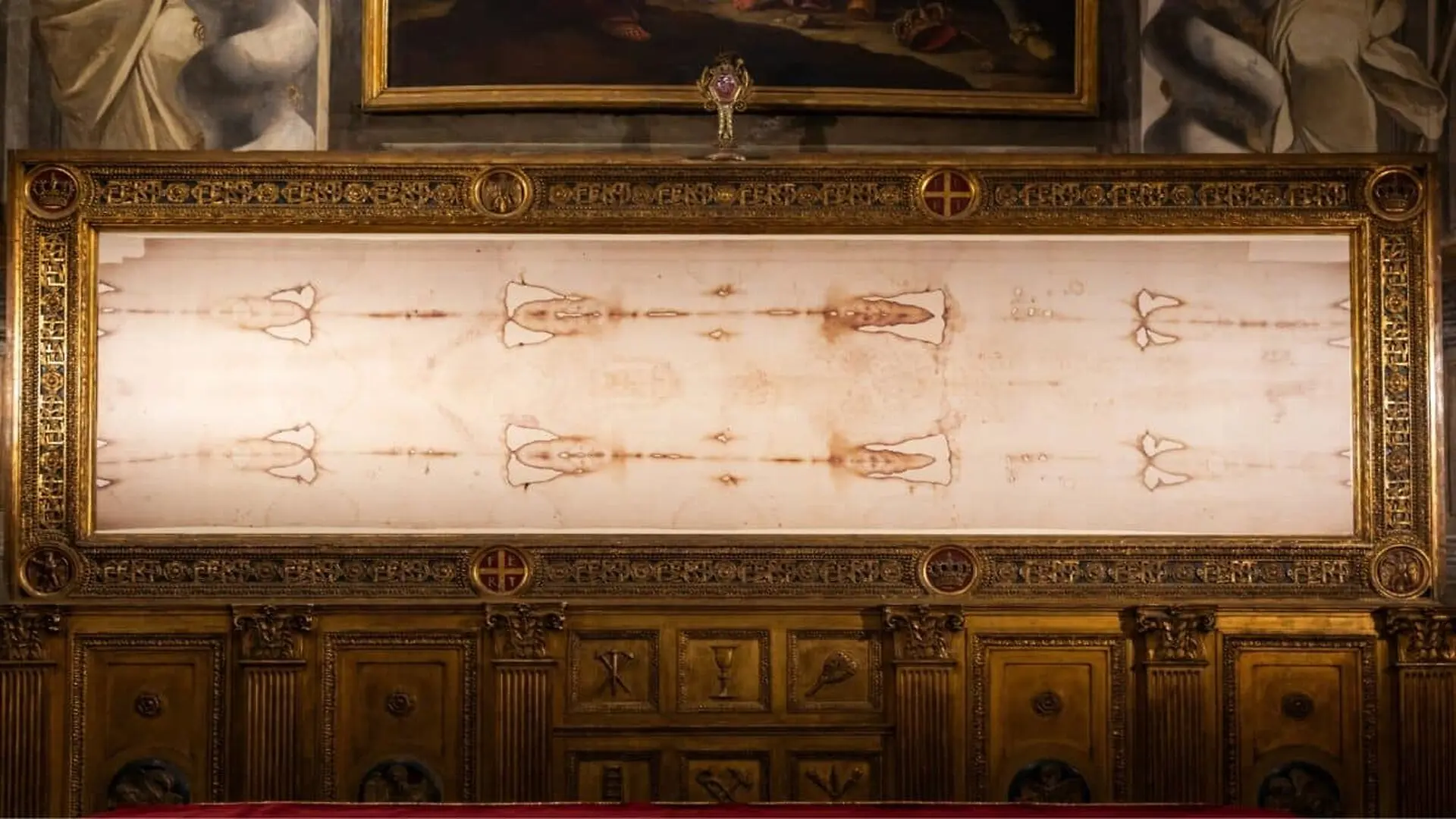
Measuring roughly 14 feet (4.4 meters) in length, the linen cloth bears a faint double‑sided impression of a crucified figure. For centuries, believers have argued that the fabric once covered the body of Jesus, turning it into one of the most scrutinised relics in history.
A research team headed by Gianni Barcaccia revisited official Shroud specimens that were gathered almost five decades ago. Published in Scientific Reports, their work applied a shotgun‑sequencing approach that captures every DNA fragment present in a sample, without pre‑selecting particular markers.
The resulting dataset catalogued genetic remnants from humans, microbes, plants and animals that have interacted with the linen over the centuries. While the findings enrich the artifact’s biological chronology, they leave the core controversy over its age and provenance unresolved.
Human genetic traces pinpoint recurrent handlers
Three of the analysed extracts yielded robust human DNA signatures, all converging on a single individual. Kinship testing linked this material to Pierluigi Baima Bollone, a forensic‑medicine professor at the University of Turin who collected the reference samples in 1978.
The match could represent either Baima Bollone himself or an immediate relative. Baima Bollone, who also co‑authored the paper, passed away in Turin in November 2025, just months before the study’s appearance.
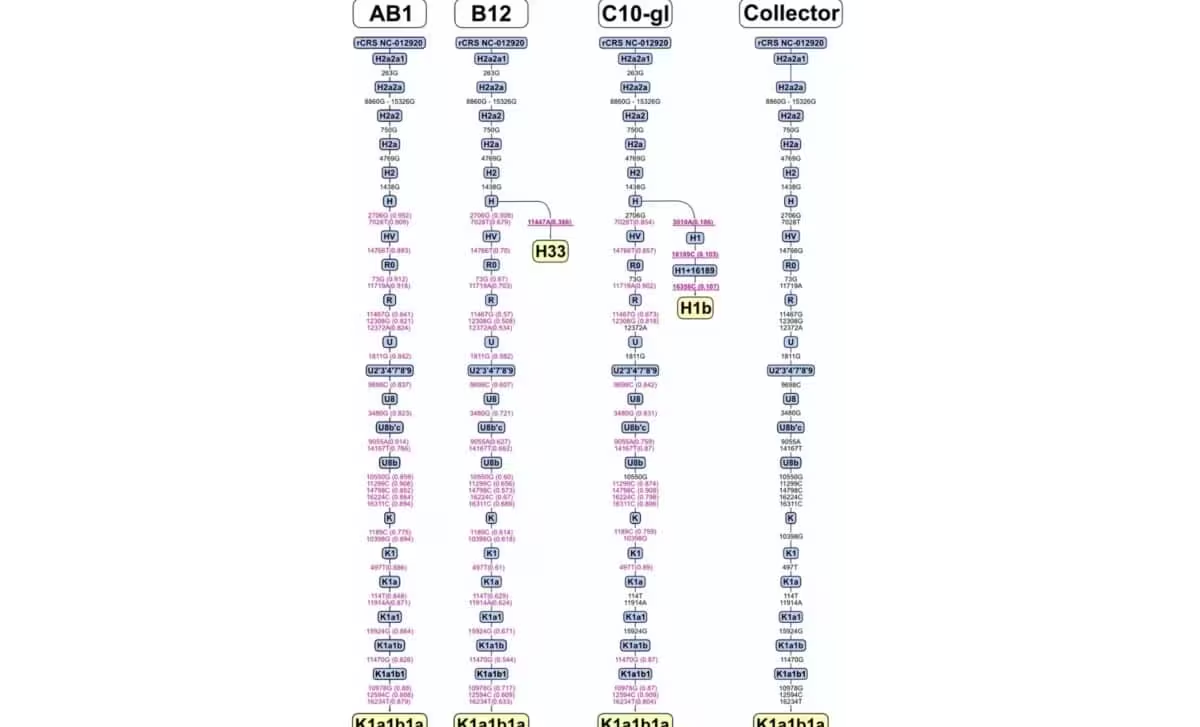
Repeated detection of his mitochondrial haplogroup K1a1b1a—predominantly found among Ashkenazi Jewish groups—demonstrates how the DNA of a frequent toucher can dominate later metagenomic analyses.
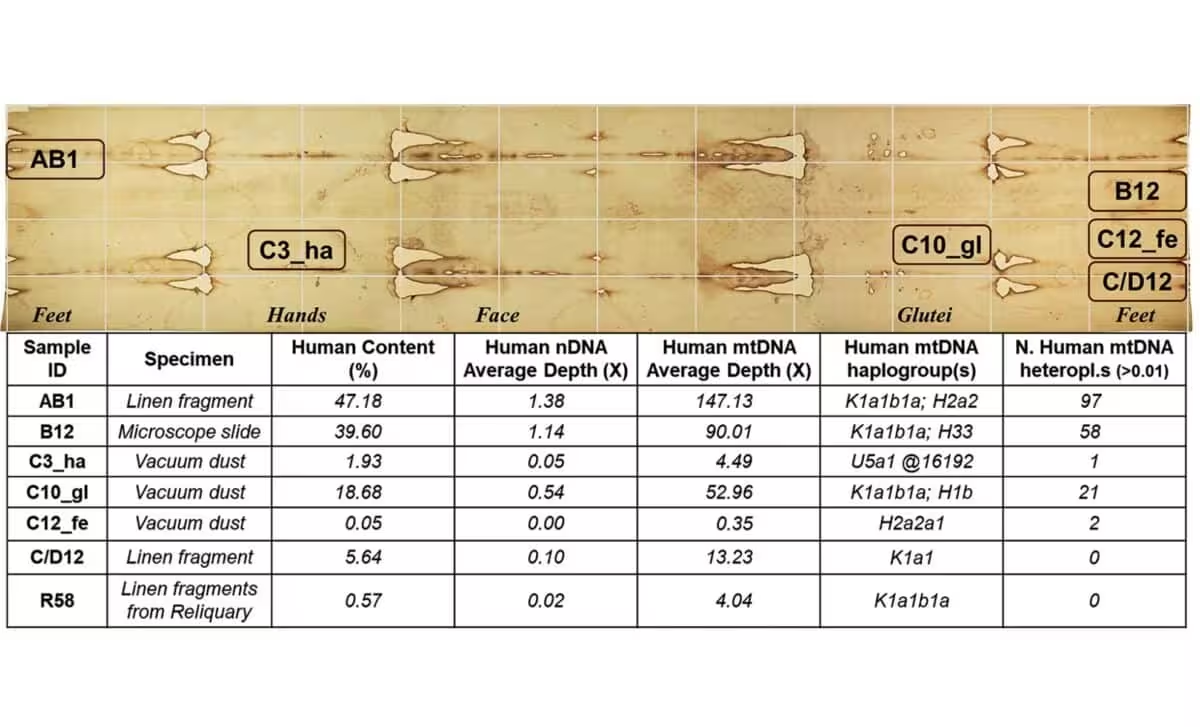
Additional human lineages emerged in the dataset, including a rare haplotype now most common among Near‑Eastern communities such as the Druze. The breadth of mitochondrial signals suggests that the cloth has encountered a diverse array of people throughout its history.
Microbial and botanical residues map centuries of exposure
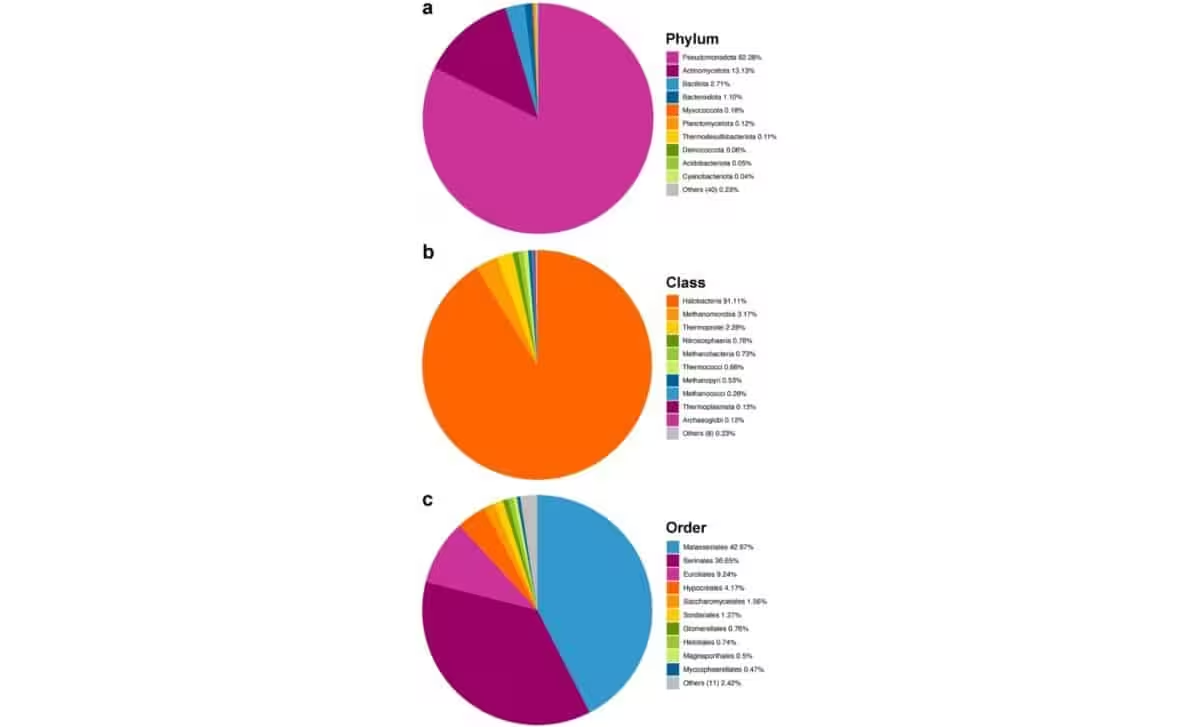
Skin‑associated bacteria from the Cutibacterium and Staphylococcus genera—common inhabitants of human faces and hands—were consistently identified across the samples, underscoring repeated human contact.
Archaeal DNA linked to hypersaline habitats also appeared, which the authors interpret as either a relic of storage conditions involving salt or evidence of historic flax‑soaking practices that employed saline solutions.
A yeast species typically found on cheese rinds and in salty waters was detected, though its exact route onto the cloth remains unclear. Additionally, a fungus known to colonise human scalp and skin surfaced in every extract, reinforcing the notion of continual handling (see related report).
Plant DNA analysis revealed a striking dominance of carrot sequences, accounting for nearly one‑third of all botanical reads. Comparative work matched these traces to orange carrot cultivars that originated in Western Europe during the 15th and 16th centuries.
Bread wheat comprised the second‑largest botanical signal, representing roughly one in nine plant reads. DNA from maize, peanuts, peppers and tomatoes—crops native to the Americas and absent from the Old World before the Columbian exchange—also surfaced.
The presence of these New‑World species raises questions for claims that the relic dates back two millennia, given that such crops only entered European agriculture after the 15th century.
Animal DNA paints a Mediterranean‑European portrait
Analysis of animal DNA highlighted a profile dominated by Mediterranean and European fauna. The most abundant non‑human trace originated from red coral, a marine organism endemic to the Mediterranean Sea and historically employed in ornamentation and folk remedies.
Domestic cat and dog DNA each accounted for about 20 % of the animal reads, while sequences from chickens, cattle, sheep, goats, pigs and horses—species associated with traditional farming—were also prominent.
Smaller quantities of brown rat, mouse and human‑skin mite DNA were identified, reinforcing a picture more consistent with a Mediterranean‑European setting than with an ancient Near‑Eastern provenance.
The authors caution that genetic data alone cannot assign a definitive age to the Shroud (see related discussion) or resolve whether its origins lie in medieval times or the first century.
Reference databases limit the resolution of some identifications; for example, plant comparisons relied on a catalog of 126 species, and many DNA fragments were too degraded for precise taxonomic placement. Radiocarbon dating performed in 1988 placed the linen between 1260 and 1390 AD—a medieval timeframe that proponents of an earlier date continue to dispute.
Radiocarbon measurements taken from two threads stored in the Shroud’s protective box aligned with documented repairs after a fire in 1532, with restoration work recorded in 1534 and again in 1694.
Noemi Procopio, a forensic‑science professor at the University of Lancashire, described the relic as “a rich archive of genetic information that has accumulated over centuries of human interaction and environmental exposure.” She noted that while the DNA profile offers fresh insight into the cloth’s biological past, it does not settle the lingering debates over its chronology or authenticity.
The project was supported by university and research‑council funding, and the authors declared no competing interests.
This article has been fact checked for accuracy, with information verified against reputable sources. Learn more about us and our editorial process.
Last reviewed on .
Article history
- Latest version
Reference(s)
- <https://www.unito.it/>.
- “Noemi Procopio - Academic Staff.” University of Lancashire <https://www.lancashire.ac.uk/academics/noemi-procopio>.
- “University of Lancashire.” University of Lancashire <https://www.lancashire.ac.uk/>.
Cite this page:
- Posted by Elizabeth Taylor