How an Antarctic Volcano Sprinkles the Sky With Microscopic Gold Crystals
Mount Erebus, the world’s southernmost active volcano, releases tiny crystalline gold particles alongside its volcanic gases.
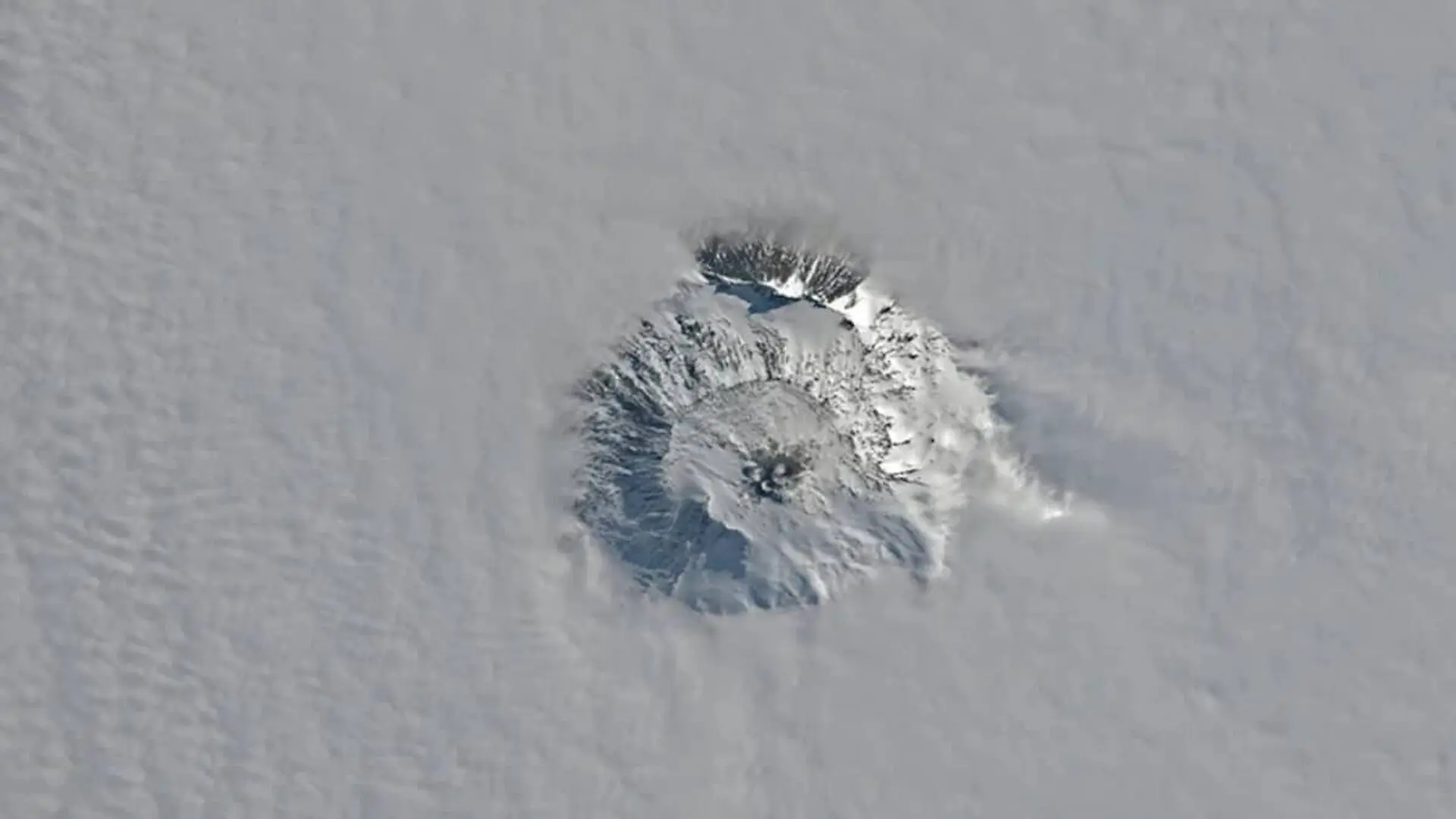
Three decades after scientists first reported a surprising find, Mount Erebus on Ross Island continues to shed microscopic particles of elemental gold into the Antarctic environment, a phenomenon that remains poorly understood.
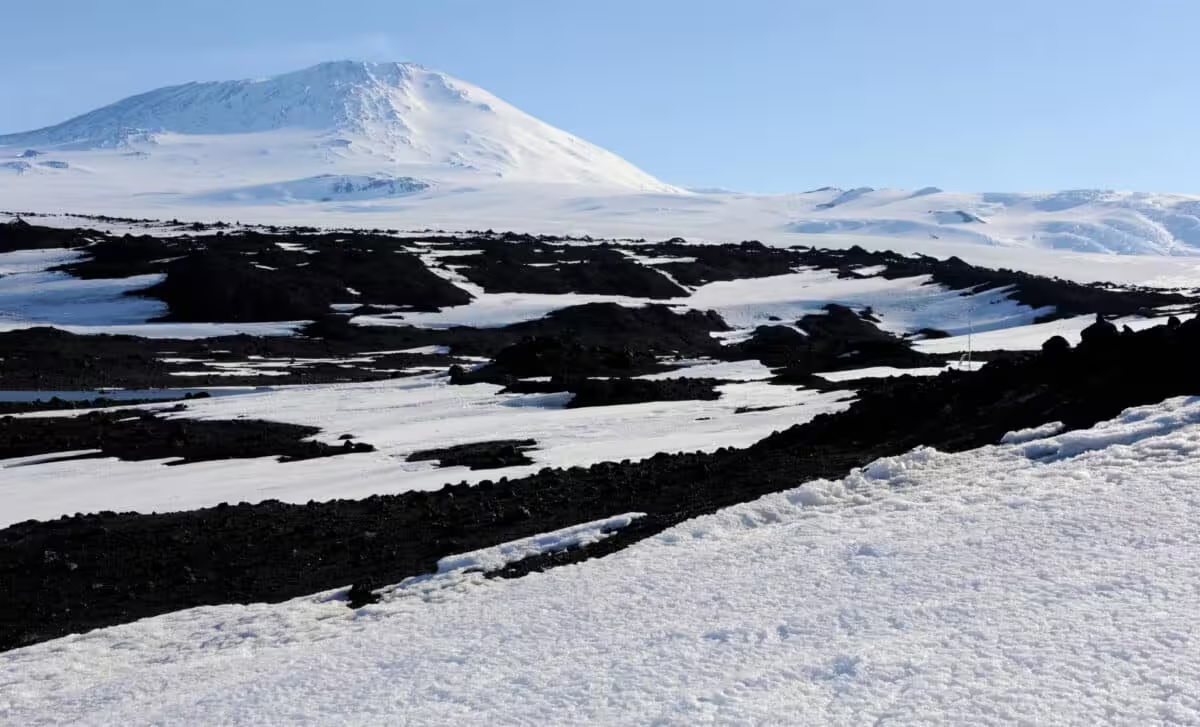
The volcano, which sits about 1,350 kilometers (840 miles) from the Geographic South Pole, is best known for its persistent lava lake. In addition to the usual volcanic gases, Erebus releases a fine dust of gold that can travel up to a thousand kilometres from the crater before settling on the ice.
Early Observations and the 1991 Gold‑Dust Estimate
A 1991 article in Geophysical Research Letters first quantified the emission, calculating that roughly 80 grams (2.8 ounces) of gold‑laden particles escape the volcano each day. The authors noted that these particles are small enough to be carried great distances by wind currents.
Gold in Volcanoes: Erebus’s Unique Signature
Trace amounts of gold have been detected in volcanic gases from sites such as Kīlauea (Hawai‘i), Etna (Italy), Augustine (Alaska) and El Chichón (Mexico). However, the crystalline form observed at Erebus distinguishes it from these other systems, which typically contain only dissolved or amorphous gold.
Subsequent theoretical work suggests that gold can hitch a ride in hot volcanic fluids and possibly in the associated gases. The prevailing view is that deep‑seated magmas contain a suite of metals—including copper, silver, mercury, arsenic, selenium, sulfur and gold—that can combine into volatile compounds.
Because gold’s boiling point far exceeds volcanic temperatures, it does not vaporize directly. Instead, researchers propose that gold is bound in chlorine‑ or sulfur‑rich molecules that remain stable within the plume.
Field Campaign Captures Gold Crystals in Snow, Air and Gas
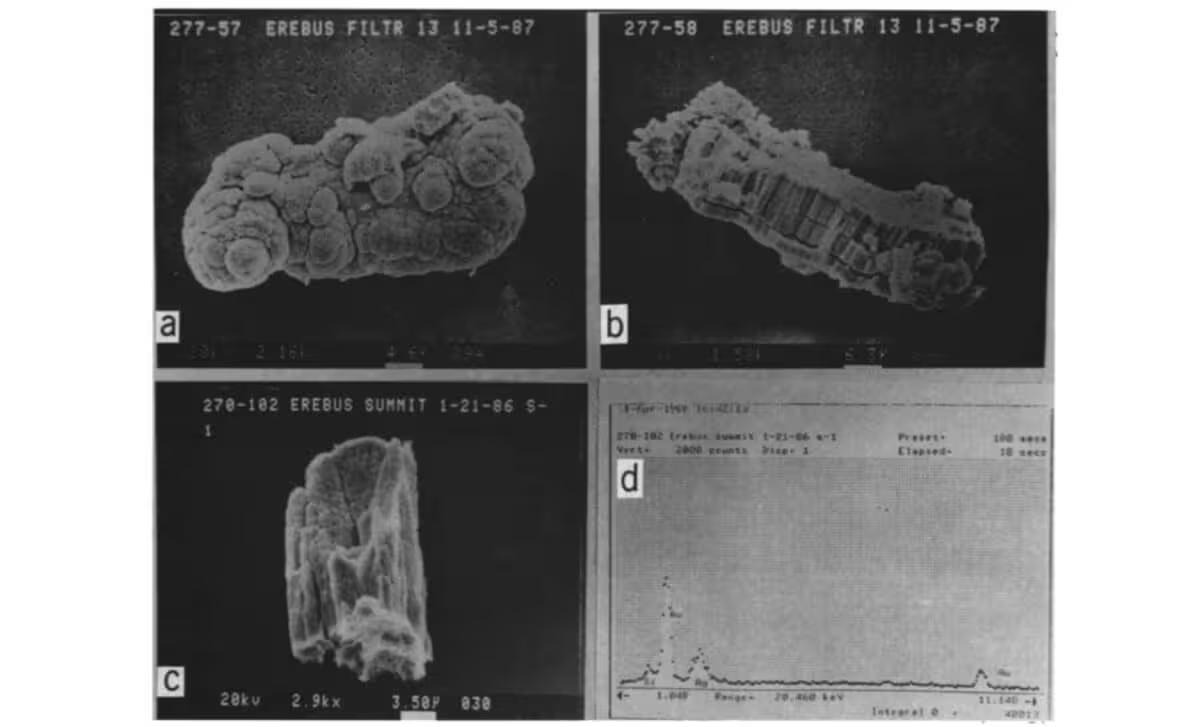
Geochemist Kimberly Meeker of the New Mexico Institute of Mining and Technology led a team that sampled snow around the crater, collected gas from the lava‑lake plume, and retrieved air from the Antarctic troposphere up to 1,000 kilometres downwind. All three sample sets contained tiny, well‑shaped gold crystals, some measuring as much as 60 micrometres across.
The findings, published in Geophysical Research Letters, showed that the particles are not irregular grains but faceted crystals with near‑perfect geometry, as revealed by electron‑microscope imaging.
When compared with other volcanoes, the gold output from Kīlauea (estimated 500–800 grams per day) and Etna (up to 2.4 kilograms per day) is larger in mass, yet neither site has produced the crystalline gold particles documented at Erebus.
Competing Hypotheses for Gold Crystal Formation
One scenario proposes that gold departs the lava in volatile chlorine‑bearing compounds, which then crystallize as the gases cool and eventually settle onto ice. Critics point out that the volcanic plume contains only trace amounts of gold, making spontaneous crystal growth in the atmosphere unlikely.
A second idea, voiced by volcanologist Philip Kyle of the same research team, suggests that gold may nucleate on a thin crust that forms atop the lava lake before being lofted into the air by rising gases.
Despite three decades of investigation, the precise mechanism that allows Mount Erebus to generate and disperse these minute gold crystals remains elusive. Whether driven by unique chemical pathways, temperature regimes, or geological structures, the volcano stands alone as the only known source of airborne elemental gold in crystalline form.
This article has been fact checked for accuracy, with information verified against reputable sources. Learn more about us and our editorial process.
Last reviewed on .
Article history
- Latest version
Reference(s)
- “Scott Base.”, April 8, 2019 Antarctica New Zealand <https://www.antarcticanz.govt.nz/scott-base>.
- Farsang, Stefan. “Sulfur species and gold transport in arc magmatic fluids - Nature Geoscience.”, vol. 18, no. 1, pp. 98-104. Nature, doi: 10.1038/s41561-024-01601-3. <https://www.nature.com/articles/s41561-024-01601-3>.
- Meeker, Kimberly A.., et al. “Emission of elemental gold particles from Mount Erebus, Ross Island, Antarctica.” Geophysical Research Letters, vol. 18, no. 8, December 7, 2012, pp. 1405-1408. American Geophysical Union (AGU), doi: 10.1029/91GL01928. <https://agupubs.onlinelibrary.wiley.com/doi/epdf/10.1029/91GL01928>.
- “Philip Kyle | US-SCAR.” US-SCAR <https://usscar.org/directory/philip-kyle>.
Cite this page:
- Posted by Vikram Desai