Scientists Discover Earth Is Unzipping Beneath Italy In A Massive Geological Shift
New research reveals a hidden, unexpected geological process shifting deep beneath Italy, shedding new light on how Earth’s crust continues to evolve.
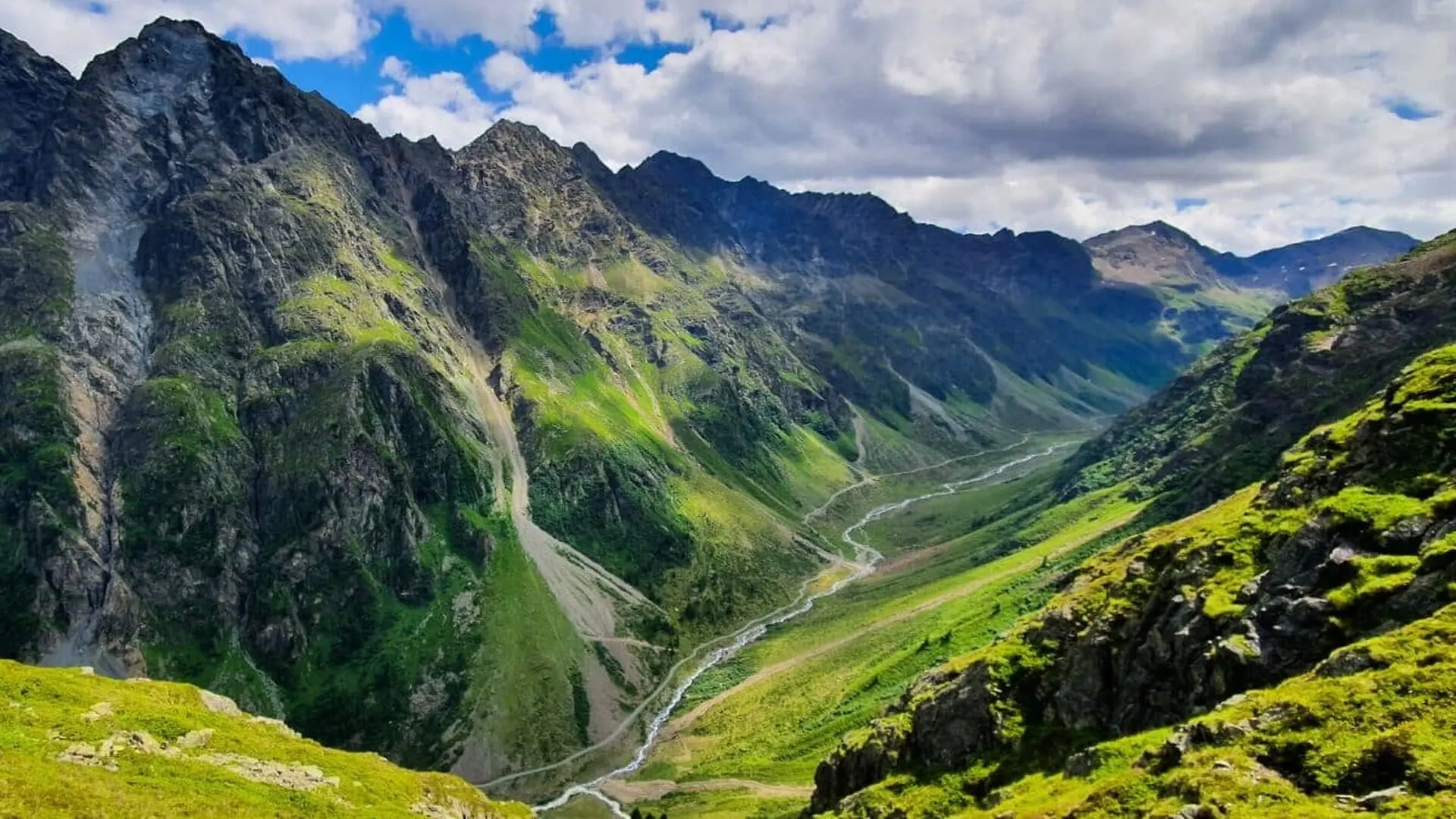
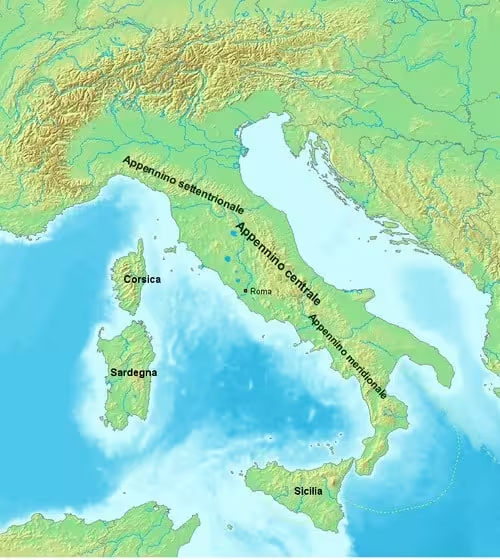
A hidden geological process deep beneath the Italian peninsula is fundamentally reshaping the Apennine Mountains. New research reveals that the Earth’s crust in this region is undergoing a phenomenon described as an “unzipping,” where deep-seated layers peel away from the surface, driving a paradoxical combination of tectonic stretching and compression.
Resolving a Longstanding Geological Paradox
For years, the 1,200-kilometer-long Apennine range has puzzled geologists. While typical mountain formation is defined by the collision of tectonic plates—which thickens and elevates the crust—the Apennines exhibit a conflicting pattern. Certain sectors of the range are actively being pulled apart, while others are simultaneously being squeezed, creating a complex, accordion-like deformation that traditional theories struggled to explain fully.
Previous models often cited “slab rollback,” a process where a descending tectonic plate retreats into the mantle, dragging the overlying crust with it. However, this theory failed to account for ongoing deformation that persisted long after the primary phase of expansion in the Tyrrhenian Sea slowed down roughly 2 million years ago.
The Mechanics of Crustal Delamination
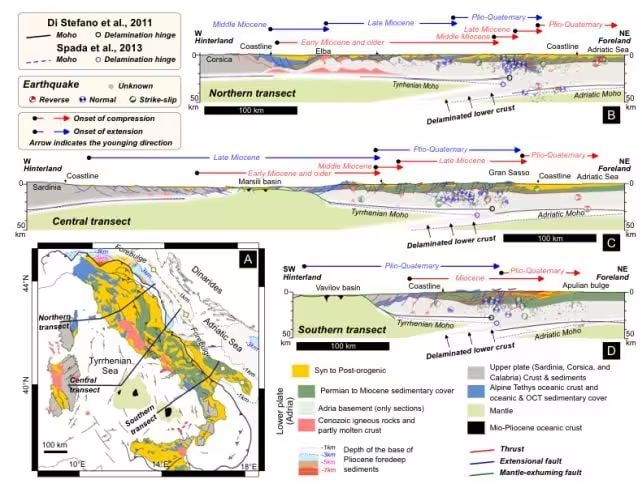
A team led by Stefano Tavani of the University of Florence has now identified “delamination” as the driving force. In this process, the dense lower crust and the attached lithosphere separate from the upper layers and sink into the mantle. Crucially, this peeling does not happen all at once; it advances along a moving front, or “hinge,” that migrates through the subsurface.
To map this subterranean movement, the researchers synthesized decades of data, including published findings in Communications Earth & Environment. By integrating seismic records, GPS tracking, and satellite radar, the team observed a 500-kilometer-long zone where the Moho—the boundary between the crust and the mantle—overlaps, providing structural evidence of the ongoing separation.
Dynamic Forces at Work
The field data correlates precisely with this delamination model. Behind the migrating hinge, the crust is undergoing extension at a rate of roughly 4 millimeters per year, while ahead of the hinge, compression occurs at about 2 millimeters per year. The researchers explain that ahead of the hinge, the lower crust remains anchored to the descending slab, creating a downward pull. As the peeling front advances and these dense layers detach, the resulting loss of mass allows the crust to rise, buoyed by the underlying mantle material.
While the authors note that this model remains a simplified representation of the complex slab dynamics beneath Italy, it provides a vital framework for understanding how mountain systems evolve beyond simple plate collisions. It serves as a reminder that even landscapes appearing static to human observers are constantly being reconfigured by slow, powerful processes deep within the Earth.
This article has been fact checked for accuracy, with information verified against reputable sources. Learn more about us and our editorial process.
Last reviewed on .
Article history
- Latest version
Reference(s)
- <https://www.researchgate.net/profile/Stefano-Tavani>.
- Tavani, Stefano., et al. “Lower-crustal unzipping drives active orogenic deformation.” Communications Earth & Environment, September 7, 2026 Springer Science and Business Media LLC, doi: 10.1038/s43247-026-04021-w. <https://doi.org/10.1038/s43247-026-04021-w>.
Cite this page:
- Posted by Vikram Desai