Mining Coal Beneath Oil Pipelines Triggers Severe Ground Deformation And Structural Stress
New finite element simulations reveal how multi-panel coal extraction and soil-structure interactions threaten buried energy pipelines.
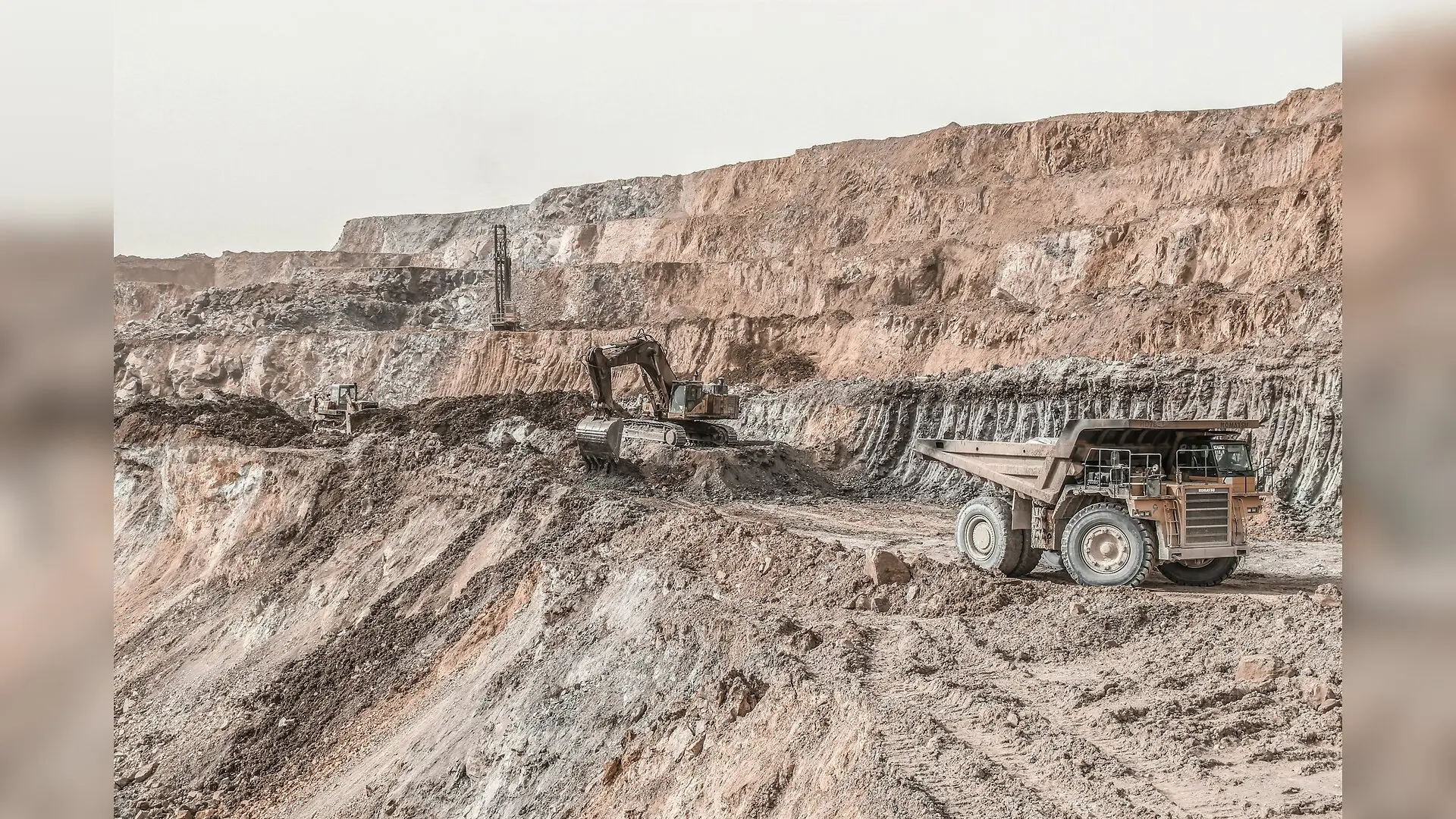
Deep underground coal mining beneath high-pressure oil pipelines can induce severe ground subsidence, shifting the surrounding soil and exerting massive mechanical stress on the buried metal tubes. Researchers have long sought to balance energy resource recovery with pipeline integrity in overlapping resource basins like northern Shaanxi in China. A team of investigators led by Tuanjie Liu at Xi’an University of Science and Technology tackled this complex engineering puzzle by modeling how multi-panel extraction scenarios transfer ground deformation into structural stress on nearby steel pipelines, as published in PLOS One.
How Does Underground Coal Extraction Bend and Stress Buried Steel Pipelines?
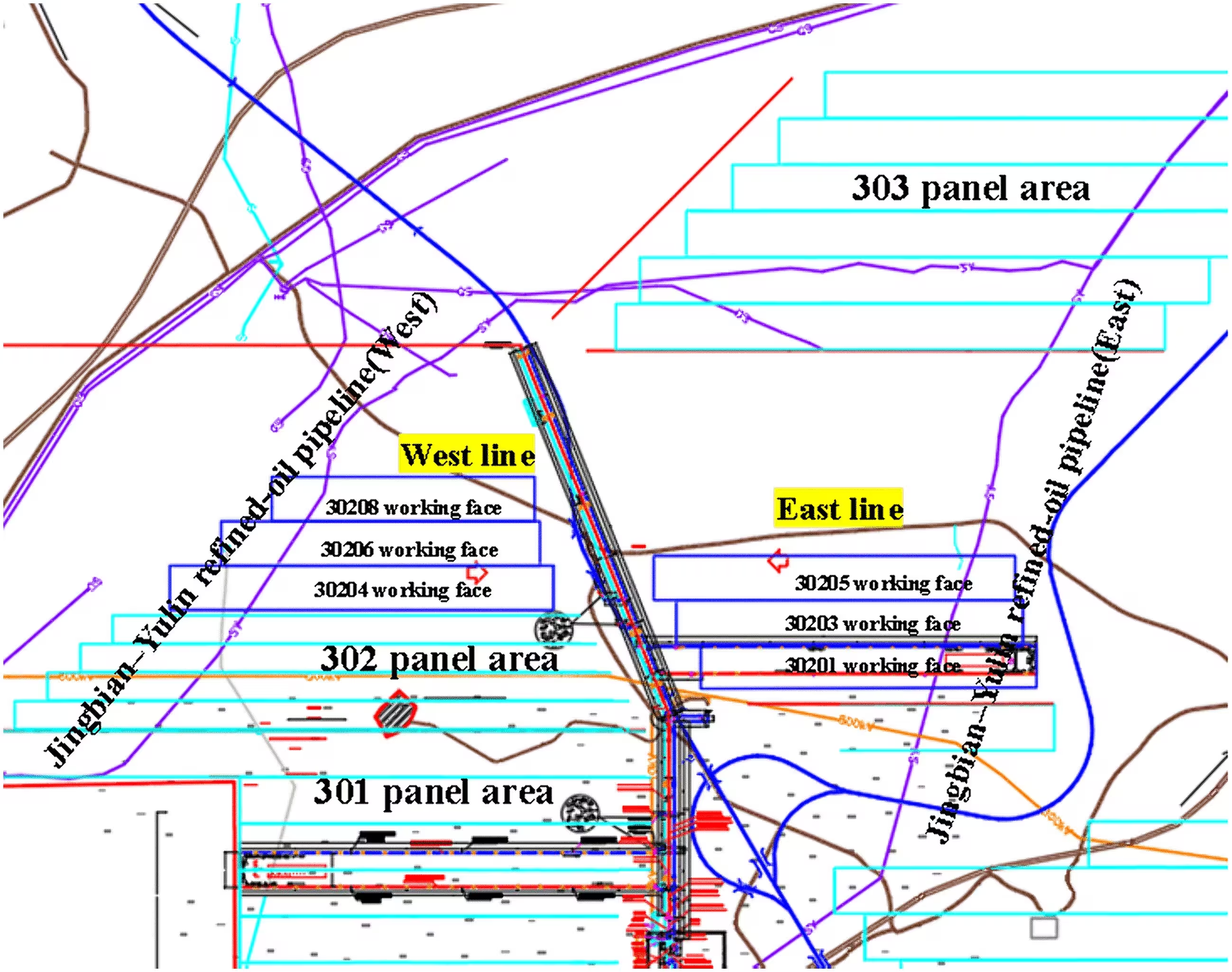
When longwall mining collapses underground strata, it creates a surface subsidence basin that subjects buried infrastructure to vertical settlement, axial drag, and lateral soil resistance. To understand these hidden forces, the team evaluated the specific layout of the Haichatan Coal Mine and the adjacent Jingbian-Yulin refined-oil pipeline, which features an outside diameter of 273 millimeters and a wall thickness of 6.4 millimeters. The researchers constructed a coupled analysis framework by first using the probability integral method to predict surface movement, including subsidence, tilt, horizontal strain, and curvature. This mathematical approach treats the influence of underground mining units on the surface as a random process governed by probability distribution.
Next, the investigators applied the resulting three-dimensional ground displacement field to a nonlinear Winkler foundation model implemented within ANSYS software. This finite element model utilized directional soil springs to simulate the mechanical behavior of the pipe-soil interface across sixteen distinct operating conditions. These scenarios combined two pipeline branches, two mining scales involving either single panels or three-panel cumulative extractions, and four distinct mining-thickness levels ranging from full-thickness extraction down to twenty percent of the seam height.
What Did the Stress Calculations and Finite Element Simulations Reveal?
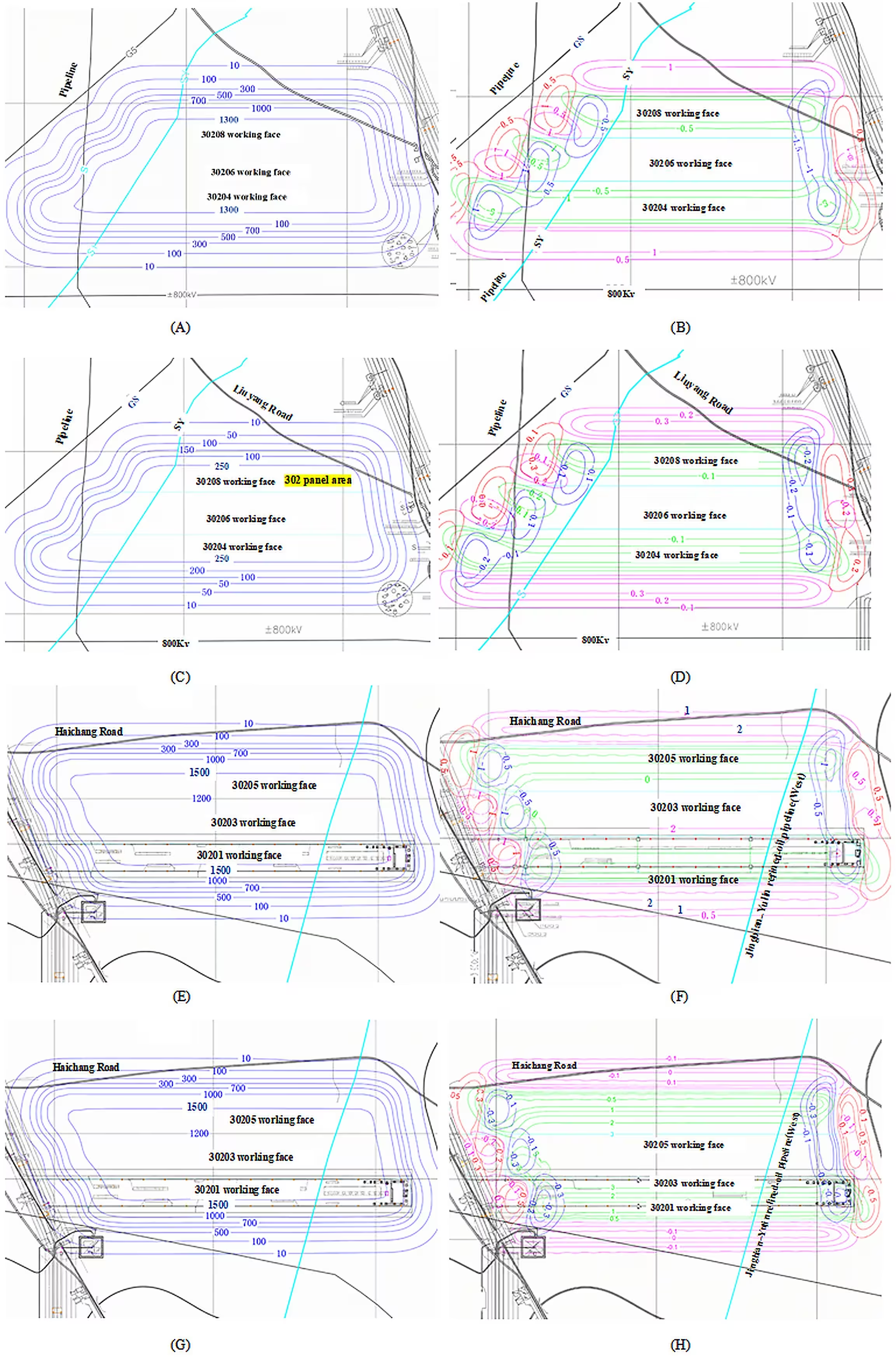
The simulations demonstrated that expanding mining operations from a single panel to three cumulative panels drastically increases both the subsidence amplitude and the ground deformation gradient. For the western pipeline branch, full-thickness single-panel extraction produced a maximum ground subsidence of 635 millimeters, while full-thickness extraction across three panels more than doubled subsidence to 1,480 millimeters. For the eastern branch, maximum subsidence under three-panel full-thickness mining reached 1,634 millimeters, accompanied by a peak combined stress of 946 megapascals, far exceeding the allowable safety limit of 261 megapascals.
When the investigators reduced the effective mining thickness to twenty percent of the full coal seam, the maximum combined stress dropped significantly. However, the reduction in stress was not strictly proportional to the reduction in mining thickness because internal operating pressure and temperature differences created a fixed baseline stress. Furthermore, soil spring yielding and interface slip caused the transfer of mining-induced additional stress to behave in a nonlinear fashion. Under the three-panel extraction scenario at twenty percent thickness, the western line reached a combined stress of 255 megapascals, placing it directly within the engineering critical safety zone.
What Are the Practical Limits and Proposed Safety Interventions for Energy Basins?
The findings indicate that relying solely on thickness-limited mining or protective coal pillars is insufficient to guarantee pipeline safety without active engineering interventions. To manage these risks safely, the authors proposed a hierarchical control strategy combining a 2.3-meter thickness limit with active ground protection measures. This protocol involves pre-mining pipeline positioning, weld reassessment, and wall thickness measurements to establish an accurate baseline.
As coal extraction advances, operators can perform targeted trench excavations to relieve overburden soil pressure and axial friction, providing physical space for vertical pipe deformation. In areas experiencing larger deformations, segmented support and controlled pipe lifting can restore proper pipeline alignment. A multi-source monitoring network utilizing satellite radar interferometry, ground-survey lines, pipeline strain sensors, and trench displacement instruments is recommended to track structural integrity throughout the mining process.
The research was published in PLOS One on November 23, 2026.
This article has been fact checked for accuracy, with information verified against reputable sources. Learn more about us and our editorial process.
Last reviewed on .
Article history
- Latest version
Reference(s)
- Liu, Tuanjie., et al. “Safety collaborative prevention and control technology for coal mining beneath oil pipelines.” PLOS One, vol. 21, no. 11, November 23, 2026, pp. e0363259 Public Library of Science (PLoS), doi: 10.1371/journal.pone.0363259. <https://doi.org/10.1371/journal.pone.0363259>.
Cite this page:
- Posted by Farah Siddiqui