Smart Braking Optimization Boosts Underground Mining Electric Vehicle Range
A novel chaotic optimization algorithm increases energy recovery by fifty percent in confined underground mining transport vehicles.
Underground mine electric rubber-tired vehicles operating in narrow tunnels struggle with short driving ranges and wasted braking energy, but a new smart control strategy could help. Researchers developed an advanced electro-hydraulic braking system optimization technique that increases energy recovery and extends battery life for underground mining transport.
Traditional diesel vehicles used in underground mining create serious ventilation and pollution issues, prompting a shift toward electric alternatives. However, these battery-powered transport vehicles face severe endurance limitations due to frequent stops, heavy payloads, and steep underground slopes. To solve this problem, a research team led by scientists from Chinese academic institutions designed an intelligent braking energy recovery framework.
The study is published in PLOS One, detailing a combined approach that integrates international braking safety regulations with metaheuristic optimization algorithms.
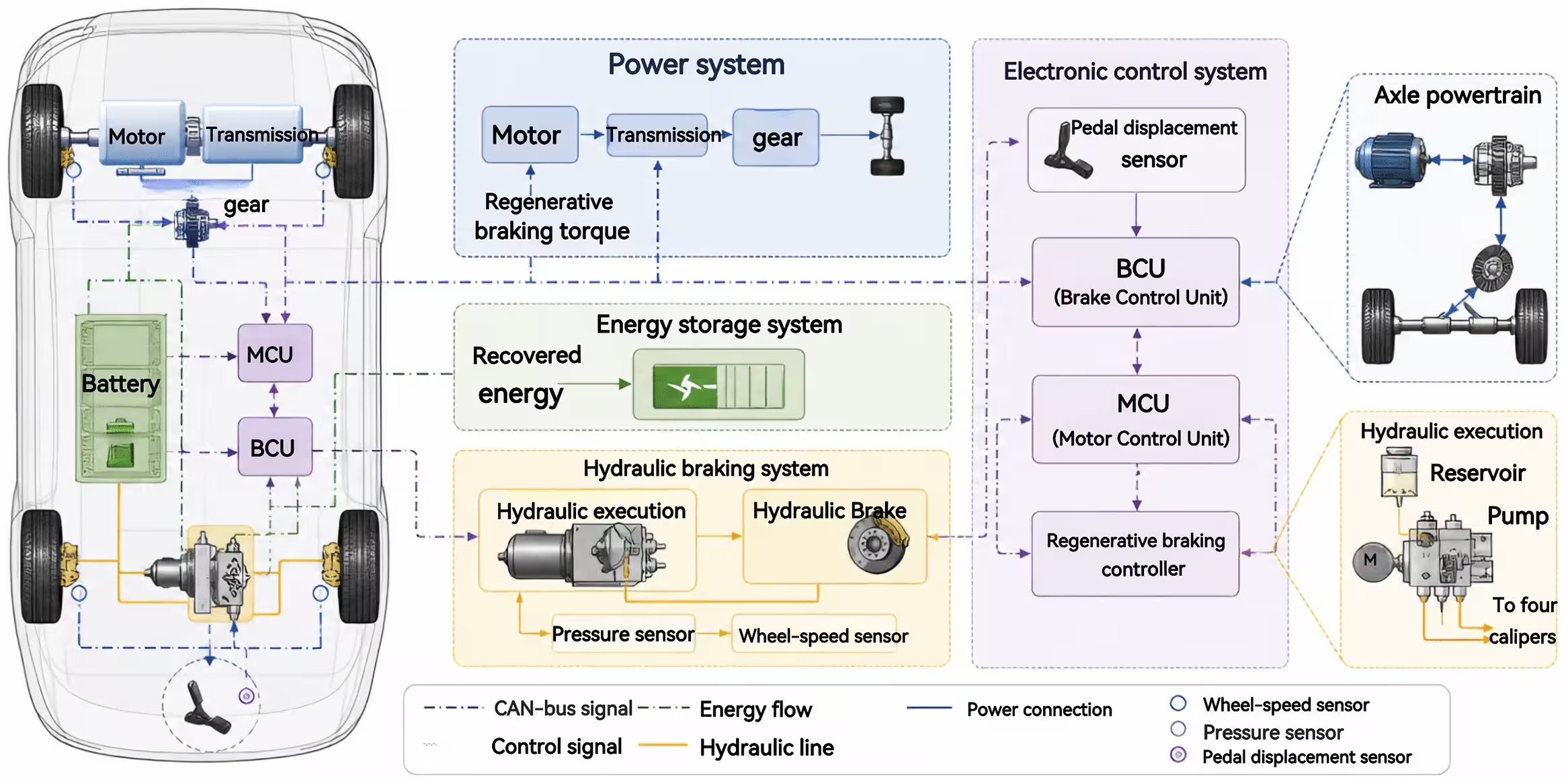
How Does The New Intelligent Braking System Work?
When an electric vehicle slows down, its traction motor can operate in reverse to act as a generator, converting kinetic energy back into electricity for the battery pack. However, managing this transition safely in a confined underground environment is difficult because traditional control systems rely on fixed rules that cannot adapt to changing road conditions or battery states.
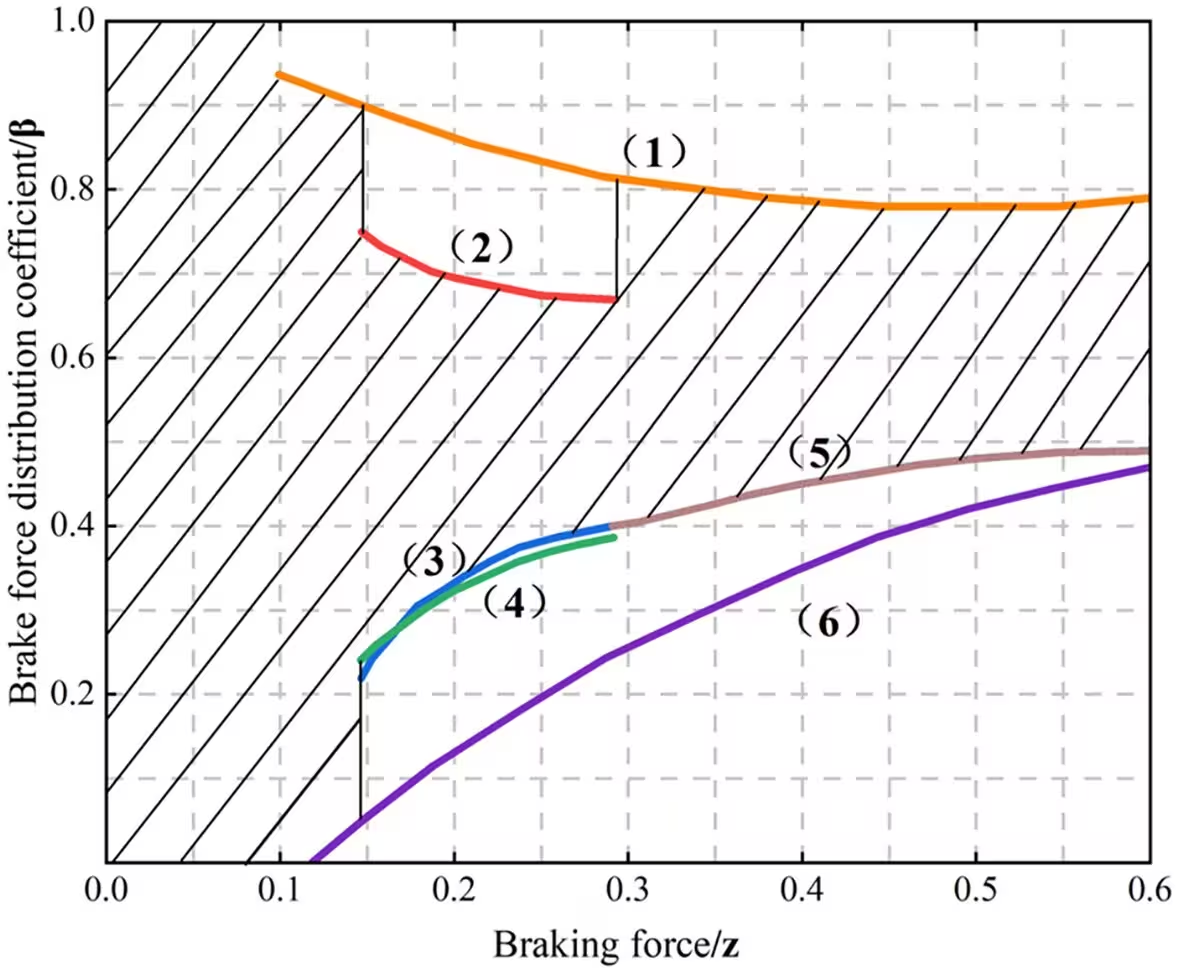
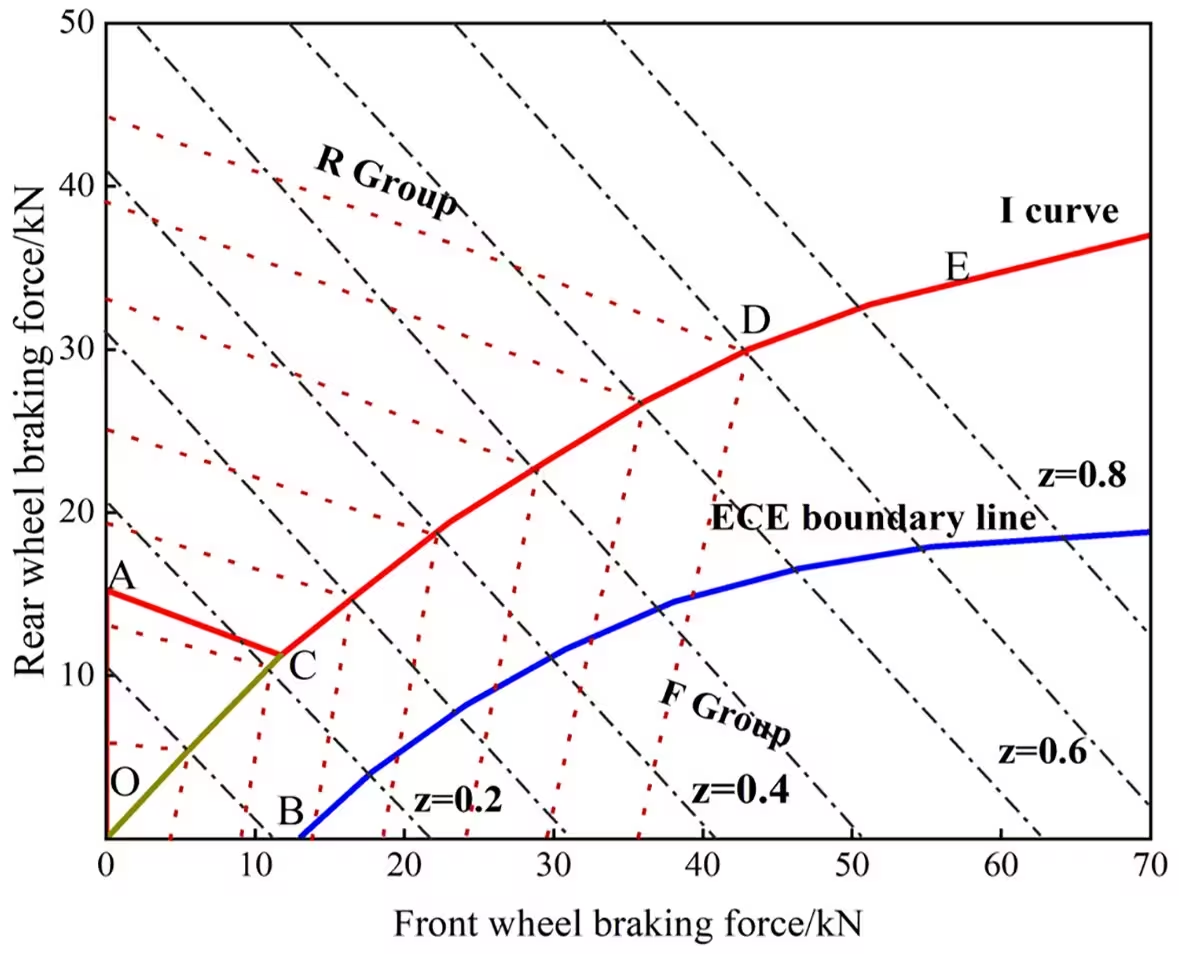
The research team established a front and rear axle braking force distribution strategy that complies with United Nations Economic Commission for Europe regulations to guarantee vehicle stability. They then designed a three-input fuzzy logic controller that evaluates braking intensity, vehicle speed, and battery state of charge in real time.
To eliminate the guesswork of manual tuning, the authors introduced an improved whale optimization algorithm enhanced with a chaotic search mechanism. This metaheuristic method automatically fine-tunes the forty-five parameters of the fuzzy controller’s membership functions, escaping local optimization traps and maximizing energy harvesting within strict safety boundaries.
What Results Did The Co-Simulation Deliver?
The research team evaluated their strategy through AVL-CRUISE and MATLAB Simulink co-simulations using a driving cycle adapted with actual slope data from a Shanxi Province coal mine. Under testing, the chaos-enhanced whale optimization algorithm recovered twenty-three hundred eighty-four kilojoules of energy, representing a fifty percent improvement over conventional fuzzy control.
The optimized control strategy increased the vehicle driving range by ten percent under mining-representative conditions. Furthermore, the system maintained proper front-wheel adhesion priority across mild, moderate, and emergency braking intensities, ensuring that higher energy recovery did not compromise vehicle safety or directional stability.
What Are The Next Steps For Underground Mining Fleets?
While the simulation results demonstrate clear operational benefits, several practical challenges remain before full field deployment. The team notes that real-world underground environments feature variable road adhesion, sensor noise, and communication delays that require further testing on hardware-in-the-loop test benches.
Future research will focus on developing dedicated driving cycles for mine electric rubber-tired vehicles using in-situ operational data and integrating real-time road condition recognition to adapt the fuzzy rule base dynamically. These advancements will bring zero-emission underground transportation closer to widespread commercial adoption.
The research was published in PLOS One on November 23, 2026.
This article has been fact checked for accuracy, with information verified against reputable sources. Learn more about us and our editorial process.
Last reviewed on .
Article history
- Latest version
Reference(s)
- Lu, Chao., et al. “Regenerative braking strategy for mine electric rubber-tired vehicles based on fuzzy control optimized by an improved whale optimization algorithm.” PLOS One, vol. 21, no. 11, November 23, 2026, pp. e0356162 Public Library of Science (PLoS), doi: 10.1371/journal.pone.0356162. <https://doi.org/10.1371/journal.pone.0356162>.
Cite this page:
- Posted by Divya Iyer