NASA To Drop Three Helicopters Into Mars Atmosphere In Bold New Hunt For Buried Ice
NASA is planning a groundbreaking mission to explore what may be hiding beneath the Martian surface, using technology unlike anything ever sent to Mars.
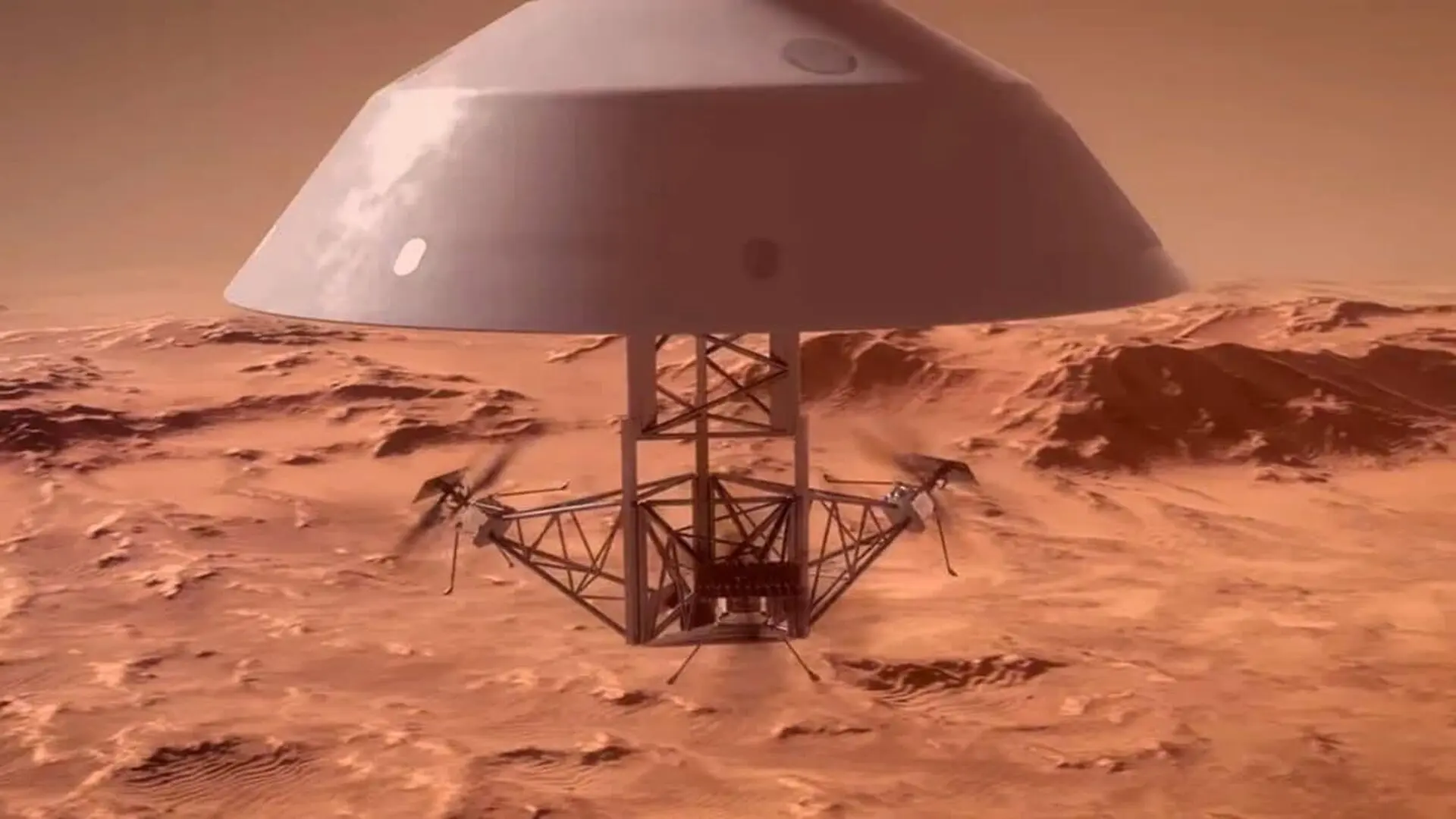
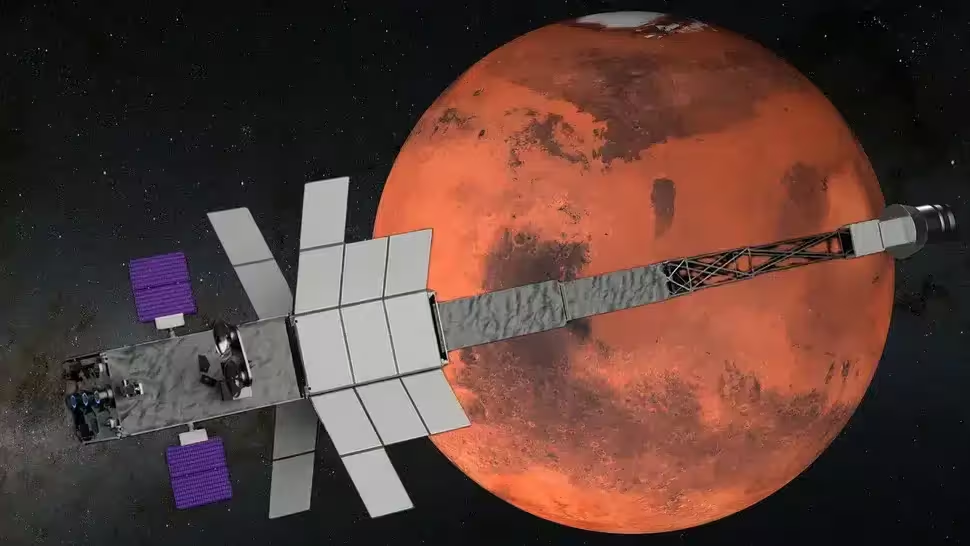
NASA is poised to escalate its aerial exploration of Mars with the upcoming SkyFall mission, a project designed to deploy a trio of helicopters capable of traversing regions previously inaccessible to surface rovers. Scheduled for a 2028 launch, the mission will utilize the nuclear-powered SR-1 Freedom spacecraft to transport the aircraft to the Red Planet, where they will investigate subterranean water ice, geological features, and localized atmospheric dynamics.
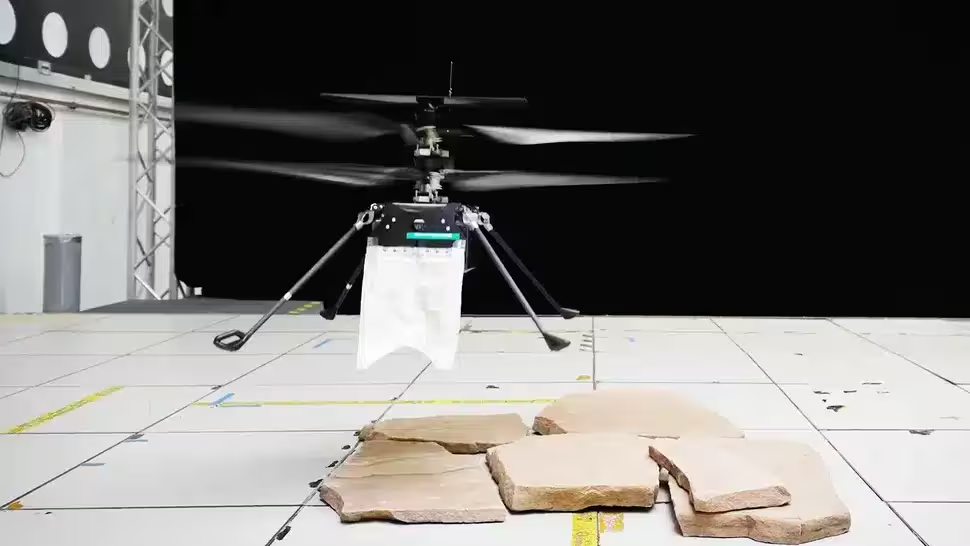
This initiative builds upon the legacy of Ingenuity, the pioneering rotorcraft that exceeded all expectations during its time with the Perseverance rover. While Ingenuity was originally conceived as a brief technology demonstration, it completed an impressive 72 flights before sustaining rotor damage. The lessons learned from this extended mission have been instrumental in shaping the development of the next generation of Martian aviation.
In a departure from traditional exploration strategies, the SkyFall mission will forgo the reliance on a rover for deployment. Instead, the helicopters will be released directly into the Martian atmosphere, a sophisticated maneuver managed through a partnership between NASA’s Jet Propulsion Laboratory (JPL) and AeroVironment.
Advanced Aerial Deployment and Reach
The logistics of the mission involve an entry capsule housed within the SR-1 Freedom spacecraft, which utilizes nuclear fission propulsion for the interplanetary transit. Upon arrival, the capsule is slated to release the three helicopters at an altitude of approximately 3,300 feet (1,000 meters). Each unit is designed to autonomously navigate its descent and landing. By eliminating the need for complex landers or rovers, the SkyFall maneuver aims to significantly lower the cost and operational overhead of sending advanced aircraft to Mars. Mission planners are targeting an arrival in the northern hemisphere during the spring, with flight paths carefully plotted to avoid the planet’s frequent dust storms.
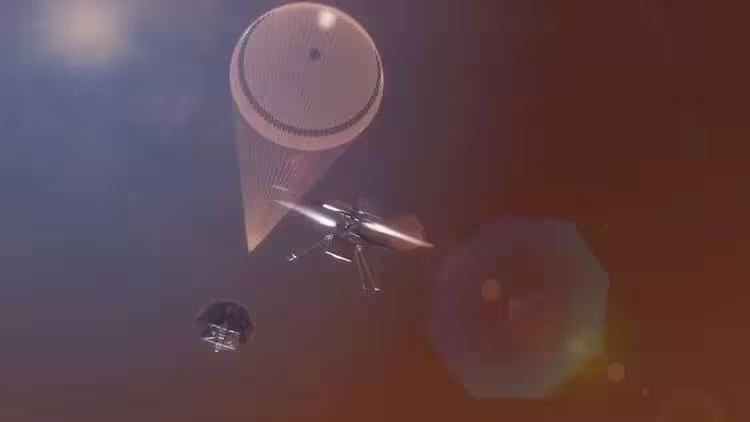
According to Jeff Rodrian, who leads the MacCready Works research division at AeroVironment, the project represents a paradigm shift. He noted to Space.com that the team is applying a high-volume, uncrewed systems mindset to planetary science, proving that Mars-capable helicopters can be produced as a repeatable product line rather than bespoke, one-off instruments.
Probing the Martian Subsurface
The primary scientific objective of the SkyFall mission is to characterize the materials hidden beneath the Martian surface. Each helicopter will be equipped with a suite of five scientific instruments, including navigation cameras and ground-penetrating radar. This radar technology is intended to identify shallow subsurface layers, such as buried ice or rocky deposits, that orbital sensors are currently unable to resolve with the same level of detail.
“The project has identified a design reference landing site that targets subsurface water ice deposits with glacial/periglacial terrains,” said Matthew Golombek, the project scientist at JPL.
Beyond mapping resources, the helicopters will employ a novel “Balloon Mode,” which allows them to drift with the Martian winds to gather atmospheric data without the need for specialized sensors. This research is expected to clarify the planet’s past climate conditions and assist in identifying areas of interest for potential future human exploration.
Expanding the Frontier of Exploration
Mission success relies on the ability of the helicopters to cover significant distance. Engineers have designed the aircraft to travel between 1 and 2 kilometers during each flight window, with a cumulative goal of traversing 200 to 300 kilometers over the course of the mission. While the baseline mission duration is six months, researchers are optimistic about extending operations to a full Earth year.
NASA is currently finalizing potential landing sites through a series of workshops planned for 2027. By selecting terrains that offer high scientific value while remaining traversable for aircraft, the agency hopes to maximize the return on this new class of exploration technology. As Will Pomerantz, head of Space Ventures at AeroVironment, observed, the capacity for helicopters to bypass terrestrial obstacles offers an unprecedented advantage in rapid, wide-area exploration.
This article has been fact checked for accuracy, with information verified against reputable sources. Learn more about us and our editorial process.
Last reviewed on .
Article history
- Latest version
Reference(s)
- Carney, Stephen. “SkyFall - NASA Science.”, July 14, 2026 NASA <https://science.nasa.gov/mission/skyfall/>.
- “JPL Science: Matthew Golombek.” <https://science.jpl.nasa.gov/people/golombek/>.
- Guido, Carlos. “AeroVironment: Proven Solutions Across Every Domain - AeroVironment.”, November 28, 2025 AeroVironment <https://www.avinc.com/>.
- “Jeffrey Rodrian.” School of Aeronautics and Astronautics - Purdue University <https://engineering.purdue.edu/AAE/people/alumni/oae/2026/profiles/jeffrey_rodrian>.
- David, Leonard. “NASA's SkyFall helicopters will 'show us parts of Mars we've never seen before', scientists say.”, October 15, 2026 Space <https://www.space.com/astronomy/mars/nasas-skyfall-helicopters-will-show-us-parts-of-mars-weve-never-seen-before-scientists-say>.
Cite this page:
- Posted by Aisha Ahmed