Rare Ghost of the Andes Caught on Camera Again in Major Conservation Win
Rare footage of the elusive Andean mountain cat, known as the ghost of the Andes, highlights a decades-long conservation effort in Argentina’s wilderness.
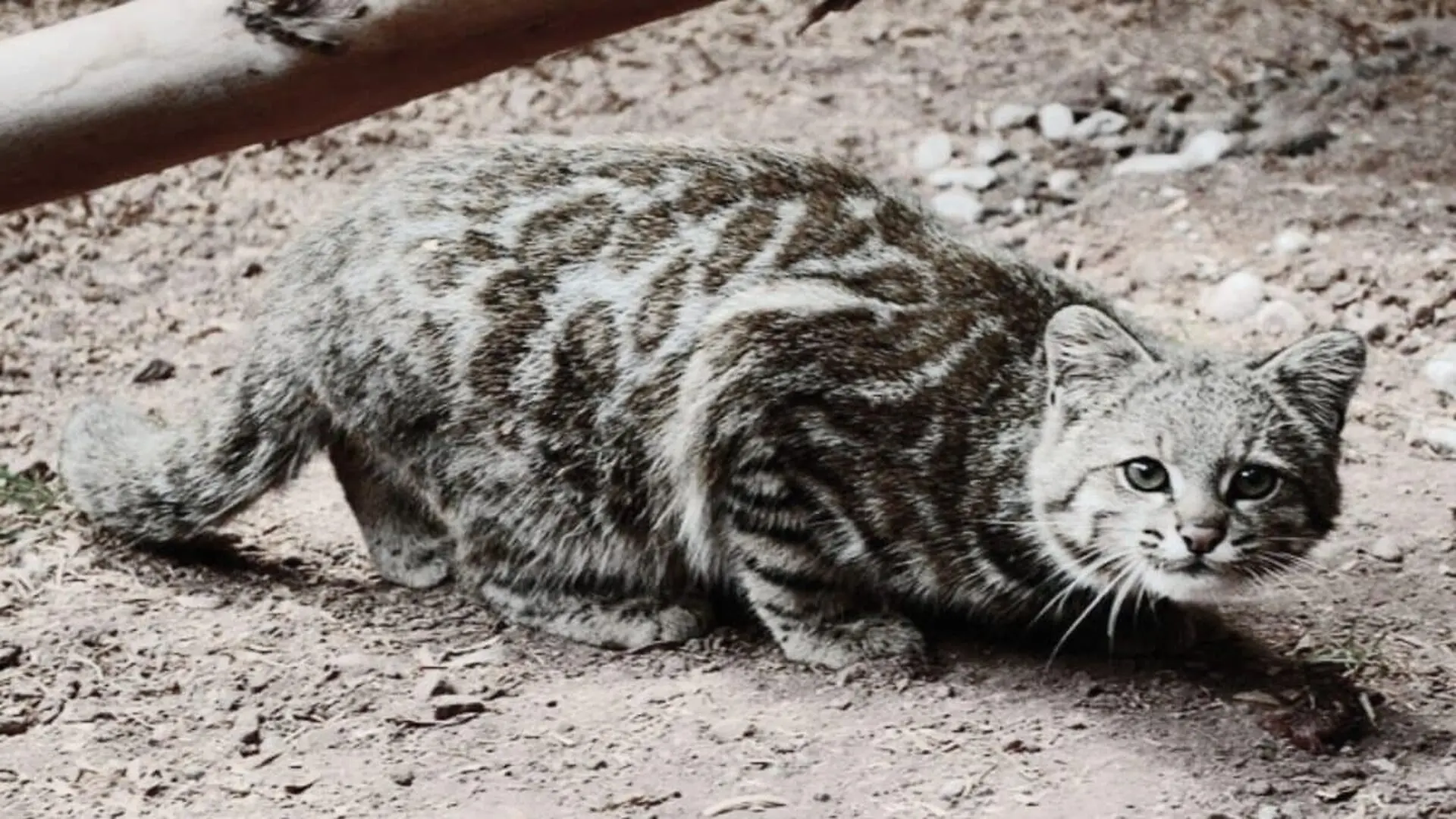
The Andean cat, one of the planet’s most elusive and threatened feline species, has been captured on camera once again in Argentina’s Mendoza province. This latest sighting, recorded on May 12, 2026, marks the third consecutive year that researchers have successfully documented the animal in this region, reinforcing the importance of ongoing monitoring efforts near the La Payunia Protected Natural Area.
Often referred to as the “ghost of the Andes,” the Andean cat (Leopardus jacobita) is notoriously difficult to track due to its solitary nature and specialized habitat. With global population estimates currently hovering below 2,200 individuals, according to WCS Argentina, every documented appearance provides vital data for conservationists working to prevent the extinction of this high-altitude predator.
Tracking the Elusive Predator
The most recent images were obtained in the Malargüe department, where motion-sensitive cameras were deployed in rugged, rocky terrain that serves as prime camouflage for the feline. While researchers had previously lacked photographic evidence for this specific location, the detection was prompted by anecdotal reports from local livestock farmers. This collaboration between scientists and the rural community has become a cornerstone of the research strategy that has been in place since 2005.
María José Bolgeri, a biologist and manager of regenerative management at WCS Argentina, noted that the discovery underscores the effectiveness of current habitat studies. By mapping the species’ distribution, the team can better understand the specific environmental needs of the cats, which typically inhabit elevations between 3,800 and 5,180 meters, though they have been observed at lower altitudes in Patagonia.
Mitigating Human-Wildlife Conflict
The long-term survival of the Andean cat is closely tied to the human populations that share its environment. Historically, conflicts between mountain predators and livestock producers have been a significant cause of mortality for the cats, with half of the historical records in northern Patagonia involving animals killed by ranchers seeking to protect their herds. Other persistent threats to the species include habitat degradation caused by extractive industries, climate change, and dwindling populations of mountain viscachas, the cat’s primary prey.
To combat these threats, conservationists have moved away from punitive measures, instead working directly with 90 local livestock producers to implement nonlethal deterrents. These strategies include the deployment of livestock guardian dogs, the reinforcement of enclosures, and the use of strategic nighttime lighting. The results have been promising: 84 percent of participating farmers reported fewer livestock losses, and 89 percent confirmed they had ceased the practice of hunting carnivores and scavenging birds.
A rare mountain moment you’ll want to watch twice.
— Nature & Animals (@NatureIs_Metal) July 31, 2026
An elusive Andean cat mother and her fluffy kitten make their way down the mountainside-pausing just long enough to look into the camera. pic.twitter.com/pdx5bu5bk2
Beyond predator management, land protection remains a primary focus. In March 2025, a collaborative effort involving WCS Argentina and Greater Good Charities secured roughly 40,000 hectares of private land for incorporation into Mendoza’s public domain. As Fernando Miñarro, WCS Argentina’s manager of terrestrial protected areas, has noted, the future of the Andean cat depends on creating a conservation network that functions effectively both inside and outside the boundaries of formal nature reserves.
This article has been fact checked for accuracy, with information verified against reputable sources. Learn more about us and our editorial process.
Last reviewed on .
Article history
- Latest version
Reference(s)
- “Nuevo hallazgo de gato andino consolida a Malargüe como un área clave para su conservación.” <https://argentina.wcs.org/es-es/Quienes-somos/Noticias/articleType/ArticleView/articleId/26180.aspx>.
- “WCS Argentina > Quiénes somos > Equipo > Conservación terrestre.” <https://argentina.wcs.org/es-es/Qui%C3%A9nes-somos/Equipo/Conservaci%C3%B3n-terrestre.aspx>.
- “https://twitter.com/NatureIs_Metal/status/2083097661905965139/video/1.” <https://t.co/pdx5bu5bk2>.
Cite this page:
- Posted by William Moore