86,000-Year-Old Flint Tools Discovered in Turkey Shed Light on Early Human Life
New finds in a Turkish prehistoric cave reveal human occupation dating back tens of thousands of years.
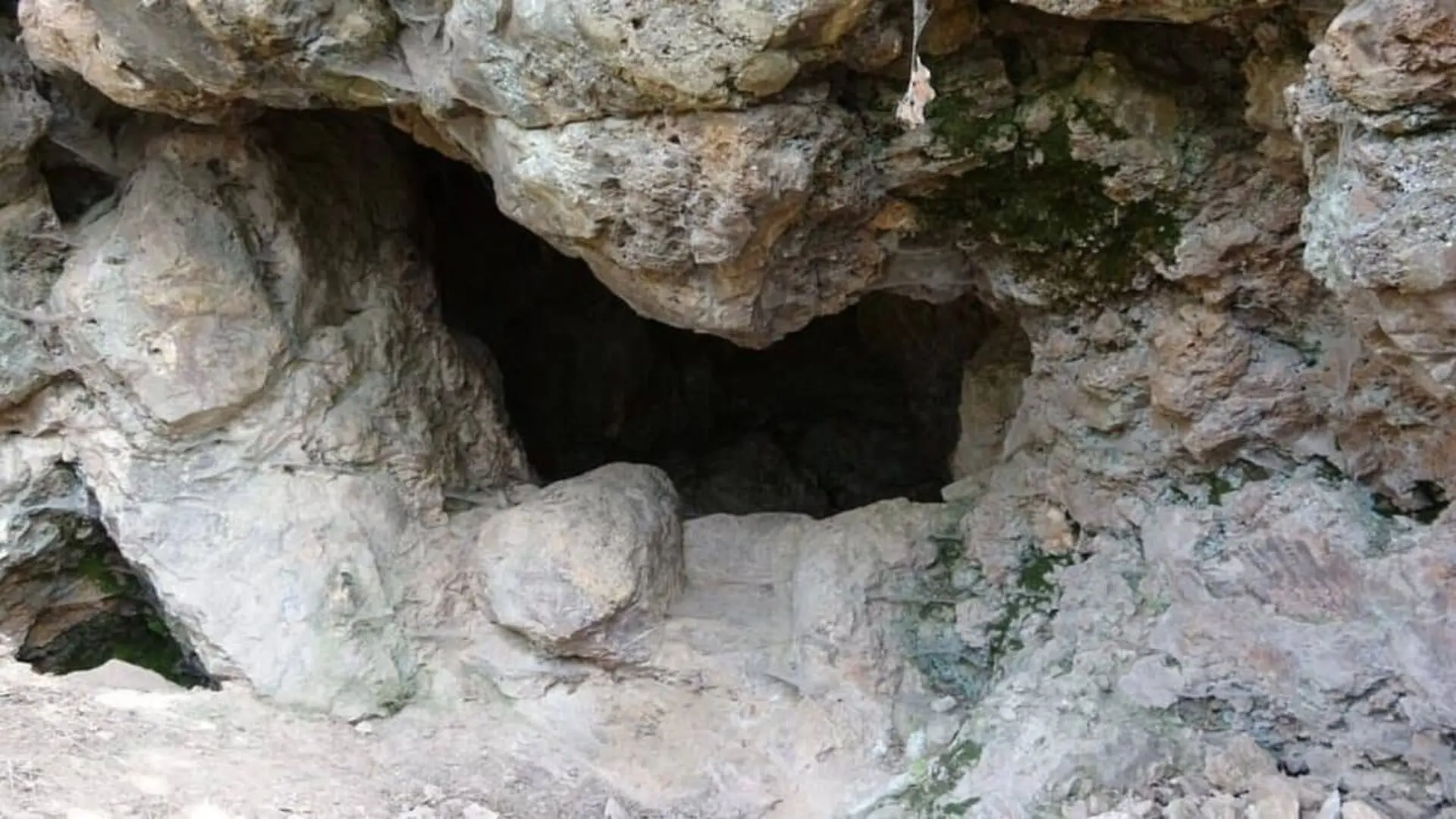
Archaeologists have dated human activity at İnkaya Cave in northwestern Turkey to around 86,000 years ago, uncovering a substantial assemblage of flint tools that illuminate Middle Paleolithic lifeways.
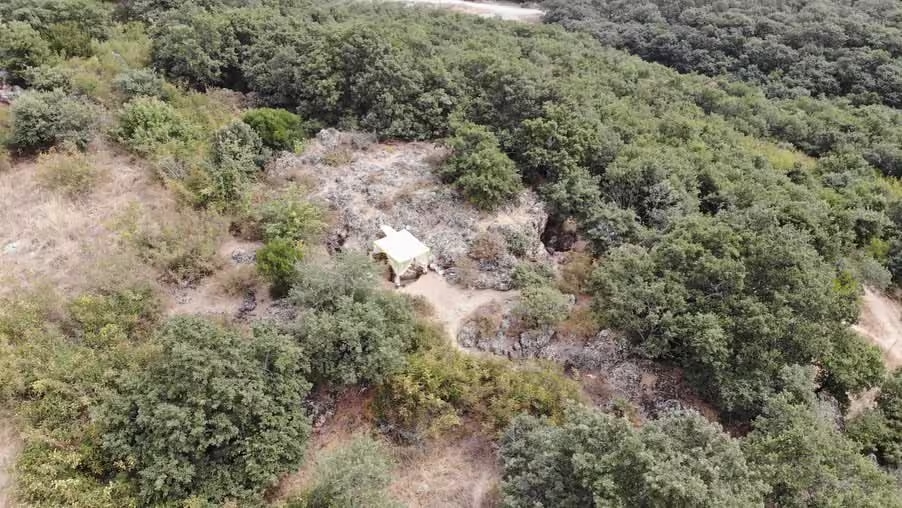
The site sits on the outskirts of Bahadırlı village in the Çan district of Çanakkale province, a region now emerging as a key locus for studying early human movement between Anatolia and the Balkans.
First recorded in 2016 during the Muğla and Çanakkale Provinces Survey led by Ankara University paleoanthropologist İsmail Özer, the cave has since been the focus of six years of systematic excavations.
A multidisciplinary team of twenty specialists has concentrated on the cave’s eastern slopes, where the oldest stratigraphic layers yielded the 86‑thousand‑year‑old evidence. These layers correspond to the Middle Paleolithic period, a span from roughly 250,000 to 50,000 years ago.
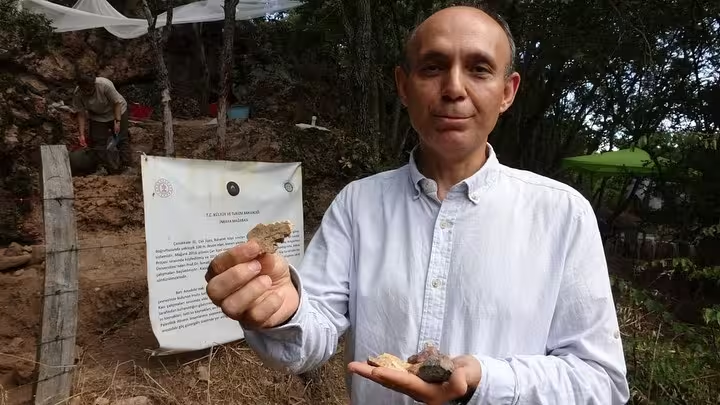
Professor İsmail Özer emphasized that the findings overturn previous assumptions about Çanakkale’s prehistoric record, noting that the province now ranks among Turkey’s richest areas for Paleolithic discoveries despite a historic bias toward open‑air sites.
Researchers argue that İnkaya Cave offered more than a fleeting shelter; the natural availability of flint and a reliable water source likely encouraged prolonged occupation by early groups.
Among the recovered artifacts are dozens of flint pieces of varying shapes, suggesting a diversified toolkit rather than a single‑purpose set. A particularly notable find is a toothed implement that may have functioned similarly to a modern saw, while other pieces appear to have been fitted with handles—potentially attached to wooden shafts, bone fragments, or horns using resin.
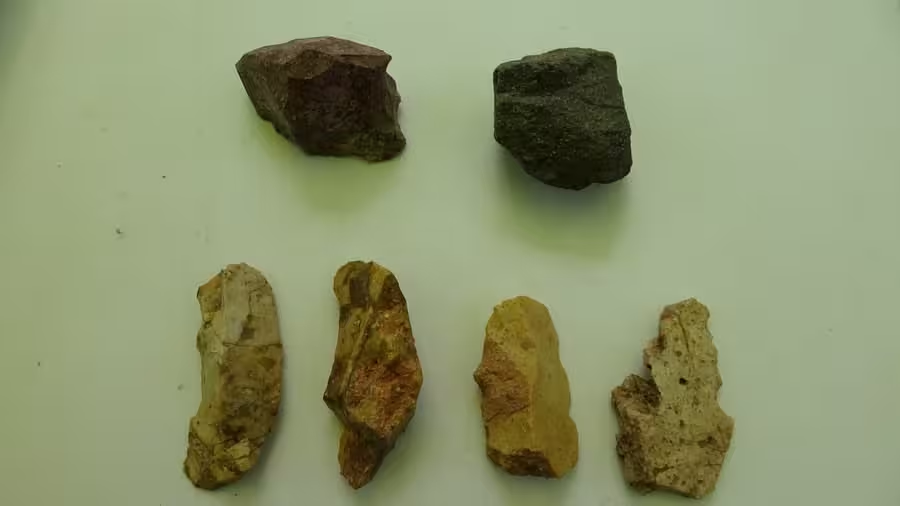
The manufacturing sequence involved careful thinning of stone cores and precise edge modification, producing tools suited for tasks such as soil excavation or skin processing. Ongoing microscopic analyses aim to detect wear patterns that could confirm these functional hypotheses.
To date, no organic material—such as human bones, animal remains, or plant residues—has been recovered from the cave, a gap that limits direct insight into the diet and daily routines of its occupants.
The convergence of geological advantages and the presence of raw flint makes İnkaya Cave a strategic locale for repeated use, offering a rare window into how early humans exploited local resources while navigating the broader Anatolian‑Balkan corridor.
This article has been fact checked for accuracy, with information verified against reputable sources. Learn more about us and our editorial process.
Last reviewed on .
Article history
- Latest version
Cite this page:
- Posted by Vikram Desai