New Study Suggests Venus May Have Covered 90
Geologists propose Venus once hosted massive oceans, challenging views of its ancient climate and habitability, hinting at past life potential.
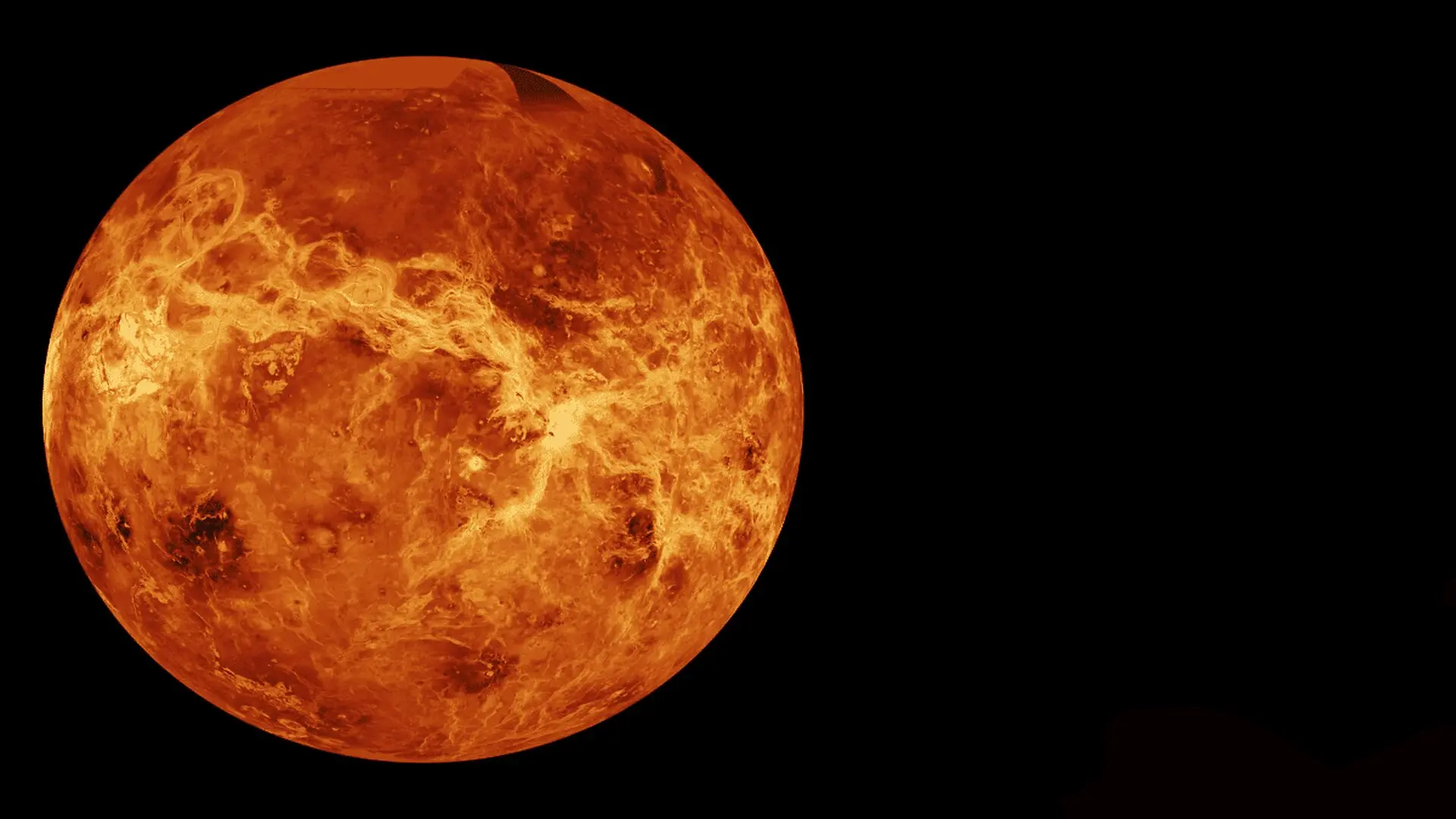
For many years Venus has been portrayed as a hostile world of crushing pressure, scorching temperatures and clouds of sulfuric acid. A recent paper in Earth & Planetary Science Letters challenges that image, proposing that the planet’s early surface may once have been dominated by vast oceans. The study interprets ancient landforms as possible remnants of a watery past, opening fresh debate about the planet’s climate history and its brief habitability potential.
Tesserae Structures Point to a Once‑Wet Surface
The investigators focused on Venus’s oldest terrains, the highly deformed regions known as tesserae. Unlike the smoother volcanic plains that cover most of the planet today, these rugged blocks display patterns that the authors argue resemble continental margins shaped by large bodies of water. By mapping the shapes and spread of these features, the team suggests they could be the fossilized outlines of ancient shorelines.
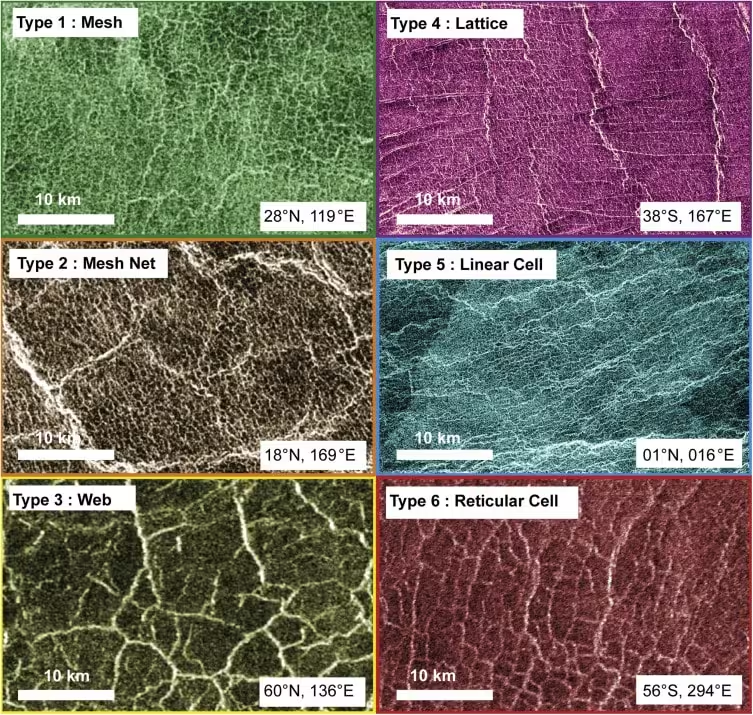
According to the authors, up to 90 percent of Venus’s surface could have been submerged under water before a dramatic climatic shift transformed the planet into the extreme environment we see today. If correct, this would constitute one of the most compelling geological arguments for long‑lived surface water on the planet.
“While the interpretation of these features is not unambiguous,” writes a team led by geologist Richard Ghail of the University of London in the UK, “there is a compelling case that Venus once supported oceans, and perhaps life, across most of its surface.”
The authors acknowledge that alternative scenarios cannot be ruled out, especially since no direct samples of Venus’s ancient crust exist. Nevertheless, they argue that the suite of observed landforms aligns more naturally with an oceanic history than with a model of a permanently arid, volcanic world.
Revisiting Assumptions About Venus’s Early Climate
Published in Earth & Planetary Science Letters, the paper contests the long‑standing belief that Venus never retained significant surface water after its formation. The researchers propose that the planet may have enjoyed temperate conditions for hundreds of millions, or perhaps billions, of years before entering a runaway greenhouse phase that elevated its surface temperature beyond any known planetary limit.
Recent climate models have shown that early Venus could have maintained moderate temperatures if cloud dynamics, atmospheric circulation, and solar input interacted differently from today’s configuration. The identification of possible ocean‑related landforms now provides a tangible geological anchor for those theoretical scenarios.
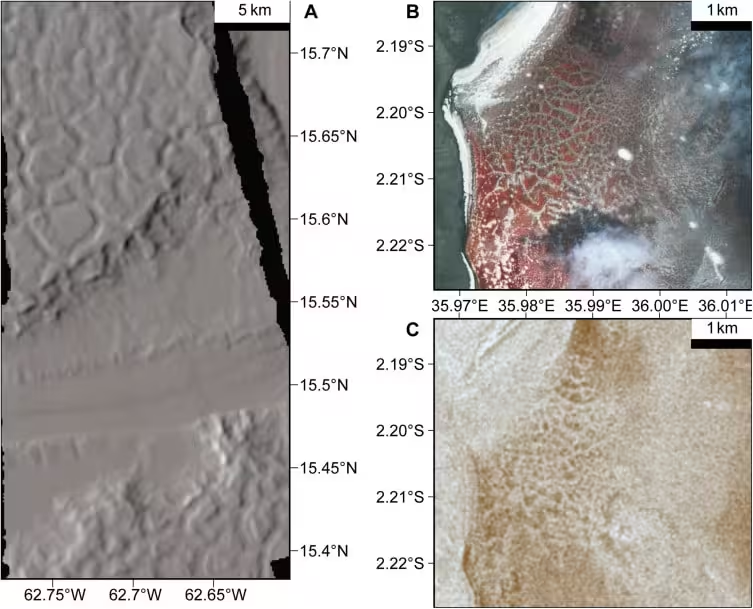
Venus and Earth share a common origin, similar sizes, and comparable bulk compositions, yet their evolutionary tracks have diverged dramatically. Pinpointing why Venus lost its water while Earth retained it is now a central question in planetary science.
Upcoming missions such as NASA’s VERITAS and ESA’s EnVision will deliver high‑resolution radar maps and in‑situ measurements that could confirm—or refute—the oceanic interpretation of the tesserae.
Implications for Ancient Habitability
If Venus did sustain stable oceans for an extended interval, the planet becomes a far more attractive target in the search for ancient life. Liquid water is a cornerstone for biology, and the possibility that a Venusian biosphere could have emerged before the planet’s climate collapse invites speculation about microbial survival under extreme conditions.
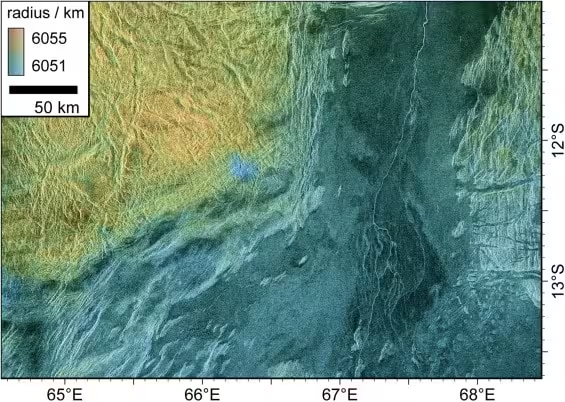
On Earth, microbial life was already established within the first few hundred million years after the planet’s formation. If Venus experienced a comparable window of habitability, it is plausible that simple organisms could have arisen before the runaway greenhouse erased them.
“On Earth, life was well-established by that time; the possibility that a runaway greenhouse might have eradicated it on Venus has profound implications for our own future and for life outside the Solar System,” the researchers write.
The scenario underscores the broader relevance of Venus for exoplanet studies. Many rocky worlds orbiting other stars sit in zones where liquid water could exist, yet subtle variations in atmospheric evolution can drive them toward drastically different outcomes.
Lessons for Climate Science and Future Exploration
Understanding how a temperate planet can transition into a hostile, high‑temperature world offers valuable clues for Earth’s own climate trajectory. While the mechanisms differ, the Venusian case provides a natural laboratory for testing theories of planetary stability and greenhouse runaway.
The next generation of Venus missions will map the planet’s surface with unprecedented detail, measure atmospheric composition, and possibly retrieve samples from the ancient tesserae. Whether these formations prove to be the relics of ancient seas or something else, they promise to deepen our comprehension of planetary evolution.
In any outcome, Venus remains a key piece of the Solar System’s history, holding clues to one of the most dramatic environmental transformations known. Decoding that record will illuminate how habitable worlds arise, transform, and sometimes vanish.
This article has been fact checked for accuracy, with information verified against reputable sources. Learn more about us and our editorial process.
Last reviewed on .
Article history
- Latest version
Cite this page:
- Posted by Vikram Desai