How Nazi Researchers Tried to Turn Swedish Rock Art Into Aryan Scripture
Nazi archaeologists distorted Bronze Age rock carvings, falsely claiming these ancient artworks were encoded messages from a mythical master race.
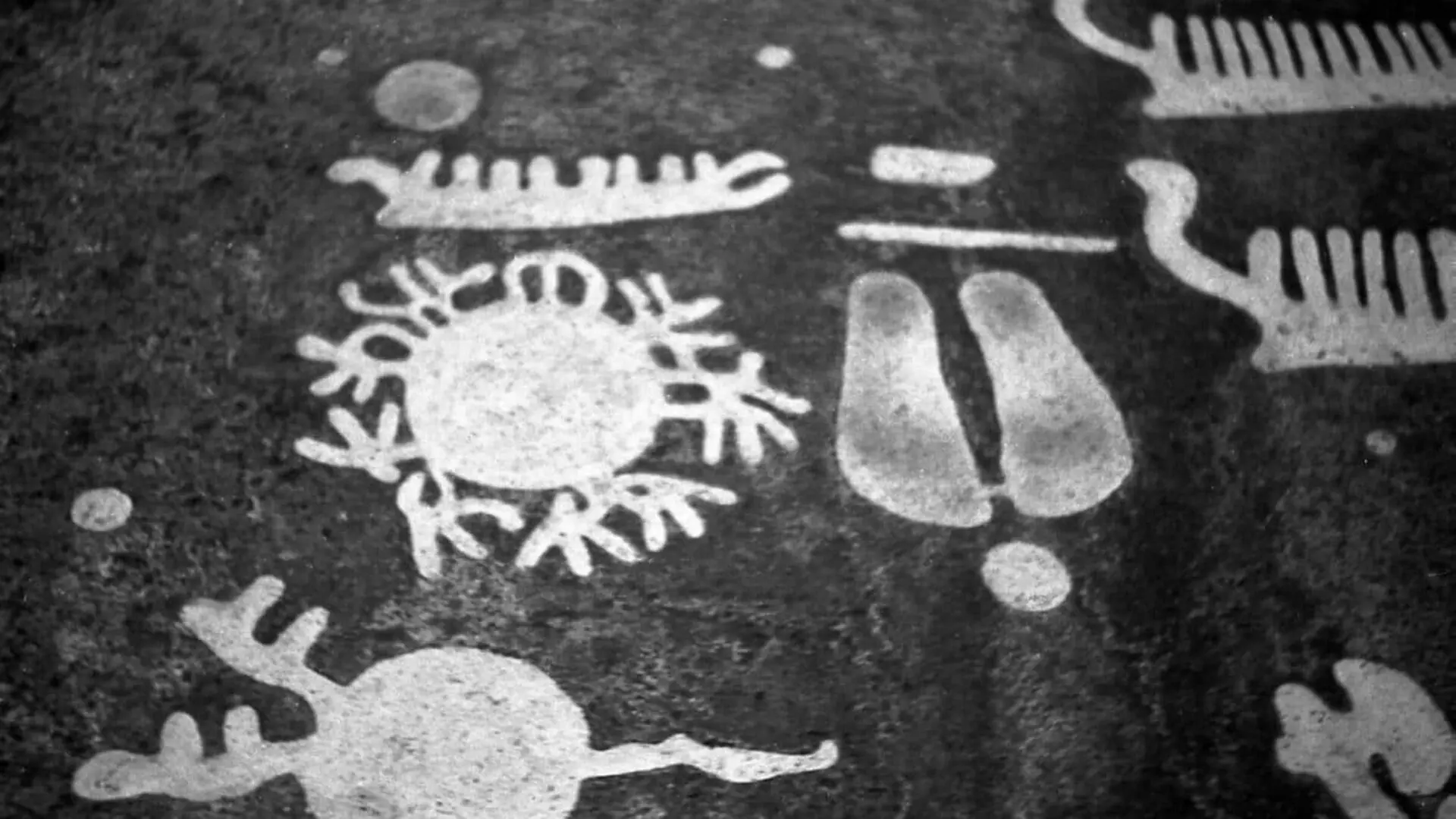
During the 1930s, the Nazi organization known as the Ahnenerbe launched an ambitious but scientifically baseless crusade to fabricate a foundational myth for the German people. Led by Heinrich Himmler and the controversial scholar Herman Wirth, the group sought to prove that a superior Nordic race had migrated from a mythical sunken continent, leaving behind evidence of their divine origins etched into Scandinavian stone.
This project was deeply rooted in the völkisch movement, a nationalist ideology that had been gaining traction in Germany since the 19th century. Proponents argued that modern German and Scandinavian populations were the direct descendants of a prehistoric Atlantean civilization, a master race whose cultural integrity had allegedly been compromised by centuries of societal mixing.
Propaganda in Plaster: The Fabrication of Aryan Relics
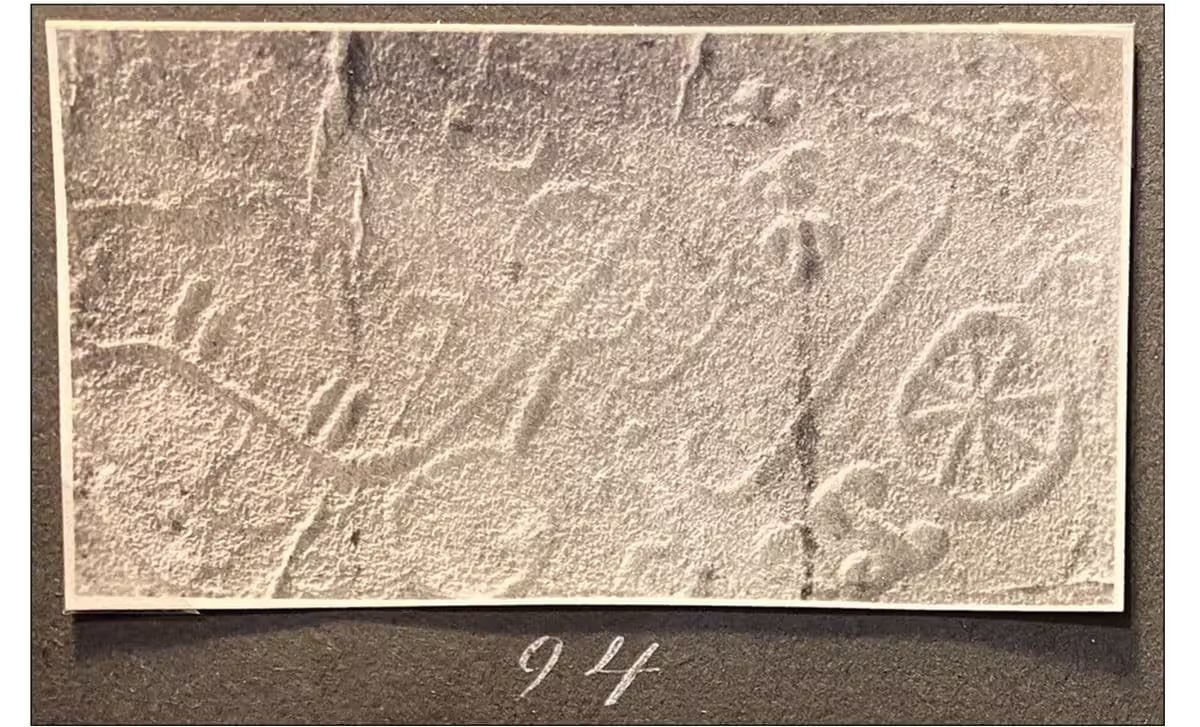
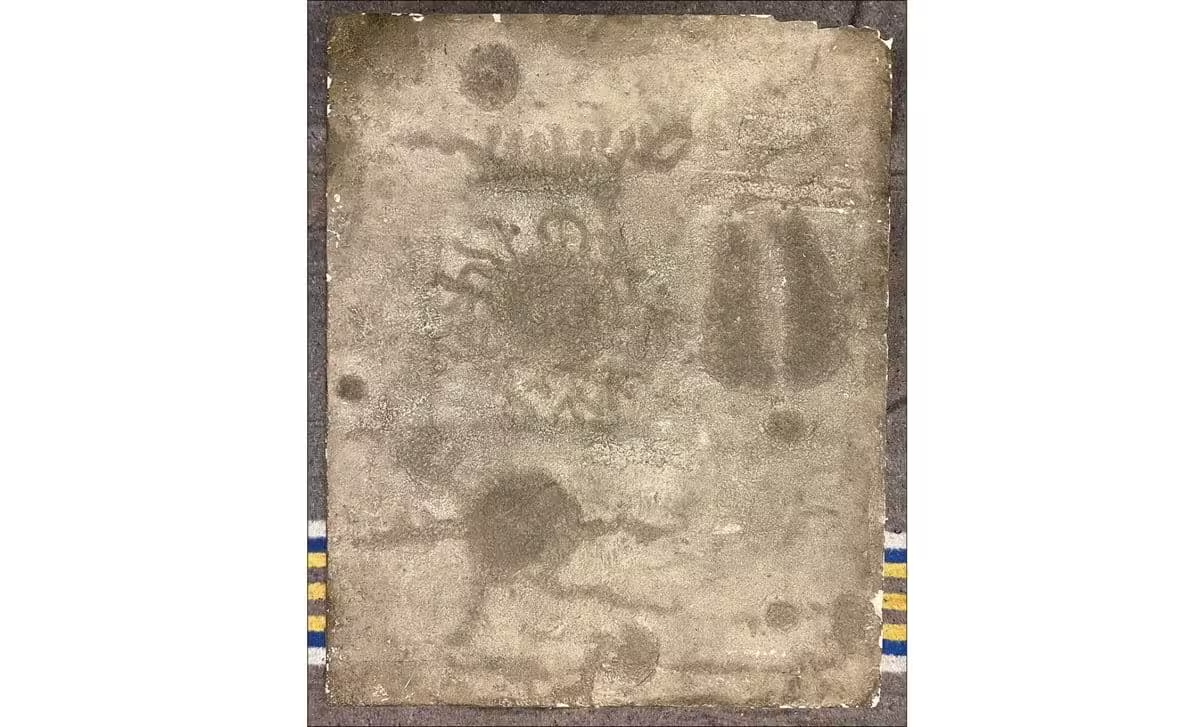
In 1936, Wirth embarked on an extensive tour of Scandinavia to secure tangible evidence for these theories. He produced 221 plaster casts of Bronze Age rock art, focusing primarily on the carvings found in the Bohuslän region along Sweden’s western coast.
Research conducted by Uppsala University archaeologist Mattias Legnér, who analyzed the surviving casts and associated archival records, suggests that Wirth intended to use these replicas to transform the German landscape. The scholar envisioned an expansive, open-air museum where the prehistoric replicas would serve as the foundational “holy scripture” for a revived Aryan society.
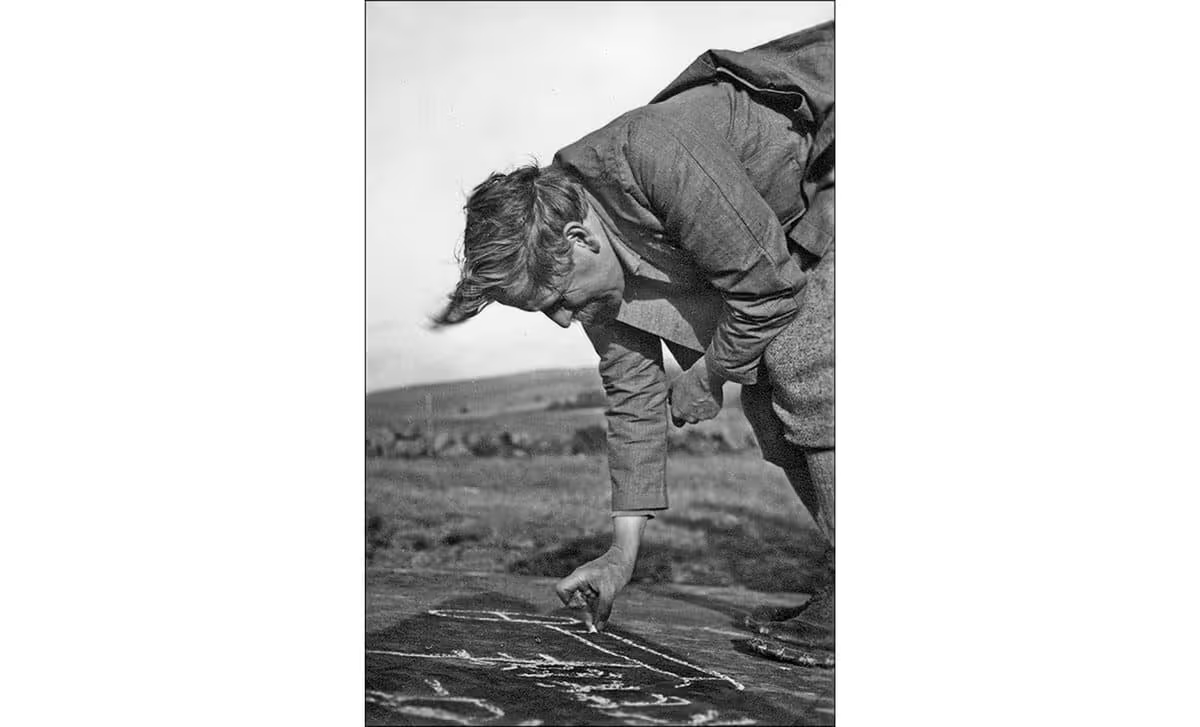
Wirth and Himmler asserted that these petroglyphs represented the world’s oldest written language, functioning as proof of the Nordic race’s inherent superiority. In one instance, Wirth interpreted a specific carving of feet as the Indo-Germanic “God son,” explicitly drawing a parallel to the figure of Jesus Christ within Judeo-Christian theology.
Engineering an Agrarian Utopia
The proposed museum was designed to be more than a display of archaeological curiosities. According to the study by Legnér, the site was intended to serve as a propaganda tool that would encourage a retreat from urban modernity, capitalism, and communism, in favor of a romanticized, agrarian lifestyle rooted in so-called “primordial” traditions.
Internal Friction and the Collapse of the Vision
Despite significant backing from the Ahnenerbe, the project never moved beyond the planning stages. Internal conflict eventually severed the relationship between Wirth and Himmler after Wirth suggested that women had held significant spiritual and political authority in ancient Germanic society—a claim that clashed with the Nazi leadership’s own patriarchal worldviews.
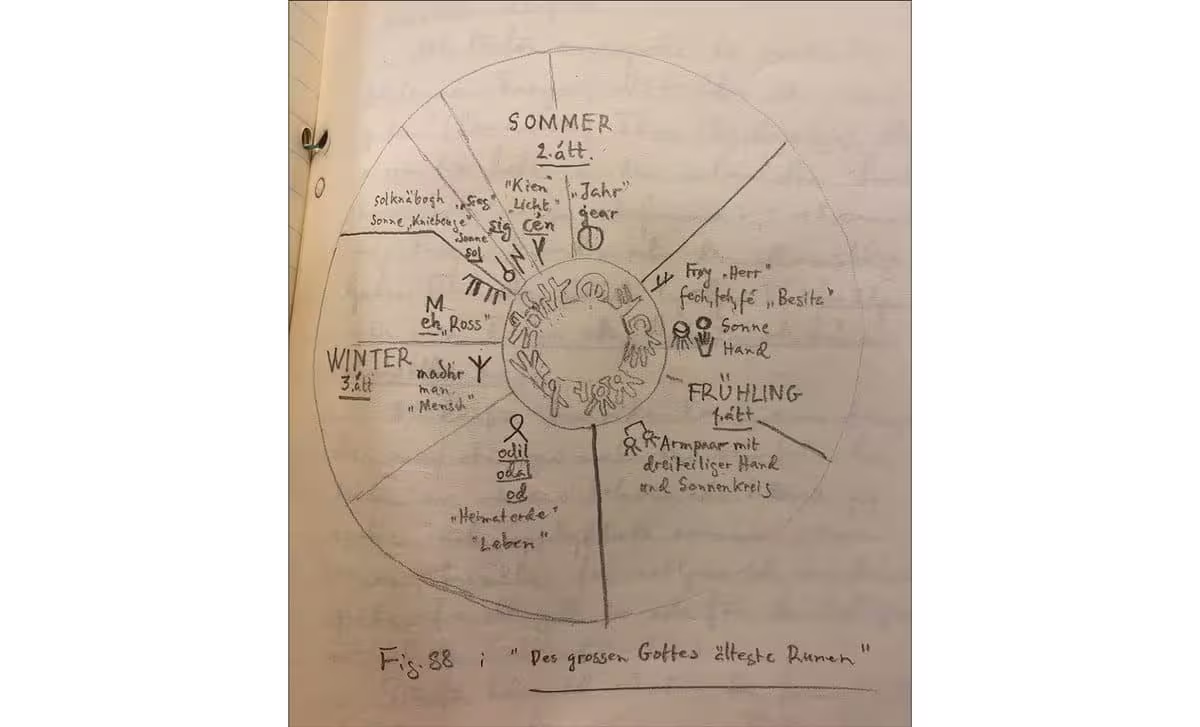
Wirth was subsequently dismissed from the organization, and the museum project was abandoned. While the effort failed, the surviving plaster casts serve as a stark historical reminder of how easily the physical record of the past can be manipulated to serve destructive, modern ideological ends.
This article has been fact checked for accuracy, with information verified against reputable sources. Learn more about us and our editorial process.
Last reviewed on .
Article history
- Latest version
Reference(s)
- Legnér, Mattias. “Nordic rock art and Nazi mythology: the Ahnenerbe and the search for Germanic origins | Antiquity | Cambridge Core.”, pp. 1-17. Cambridge Core, doi: 10.15184/aqy.2026.10430. <https://www.cambridge.org/core/journals/antiquity/article/nordic-rock-art-and-nazi-mythology-the-ahnenerbe-and-the-search-for-germanic-origins/78C0A6F87254AD080206C38A8A91B1C7>.
Cite this page:
- Posted by Vikram Desai