Forgotten Papyrus Fragment Reveals Secret Origins of a Famous Roman Masterpiece
A newly discovered 1st-century BCE papyrus reveals 30 unknown verses by Empedocles, shedding fresh light on his influence on the Roman poet Lucretius.
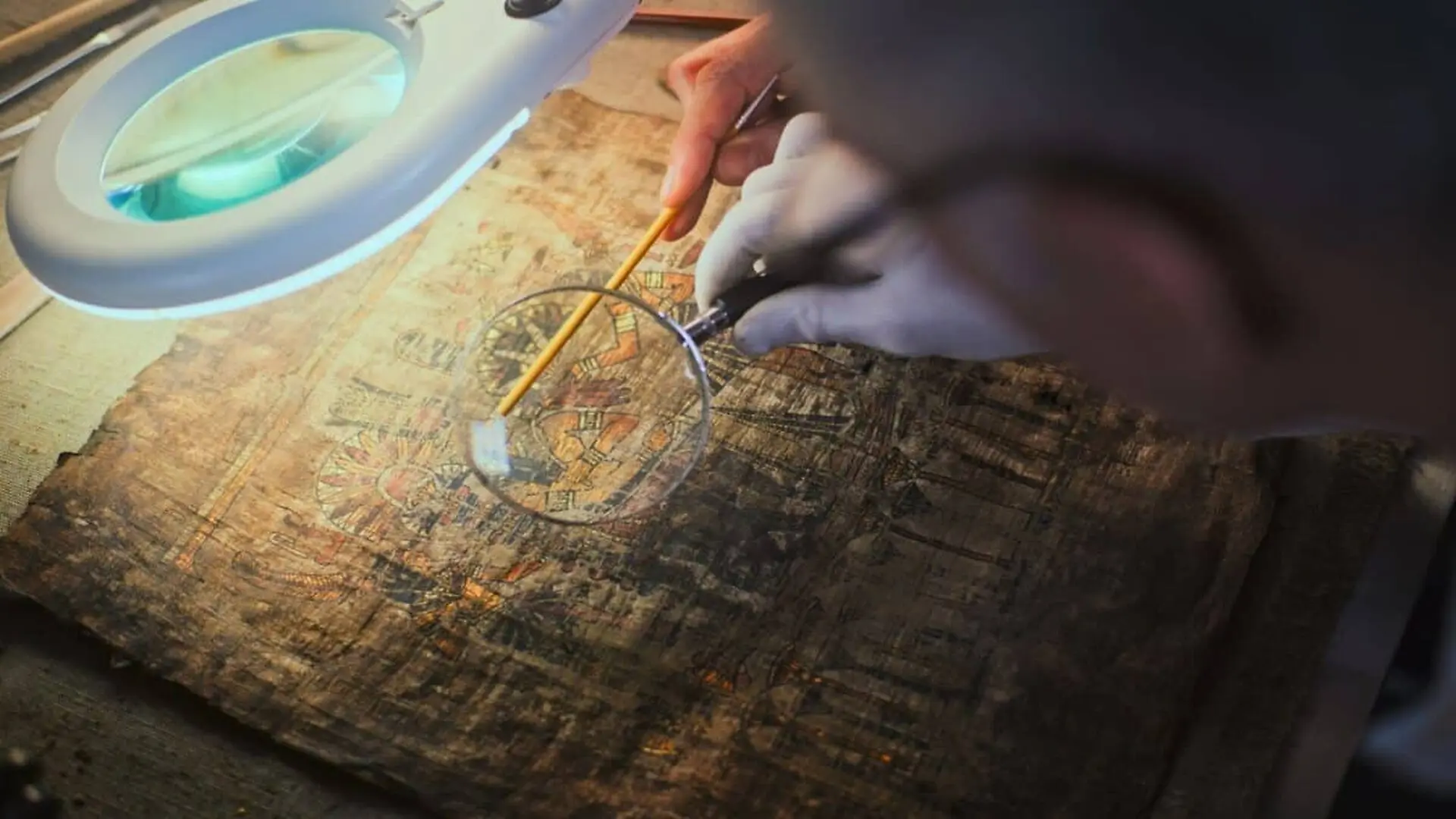
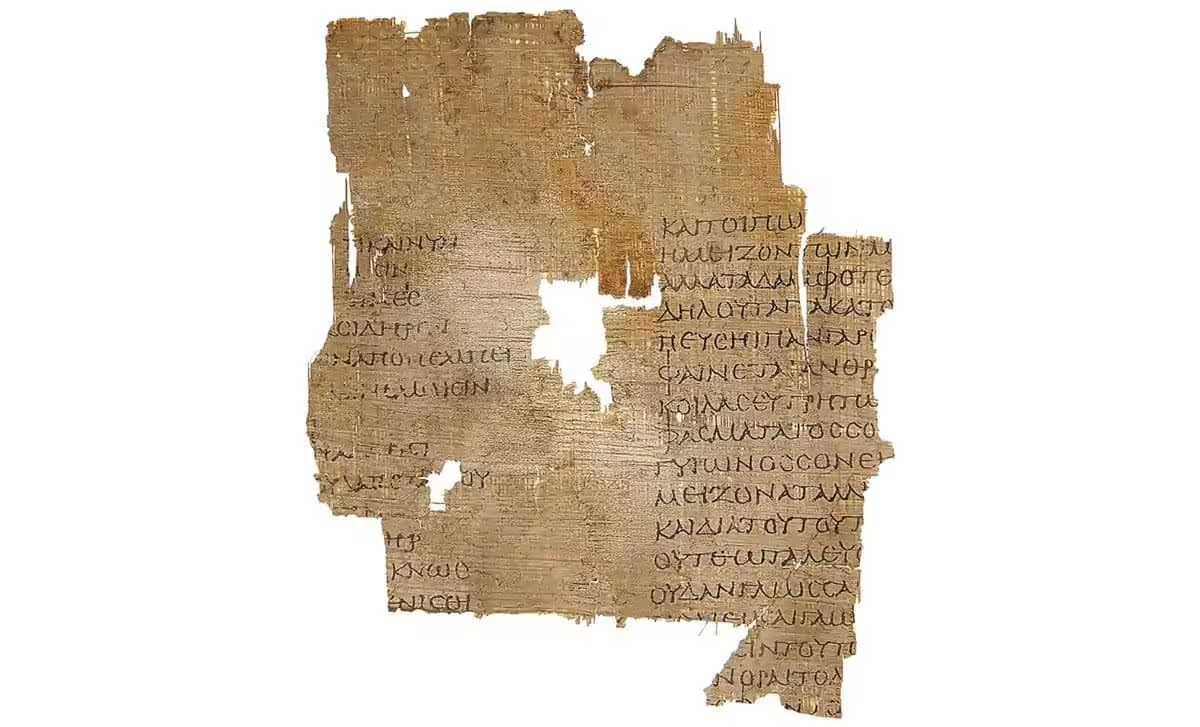
A long-overlooked papyrus fragment housed in Cairo has provided a critical breakthrough in our understanding of how ancient Greek thought shaped Roman literature. Identified by Belgian papyrologist Nathan Carlig, the document, known as P.Fouad inv. 218, contains previously lost verses from On Nature, a seminal poem by the Greek philosopher Empedocles of Agrigentum.
The discovery is significant not only for reclaiming a piece of lost philosophy but for the light it sheds on the Roman poet Lucretius. Researchers at Goethe University Frankfurt suggest that Lucretius did not merely borrow the poetic aesthetic of Empedocles for his own masterpiece, De rerum natura, but also deeply integrated the Greek thinker’s scientific theories.
Bridging a Philosophical Gap
Empedocles has long been a shadowy figure in the history of science. Because his original writings have largely vanished, modern scholars have relied on fragmented quotations preserved by later authors to reconstruct his ideas. The recovery of P.Fouad inv. 218 is particularly noteworthy as experts—including Nathan Carlig, Alain Martin, and Oliver Primavesi—suspect the text was transcribed by the same scribe who produced the famous Strasbourg papyrus, which was unearthed in 1990 and helped reconstruct ninety-nine verses of Empedocles’ work.
The content of the Cairo fragment delves into the theory of pores and effluvia, an early scientific attempt to explain sensory perception and physical interaction. Empedocles proposed that all objects emit invisible particles that travel through space and are absorbed by the specific pores of living beings. This framework provided a mechanism for interaction between the observer and the environment, a concept later discussed by figures such as Plato and Theophrastus.
Lucretius and the Influence of Pre-Socratic Thought
For generations, historians have debated the extent of Lucretius’ reliance on Empedocles. While Lucretius openly positioned himself as a disciple of Epicurus and occasionally critiqued Empedoclean physics, he simultaneously lauded the Greek philosopher’s intellectual and literary prowess. According to Hans Bernsdorff and Julian Kaiser, the newly analyzed text provides the “missing link” that proves this admiration was not merely stylistic.
By comparing the Cairo papyrus with the sixth book of De rerum natura, researchers identified clear structural and thematic parallels. Lucretius appears to have utilized Empedocles’ specific arguments regarding effluvia to explain phenomena such as magnetism and the way bodies adhere to one another. This evidence suggests that the Roman poet adopted the older philosopher’s materialist logic to bolster his own scientific arguments.
The discovery highlights the enduring importance of these ancient texts. De rerum natura would later become a foundational document for Western materialism, eventually serving as a key reference for thinkers like Karl Marx. As scholars continue to sift through thousands of unpublished papyri from past excavations, the Cairo fragment stands as a testament to how much of the ancient world’s intellectual legacy remains hidden, waiting to be rediscovered.
This article has been fact checked for accuracy, with information verified against reputable sources. Learn more about us and our editorial process.
Last reviewed on .
Article history
- Latest version
Reference(s)
- “ORBi: Profile of Nathan Carlig (ULiège).” <https://orbi.uliege.be/profile?uid=p018415>.
- <https://uni-frankfurt.academia.edu/HansBernsdorff>.
- <https://scispace.com/authors/j-d-kaiser-3jmd8yhbg1>.
Cite this page:
- Posted by Vikram Desai