Boy Discovers Ancient Ritual Tools While Playing in Muddy Field on Family Vacation
A young vacationer has discovered a set of rare ancient tools, proving that significant archaeological breakthroughs can happen anywhere, even on holiday.
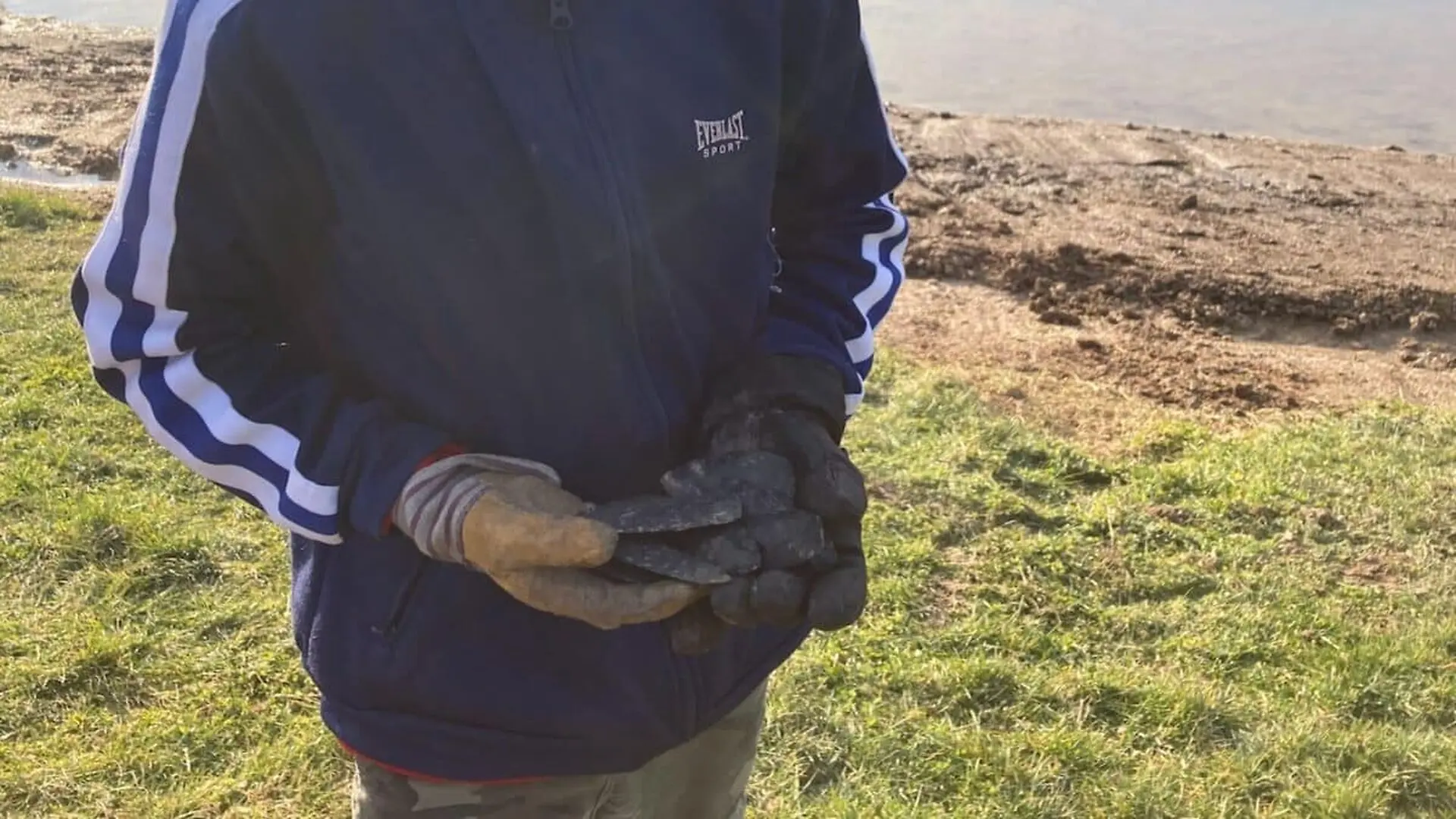
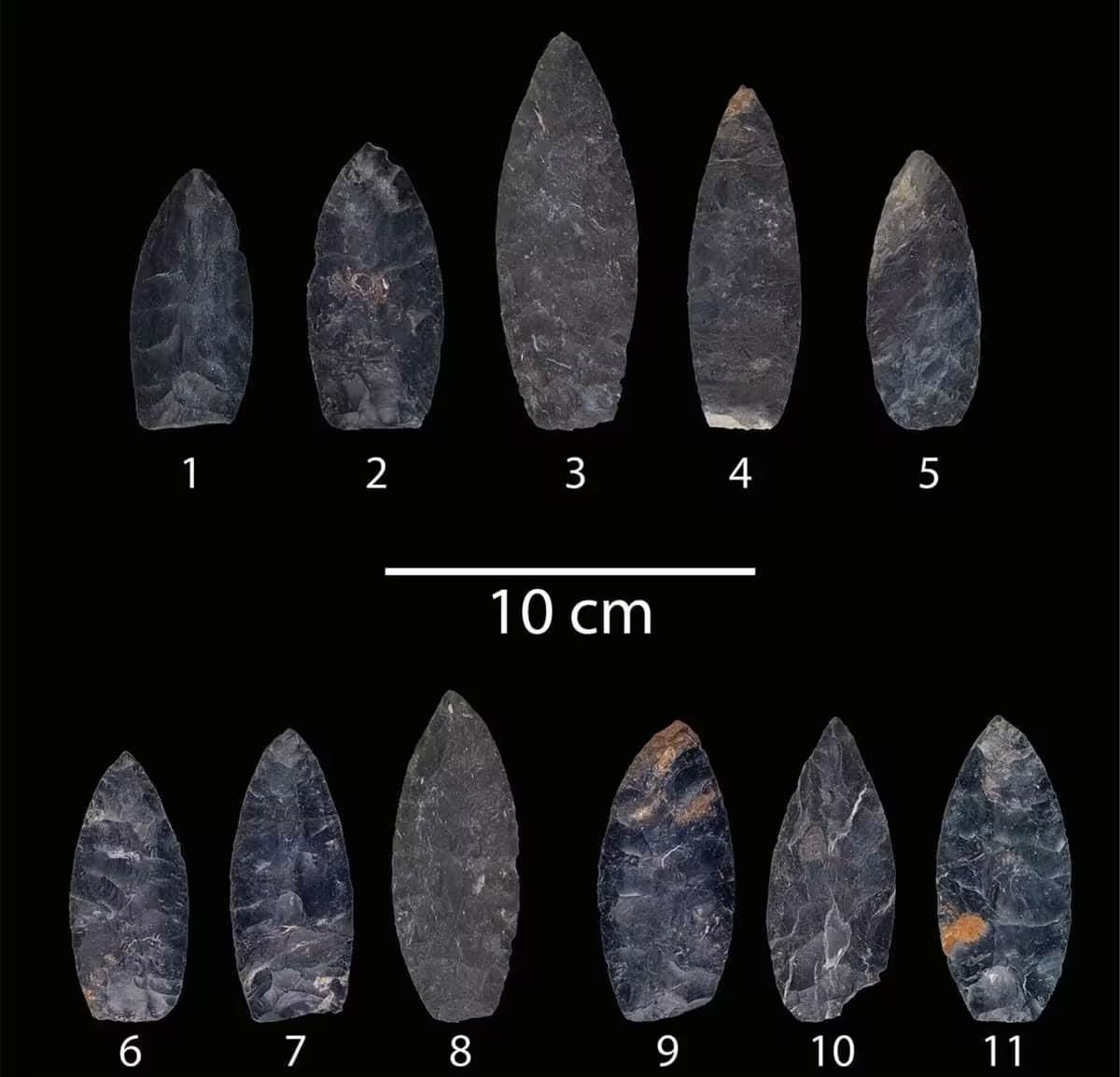
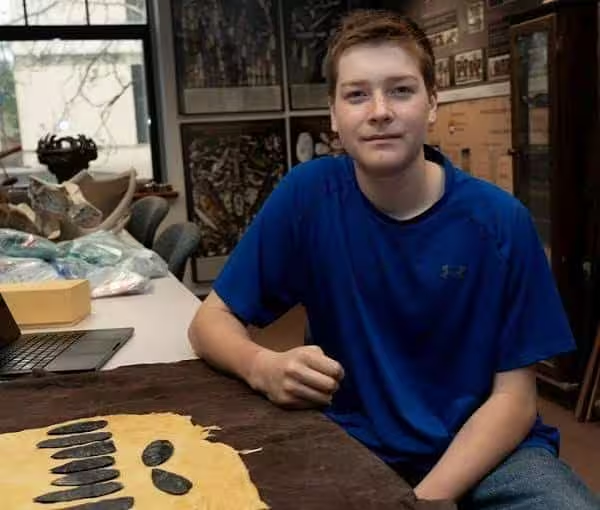
A routine family excursion in Sugarcreek, Ohio, took an unexpected turn when 11-year-old Joshua Fetter spotted unusual black stones embedded in the mud of a nearby construction site. Five years later, that chance discovery has been formally documented as the “Joshua Cache,” a collection of 11 prehistoric artifacts that has earned the now-17-year-old a co-author credit on a scientific paper.
The discovery, which archaeologists believe dates back nearly 2,000 years, is linked to the Adena culture, a pioneering North American group known for merging early agriculture with traditional hunting and gathering practices. The find serves as a stark reminder of the critical role amateur explorers—and particularly children—play in unearthing significant historical narratives.
A Serendipitous Encounter with Prehistory
In January 2021, Joshua Fetter was exploring a field undergoing excavation during a family trip. Familiar with the appearance of arrowheads, he recognized that the dark, palm-sized points emerging from the mud were distinct from typical rocks. Despite his father Matthew’s initial hesitation to let him explore further, the boy’s persistence eventually led to the recovery of the items.
“It’s not the day for it,” his father recalled saying, before ultimately allowing his son to continue the search. Joshua, reflecting on the moment, simply noted, “They were really cool.”
The timing of the discovery was precarious. Heavy rains had exposed the artifacts, but a bulldozer was actively operating nearby, threatening to destroy the site. Had the construction continued as scheduled, these rare tools might have been lost forever. The family’s decision to notify the landowner, who in turn reached out to a contact at Kent State University, ensured the site was preserved for professional study.
Decoding the Ritual Intent
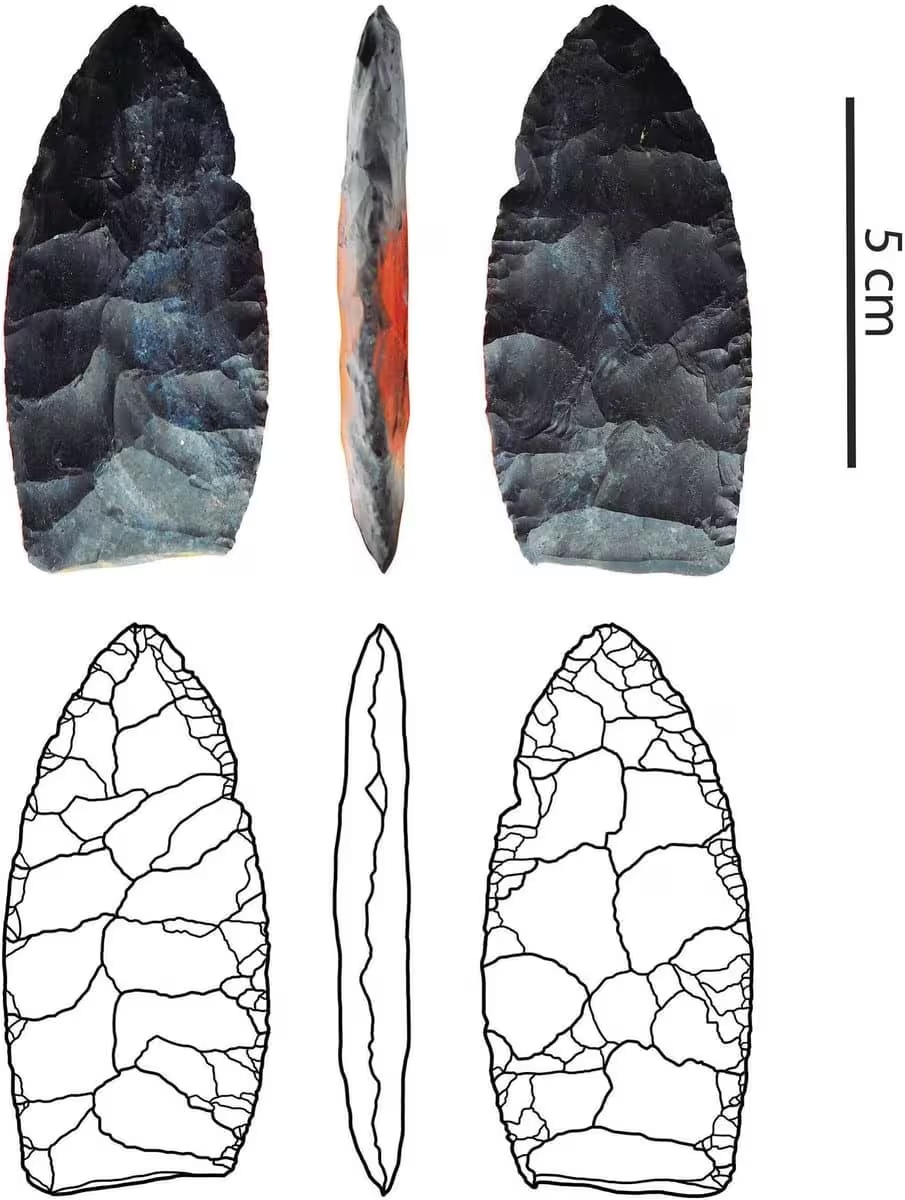
A research team from Kent State, led by Dr. Metin Eren, spent years analyzing the items. The researchers eventually recovered a total of 11 bifaces, some of which had been intentionally arranged in a circular formation. Detailed microscopic analysis revealed that the stones showed no signs of use, suggesting they were created specifically for a ritual or ceremonial purpose rather than for daily labor.
“There was a lot of work put into these,” Eren noted. “Why would they put so much work into them and not use them?”
The research findings have been submitted to the Journal of Archaeological Science. Once the academic process concludes, the collection is slated to reside permanently at the Cleveland Museum of Natural History.
Empowering the Next Generation of Discoverers
For Dr. Eren, the story of the Joshua Cache highlights the vital necessity of public engagement in science. By encouraging curiosity in young people, society ensures that rare glimpses into the past are not lost to modern development.
“We should encourage all of our kids to be explorers,” Eren said, adding that the public serves as the essential “first line of archaeology.”
To deepen the experience, Eren—a practitioner of the ancient art of flint knapping—demonstrated the efficiency of such stone tools to the Fetter children, showing them how the sharp edges could still slice through leather centuries later.
This article has been fact checked for accuracy, with information verified against reputable sources. Learn more about us and our editorial process.
Last reviewed on .
Article history
- Latest version
Reference(s)
- “Dr. Metin I. Eren.” Kent State University <https://www.kent.edu/anthropology/dr-metin-i-eren>.
- <https://www.sciencedirect.com/journal/journal-of-archaeological-science>.
- “The Joshua Cache: A Rare Archaeological Discovery.” <https://www.cmnh.org/learn/science-blog/2026/05/19/beneath-an-ohio-golf-course-a-young-explorer-makes-a-rare-archaeological-discovery>.
Cite this page:
- Posted by Vikram Desai