Railway Dig Unearths Rare Coin of Britain’s Rebel Emperor Carausius
A newly unearthed Roman coin reveals the daring story of a man who defied Rome, shedding fresh light on ancient rebellion.
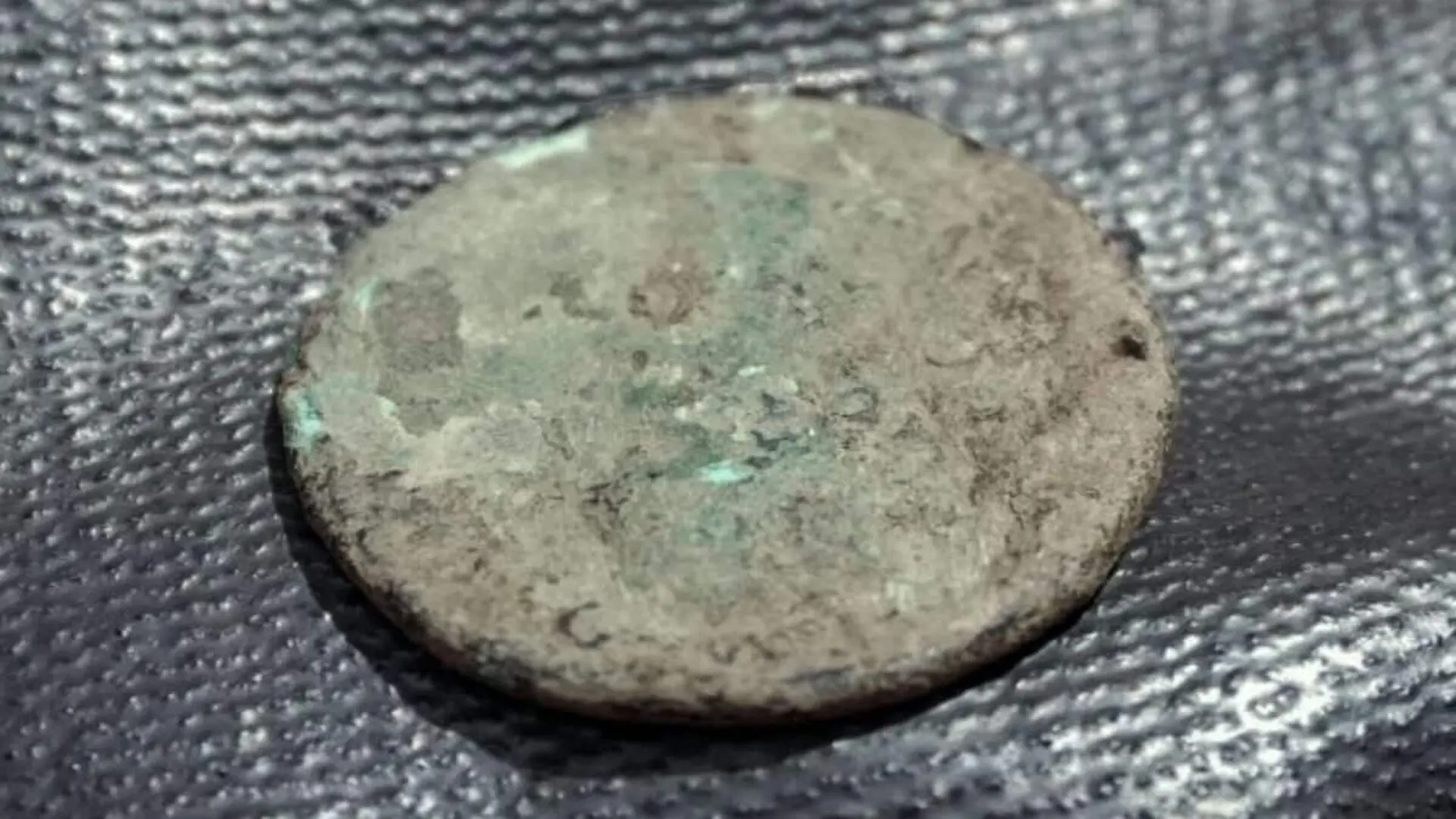
During routine excavations for the East West Rail line linking Oxford and Cambridge, archaeologists uncovered a rare Roman‑era coin that directly ties to the short‑lived regime of Carausius, a former Roman officer who declared himself ruler of a breakaway Britain.
Dating to roughly 287 C.E., the find falls within the interval when Carausius styled himself “Emperor of the North,” offering fresh material for scholars studying this isolated chapter of Roman Britain.
The Commander Who Broke From Rome
Initially a naval commander tasked with safeguarding the English Channel against piracy, Carausius served the Roman Empire before accusations of embezzling loot forced him to flee rather than face imperial retribution.
In 286 C.E., he seized control of the island, proclaimed independence, and instituted his own administration. Central to his legitimacy were newly minted coins produced in workshops at London and Colchester, bearing his portrait and name to mirror the official Roman currency.
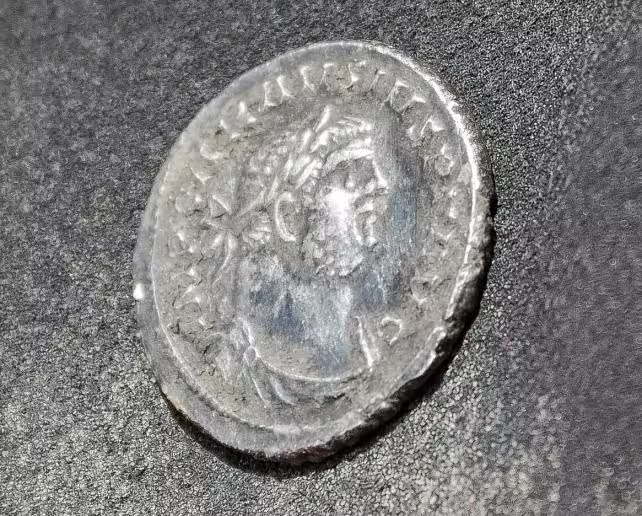
The newly recovered piece offers a tangible link to Carausius’s propaganda network, illustrating how he leveraged imagery and metal to cement authority before his rule collapsed in 293 C.E.
Rail Works Reveal Layers of Roman Britain
The coin emerged from systematic archaeological surveys conducted ahead of the East West Rail construction. Teams are obliged to inspect the ground for buried heritage before any tracks are laid.
To date, more than 6,000 trenches have been opened along the route, yielding a range of artifacts—including a Roman coin dated between 138 and 180 C.E., likely tied to the reigns of Antoninus Pius or Marcus Aurelius, as well as a late Iron Age jar.
“Every discovery helps build a richer picture of the people who once lived here,” explained Joss Piper‑Jarrett, archaeology survey manager for East West Rail Co., in a recent statement. “When you’re excavating these features, you’re often the first person to see them in 2,000 years, sometimes even longer, which is a really special feeling.”
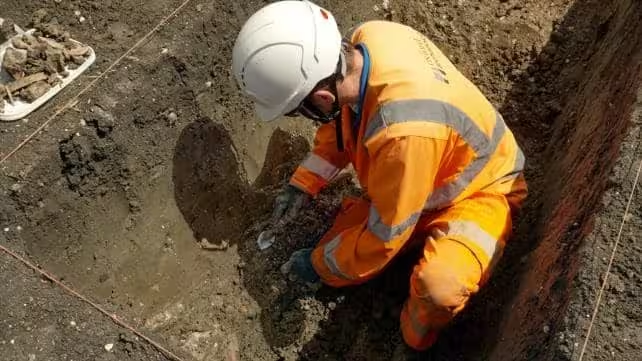
Post‑hole remains identified in the same areas indicate the presence of Roman‑era structures, turning the construction zone into a snapshot of everyday life in ancient Britain.
Legacy of a Forgotten Emperor and Ongoing Finds
Carausius’s footprint in the numismatic record was dramatically highlighted by a 2010 discovery in Somerset, where a metal‑detectorist uncovered a hoard of more than 52,000 coins, including 766 bearing Carausius’s imprint.
Although the newly found coin is modest in size, it reinforces the narrative of a brief, self‑styled empire that intersected with a modern infrastructure project, illustrating how Britain once stood apart from Rome under a former imperial officer.
Archaeological work on the East West Rail corridor will continue for another two years, with specialists cataloguing and analyzing thousands of artifacts. “We know from other projects nearby that this part of Britain has a rich archaeological landscape, and we weren’t disappointed,” said Mike Court, historic environment lead at East West Rail. He added that the team anticipates uncovering evidence spanning multiple eras of British history.
This article has been fact checked for accuracy, with information verified against reputable sources. Learn more about us and our editorial process.
Last reviewed on .
Article history
- Latest version
Cite this page:
- Posted by Vikram Desai