Hidden Runestone Unearthed Under Faroe Chapel Reveals Fragmented Old Norse Message
Archaeologists uncover a rare runestone under a medieval Faroe Islands chapel, providing a surprising clue to the islands’ past as researchers investigate.
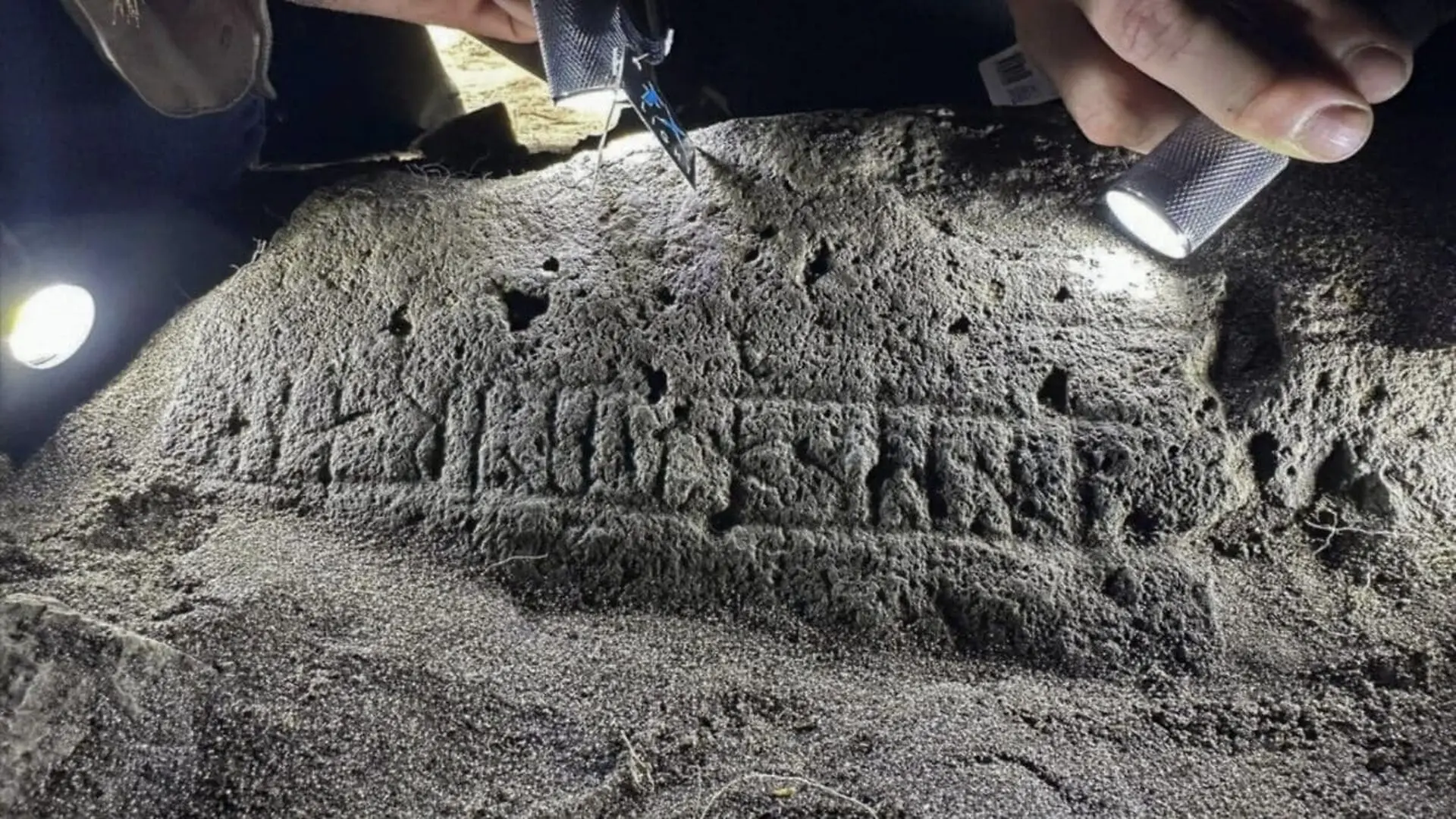
Archaeologists have uncovered a centuries‑old runestone hidden beneath the floor of a ruined medieval chapel on Sandoy, one of the Faroe Islands. The stone bears an Old Norse inscription, yet much of the text remains illegible.
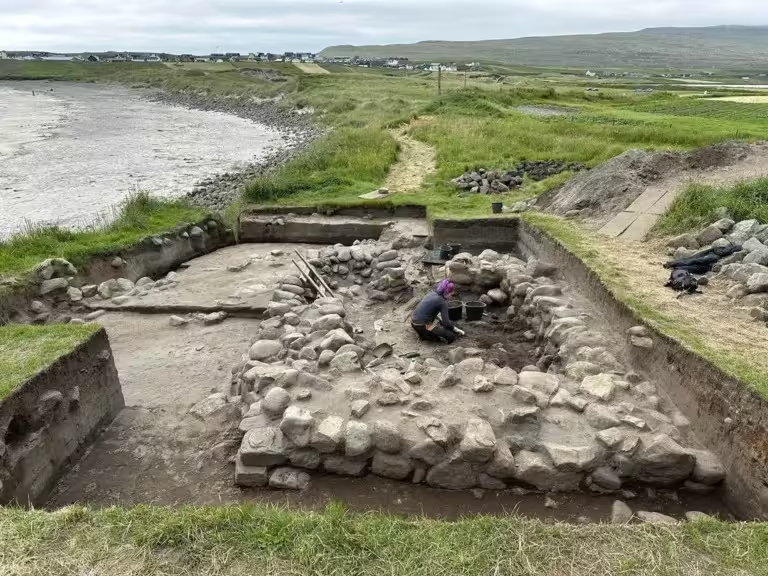
The discovery occurred at the Á Sondum archaeological site during a joint excavation by the Faroe Islands National Museum, Aarhus University and Denmark’s Moesgaard Museum. The project has already shed new light on the pattern of human settlement throughout the archipelago.
Situated in the North Atlantic between Iceland and Scotland, the Faroe Islands were shaped by Norse settlers and the later spread of Christianity. Surviving runic texts from the islands are scarce, making this find a noteworthy addition to the limited corpus of Faroese rune stones.
Excavators identified the stone embedded in the floor of a structure believed to have served as a medieval chapel or modest prayer house. Centuries of exposure have eroded the surface, leaving only fragments of the original carving.
Early Words Hint at a Memorial Purpose
Preliminary analysis suggests the opening of the inscription may read “Her hvílur…”, which can be rendered as “Here lies…” or “Here rests…”. This phrasing implies a connection to a burial or commemorative function.
Because many sections of the carving are broken or missing, the research team has enlisted a specialist in runic epigraphy to scrutinize the surviving marks. The stone has been transferred to the Faroe Islands National Museum for safekeeping, and a high‑resolution 3D scan is planned to produce a digital replica for future study.
Christian Artifacts Confirm a Sacred Space
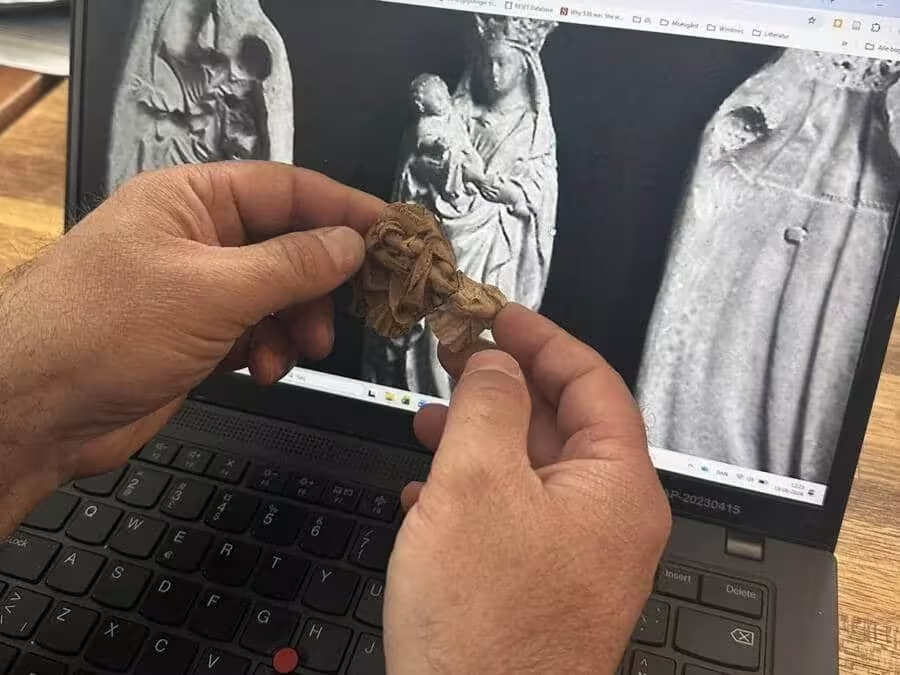
Alongside the runestone, excavators recovered fragments of a diminutive statue portraying the Virgin Mary cradling the infant Jesus, as well as a small oil lamp known as a kola. These items support the interpretation of the building as an early Christian worship site. Its orientation—east to west with an entrance on the western side—matches typical medieval ecclesiastical architecture.
The structure is thought to have functioned as an oratory—a modest venue for private prayer. Comparable sites have been identified elsewhere in the Faroes, including the oratory at Bønhúsberg on Mykines, Bønhústoft in Leirvík, and the ruins at Bakki in Velbastaður.
New Clues About Medieval Life on Sandoy
The Á Sondum discovery adds another layer to our understanding of medieval communities on Sandoy. The combination of a runic memorial, Christian iconography, and the building’s remnants provides fresh material for researchers investigating how island inhabitants lived, worshipped and commemorated the dead.
The unfinished inscription remains the most enigmatic element of the site. Scholars continue to debate whether the stone marks a burial, honors an individual, or serves another ritual purpose.
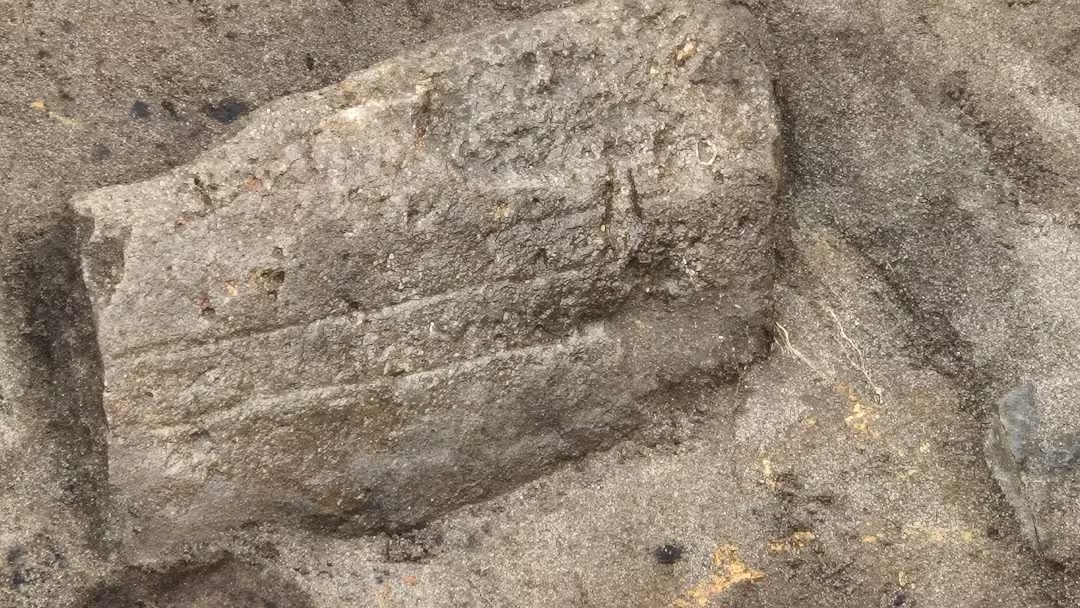
Ongoing analysis of the runestone and associated artifacts promises to reveal further details about the individuals who crafted the message and the role of this modest sanctuary in the Faroe Islands’ medieval heritage.
This article has been fact checked for accuracy, with information verified against reputable sources. Learn more about us and our editorial process.
Last reviewed on .
Article history
- Latest version
Cite this page:
- Posted by Vikram Desai