Hidden L-Shaped Chamber Discovered Beneath Giza’s Western Cemetery By Ground-Penetrating Radar
Researchers near the Great Pyramid uncover an unexpected underground structure, sparking questions about its purpose and origin.
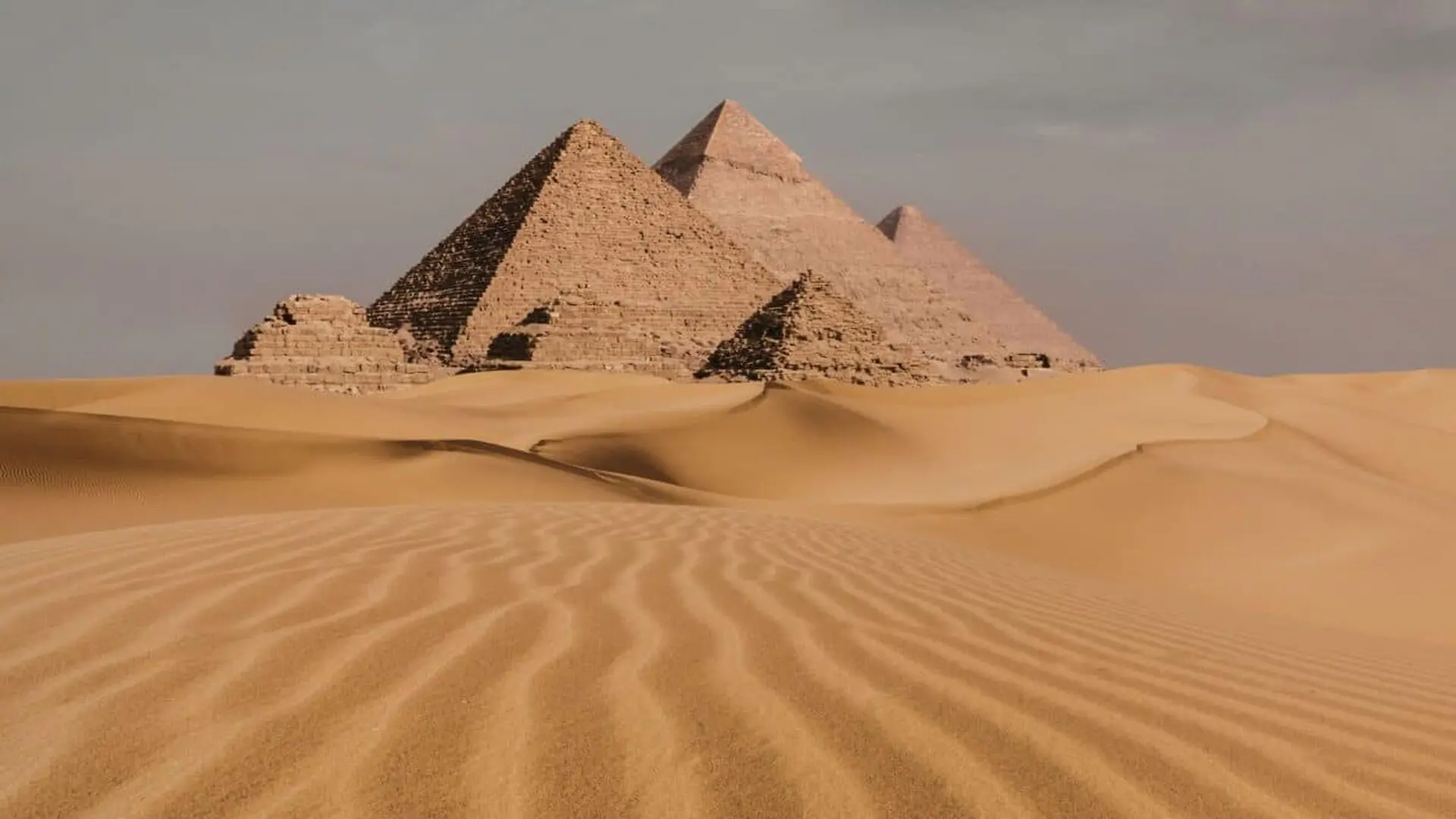
A recent geophysical investigation carried out close to Egypt’s Great Pyramid of Giza has revealed an enigmatic subsurface formation that has yet to be identified by archaeologists. The survey uncovered an L‑shaped construction beneath the Western Cemetery and a second, deeper irregularity.
The results stem from a 2024 project directed by scholars from Tohoku University, who targeted a stretch of the Western Cemetery that appeared largely featureless at ground level. Although Giza ranks among the world’s most intensively examined archaeological landscapes, the new data show that concealed structures can still surface beneath the desert.
Located to the west of the Great Pyramid, the Western Cemetery functioned as a burial ground for members of the royal family and senior officials. The zone is noted for its mastabas – the flat‑roofed tombs linked to elite interments in ancient Egypt. The specific sector examined received comparatively little attention because it lacked any visible super‑structures.
High‑Resolution Scans Reveal Hidden L‑Shaped Feature
To probe the site, the team employed a combination of ground‑penetrating radar (GPR) and electrical resistivity tomography (ERT), two non‑invasive techniques widely adopted for detecting buried archaeological remains.
GPR transmits radar pulses into the earth and records the echoes that return after striking subsurface objects, while ERT gauges how underground materials respond to electrical currents, highlighting contrasts between different layers.
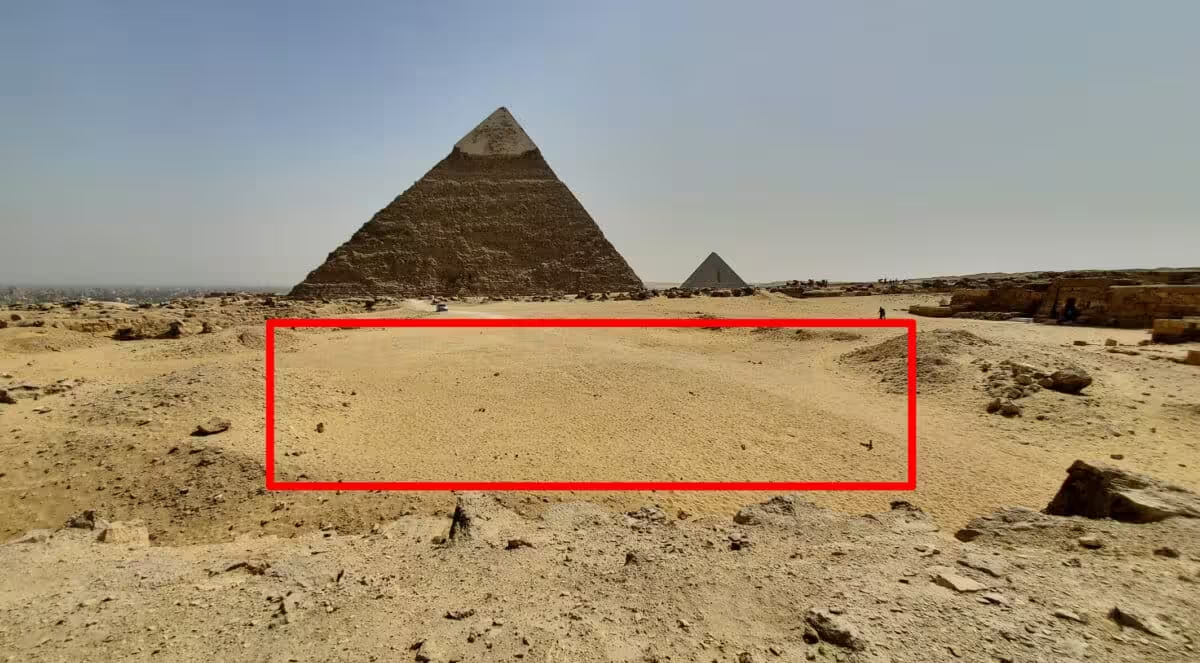
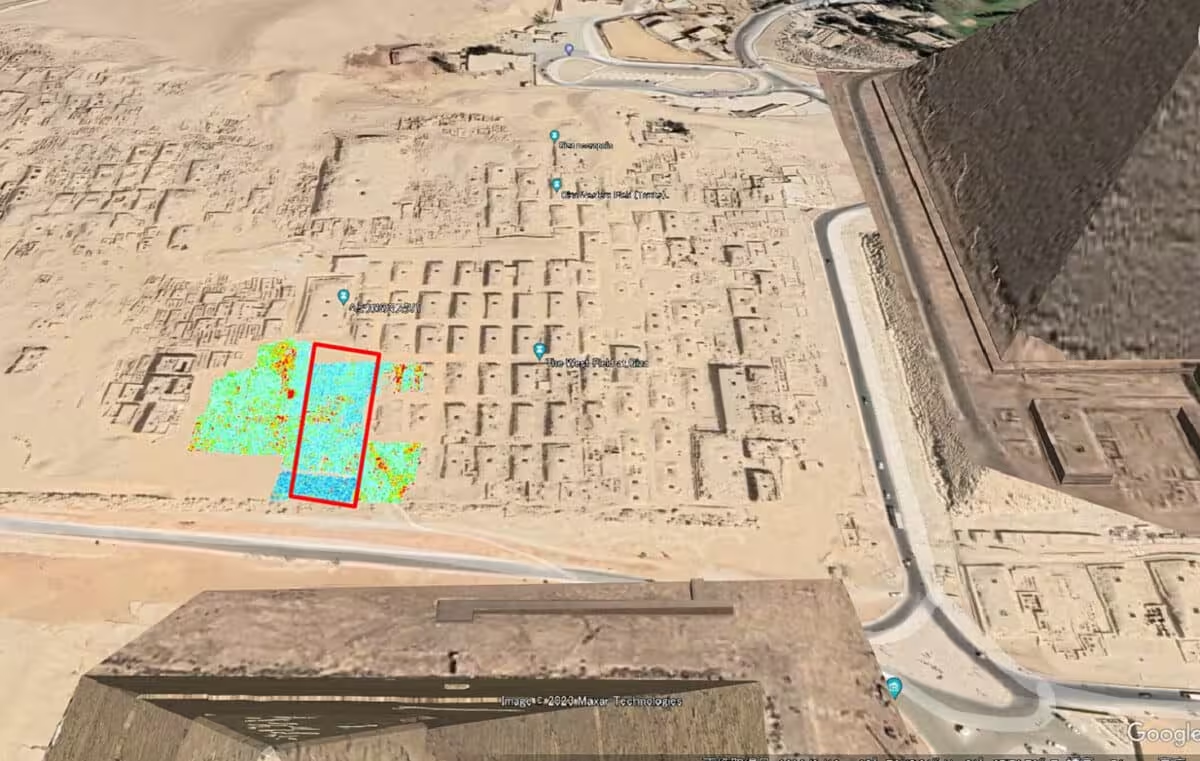
Published in Archaeological Prospection, the analysis identified an L‑shaped anomaly situated roughly 6.5 feet beneath the surface. The structure extends about 33 feet in length and appears to have been deliberately backfilled after construction.
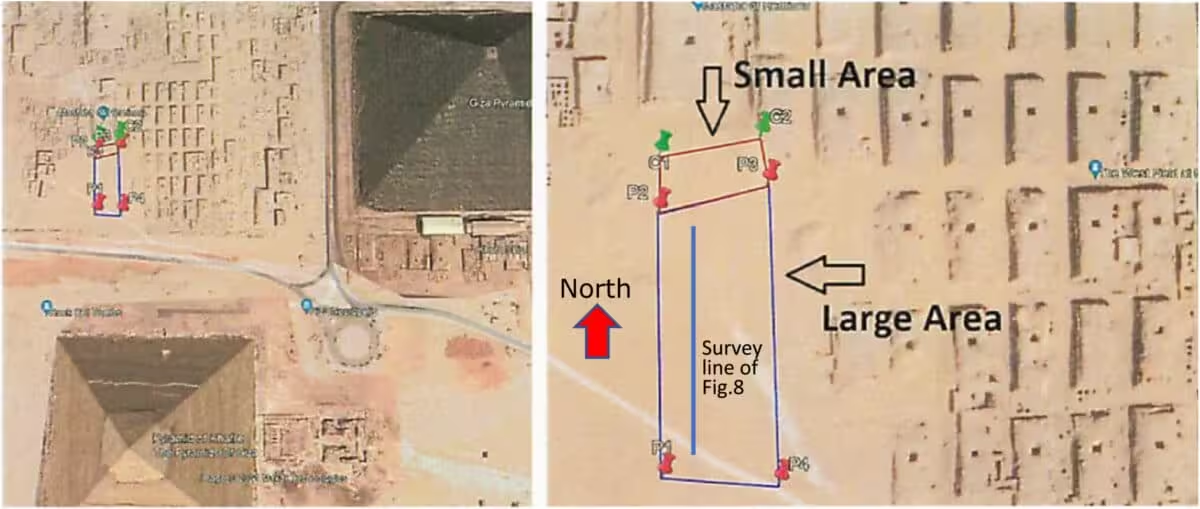
The authors also note that earlier surveys had hinted at an irregularity in the northern portion of the study area, though its precise geometry was unclear at the time. The joint application of GPR and ERT furnished a more detailed picture of the concealed architecture.
“The Western Cemetery at Giza is known as an important burial place of members of the royal family and high‑class officers,” the researchers wrote in the paper.
Deeper Resistive Anomaly Detected Below
Beneath the L‑shaped feature, the investigators recorded a second irregularity at depths ranging from roughly 16 to 33 feet. This lower signal stood out because of its markedly high electrical resistance relative to the surrounding substrate.
Two scenarios are proposed for this response: a mixture of sand and gravel, or voids filled with air. The available data do not allow a definitive choice between these interpretations.
“From the survey results, we cannot determine the material causing the anomaly,” they wrote, “but it may be a large subsurface archaeological structure.”
The scans reveal a pronounced subsurface contrast, yet they fall short of identifying the exact nature of the feature.
Interpretation Remains Uncertain
The geometry of the upper anomaly leads researchers to doubt a purely natural origin. Motoyuki Sato commented that the sharp angles of the structure are unlikely to have formed without human intervention.
The team suggested that the L‑shaped element could function as an entrance to the deeper anomaly beneath it. Nonetheless, the authors are careful to state that no tomb has been discovered, and no excavation has been undertaken to verify the hypothesis.
Subsequent heritage‑science publications have cited the project as a compelling example of how GPR and ERT can be integrated in Egyptian archaeology. Yet the anomalous feature itself remains unresolved, and no conclusive explanation has emerged since the study’s release.
The investigation confirms that something atypical lies beneath this portion of Giza’s Western Cemetery. Until further fieldwork is conducted, the purpose of the L‑shaped structure and the deeper resistive zone will continue to elude researchers.
This article has been fact checked for accuracy, with information verified against reputable sources. Learn more about us and our editorial process.
Last reviewed on .
Article history
- Latest version
Reference(s)
- Sato, Motoyuki., et al. “GPR and ERT Exploration in the Western Cemetery in Giza, Egypt.” Archaeological Prospection, vol. 31, no. 2, May 5, 2024, pp. 187-198. Wiley, doi: 10.1002/arp.1940. <https://onlinelibrary.wiley.com/doi/10.1002/arp.1940>.
- <https://www.researchgate.net/profile/Motoyuki-Sato>.
Cite this page:
- Posted by Vikram Desai