NASA Satellite Captures 2021 Bullseye Cloud Rings Over La Palma Volcano
Satellite image shows rare cloud rings over La Palma’s erupting volcano, illustrating how massive eruptions alter atmospheric dynamics.
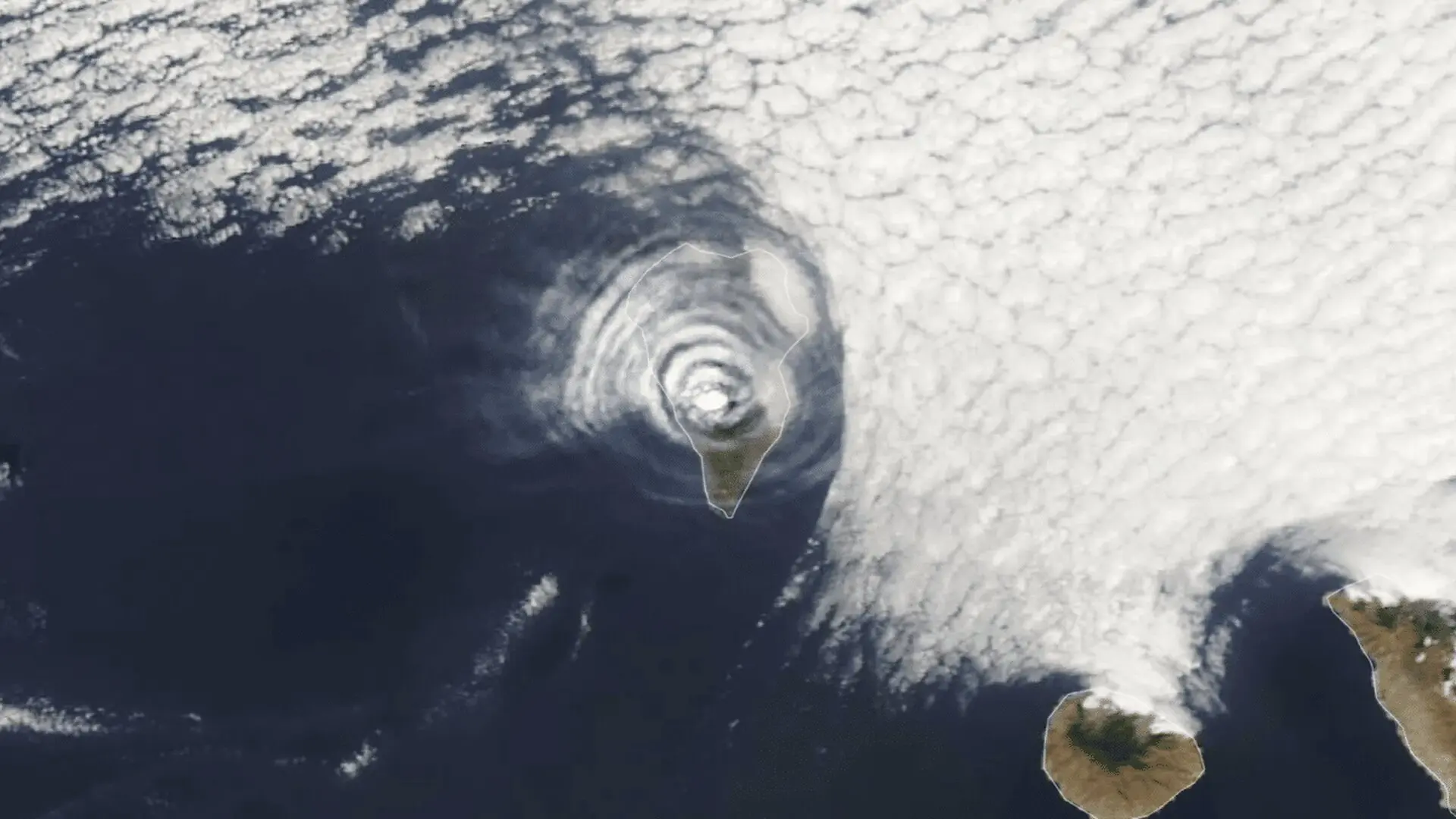
A satellite snapshot taken during the 2021 eruption of Cumbre Vieja on La Palma captured a series of nearly perfect concentric cloud rings that spread across the sky above the volcano. Highlighted by NASA’s Earth Observatory, the image provides a rare visual record of how volcanic outbursts can shape atmospheric structures and be seen from orbit. It also underscores the powerful forces released during one of Europe’s most significant recent volcanic crises.
Spaceborne View Reveals Bull’s‑Eye Clouds Over La Palma
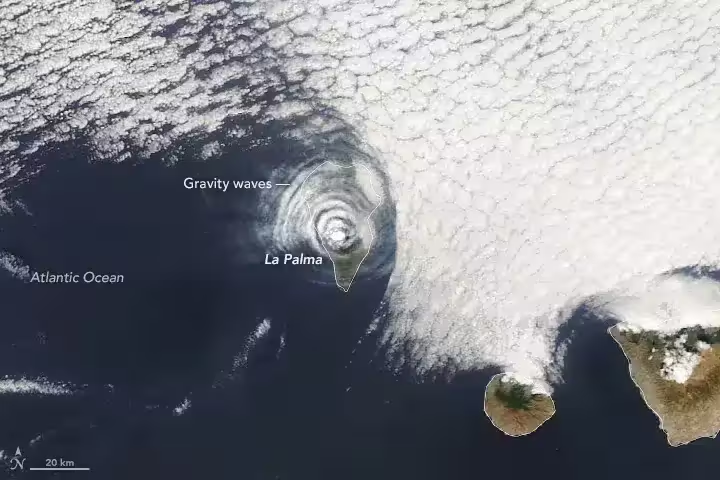
On 1 October 2021 the NASA Aqua platform recorded an unusual arrangement of cloud rings directly above the erupting Cumbre Vieja volcano in Spain’s Canary Islands. The picture shows several concentric circles expanding from the vent, producing a giant bull’s‑eye pattern that is seldom captured with such clarity. Researchers consider the observation valuable for probing the atmospheric response to large‑scale eruptions.
The formation of the rings is linked to a dense plume of ash and gas that became trapped beneath a stable atmospheric layer. As hot material rose from the crater, the confined plume expanded laterally, generating wave‑like motions that organized surrounding clouds into expanding circles. According to NASA’s Earth Observatory, this confinement allowed the eruption’s energy to sculpt the visible rings.
Such atmospheric displays require a precise mix of eruption intensity, air‑layer stability, moisture, and wind conditions, making them rare even among active volcanoes. The La Palma image therefore represents more than a striking photograph; it captures a fleeting moment when geology and meteorology intersected in a way that can be monitored from hundreds of miles above the planet.
Lava’s Heat Seen From Space
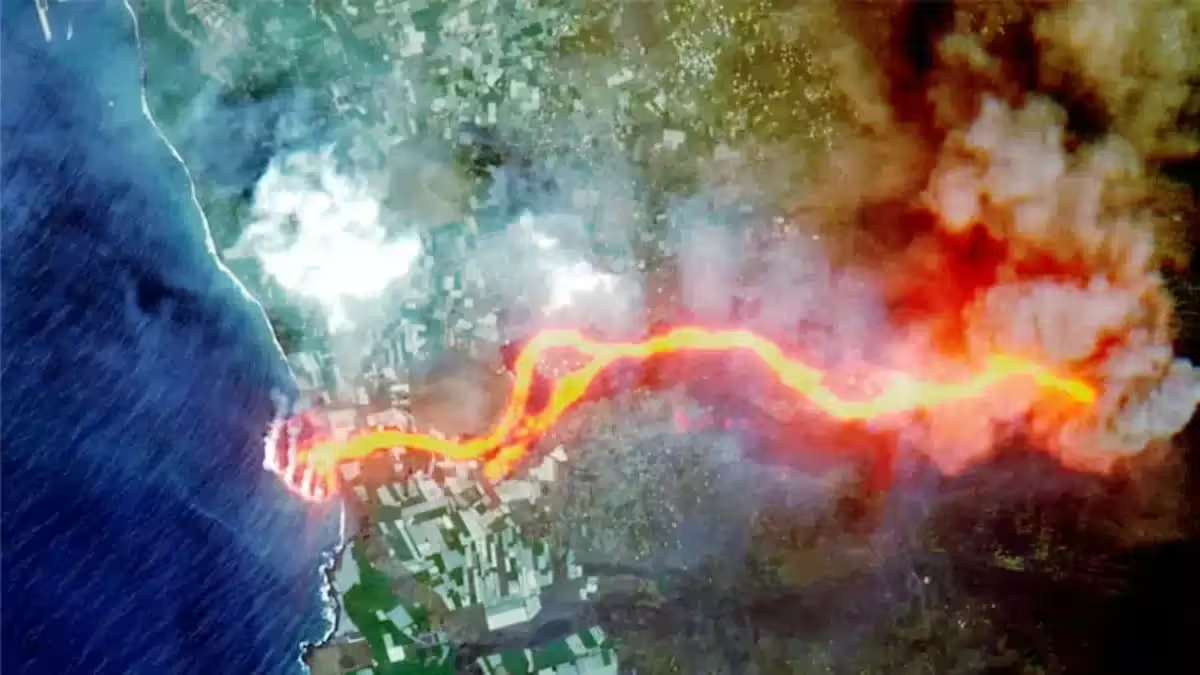
A second satellite view, captured on the same day by the European Space Agency’s Copernicus system, shows infrared emissions from the lava as it advanced toward the sea, creating new land. The image highlights the thermal intensity of the flow and offers a complementary perspective to the cloud‑ring photograph.
Ground Reality: Widespread Destruction
While the cloud rings offered a dramatic view from orbit, the eruption on La Palma raged for nearly three months, reshaping large swaths of the island. Rivers of lava razed homes, roads, farms and critical infrastructure, prompting the evacuation of thousands of residents. The event has become one of the most destructive volcanic episodes recorded on the island.
“The damage was ‘truly terrible,’” said Marie Edmonds, a volcanologist at the University of Cambridge, in an interview with Live Science. She added that the proximity of the vent to populated areas made the situation “absolutely terrifying” for those who witnessed the eruption up close.
Why La Palma Remains a Research Focus
More than a year after the eruption ceased, Cumbre Vieja continues to serve as a key case study for volcanologists, atmospheric scientists and disaster‑risk researchers. The event generated an extensive suite of observations—including satellite imagery, seismic data, lava‑flow maps and gas‑emission records—that scientists are still mining for insights.
The unusual cloud rings provide a concrete example of how volcanic plumes can modify atmospheric dynamics. By analyzing such interactions, researchers aim to refine models that track plume dispersion, assess hazards to aviation and gauge the broader environmental impacts of major eruptions.
The episode also underscored the value of modern Earth‑observation platforms. Continuous satellite monitoring allowed experts to follow rapid changes in real time, delivering a perspective that would be impossible to obtain from the ground alone. The bull’s‑eye cloud formation has become an iconic visual shorthand for the eruption, symbolising both the planet’s capacity for spectacular natural displays and the profound challenges they pose for nearby communities.
This article has been fact checked for accuracy, with information verified against reputable sources. Learn more about us and our editorial process.
Last reviewed on .
Article history
- Latest version
Reference(s)
- Migrate, NASA. “Ash and Cloud Rings Over La Palma - NASA Science.”, October 6, 2021 NASA <https://science.nasa.gov/earth/earth-observatory/ash-and-cloud-rings-over-la-palma-148924/>.
- Baker, Harry. “Bizarre 'bull's-eye' cloud rings appear above erupting volcano on Atlantic island — Earth from space.”, June 23, 2026 Live Science <https://www.livescience.com/planet-earth/volcanoes/bizarre-bulls-eye-cloud-rings-appear-above-erupting-volcano-on-atlantic-island-earth-from-space>.
Cite this page:
- Posted by Vikram Desai