Mars Contains Giant Underground Tunnels Larger Than Anything on Earth, And Scientists Have Designed a Robot to Explore Them
Underground tunnels beneath Mars may extend vast distances, explored by innovative robotic explorers.
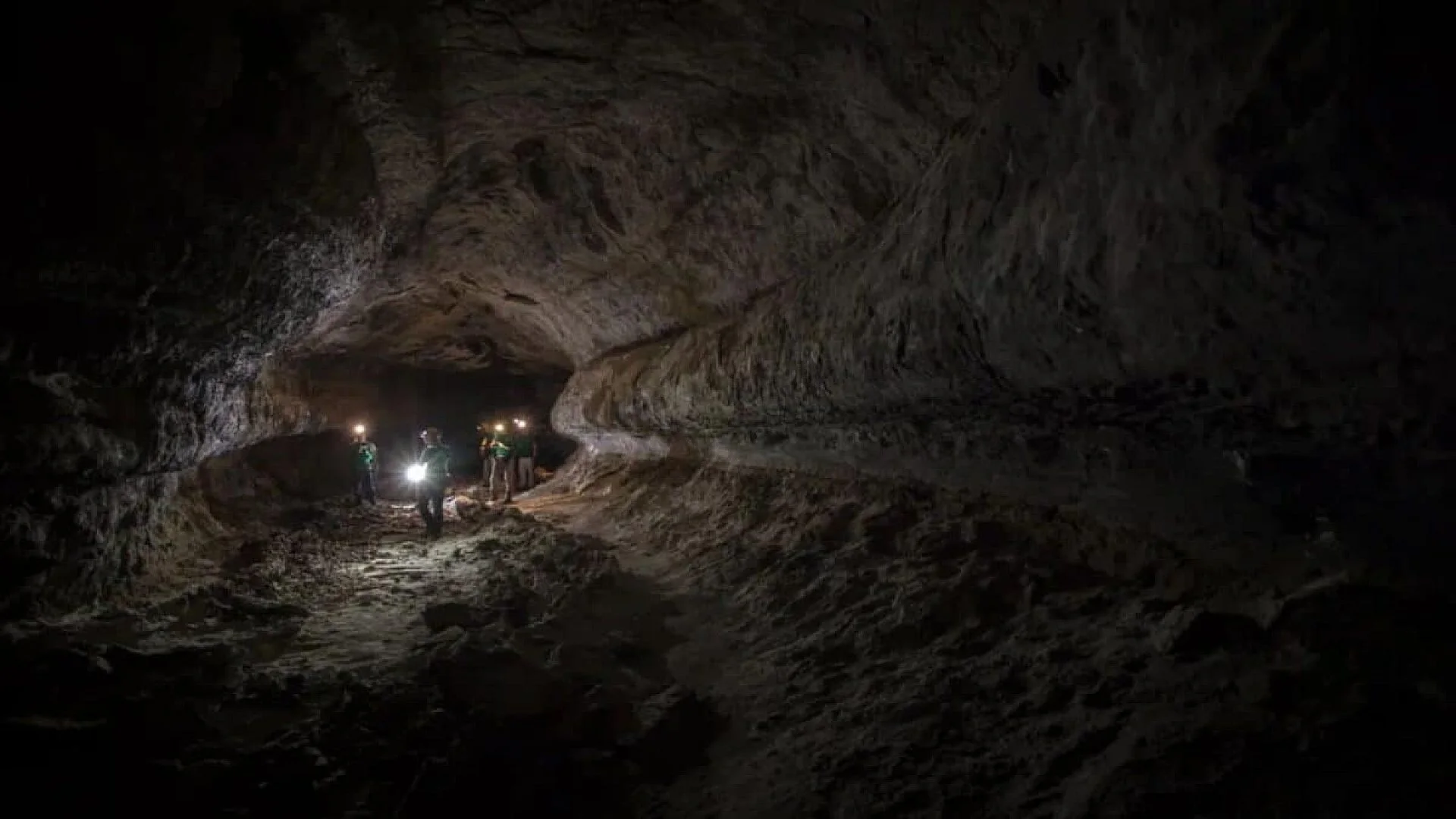
A new engineering proposal seeks to reach the hidden networks of lava tubes that criss‑cross the Martian landscape. By pairing a compact rolling device that mimics the defensive roll of a pill‑bug with swarms of ultra‑light probes that float on ambient air currents, the team hopes to gather data from underground passages that have never been visited by a rover.
The approach follows a growing trend in space hardware design that looks to nature for inspiration. Mars’ volcanic past left behind extensive subterranean cavities, and scientists have begun to map these structures as prime candidates for future exploration, especially because they remain largely untouched by surface missions.
Pill‑Bug Mechanics Inspire a Compact Explorer
The concept originates from Mostafa Hassanalian, an associate professor at New Mexico Tech, who argues that digging beneath the surface demands a different mindset than traditional rover operations. In a paper released through Aerospace Research Central (ARC), his group outlines a “roly‑poly” vehicle that folds into a spherical shape, echoing how pill‑bugs curl up when threatened. The deployment plan calls for the robot to be lowered through an opening in a cavern ceiling using a parachute system.
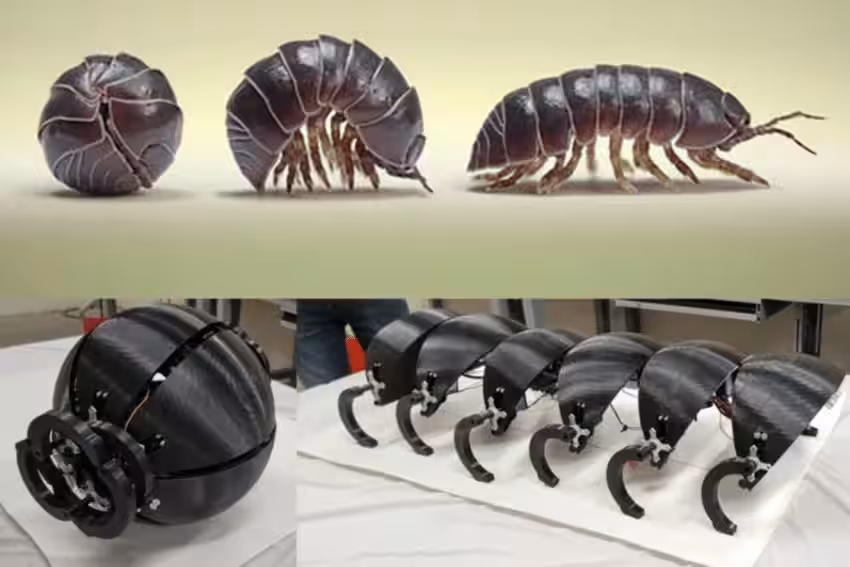
Once the robot reaches the tunnel floor, it would disperse thousands of miniature “dandelion drones.” These devices are engineered to glide with whatever airflow exists inside the caves, rather than relying on conventional propulsion. The drones would relay their observations back to the base via radio links.
“The rovers are the size of a school bus. That’s why they can’t get in.”
Harnessing Subsurface Airflows
A major unknown remains the character of the atmosphere within Martian caverns. No spacecraft has yet entered these voids, leaving scientists uncertain about the presence or strength of natural breezes. The researchers posit that openings in the ceiling could create enough ventilation for the drones to travel significant distances.
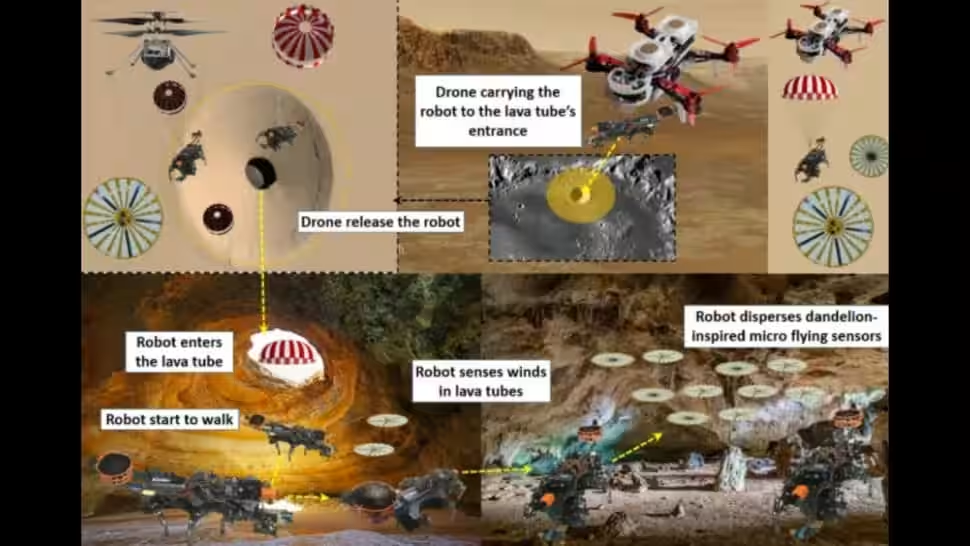
To compensate for potentially weak currents, the design incorporates a high‑output fan that can boost the drones’ motion when natural airflow falls short. Because sunlight does not penetrate these underground passages, the team also proposes generating electricity through piezoelectric polymers that produce charge from mechanical stress, a method inspired by the lightweight, reflective seeds that drift on Earth’s breezes.
Parallel Efforts in Subsurface Robotics
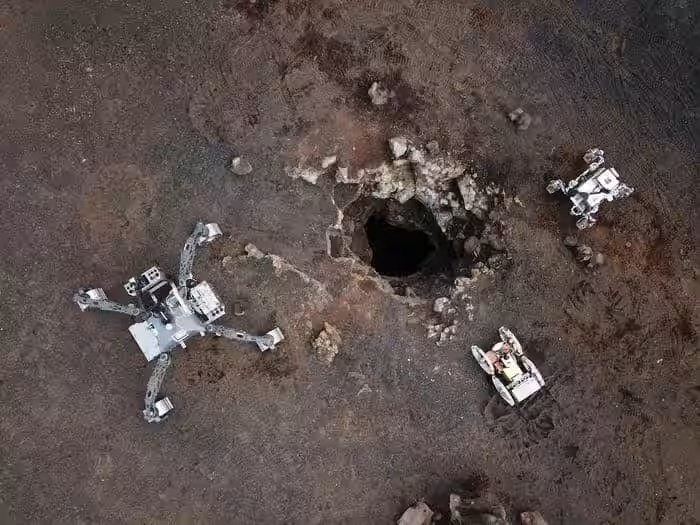
The “roly‑poly” vehicle joins a suite of projects aimed at underground planetary study. Since 2023, a European team led by the Space Robotics Laboratory at the University of Malaga has been field‑testing robotic platforms inside volcanic tubes on Lanzarote, Spain, to assess mapping techniques for future Martian missions.
NASA’s Ingenuity helicopter, which has completed 72 flights in the thin Martian atmosphere, demonstrated that powered flight is feasible on the Red Planet, though its design was not intended for cavern navigation. Thermal readings taken near cave openings show more stable temperatures compared with the surface, providing another incentive for scientists to probe beneath the regolith.
This article has been fact checked for accuracy, with information verified against reputable sources. Learn more about us and our editorial process.
Last reviewed on .
Article history
- Latest version
Reference(s)
- “Dr. Mostafa Hassanalian: New Mexico Tech.” <https://www.nmt.edu/academics/mecheng/faculty/mhassanalian.php>.
- Lanctot, Sara., et al. “Pill Bug-Inspired Robot with Crawling and Rolling Locomotion Mechanisms for Use on the Lunar Surface.” AIAA SCITECH 2023 Forum, January 19, 2023 American Institute of Aeronautics and Astronautics, doi: 10.2514/6.2023-2290. <https://arc.aiaa.org/doi/10.2514/6.2023-2290>.
Cite this page:
- Posted by Karan Das