Scientists Found a Super-Earth in the Life Zone, Until Its 647-Day Orbit Defied the Rules
Un planeta cercano en la zona habitable revela una extraña órbita de fuego y hielo que complica la búsqueda de mundos habitables
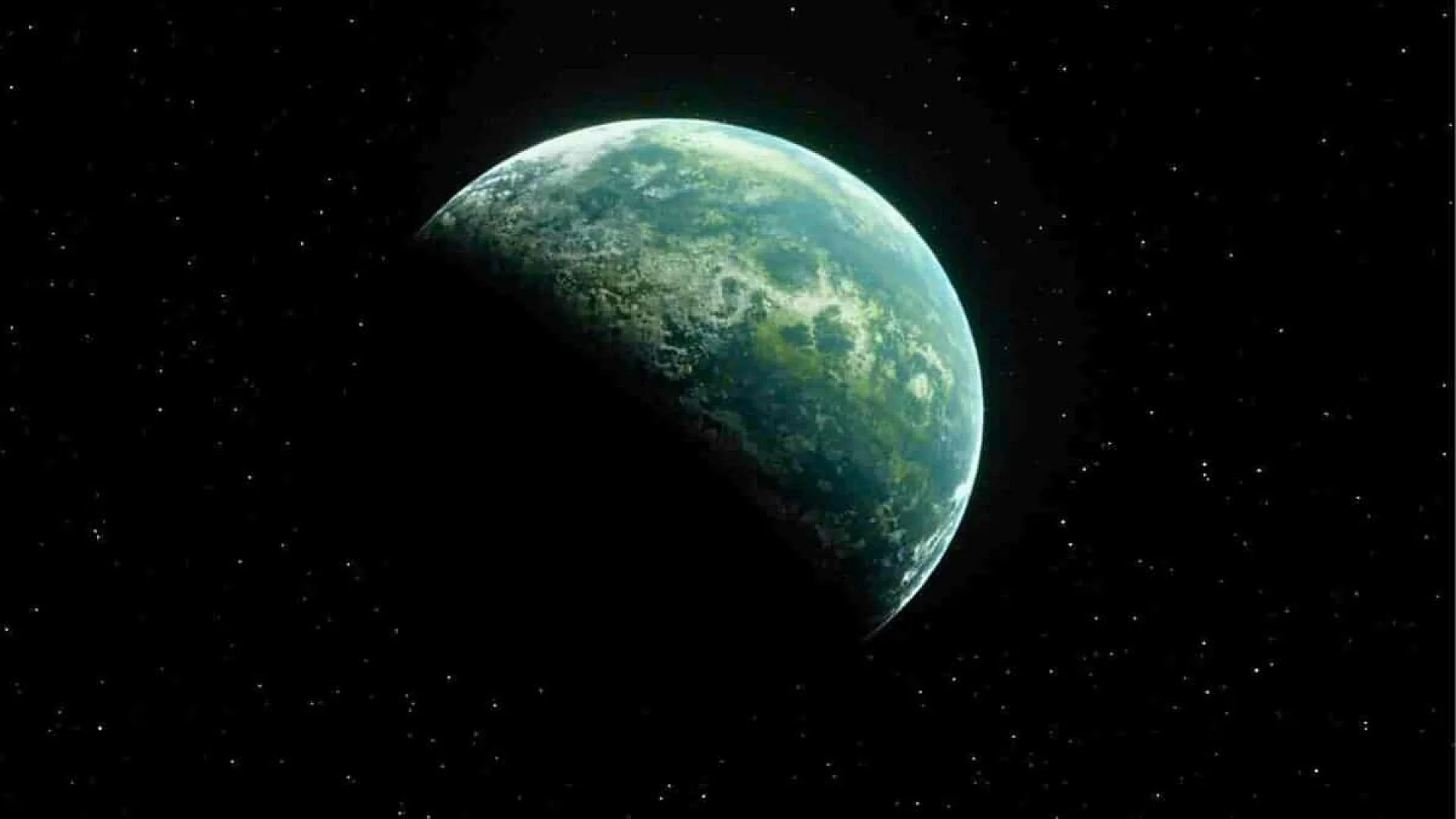
HD 20794 d follows a highly elongated orbit that carries it from a region comparable to Mars’ distance from the Sun to a zone similar to Venus’ orbit. This dramatic shift means that, even though the planet lies within the traditional habitable band of its star, the extreme variations in stellar heating make its potential for supporting life difficult to assess.
An international collaboration reported the discovery in a paper published in Astronomy & Astrophysics on 28 January 2025. The researchers combined more than two decades of observations of HD 20794, a Sun‑like star located roughly 20 light‑years from Earth. While three planets are now confirmed around the star, the outermost, HD 20794 d, is of particular interest because its path cuts across the region where liquid water could exist.
The term “habitable zone” refers only to a range of distances from a star that allow temperatures suitable for liquid water, but it does not guarantee that a planet will actually retain water on its surface. A world must also possess the right atmospheric pressure, chemistry and climate. For HD 20794 d, the amount of stellar energy it receives can change dramatically over a single orbit, complicating any straightforward habitability assessment.
A Nearby World on a Skewed Trajectory
HD 20794 is bright enough to be seen with the naked eye, a feature that makes it valuable for exoplanet research. Its proximity and luminosity enable astronomers to detect minute signals that would be lost around more distant, fainter stars. As noted by Scientific American, the star resides in the constellation Eridanus.
The inner two planets complete orbits in roughly 18.3 and 89.7 days, respectively, while HD 20794 d requires about 647 days to circle its star. Unlike the nearly circular paths of its companions, the outer planet follows an eccentric ellipse that carries it in and out of the habitable region rather than keeping it fixed within a single band.
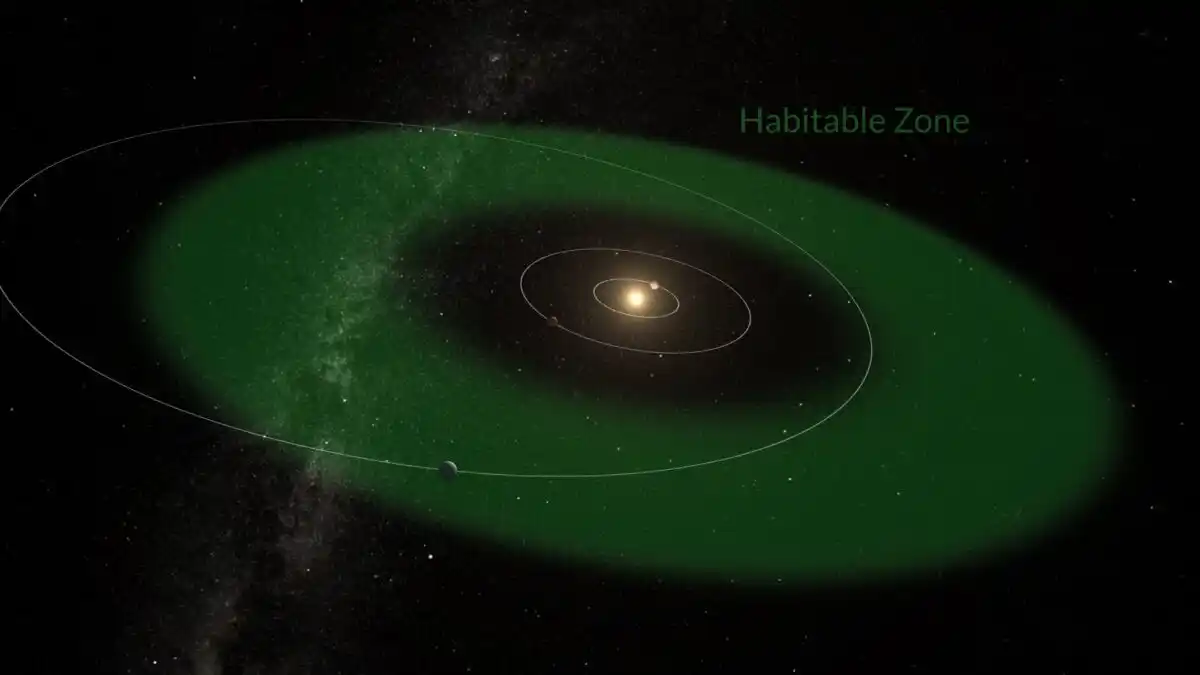
When the planet reaches the farthest point of its ellipse, any surface water would be exposed to colder conditions; at the closest approach, the same water could be subjected to intense heating. Scientific American likened the scenario to a “world of fire and ice,” emphasizing the extreme swings in stellar energy that HD 20794 d experiences.
Detecting a Planet Through a Subtle Stellar Wobble
HD 20794 d has not been imaged directly. Dr. Michael Cretignier first identified a candidate signal in 2022 while re‑examining archival data from the HARPS spectrograph (High Accuracy Radial Velocity Planet Searcher) at La Silla Observatory, Chile. The detection relied on minuscule shifts in the star’s spectral lines caused by the gravitational tug of an orbiting companion.
Radial‑velocity measurements track the back‑and‑forth motion of a star induced by an orbiting planet. For HD 20794 d, the observed wobble was under one metre per second and repeated over a period close to two Earth years, a pattern that could easily be mistaken for stellar activity or instrumental noise.
To confirm the signal, the team combined long‑term HARPS data with observations from ESPRESSO, another high‑precision spectrograph also based in Chile. According to a University of Oxford announcement reposted by Astrobiology, researchers spent years vetting the data and eliminating potential contaminants before affirming the planet’s existence.
The analysis employed the YARARA algorithm, led by Cretignier, to disentangle genuine planetary signals from stellar and instrumental noise. The final results not only reinforced the presence of HD 20794 d but also strengthened the evidence for the two inner planets while reducing confidence in a previously suggested additional companion.
Massive Yet Uncertain: The Super‑Earth Label
HD 20794 d is classified as a “super‑Earth,” a term that simply indicates a mass larger than Earth’s, not an Earth‑like composition. Radial‑velocity data place its minimum mass at roughly six to 6.5 times that of our planet. Without a measured radius, scientists cannot determine its density or infer whether the world is rocky, water‑rich, or enveloped in a thick atmosphere.
Because radial‑velocity techniques provide only a lower bound on mass, the planet could be a dense, terrestrial body, a water‑world, or a mini‑Neptune. Renyu Hu of NASA’s Jet Propulsion Laboratory, who was not involved in the study, cautioned that there is currently no definitive evidence that HD 20794 d is a rocky planet.
The eccentric orbit further complicates any speculation about surface conditions. If extensive oceans exist, the varying pressure and temperature along the orbit could alter the phase of water. Co‑author Xavier Dumusque of the University of Geneva noted that high‑pressure environments might affect how water behaves under such extreme orbital dynamics.
Prospects for Direct Observation with Next‑Generation Telescopes
Although habitability remains uncertain, HD 20794 d’s proximity and detectable signal make it an attractive target for future instrumentation. At a distance of about 20 light‑years, the planet lies within reach of upcoming missions designed to isolate faint planetary light from the glare of its host star.
Planned facilities such as the Extremely Large Telescope, NASA’s Habitable Worlds Observatory, and the proposed Large Interferometer For Exoplanets (LIFE) aim to characterize the atmospheres of nearby Earth‑size worlds and search for biosignatures. Scientific American reported that both NASA and ESA have already considered HD 20794 as a candidate for future observation programs.
In summary, HD 20794 d is a confirmed exoplanet with a minimum mass of about six Earth masses, orbiting a Sun‑like star roughly 20 light‑years away. Its highly eccentric path carries it through the star’s habitable zone, yet many key properties—including composition, atmosphere and true habitability—remain to be determined.
This article has been fact checked for accuracy, with information verified against reputable sources. Learn more about us and our editorial process.
Last reviewed on .
Article history
- Latest version
Reference(s)
- Nari, N.. “Revisiting the multi-planetary system of the nearby star HD 20794 - Confirmation of a low-mass planet in the habitable zone of a nearby G-dwarf.”, vol. 693, January 1, 2025, pp. A297, doi: 10.1051/0004-6361/202451769. <https://www.aanda.org/articles/aa/full_html/2025/01/aa51769-24/aa51769-24.html>.
- Lee, Gayoung. “Nearby Habitable-Zone Exoplanet May Be a World of Fire and Ice.”, February 3, 2025 Scientific American <https://www.scientificamerican.com/article/nearby-habitable-zone-exoplanet-may-be-a-world-of-fire-and-ice/>.
- Cowing, Keith. “Existence Of Exoplanet HD 20794 d In A Habitable Zone Confirmed.”, January 28, 2025 Astrobiology <https://astrobiology.com/2025/01/existence-of-exoplanet-hd-20794-d-in-a-habitable-zone-confirmed.html>.
Cite this page:
- Posted by Bilal Abbasi