Microscopic Ocean Cells Define a 40° Latitude Divide That May Redraw Earth’s Carbon Budget
Scientists discover trillions of microscopic cells beneath the Atlantic drawing an unseen border, revealing clues to Earth’s climate history.
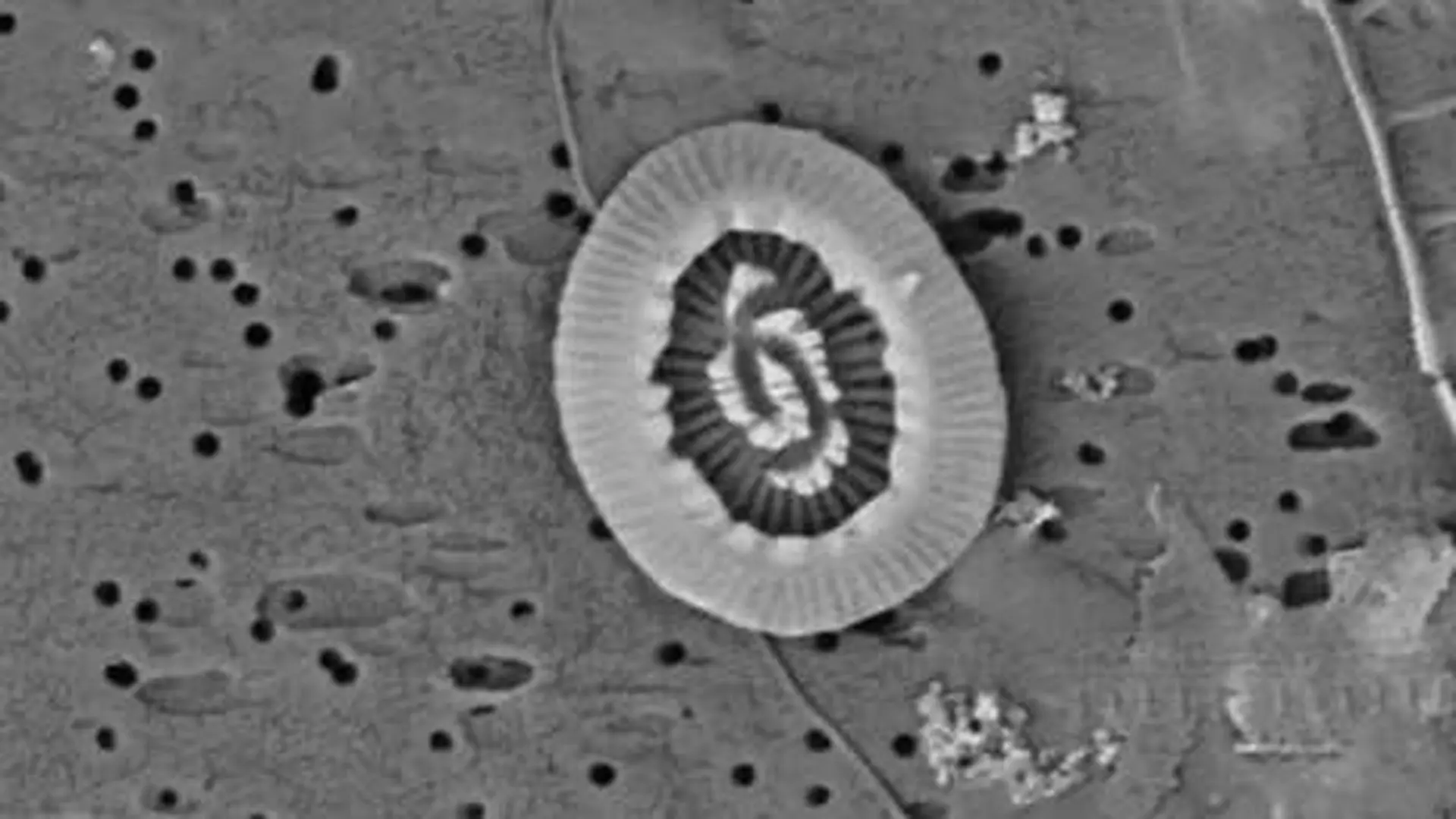
Deep beneath the Atlantic’s surface, microscopic phytoplankton called coccolithophores coat themselves in overlapping calcite plates—coccoliths—derived from the same mineral that makes up limestone. Though each organism is smaller than a human hair, together they generate roughly one‑fifth to four‑fifths of the ocean’s calcite, a key component of the long‑term carbon sink.
A recent analysis of Atlantic seafloor sediments has uncovered a pronounced latitudinal breakpoint that governs how these organisms grow and calcify, shedding light on a subtle but vital climate feedback.
Divergent Growth Paths Across the Ocean
Two distinct physiological groups emerge among coccolithophores. The smaller, rapidly reproducing species build their thickest plates when environmental conditions are most favorable, showing a tight coupling between growth speed and calcification. In contrast, larger, slower‑dividing taxa produce thinner plates during periods of peak growth, implying that carbon demand outstrips supply in their surroundings.
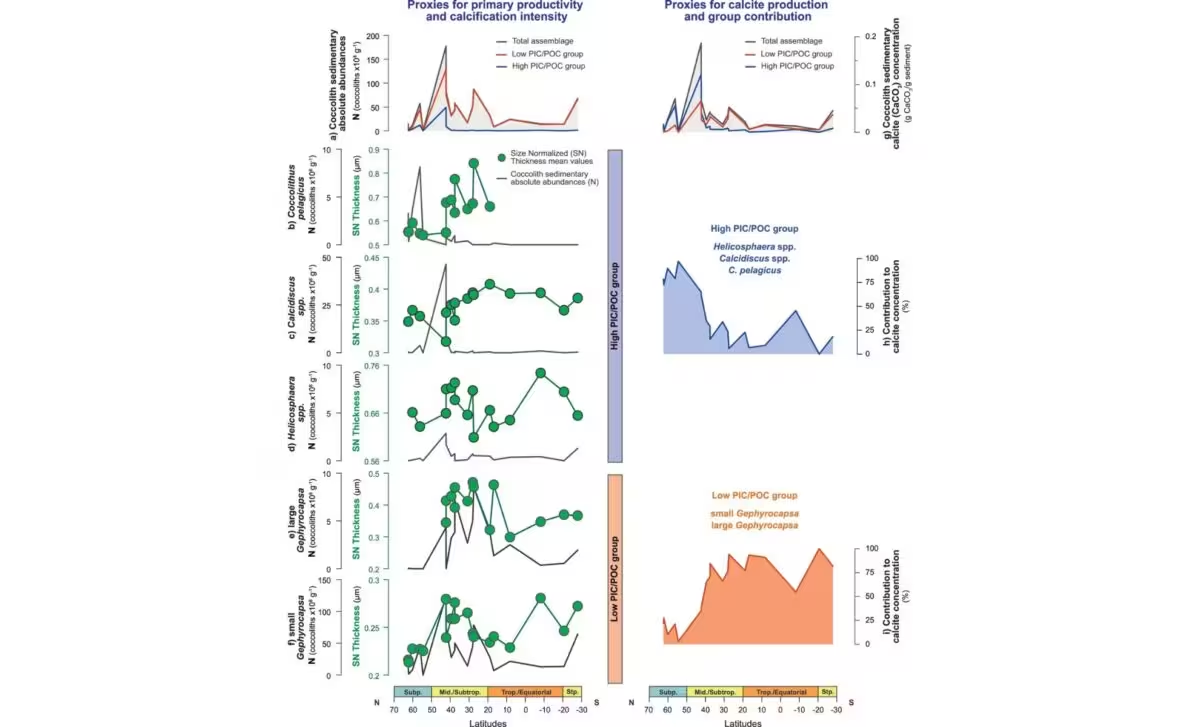
The study, published in Nature Communications, pinpoints the transition near 40° N—roughly the line that passes through New York and Lisbon. North of this latitude, colder, more turbulent waters favor the larger, heavily plated species as the primary calcite contributors. Southward, across temperate and subtropical zones, the smaller, faster‑growing cells become dominant, as noted in a related article about self‑assembling cells.
Sediment Records Reveal Ocean Chemistry Controls
Lead author Alba González‑Lanchas of the University of Oxford and collaborators took a fossil‑based approach, sampling well‑preserved coccolith plates from 19 sites spanning sub‑polar to equatorial Atlantic basins. All samples were collected from depths shallower than 3,000 m to avoid dissolution of calcite in the deep‑sea environment. By quantifying plate abundance, dimensions, and thickness, the team reconstructed historic growth and calcification patterns.
Applying classic microscopy techniques to these sedimentary archives, the researchers linked the 40° N breakpoint to major oceanic chemical gradients, including variations in temperature, dissolved inorganic carbon, and nutrient concentrations. North of the line, the rate of internal cellular reactions appears to limit calcification, whereas south of it, the speed at which carbon reaches the cell from surrounding seawater becomes the controlling factor. The authors liken this to snowflake formation: rapid growers develop delicate, branching crystals, while slower growers produce denser, solid plates.
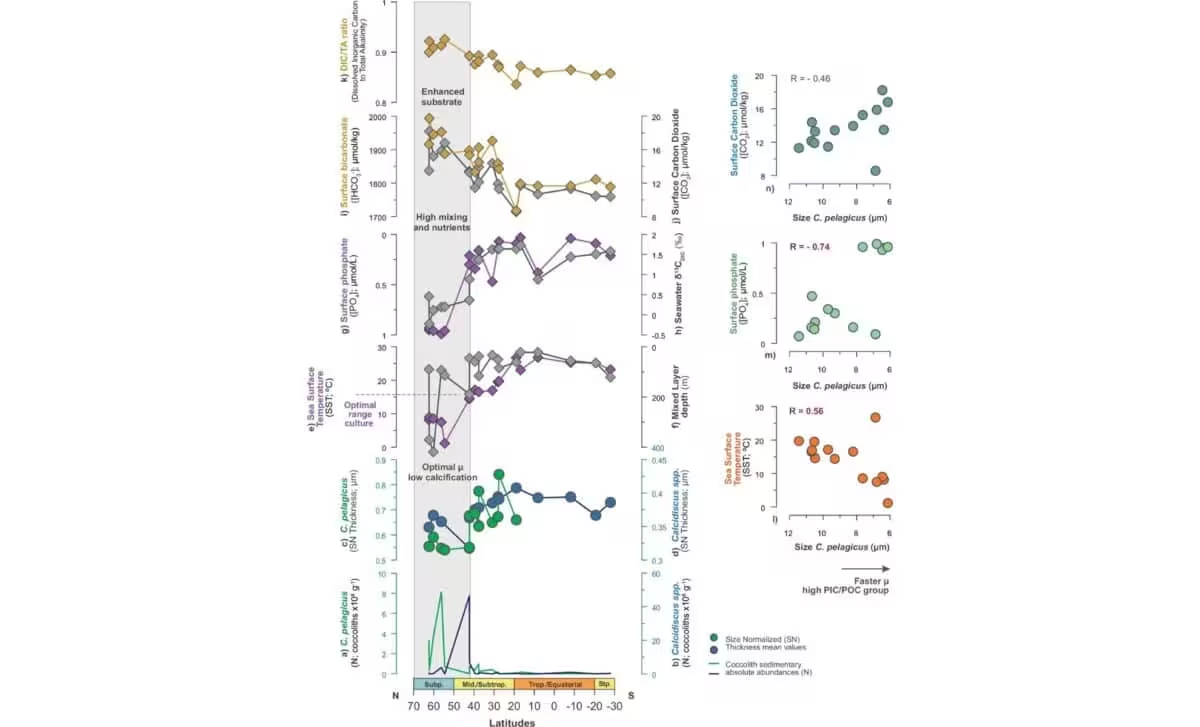
The authors caution that the latitude of this ecological boundary may shift as ocean chemistry evolves under rising CO₂ levels and warming temperatures. A migration of the breakpoint would reconfigure which coccolithophore group dominates calcite production, ultimately influencing the amount of carbon that reaches the seafloor.
Beyond contemporary implications, the work provides a new framework for interpreting ancient coccolith assemblages. Fossil plates from sediments dating back roughly 400,000 years already display patterns consistent with the study’s findings, showing intensified calcification by fast‑growing groups during known warm intervals. Such evidence reinforces the link between cellular growth dynamics and historic ocean carbon conditions.
This article has been fact checked for accuracy, with information verified against reputable sources. Learn more about us and our editorial process.
Last reviewed on .
Article history
- Latest version
Reference(s)
- González-Lanchas, Alba. “Atlantic sediments reveal interacting environmental and physiological controls on coccolithophore calcite production - Nature Communications.”, vol. 17, no. 1, May 28, 2026, pp. 4722 Nature, doi: 10.1038/s41467-026-73162-5. <https://www.nature.com/articles/s41467-026-73162-5>.
- “Alba Gonzalez-Lanchas.” <https://www.earth.ox.ac.uk/people/albagonzalez-lanchas>.
Cite this page:
- Posted by Bilal Abbasi