Wild Bactrian Camel Drinks Saltier-Than-Sea Water and Thrives in Former Nuclear Test Site
Only under 1,000 wild Bactrian camels survive, but their unique ability lets them gulp water that would drown most mammals.
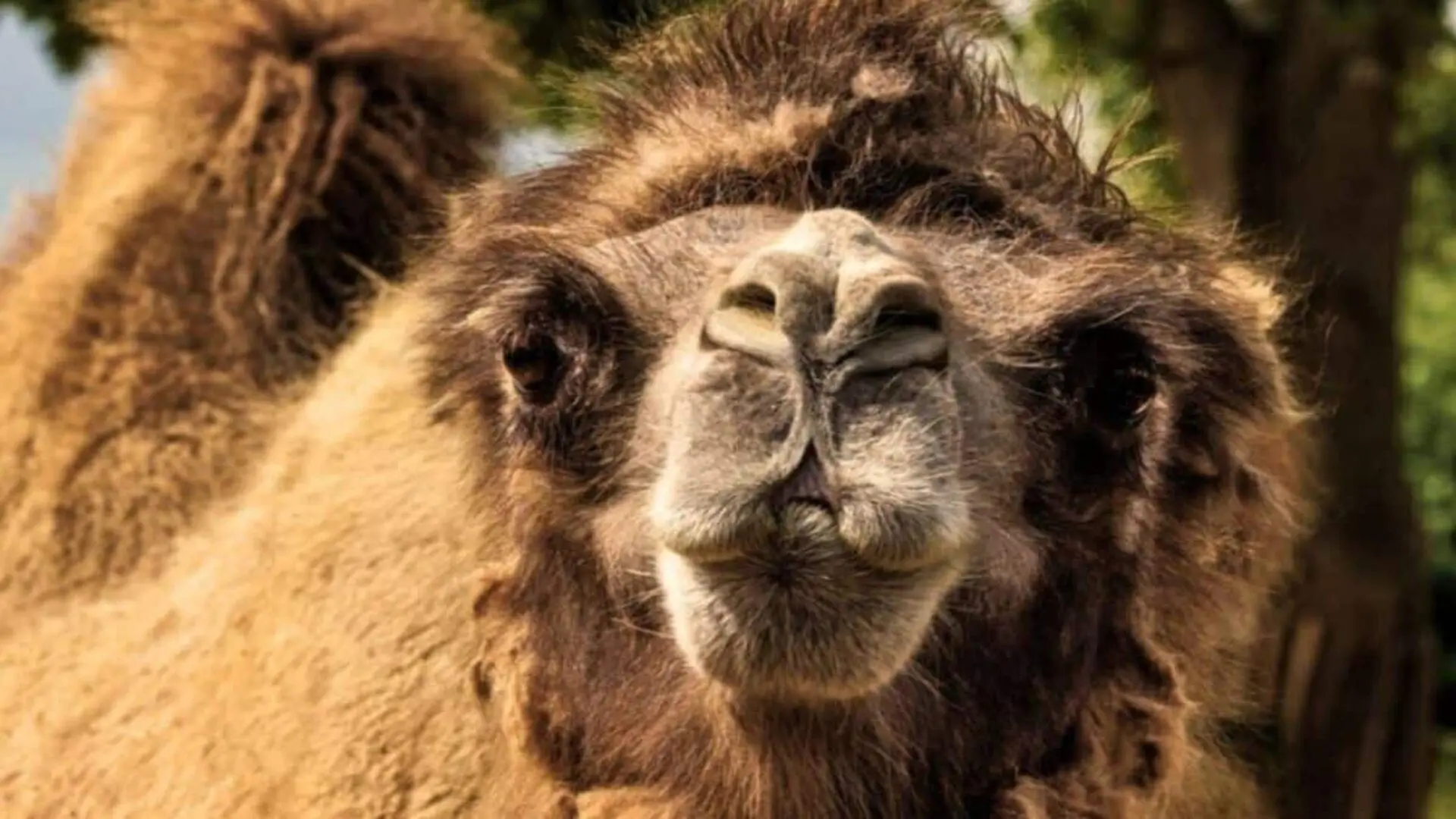
Wild Bactrian camels manage to survive the harsh Gobi Desert by drinking water whose salt concentration exceeds that of seawater – a physiological trait that remains a mystery to researchers and is absent in their domesticated cousins.
Fewer than one thousand individuals are thought to persist across north‑western China and south‑western Mongolia. The species, Camelus ferus, inhabits isolated desert stretches where fresh water is rare, temperatures swing dramatically, and human pressures increasingly threaten its limited range.
Genetic analyses have confirmed that this camel is not a feral offshoot of domestic stock; it represents a distinct species. In Mongolia it is called the havtgai or “flathead,” a nod to its uniquely shaped forehead, and it stands as the sole surviving truly wild camel.
Mystery Behind Extreme Saltwater Tolerance
In parts of China, wild camels rely on salty slush because no fresh sources exist. The EDGE of Existence profile from 2007 described this water as intolerable to any other mammal.
Domestic Bactrian camels cannot handle such saline solutions, indicating that the wild form possesses a unique physiological mechanism for extracting water while expelling excess salt without apparent harm – a process that scientists have yet to decode.
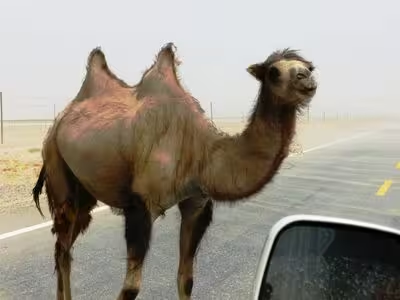
Skin‑sample DNA work on deceased wild camels revealed two to three genetic differences from domestic Bactrian camels and a base‑pair variation of about 3 %. These findings support the view that existing herds are remnants of the original wild lineage rather than escaped domestic animals.
Maintaining this genetic distinction is crucial for conservation. Hybridisation with domestic camels can erode the limited gene pool, so the isolated populations in China’s Gashun Gobi, which have no contact with domestic herds, are especially valuable.
Challenges in Counting a Sparse Population
Current assessments place the total number of wild Bactrian camels below 1,000, though national tallies differ. The Zoological Society of London (ZSL) project estimates roughly 600 individuals in China and about 450 in Mongolia, while still describing the overall count as under 1,000.
Earlier estimates showed similar uncertainty. In 2007, EDGE reported around 450 camels in Mongolia’s Great Gobi Reserve A and roughly 650 spread across three isolated sites in Xinjiang, China.
Accurate enumeration is hampered by the camels’ low density, vast and remote distribution, extreme weather, and political obstacles that have limited previous surveys. ZSL notes that earlier attempts failed to generate fully reliable figures.
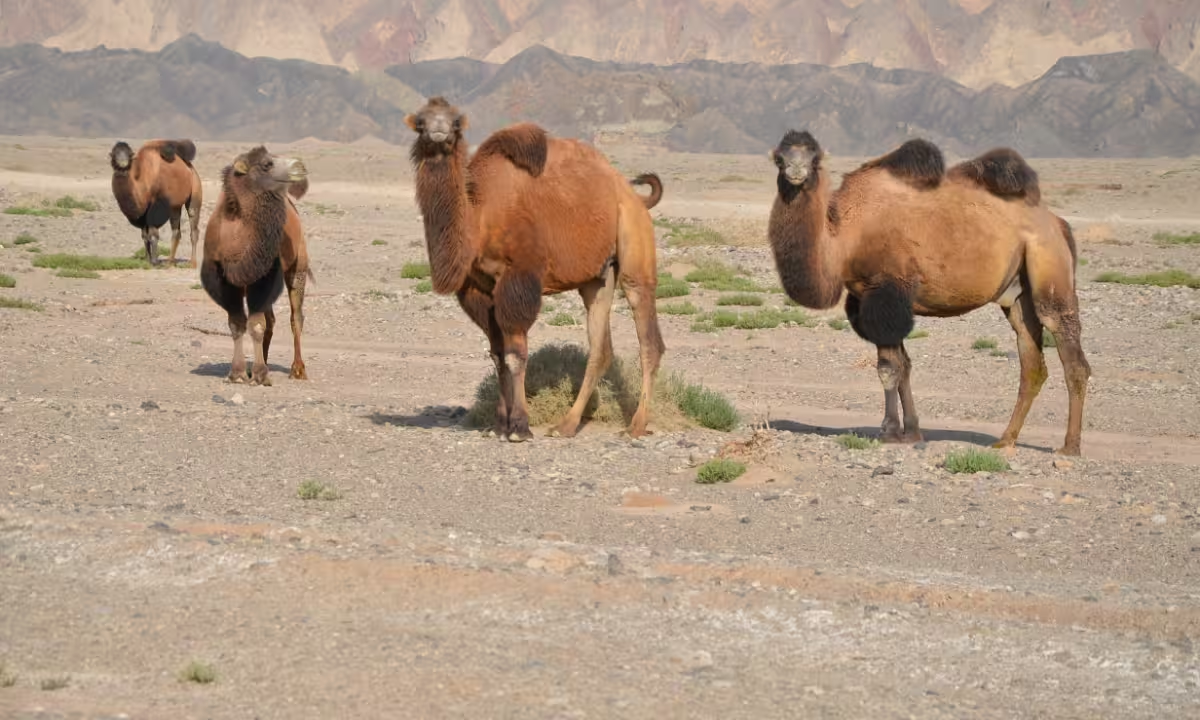
A pilot camera‑trap survey launched in April 2019 deployed 180 traps across Mongolia’s Great Gobi Special Protected Area A. Researchers, park rangers and border officers monitored the sites until October 2021, feeding the resulting images into population‑modelling efforts conducted by the Wild Camel Protection Foundation, ZSL and Prague Zoo.
All remaining wild camels in Mongolia are confined to that protected zone, while the rest of the species’ survivors occupy isolated pockets of the Chinese Gobi, leaving the global population fragmented between two nations.
From Nuclear Test Sites to Modern Threats
The Chinese Gashun Gobi herd lives within a former nuclear‑testing area, having survived more than 43 atmospheric detonations. Existing data do not confirm that the camels have developed radiation resistance, but the restricted access during testing may have inadvertently shielded them from human disturbance.
Once testing ceased, illegal hunters and miners seeking gold and iron entered the region, posing new risks. John Hare, founder of the Wild Camel Protection Foundation, told BBC News in 2001 that the area’s remoteness had helped preserve the animals, but that poaching and mining pressures were now encroaching, even as land‑mines were placed near the salt‑water springs the camels rely on.
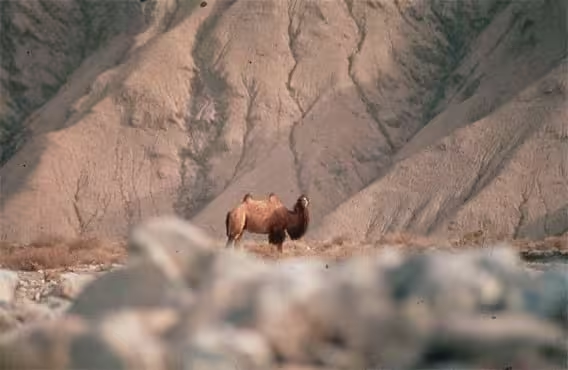
Predation by wolves is a primary concern in Mongolia, whereas in China hunting and illicit mining present the greatest threats. Additional pressures include habitat degradation, desertification linked to climate change, and contact with domestic camels that can lead to hybridisation.
The International Union for Conservation of Nature classified the wild Bactrian camel as Critically Endangered in 2002. ZSL ranks it among the eight most endangered large mammals, emphasizing the need for continued monitoring given the persistent uncertainty surrounding population numbers.
Conservation Strategies Target Habitat Protection and Genetic Integrity
The Wild Camel Protection Foundation helped designate the 175,000‑square‑kilometre Lop Nur Wild Camel National Nature Reserve in China and established a captive‑breeding centre at Zakhyn Us in Mongolia to safeguard a population isolated from immediate wild‑life threats.
Ongoing research in Mongolia assesses inbreeding levels within the captive herd, evaluates remaining genetic diversity among wild individuals, and quantifies hybridisation across both groups. ZSL’s Institute of Zoology collaborates with the Wild Camel Protection Foundation, the University of Kent and the University of Veterinary Medicine Vienna to generate data that will underpin a national management plan.
Studies also track camel movements within the Great Gobi Special Protected Area A, aiming to map critical drinking sites and gathering spots. This information is essential for refining protected‑area management, though gathering such data remains challenging across the expansive, sparsely populated desert landscape.
This article has been fact checked for accuracy, with information verified against reputable sources. Learn more about us and our editorial process.
Last reviewed on .
Article history
- Latest version
Reference(s)
- Waterman, Carly. “The Wild Bactrian Camel.”, April 6, 2007 EDGE of Existence <https://www.edgeofexistence.org/blog/the-wild-bactrian-camel-a-critically-endangered-species/>.
- <https://www.zsl.org/what-we-do/projects/conservation-of-mongolias-wild-camels>.
- “BBC News | SCI/TECH | 'New' camel lives on salty water.” <http://news.bbc.co.uk/2/hi/science/nature/1156212.stm>.
Cite this page:
- Posted by William Moore