New Zealand Ranks First Among Nations Most Likely to Endure a Global Collapse
New study ranks nations most likely to endure a global collapse, with one island country far outpacing the rest.
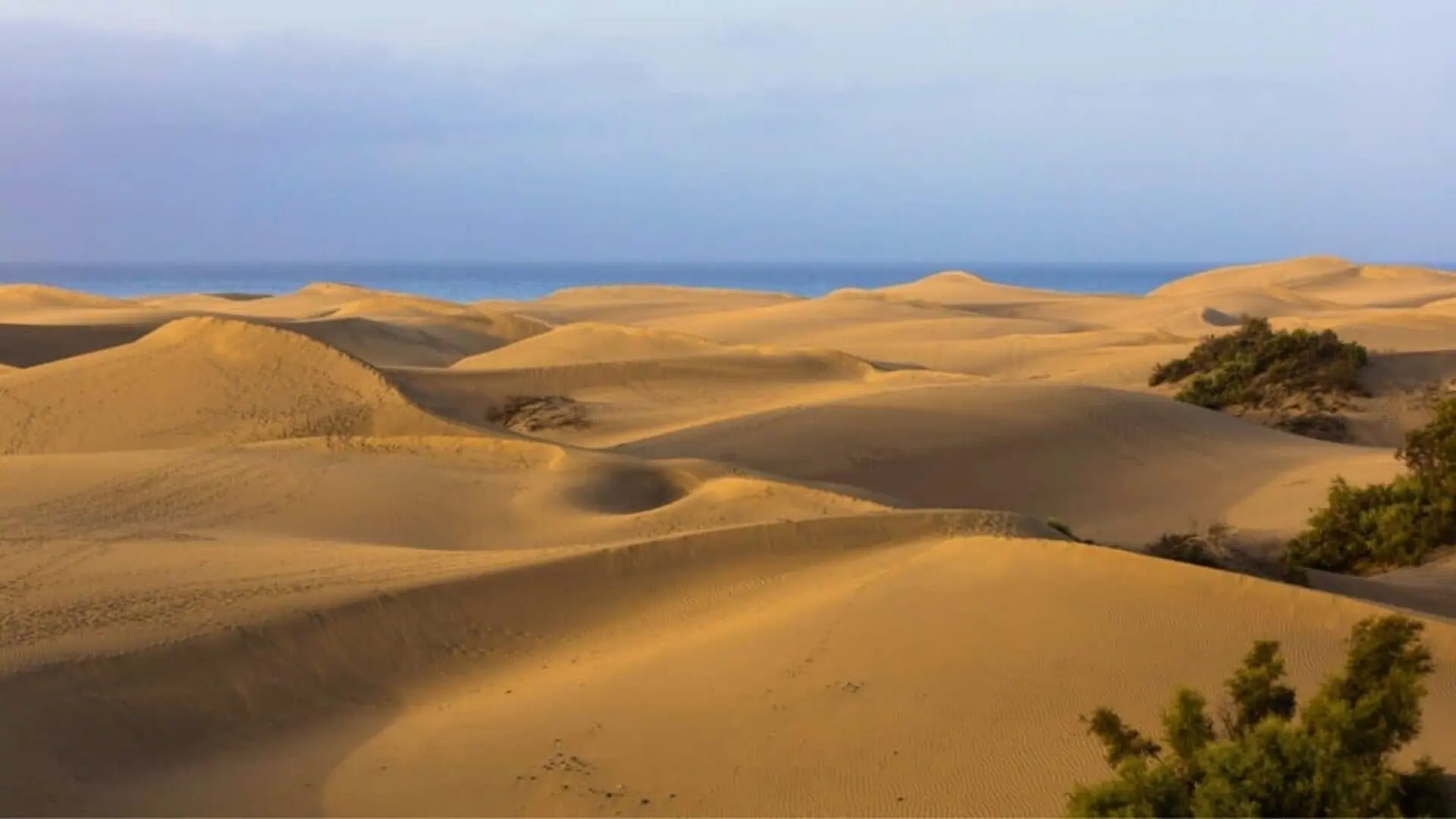
Researchers at Anglia Ruskin University have explored a provocative scenario: if worldwide systems were to crumble, which countries would be best positioned to endure? Their analysis, appearing in the journal Sustainability, ranks New Zealand at the forefront of a short list of nations whose geography, food‑production capacity, and energy setup provide a comparatively strong foundation.
The project, led by Nick King and Professor Aled Jones of the Global Sustainability Institute, does not claim that societal collapse is inevitable. Instead, it investigates a process they label “de‑complexification,” a broad undoing of the interdependent supply chains, trade agreements and financial networks that define modern life. Within this framework, climate change acts as an amplifying factor, worsening stresses on food, power and migration before other pressures peak.
Island Nations Possess Structural Advantages
The team assessed nations on three pillars: domestic energy and manufacturing self‑sufficiency, agricultural carrying capacity (arable land per capita), and geographic isolation that could limit mass influxes of people during crises. After filtering the 20 lowest‑scoring countries on a global climate vulnerability index, five emerged as the most resilient: New Zealand, Iceland, the United Kingdom, Tasmania (Australia) and Ireland.
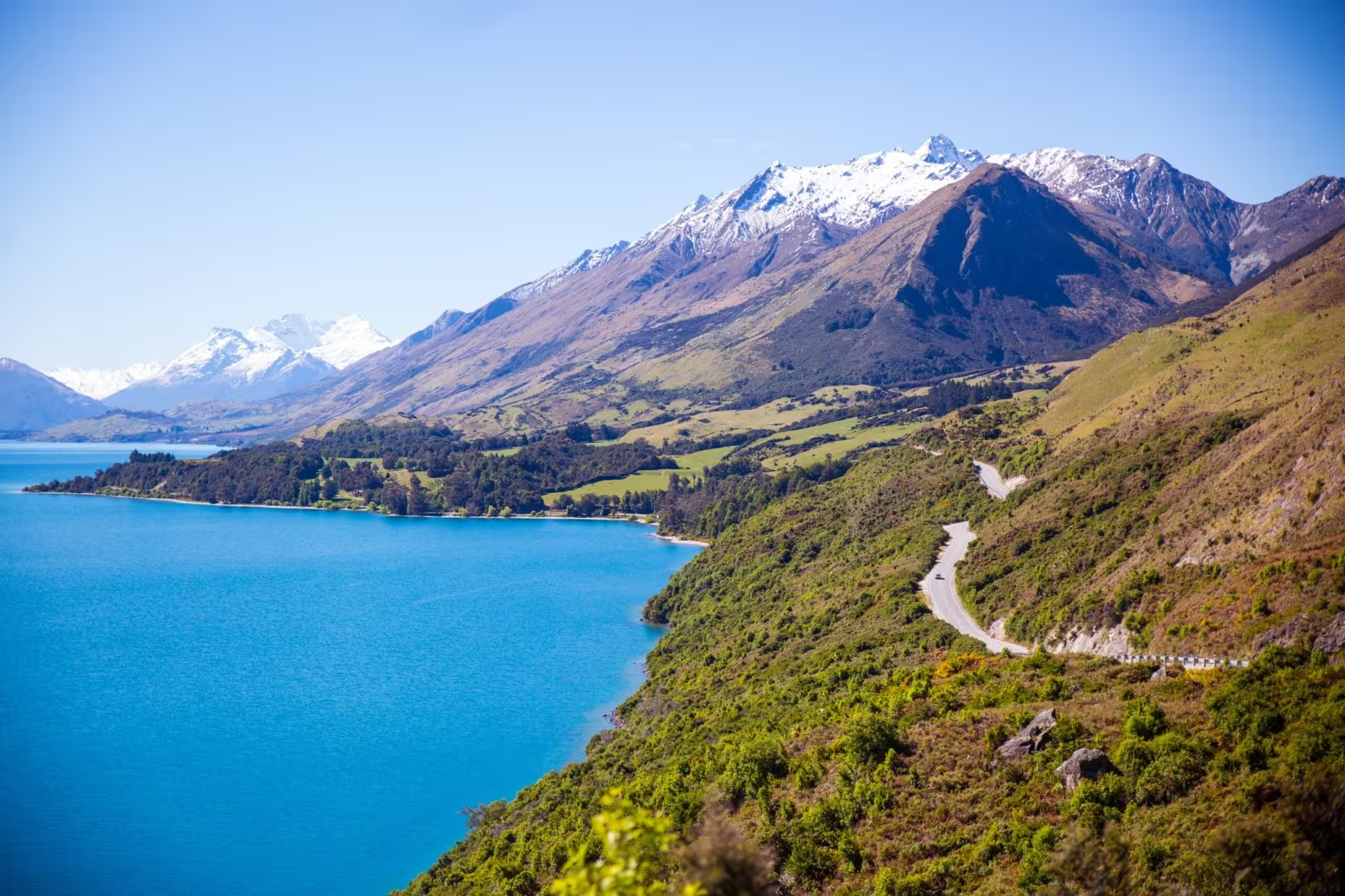
All five are either islands or island continents, a factor that matters in two ways. First, it reduces land borders, curbing the likelihood of large‑scale cross‑border migrations. Second, maritime climates tend to dampen extreme swings in temperature and precipitation, making agricultural and infrastructural systems less prone to sudden destabilisation even as global warming progresses.
According to the authors, these nations currently hold the highest probability of preserving relative stability as temperatures continue to rise.
Renewable Power and Ample Farmland Favor New Zealand
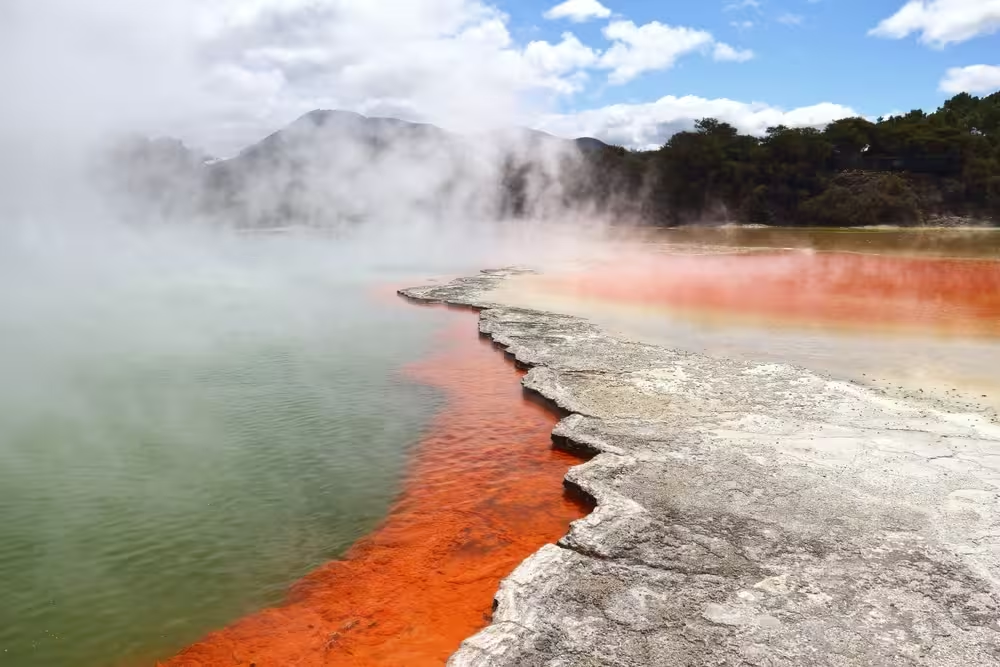
When the researchers narrowed their focus to each country’s internal energy and agricultural profiles, New Zealand stood out. The nation derives a large share of its electricity from geothermal and hydro sources, creating a renewable energy base that is largely insulated from volatile global fuel markets. Coupled with a generous amount of farmable land and a modest population, New Zealand could theoretically meet its food and power needs without heavy reliance on external supply chains.
The other candidates also show strengths but with more caveats. Iceland mirrors New Zealand’s renewable‑energy advantage, while Tasmania and Ireland benefit from productive agriculture and manageable population sizes. The United Kingdom, despite fertile soils, faces higher population density and limited per‑capita farmland, raising questions about its long‑term food self‑sufficiency; its energy mix is also less uniformly renewable.
Aled Jones, director of the Global Sustainability Institute and co‑author of the study, emphasised that the analysis also seeks to highlight steps less‑advantaged countries can take—namely, trimming reliance on complex global supply networks and bolstering domestic energy and food production.
Resilience Still Coexists With Climate Risks
The rankings are not intended as a guide to “safe havens.” Even the top‑ranked nations remain vulnerable to climate‑related threats. New Zealand, for example, already confronts increasing storm activity, wildfires and shifting disease patterns.
As climate scientist Heidi Roop of the University of Minnesota explained to Popular Science, the study measures existing assets rather than guaranteeing future performance. The researchers asked which capabilities a country already possesses that would allow it to function if global structures collapsed, not how it would fare under ideal conditions.
The authors point out that ecological degradation, resource depletion and demographic pressures interact with climate stress, while the hyper‑connected nature of the modern economy accelerates the spread of shocks. A financial downturn, a cascading supply‑chain failure, or a rapid agricultural collapse in one region can reverberate worldwide within months. Nations that can sustain themselves in food and energy, and that can limit uncontrolled migration, are therefore better equipped to weather such disruptions, even if they cannot avoid them entirely.
This article has been fact checked for accuracy, with information verified against reputable sources. Learn more about us and our editorial process.
Last reviewed on .
Article history
- Latest version
Reference(s)
- <https://www.mdpi.com/2071-1050/13/15/8161>.
- Watson, Sara. “You can’t escape climate change by moving to New Zealand.”, August 10, 2021 Popular Science <https://www.popsci.com/environment/nations-prepared-global-climate-collapse/>.
Cite this page:
- Posted by William Moore