NASA’s Roman Telescope Just Passed A Major Navigation Milestone On Its Way To Deep Space
NASA’s Roman Space Telescope has successfully completed its first trajectory adjustment as it journeys toward its final orbit at the L2 Lagrange point.
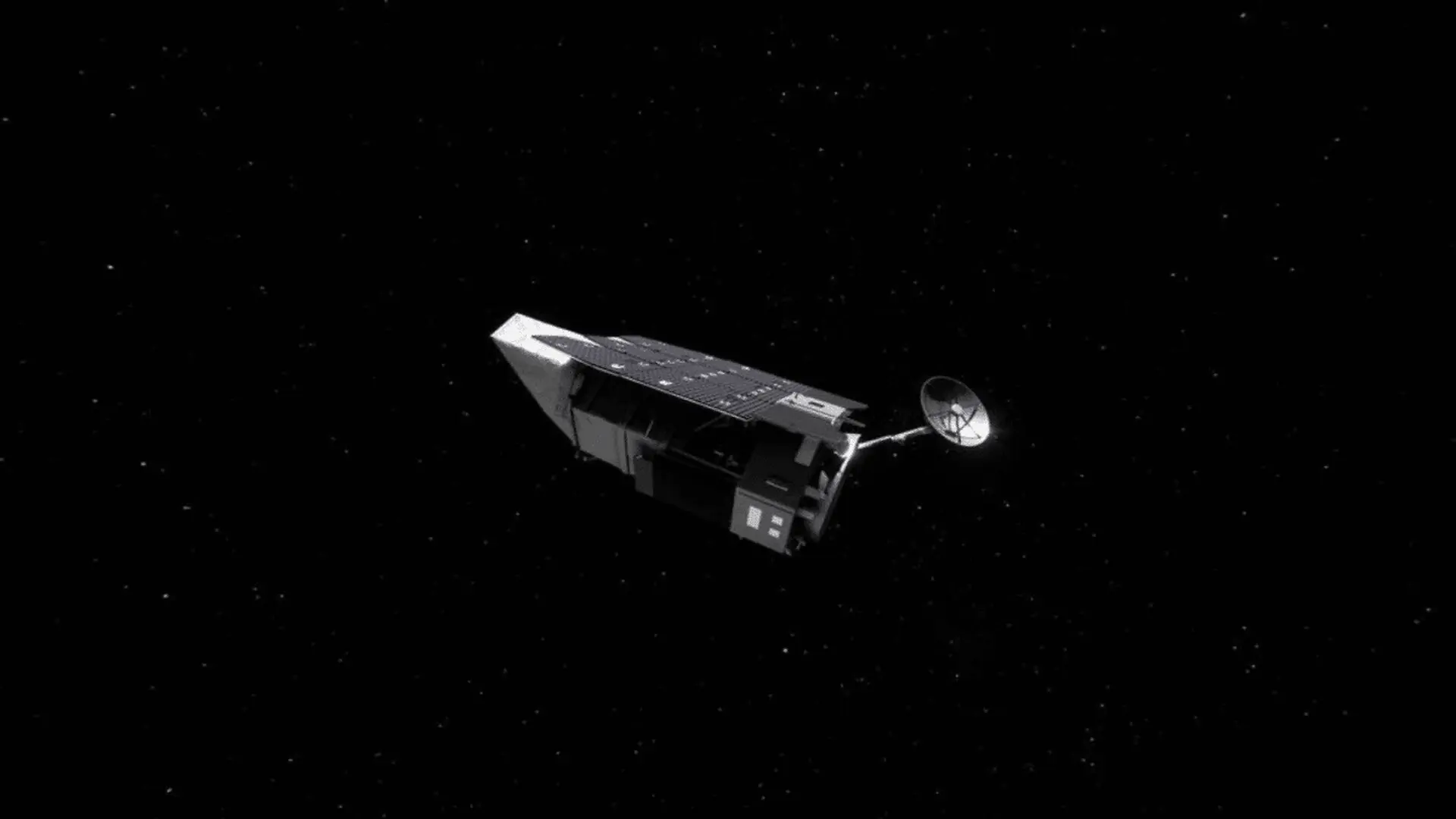
NASA’s Nancy Grace Roman Space Telescope has achieved a critical operational milestone, successfully executing its inaugural mid-course correction burn. This maneuver is a vital component of the spacecraft’s complex transit toward its ultimate scientific vantage point, the second Lagrange point (L2).
Steering Toward a Cosmic Observation Hub
The propulsion system of the observatory fired at 12:02 p.m. EDT, maintaining thrust for approximately three minutes. According to NASA, this adjustment was calculated to fine-tune the spacecraft’s trajectory, ensuring it remains on the precise path required for its eventual orbital insertion. While this initial correction was successful, mission controllers have built flexibility into the schedule, with an additional maneuver planned for later this week should further trajectory refinements be necessary.
Success! Roman’s planned mid-course correction burn went as expected, ensuring that we are on track for our orbit around the second Lagrange point, a million miles from Earth. https://t.co/9Pun3svIu8
— Nancy Grace Roman Space Telescope (@NASARoman) August 31, 2026
The destination, L2, is situated roughly 1.5 million kilometers from Earth in a direction shielded from the Sun. This stable gravitational region has become a premier location for deep-space observatories, most notably the James Webb Space Telescope. By residing at L2, the Roman telescope can maintain a clear, continuous line of sight toward the distant cosmos while remaining thermally stable.
Navigating the Path to Science Operations
The journey to its final orbit is a process spanning approximately 100 days from the initial launch. During this transit, the mission team is tasked with verifying the health of the spacecraft’s onboard systems and performing initial instrument calibrations. This commissioning phase is essential to ensure that once the telescope achieves orbit, it is fully prepared to begin its mission.
Following its arrival at L2, the observatory will settle into a stable, long-term routine. Rather than the major corrections required during the initial transit, the spacecraft will rely on minor station-keeping maneuvers—roughly every 28 days—to counteract external gravitational forces and maintain its specific orbital position.
Expanding Our View of the Dark Universe
The Nancy Grace Roman Space Telescope is engineered to tackle some of the most profound mysteries in contemporary astrophysics, specifically targeting the roles of dark energy and dark matter in shaping the evolution of the universe. By integrating an advanced infrared imaging system with an expansive field of view, the telescope is designed to survey the sky at a scale previously unattainable.
This wide-field capability will allow researchers to gather unprecedented volumes of data, effectively mapping galaxy structures and distant planetary systems. By working in concert with other orbital platforms, the Roman mission is expected to unlock new insights into the expansion history of the universe and reveal celestial populations that have remained hidden until now.
This article has been fact checked for accuracy, with information verified against reputable sources. Learn more about us and our editorial process.
Last reviewed on .
Article history
- Latest version
Reference(s)
- Balzer, Ashley. “NASA's Roman Completes First Mid-Course Correction Burn - NASA Science.”, August 31, 2026 NASA <https://science.nasa.gov/blogs/roman/2026/08/31/nasas-roman-completes-first-mid-course-correction-burn/>.
- “https://go.nasa.gov/4A3zDi2.” <https://t.co/9Pun3svIu8>.
Cite this page:
- Posted by Farah Siddiqui