CERN Scientists Just Recreated The Earliest Form Of Matter Using Surprisingly Small Atoms
CERN researchers have recreated early-universe matter using unexpectedly small atomic collisions, challenging previous assumptions about particle physics.
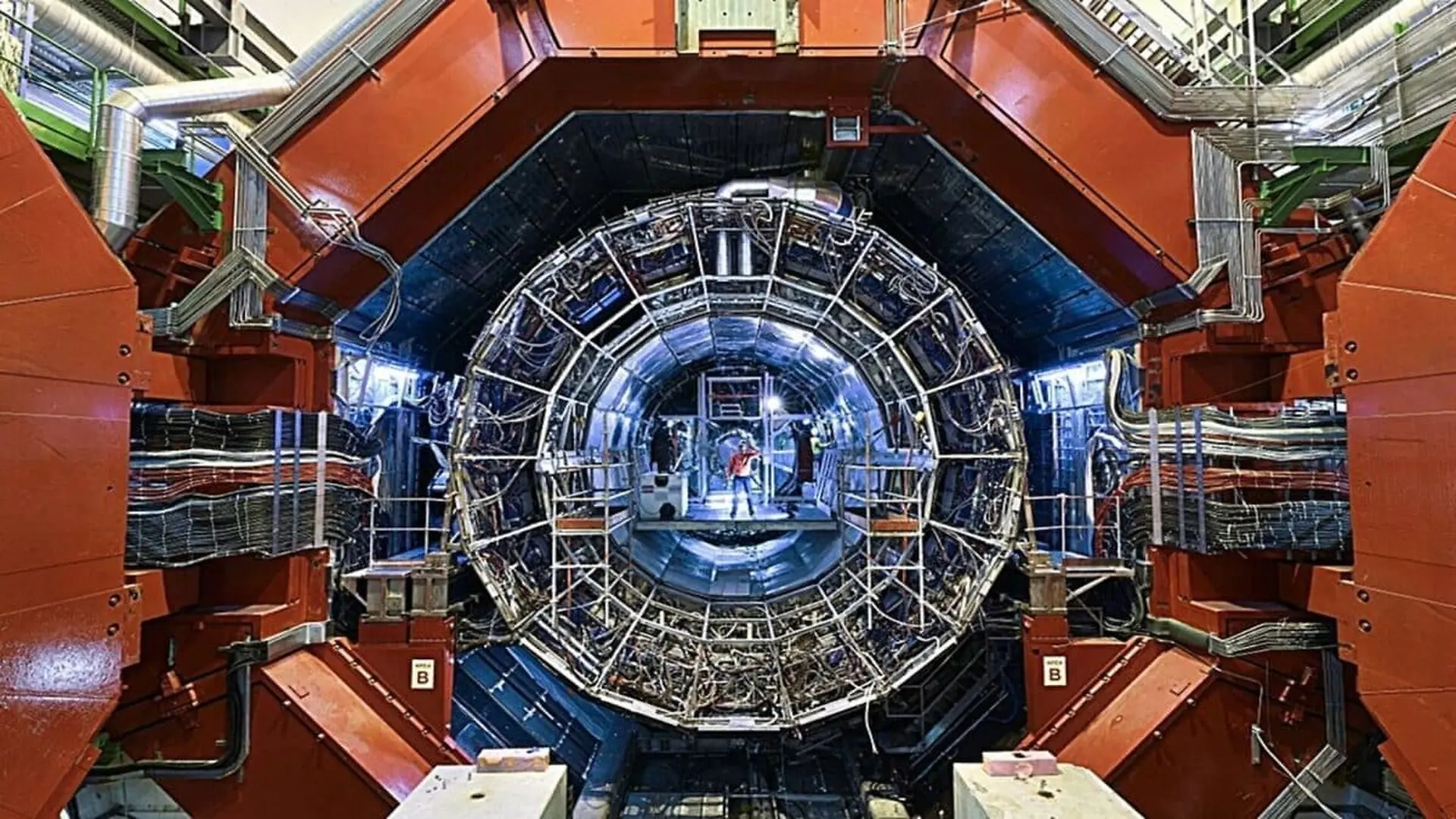
Researchers at CERN have successfully synthesized quark-gluon plasma—an exotic state of matter that permeated the infant universe—using atomic nuclei significantly smaller than previously thought possible. These findings, recently published in Physical Review Letters, demonstrate that even lighter-weight collisions can mimic the extreme environmental conditions that existed in the moments following the Big Bang.
Historically, the production of quark-gluon plasma (QGP) in particle accelerators has required the collision of heavy atomic nuclei, such as lead. By contrast, this latest experiment utilized oxygen-16 and neon-20 nuclei, successfully generating the distinct signatures associated with this primordial matter. This breakthrough establishes a new methodology for probing the early stages of cosmic history and the fundamental phase transitions that allowed the universe to evolve from a hot, chaotic particle soup into the structured matter observed today.
Mapping the Universe Before Atomic Formation
Immediately following the Big Bang, the cosmos existed in a state beyond our current comprehension. Temperatures were so intense that protons and neutrons had yet to coalesce. Instead, the universe was saturated with a dense, high-energy mixture of quarks and gluons. This fleeting epoch, characterized by quark-gluon plasma (QGP), ended as the universe expanded and cooled, eventually trapping quarks within larger, stable particles.
For decades, physicists have sought to replicate these conditions by using particle accelerators to compress vast energy densities into microscopic volumes. The primary challenge has been defining the lower limits of collision systems required to trigger the collective behavior indicative of QGP. Because larger systems were assumed to be more conducive to producing this state, research was predominantly restricted to heavy ion collisions.
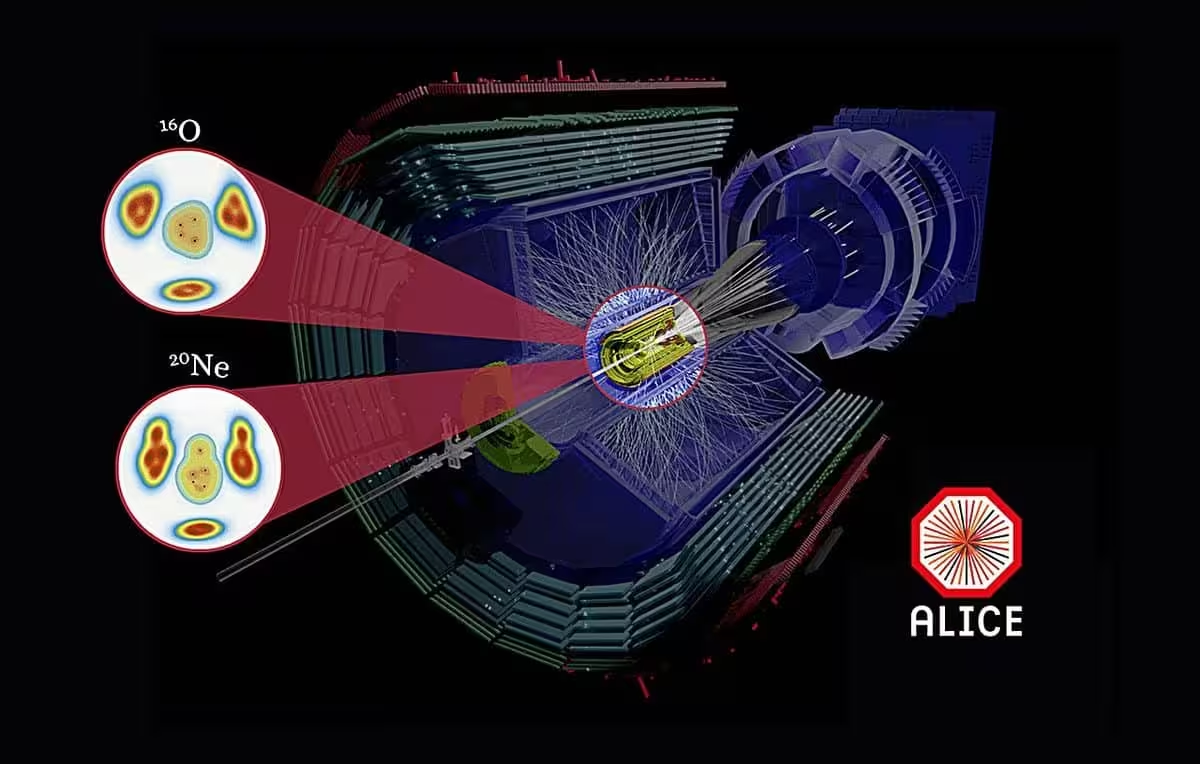
The latest CERN data refutes this limitation. The research team observed that collisions involving oxygen-16 and neon-20 exhibited patterns consistent with a tiny, fluid-like system. Rather than dispersing as isolated fragments, the resulting particles expanded in a collective manner before cooling, a hallmark of the strongly interacting fluid characteristic of QGP.
Recreating the Earliest Moments of Existence
This study represents a significant milestone in our investigation of the earliest form of matter. By testing smaller nuclei, researchers can isolate the specific variables—such as temperature and density—that drive the formation of QGP.
“This experiment has pushed the boundary for how small the atomic nuclei can be while still re-creating this primordial matter,” noted You Zhou, a researcher at the Niels Bohr Institute and co-author of the Physical Review Letters study. According to Zhou, the findings offer critical insights into the fundamental threshold required for matter to enter this unusual state, helping clarify the transition from free-floating particles to the complex building blocks of the physical world.
While these laboratory collisions do not recreate the Big Bang itself, they offer a controlled environment to study the physical laws that governed that era. By minimizing the size of the collision system, scientists can effectively disentangle the effects of geometric scale from the high-energy processes occurring within the reaction.
From Microscopic Collisions to Galactic Evolution
The ability to generate QGP in lighter nuclei provides a sophisticated new tool for mapping the evolution of matter. Understanding this primordial transition is central to modern physics, as the particles that emerged from this state eventually aggregated to form the stars, galaxies, and planets that constitute our current universe.
“Hopefully, this will help us better understand how the plasma behaved during the first moments of the universe—and how it later evolved into the forms of matter that everything around us is made of,” said Zhou. As future experiments at CERN proceed, researchers intend to refine these miniature cosmic events, comparing various collision systems to establish the precise parameters that define this ancient state of matter.
Each success in reproducing these conditions provides another data point for an epoch that remains beyond direct empirical observation, steadily advancing our narrative of how the universe transitioned from its inception to its present, highly structured state.
This article has been fact checked for accuracy, with information verified against reputable sources. Learn more about us and our editorial process.
Last reviewed on .
Article history
- Latest version
Reference(s)
- projects, Contributors. “phase of quantum chromodynamics characterised by an assembly of quarks and gluons at thermal and chemical equilibrium.”, August 23, 2004 Wikimedia Foundation, Inc. <https://en.wikipedia.org/wiki/Quark%E2%80%93gluon_plasma>.
- Institutet, Niels. “Staff at the Niels Bohr Institute – Niels Bohr Institute - University of Copenhagen.” <https://nbi.ku.dk/english/staff/?pure=en/persons/503532>.
- Abualrob, I. J.., et al. “Evidence of Nuclear Geometry-Driven Anisotropic Flow in
Cite this page:
- Posted by Farah Siddiqui