Physicists Build First Time Mirror That Generates Time‑Reversed Pulse
Scientists reverse a wave in time, uncovering unexpected phenomena beyond theoretical predictions.
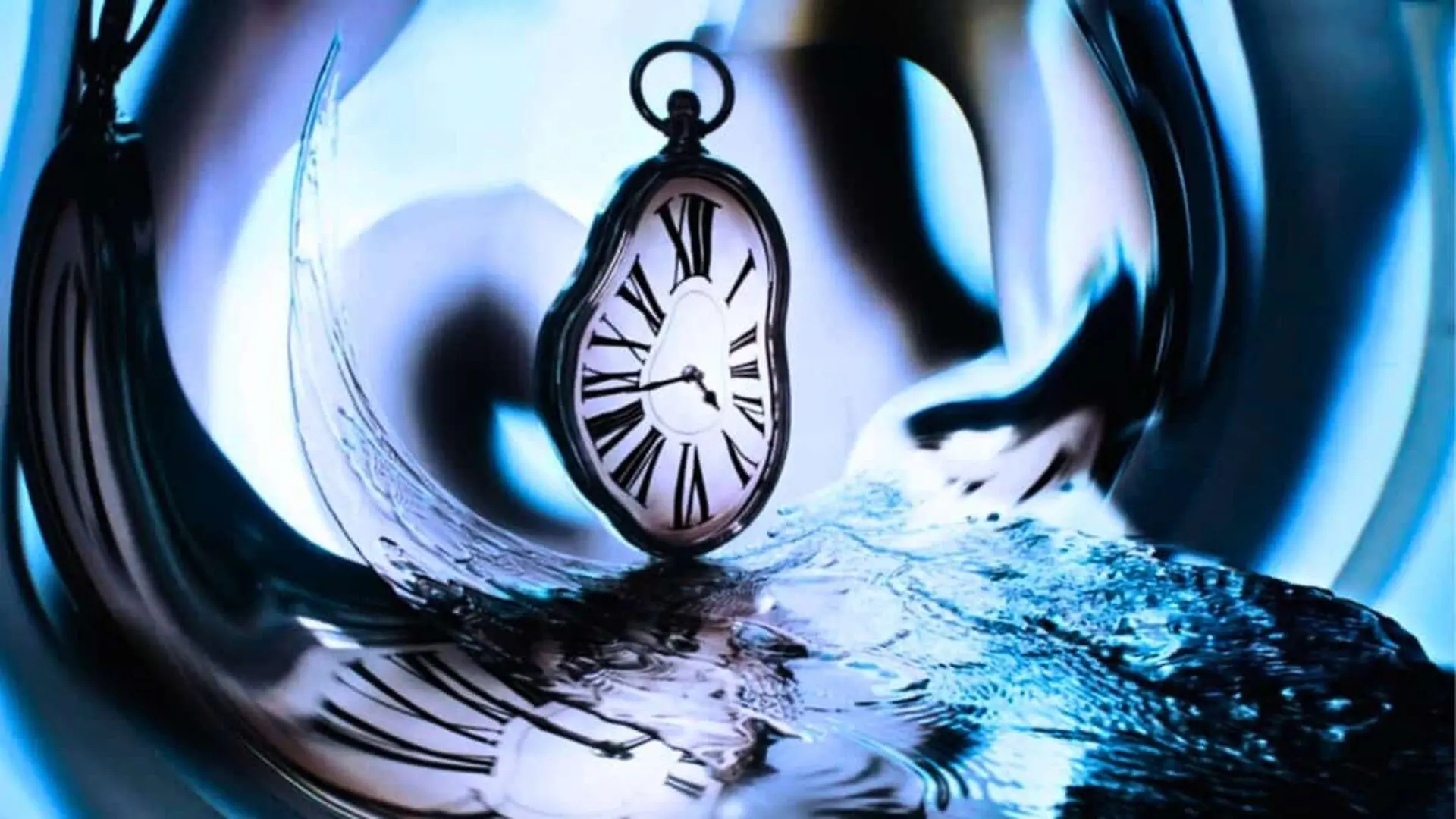
For decades, theorists predicted that abruptly altering a material’s properties everywhere could make a propagating wave behave oddly, but experimental verification remained elusive. The notion was that a wave encountering such a sudden, uniform change would not simply bounce back; part of it would appear to run its evolution in reverse.
In 2023, Hady Moussa and colleagues at the City University of New York’s Advanced Science Research Center demonstrated the effect in a laboratory setting. Their study, published in Nature Physics, showed that electromagnetic signals can generate a reflected component when the medium itself is switched in time.
No information traveled backward; instead, the rapid transition created a new wave segment whose temporal progression was inverted.
Temporal Boundaries vs. Conventional Mirrors
A classic mirror reflects a spatial wavefront that reaches a fixed surface. By contrast, a temporal interface occurs when the material parameters shift while a wave is already inside the medium. In the experiment, the researchers sent a pulse through a transmission line whose electrical characteristics were altered across its entire length within a few nanoseconds. This simultaneous change acted as a “border in time,” splitting the original signal into a forward‑propagating part and a time‑reversed component.
Because spatial momentum remains conserved, the wave must adjust its frequency to accommodate the new medium. This frequency shift provided a measurable signature of the temporal reflection.
Creating a Nanosecond‑Scale Time Mirror
Designing the theoretical model was straightforward; engineering the hardware proved challenging. Moussa’s team built a metamaterial transmission line composed of metal conductors, high‑speed electronic switches, and capacitor banks. By toggling the switches on a sub‑nanosecond timescale, they modified the line’s impedance almost instantaneously.
Uniformity across the line was critical. Any delay between sections would blur the temporal boundary, causing different portions of the pulse to experience the change at distinct moments. The researchers achieved a rise time under 3 ns and observed a reflection peak with nearly 90 % of the ideal amplitude, which decayed sharply after about 12 ns.
When the timing was sufficiently precise, a distinct echo emerged at the input port, originating solely from the abrupt medium shift rather than from any physical reflector downstream.
Introducing a Second Temporal Interface
After confirming a single time boundary, the team added a second, creating an arrangement analogous to a Fabry‑Pérot cavity—but with “mirrors” defined by moments instead of locations. By varying the interval between the two switching events, they altered the spacing of the reflected pulses: longer delays pushed the echoes further apart, while attenuation reduced the later pulse’s strength.
The spectral response also shifted. Minima in the reflected spectrum moved as the temporal separation changed, mirroring how spatial distance governs interference patterns in conventional optical cavities. Here, time played the controlling role.
Observed Frequency Conversion
One measurement revealed that the reflected wave’s frequency dropped to approximately 55 % of the original after the transition—a value matching predictions based on the line’s transmission‑line parameters. The shift arose purely from the medium’s rapid alteration; no digital processing or external mixers were involved.
Traditional frequency conversion relies on nonlinear devices, whereas a temporal boundary achieves the effect intrinsically within the propagation medium. Scaling the technique to much higher frequencies will require advances in switch speed and synchronization.
A Concept Traced Back to the Late 1950s
The underlying idea dates to 1958, when R. Morgenthaler examined how electromagnetic waves respond to time‑varying media, predicting both reflected and transmitted components from abrupt changes. Later, R. L. Fante expanded the framework in 1971. The primary obstacle remained: fabricating a transition fast and uniform enough to emulate a sharp temporal boundary.
Breakthroughs in high‑speed switching electronics finally enabled the CUNY team to synchronize rapid changes along the entire transmission line, fulfilling the theoretical conditions outlined decades earlier.
Designing Materials Through Time
A solitary temporal interface yields a predictable set of phenomena. Adding multiple interfaces introduces interference effects, similar to those studied in Floquet photonic crystals. Because the CUNY transmission line can be reprogrammed electronically, researchers can adjust the timing and spacing of boundaries on the fly, repeatedly probing wave dynamics under new conditions.
Future Directions and Potential Uses
Immediate applications are likely to focus on signal processing: frequency shifting, pulse shaping, dynamic filtering, and time‑controlled resonators could benefit from this physics. The principles may also extend to acoustic, mechanical, or spin‑wave systems, provided their media can be switched swiftly enough.
Pushing the technique to higher frequencies will demand faster, more precisely synchronized switches. Nevertheless, the experiment validates a long‑standing theoretical prediction: a rapid, nearly uniform alteration of a medium can generate a wave component that appears to reflect off time itself.
This article has been fact checked for accuracy, with information verified against reputable sources. Learn more about us and our editorial process.
Last reviewed on .
Article history
- Latest version
Reference(s)
- <https://asrc.gc.cuny.edu/>.
- Moussa, Hady. “Observation of temporal reflection and broadband frequency translation at photonic time interfaces - Nature Physics.”, vol. 19, no. 6, pp. 863-868. Nature, doi: 10.1038/s41567-023-01975-y. <https://www.nature.com/articles/s41567-023-01975-y>.
Cite this page:
- Posted by Farah Siddiqui