Toltec Altar Unearthed Outside Tula Offers Clues With Human Skulls and Sacred Offerings
Archaeologists uncover a Toltec-era altar with human remains and obsidian artifacts near Tula, shedding light on the ancient city’s layout and rituals.
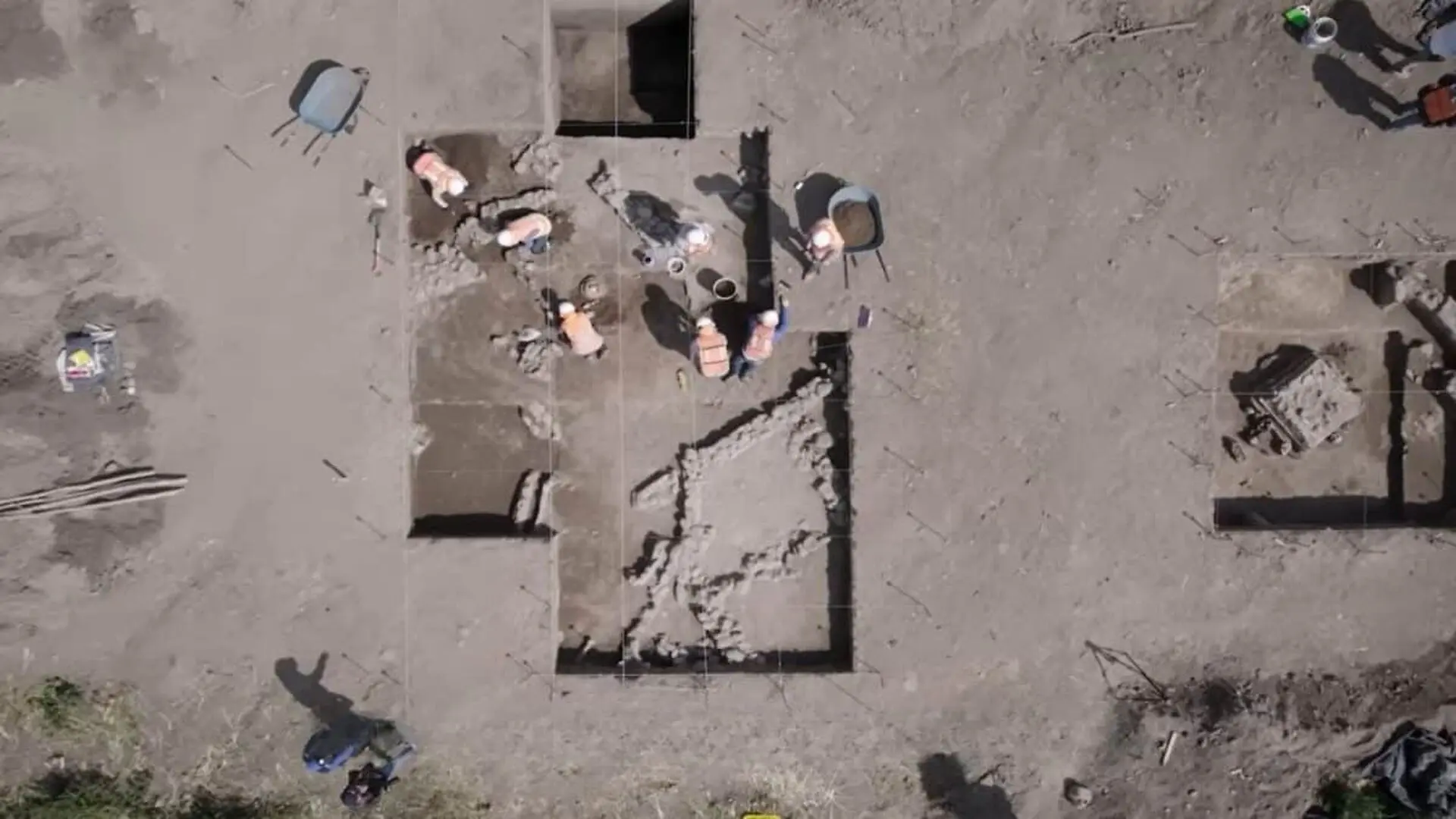
Archaeologists uncovered a stone altar on the fringe of the Tula Archaeological Zone in Hidalgo, Mexico, roughly 300 m from the protected perimeter. Mexico’s National Institute of Anthropology and History (INAH) dates the structure to the Tollan phase (c. 900‑1150 CE), when Tula functioned as the Toltec capital.
The discovery occurred during preventive digs mandated before a new railway line is built. Such surveys aim to locate, document and retrieve cultural material ahead of construction, allowing scholars to safeguard key fragments of Mexico’s past while infrastructure advances.
Ritual Platform Uncovers Human Bones and Offerings
The feature identified by researchers is a momoztli, a Nahuatl term for a modest altar used to present gifts to deities or ancestors. INAH notes the platform measures about one metre on each side and appears to have been assembled in three low tiers, lacking any steps.
Project lead Víctor Francisco Heredia Guillén described a base cut from andesite, a second tier of modular stone slabs of the same rock, and a top layer finished with river stones and basalt.
Excavators recovered human remains on three sides of the lower tier, including four skulls and long bone fragments likely representing femurs. Accompanying the bones were ceramic vessels—one black pot nested inside another—obsidian shards and stone knives, all consistent with a ritual deposit.
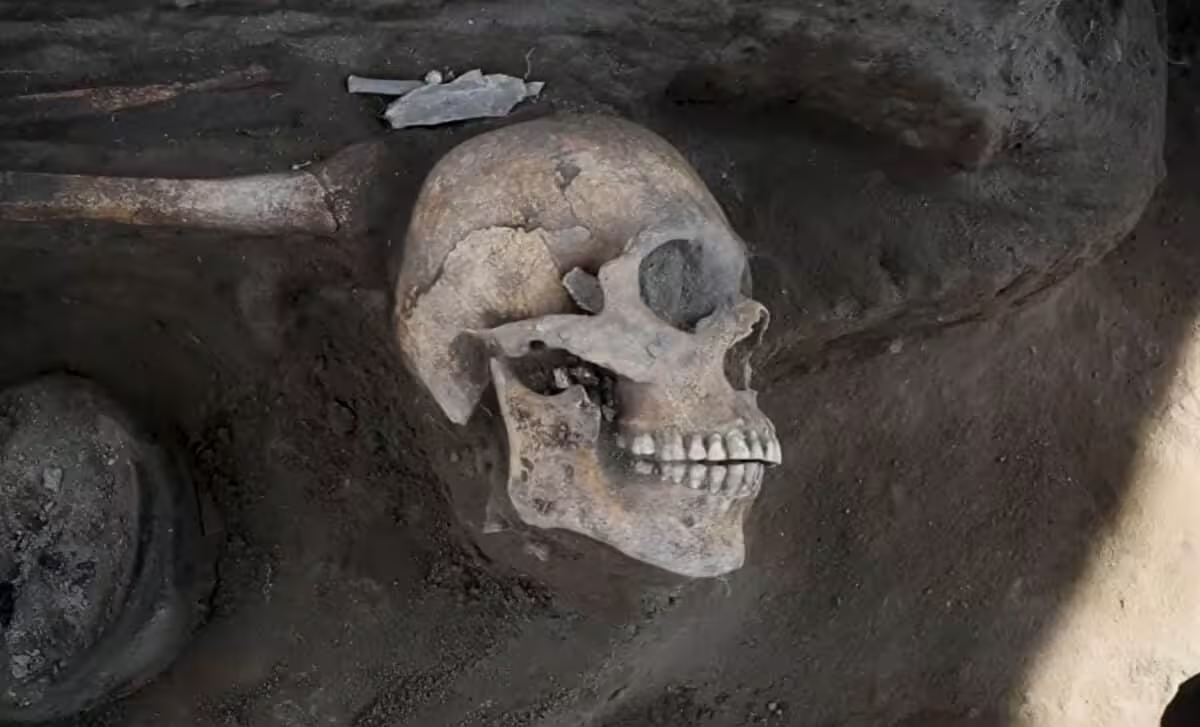
INAH reports that two skulls rested directly on the altar’s base—one oriented upward, the other facing southwest—while additional incomplete skulls and more pottery were discovered beneath a compacted, coated fill layer.
Heredia Guillén cautioned that whole skeletons are unlikely to appear, as only selected body parts may have been offered. The remains will be sent to a physical‑anthropology lab in the State of Mexico for analysis of age, sex, pathology and any evidence of decapitation.
One skull still appears attached to several cervical vertebrae. If the individuals were beheaded with obsidian or flint blades—a technique still used in the Postclassic era—cut marks could be preserved on the bones and identified during laboratory examination.
Find Sheds Light on Tula’s Architectural Layout
Beyond the altar, the team uncovered walls and flooring that suggest the platform once occupied the centre of a courtyard. These features may illuminate the spatial organization of this sector of ancient Tula.
Heredia Guillén believes the surrounding structures could represent rooms linked to an elite residential or administrative complex. He noted that higher‑status neighborhoods clustered around the city’s core, while common‑folk districts lay farther out.
Field archaeologist Emmanuel Hernández Zapata explained that the discovery has already been recorded through detailed drawings, drone imagery and digital capture before any elements are removed. Ceramic artifacts will be taken to a laboratory in Tepeji del Río de Ocampo for conservation, while specialists continue to evaluate preservation options for the altar itself.
The excavation also yielded scattered ceramics, lithic tools and malacological specimens, along with bone awls, razors and other everyday objects. These items will undergo further study to clarify their function and archaeological context.
Mexico’s Ministry of Culture highlighted the find as a testament to the value of preventive archaeology conducted alongside large‑scale public works. Culture Secretary Claudia Curiel de Icaza stressed that each new discovery enriches understanding of one of Mesoamerica’s great civilizations and reinforces the duty to investigate, protect and preserve the nation’s archaeological legacy for future generations.
This article has been fact checked for accuracy, with information verified against reputable sources. Learn more about us and our editorial process.
Last reviewed on .
Article history
- Latest version
Cite this page:
- Posted by Vikram Desai