Voyager 1 Is Approaching A Mind Bending New Distance Milestone From Earth
Nearly five decades into its mission, Voyager 1 is venturing into uncharted interstellar space, continuing to transmit vital data back to Earth.
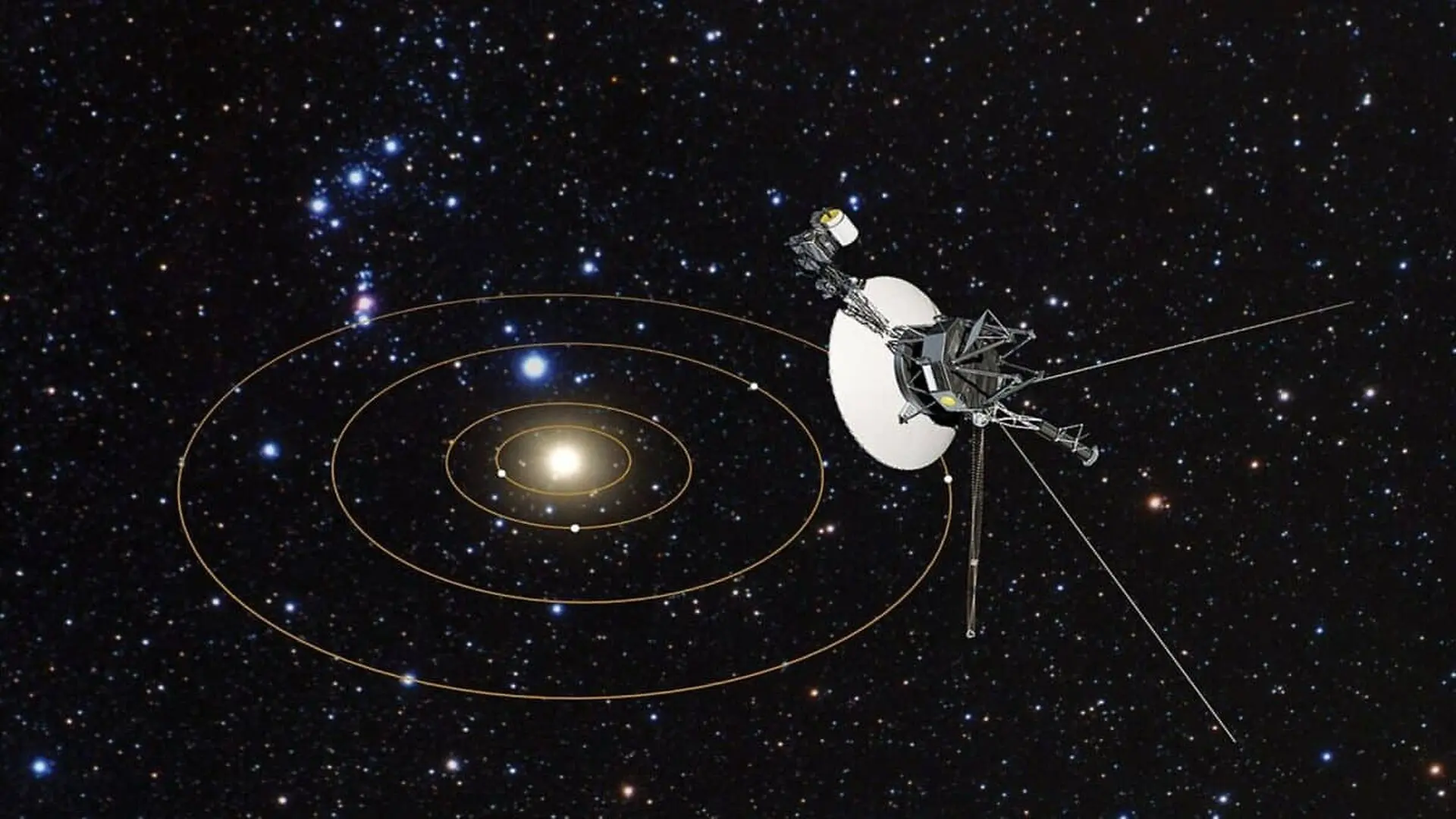
Nearly five decades into its journey, the Voyager 1 probe continues to push deeper into the void, operating at a distance that defies human intuition. Having long ago completed its primary mission to study the outer planets, the spacecraft is now traversing the vast, silent reaches of interstellar space, billion of kilometers beyond the influence of our Sun.
A new milestone is rapidly approaching. By November 2026, NASA estimates that Voyager 1 will reach a distance equivalent to one light-day from Earth. At that point, the time required for a signal to bridge the gap between the probe and our planet will stretch to a full 24 hours.
An Unforeseen Odyssey Across the Solar System
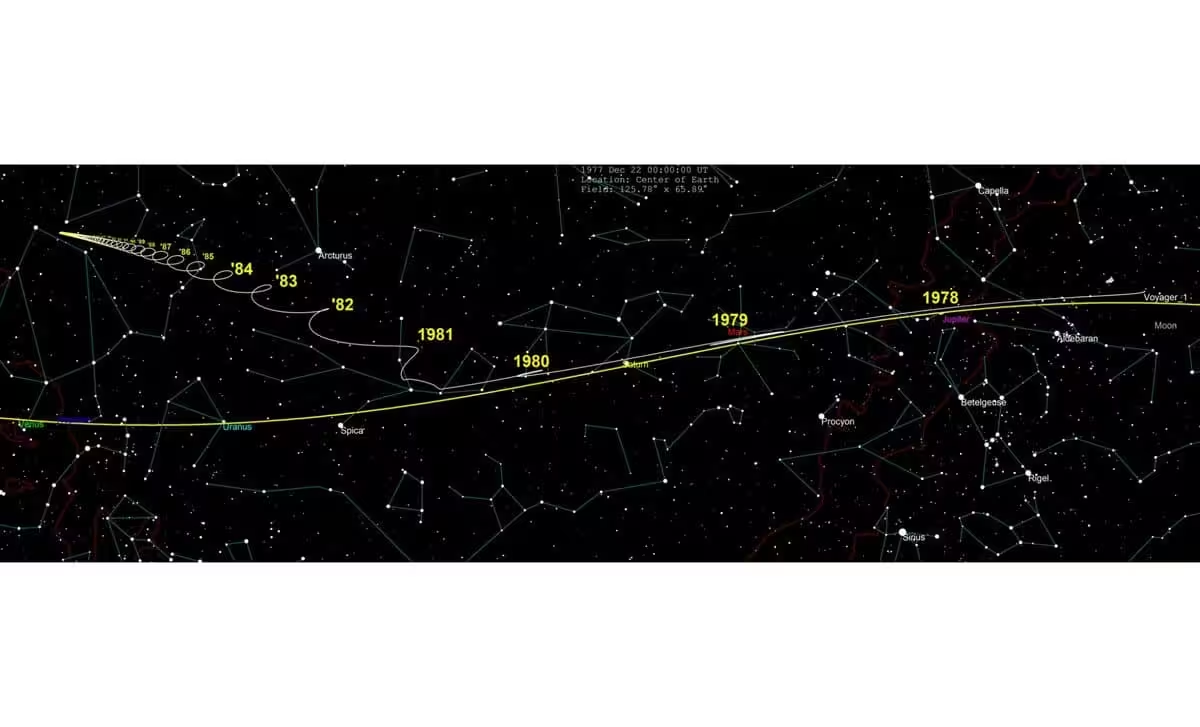
When Voyager 1 launched on September 5, 1977, the mission was designed with specific, finite goals in mind. Its itinerary was dominated by the gas giants, with historic flybys of Jupiter in 1979 and Saturn in 1980. These encounters provided humanity with its first close-up look at the complex systems surrounding these massive worlds.
Rather than powering down after its planetary tour, however, the probe simply continued its momentum. Today, it is hurtling through space at a velocity of roughly 17 kilometers per second, or approximately 61,000 km/h. Its trajectory led it to a historic crossing in August 2012, when it passed the heliopause—the boundary where the influence of solar wind gives way to the interstellar medium—making it the first human-made object to venture into the space between stars.
The Challenges of Extreme Interstellar Communication
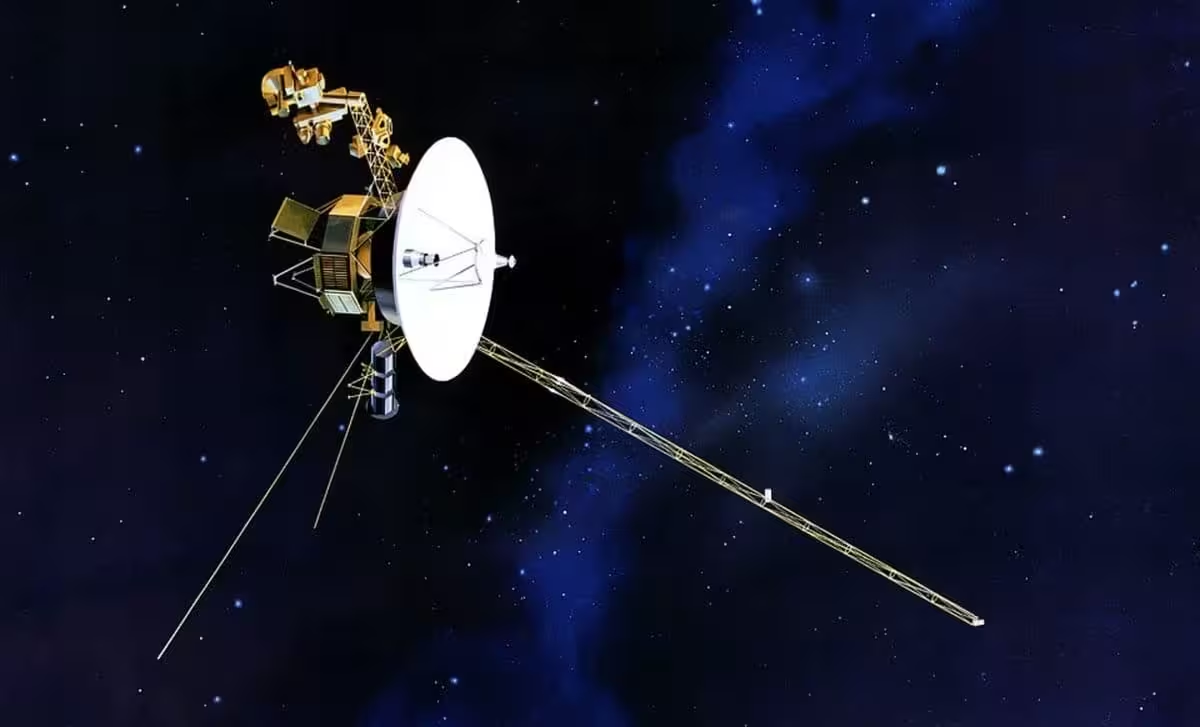
Maintaining contact at such extreme distances is a triumph of engineering against the fundamental limitations of physics. Because radio waves travel at the speed of light, commands issued from NASA ground stations face significant latency. Currently, it takes over 22 hours for a signal to reach the spacecraft, and another 22 hours for a response to return.
This reality precludes real-time troubleshooting or interactive steering. Every command sequence is a methodical, high-stakes waiting game where engineers must account for nearly two days of delay before confirming a successful maneuver. Once the one-light-day threshold is breached, every technical interaction will demand even greater patience.
Detecting a Signal Across the Abyss
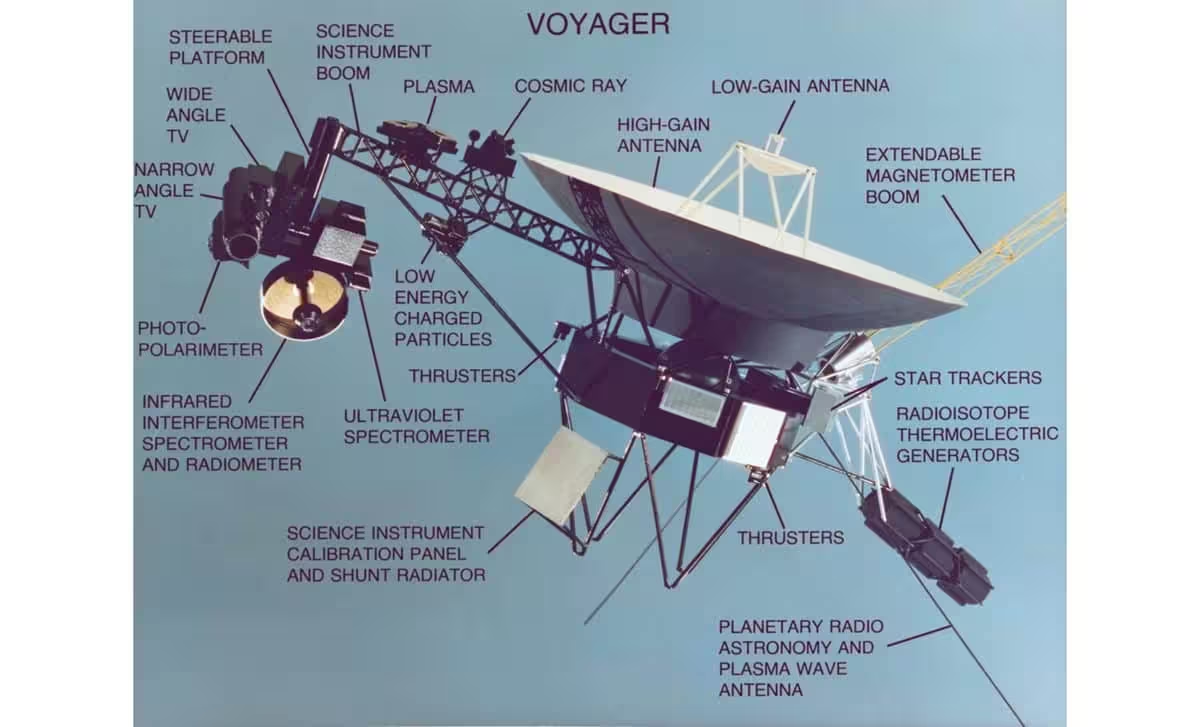
Perhaps most remarkable is that the probe continues to transmit data at all. Its Voyager 1 transmitter operates at just 22 watts—a power output comparable to a standard light bulb. To capture this signal from over 25 billion kilometers away, NASA utilizes the Deep Space Network, a global array of massive radio antennas.
Data transmission speeds are understandably modest, hovering around 160 bits per second in certain configurations. While this would be insufficient for even the most basic modern applications on Earth, it is perfectly adequate for transmitting essential readings from the probe’s surviving instruments, such as its magnetometer and plasma wave sensors.
Managing a Finite Energy Reservoir
The ultimate constraint for the mission is not distance, but energy. As the spacecraft drifts far beyond the reach of solar energy, it relies on three radioisotope thermoelectric generators, which convert the heat from decaying plutonium-238 into electricity. Since its launch, the power output of these generators has steadily declined.
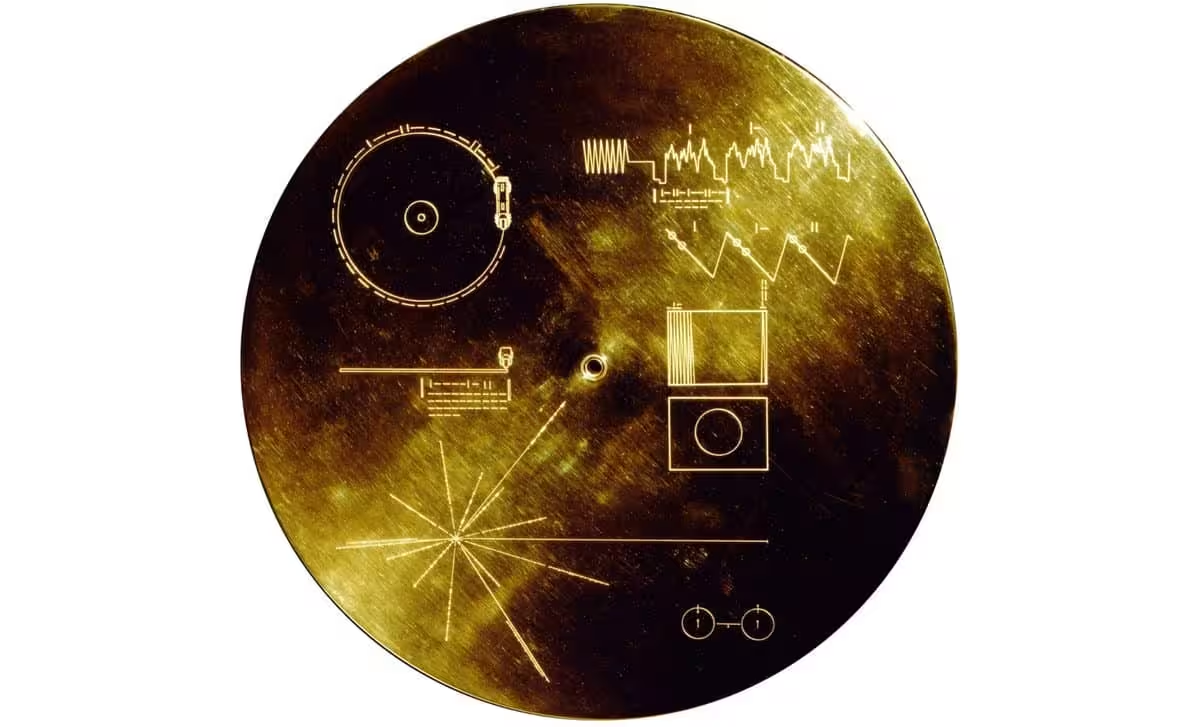
NASA engineers have systematically deactivated non-essential heaters and secondary scientific instruments to preserve the probe’s dwindling power budget. This strategic rationing is expected to keep the spacecraft operational into the early 2030s. Eventually, the signal will fall silent, and Voyager 1 will become a permanent, silent traveler through the galaxy, carrying with it the Golden Record—a time capsule of humanity’s existence launched in 1977.
This article has been fact checked for accuracy, with information verified against reputable sources. Learn more about us and our editorial process.
Last reviewed on .
Article history
- Latest version
Reference(s)
- Cermak, Alicia. “Voyager 1.”, December 7, 2017 NASA <https://science.nasa.gov/mission/voyager/voyager-1/>.
Cite this page:
- Posted by Karan Das