Europe Makes History As First Private Rocket Launches From Western European Soil Into Orbit
A German rocket has successfully reached orbit from Norway, marking a major milestone for Europe’s growing private space launch industry.
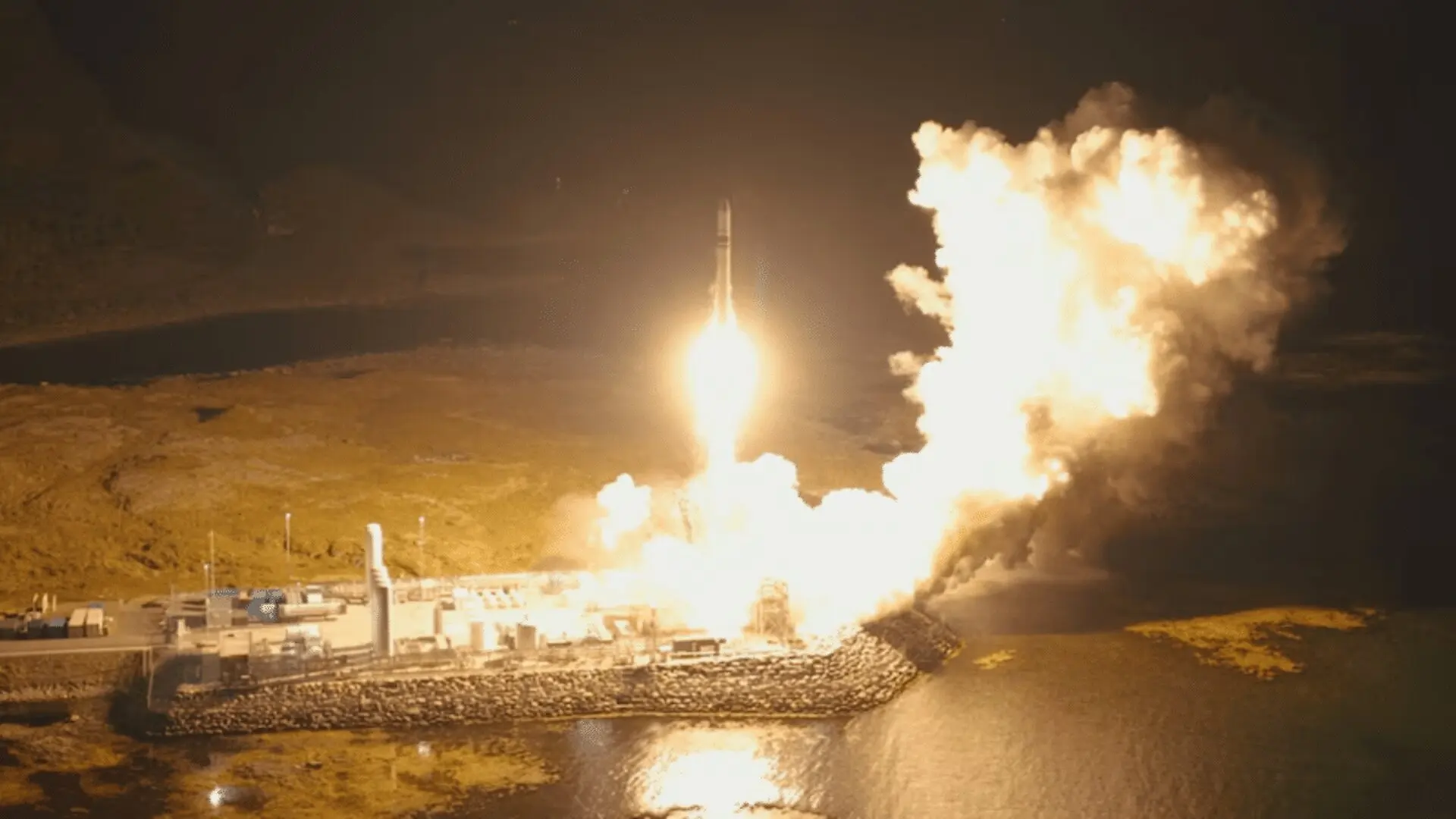
In a historic first for the continent’s commercial space sector, a rocket launched from Western European soil has successfully reached orbit. The Spectrum vehicle, developed by Germany-based Isar Aerospace, completed its second flight on September 5, 2026, marking a pivotal transition from experimental development to operational capability.
A Landmark Achievement in Northern Norway
The mission, dubbed Onward and Upward, lifted off from the Andøya Space Center in northern Norway at 10:12 p.m. local time (20:12 GMT). Approximately seven minutes after clearing the pad, the 95-foot (28-meter) tall, two-stage rocket successfully inserted itself into an initial elliptical orbit, with a perigee of roughly 112 miles (180 kilometers) and an apogee of 311 miles (500 kilometers). This orbital insertion confirms that Isar Aerospace has cleared one of the most significant technical hurdles in launch vehicle development.
Beyond the technical milestone, the mission carried a functional cargo for the first time, including five CubeSats and a non-deployable scientific experiment. Nikolaos Perakis, Spectrum’s chief engineer, heralded the success during a live broadcast with NASASpaceflight, stating that the flight represents a major moment for both the company and European spaceflight.
We made history. On just our second flight, we became the first commercial space company from Europe to deliver satellites into orbit. Mission ’Onward and Upward’ successfully lifted off and deployed payloads into orbit. A new chapter for European spaceflight. More:… pic.twitter.com/AWvqG2l8Mn
— Isar Aerospace (@isaraerospace) September 5, 2026
Learning from the 2025 Setback
The success follows a difficult learning curve. Spectrum’s inaugural attempt in March 2025 ended prematurely less than a minute into the flight. An intensive investigation concluded within two months, identifying an unintended opening of a vent valve and a subsequent loss of attitude control during the vehicle’s roll maneuver as the culprits. By swiftly diagnosing these faults and implementing hardware and software refinements, the engineering team demonstrated the iterative resilience required to move from failure to orbit.
Overcoming Months of Technical Delays
The road to this successful launch was paved with persistent obstacles. Originally scheduled for January 2026, the mission faced a series of postponements due to pressurization issues, adverse weather, and an incursions by vessels into the restricted maritime launch zone. Subsequent attempts in the spring and early summer were scrubbed due to complications involving composite overwrapped pressure vessels and irregularities in the rocket’s fluid systems. These challenges forced the team to refine their systems under intense scrutiny, ultimately ensuring the vehicle was prepared for the rigors of flight.
Expanding Europe’s Orbital Access
While Russia’s Plesetsk Cosmodrome has facilitated launches from the European continent for decades, the Spectrum mission highlights a strategic shift toward independent, commercial, Western-based launch infrastructure. The Andøya facility is particularly valuable for its ability to support high-inclination and polar trajectories, which are essential for the growing demand in Earth-observation satellite constellations.
Looking Toward Commercial Scalability
Isar Aerospace intends to position Spectrum as a reliable, dedicated workhorse for the small-to-medium satellite market, capable of carrying approximately 2,200 pounds (1,000 kilograms) to low Earth orbit. With production facilities near Munich designed to manufacture over 30 rockets annually, the company is positioning itself to compete in a crowded global launch market.
While reaching orbit is a definitive success, the long-term viability of the project will depend on achieving consistent launch cadences and competitive pricing. For now, the successful insertion of payloads into orbit provides the necessary validation for Isar to move from a test-bed phase to a repeatable, commercial transportation model.
This article has been fact checked for accuracy, with information verified against reputable sources. Learn more about us and our editorial process.
Last reviewed on .
Article history
- Latest version
Reference(s)
- Wall, Mike. “Private German rocket makes history, reaches orbit from European soil.”, September 5, 2026 Space <https://www.space.com/space-exploration/launches-spacecraft/isar-aerospace-second-launch-norway-andoya-spaceport-spectrum-rocket>.
- “https://twitter.com/isaraerospace/status/2096371587398176905/photo/1.” <https://t.co/AWvqG2l8Mn>.
Cite this page:
- Posted by Karan Das