China Narrows Down Eight Potential Landing Sites For Historic Mars Sample Return Mission
China has identified eight potential landing sites for its 2028 Tianwen-3 mission, aiming to return Martian soil samples and search for signs of ancient life.
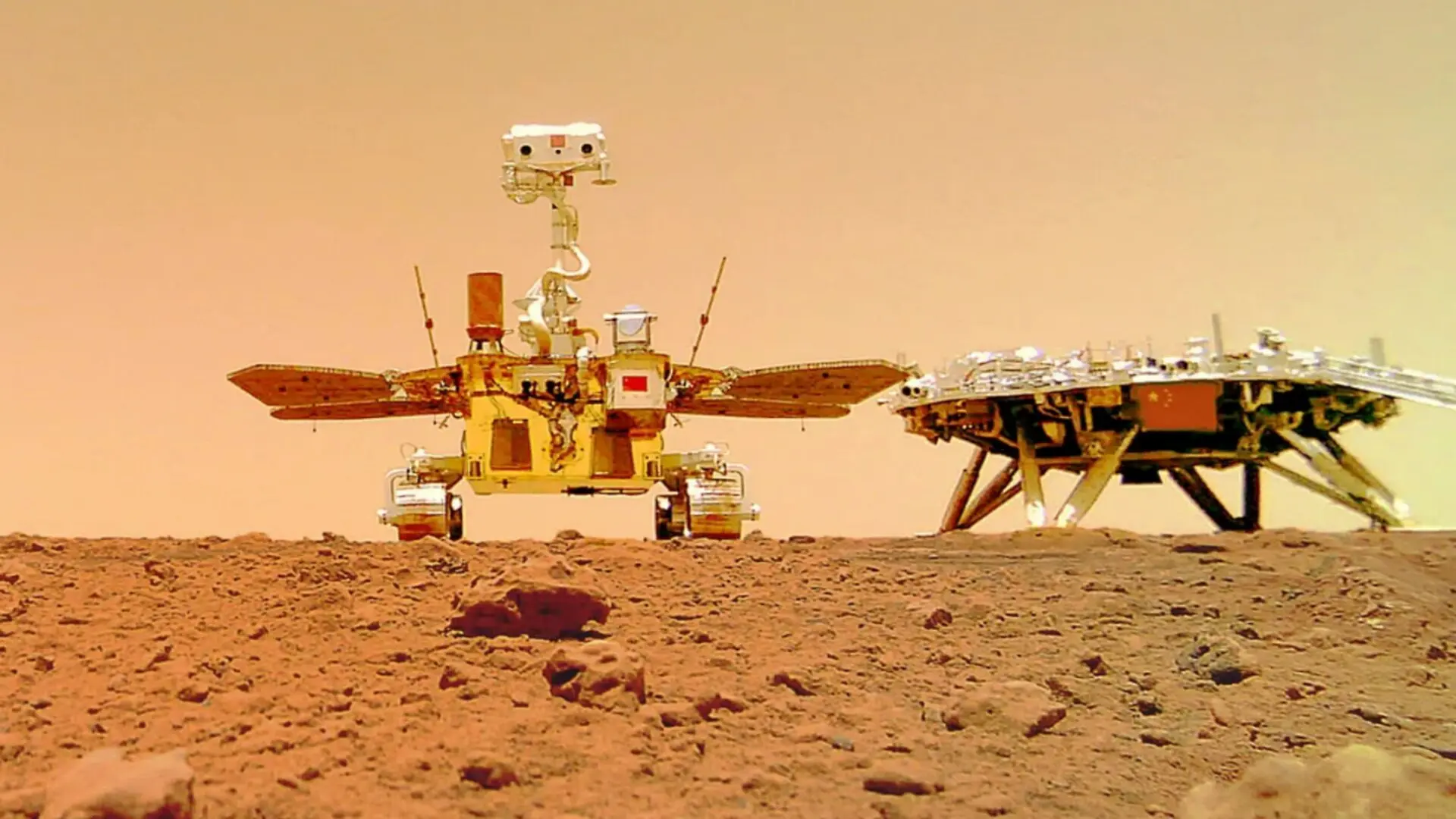
China has narrowed the field of potential landing sites for its ambitious Tianwen-3 Mars sample return mission to eight contenders. This selection process represents a critical milestone in the mission’s goal to secure material that could hold the key to understanding the Red Planet’s history of habitability and potential for ancient life.
Mission chief scientist Hou Zengqian confirmed that the final site selection is slated for completion before the end of 2026. As the hardware transitions into the prototype development phase, the project remains on track for a scheduled launch in late 2028. The choice of location is pivotal, as it dictates the specific geological archives the mission will access and ultimately determines the scientific caliber of the samples returned to Earth.
Narrowing the Field
The updated shortlist follows a rigorous vetting process that initially evaluated 86 potential sites across the Martian surface. According to comments provided by Hou at the International Deep Space Exploration Conference in Hefei, the team is prioritizing locations with specific geological characteristics, including historical water activity, varied mineral composition, and the potential to preserve biological signals.
“Site selection is the first hurdle in determining the scientific value of the samples,” Hou stated. “We have comprehensively considered factors such as geological age, water activity history, habitability, and potential for preserving biological signals, and have initially selected eight candidate landing sites to maximize the probability of obtaining samples with high scientific value.”
While the eight finalists remain undisclosed, the selection process is a complex balancing act. Scientists must weigh high-priority geological interests, such as areas rich in clay minerals that are known to preserve organic molecules, against the physical realities of landing a complex spacecraft. The mission requires a location that is not only scientifically significant but also safe enough to support the multi-stage sequence of landing, drilling, surface collection, and launching a return vehicle back into orbit.
Engineering Constraints and Scientific Goals
The mission architecture requires landing at lower elevations where the atmosphere is sufficiently dense to provide the aerodynamic drag necessary for a successful descent. This requirement narrowed the initial search to areas like Amazonis Planitia, Chryse Planitia, and Utopia Planitia, the latter of which was the successful landing site for the Zhurong rover in 2021.
Specific high-interest regions currently under scrutiny include Oxia Planum, McLaughlin Crater, and Ma’adim Vallis. Oxia Planum, in particular, has garnered significant interest within the international community, as it is also the designated target for the European Space Agency’s upcoming Rosalind Franklin rover.
The overarching mission objective is to probe why Mars evolved into an arid world while Earth developed into a life-sustaining planet. Scientists view these two planets, along with Venus, as planetary siblings that diverged approximately 3.5 billion years ago. By targeting subsurface material, Tianwen-3 aims to circumvent the surface radiation and oxidation that have degraded the Martian crust, using a drilling system capable of reaching two meters deep. The lander is also expected to deploy a drone, which will work in tandem with traditional drilling and scooping tools to broaden the scope of collection.
Progress Toward a 2031 Return
The logistics of the mission are as sophisticated as its scientific goals. China plans to utilize two separate Long March 5 rockets to deploy the mission components: one for the lander and ascent vehicle, and another for the orbiter and Earth-return craft. This dual-launch strategy is essential for the complexity of the operation, which culminates in a rendezvous in Martian orbit.
The ultimate goal is to return at least 500 grams of Martian material to Earth by 2031. With hardware prototypes moving forward and the landing site shortlist finalized, the mission is transitioning from high-level planning into the concrete engineering phases required to bring pieces of another world back to terrestrial laboratories.
Tianwen-3 will use a drone with a range of a few hundred metres to supplement samples collected by the lander’s scoop and drill. https://t.co/7pqWqZi4wXpic.twitter.com/Fh7yAftNvS
— Andrew Jones (@AJ_FI) March 12, 2026
This article has been fact checked for accuracy, with information verified against reputable sources. Learn more about us and our editorial process.
Last reviewed on .
Article history
- Latest version
Reference(s)
- “https://twitter.com/AJ_FI/status/2031999898002801089.” <https://t.co/7pqWqZi4wX>.
- “https://twitter.com/AJ_FI/status/2032203356903526756/photo/1.” <https://t.co/Fh7yAftNvS>.
Cite this page:
- Posted by Karan Das