Did Venus Once Have a Moon That Was Torn Apart by Its Own Gravity
A new study investigates the mysterious history of Venus, exploring what the second planet from the Sun may have possessed billions of years ago.
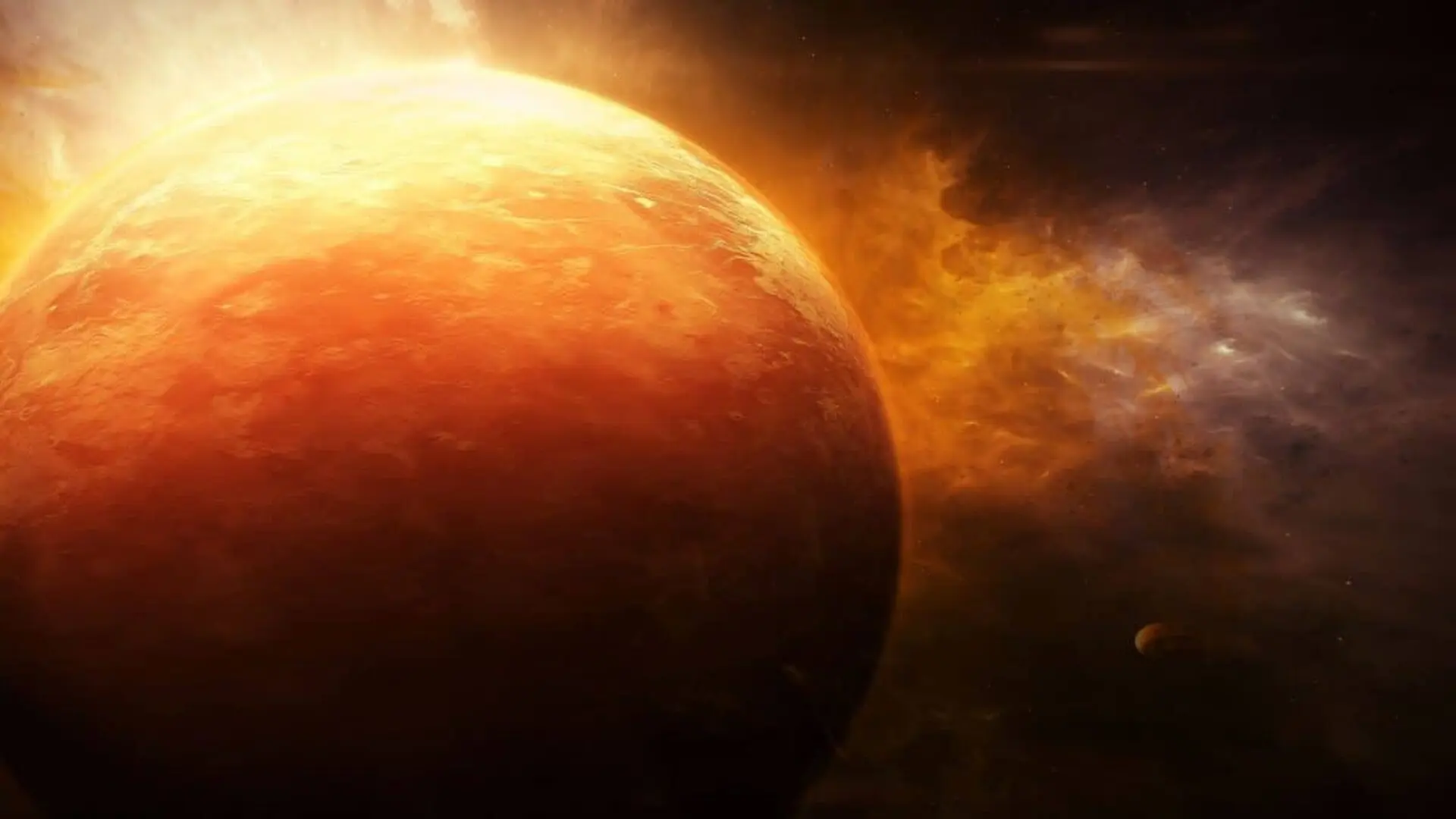
Venus stands out in our solar system for its desolate, moonless state, but new research suggests this may not always have been the case. A study led by University of California, Riverside planetary scientist Stephen Kane posits that our neighbor could have hosted a natural satellite billions of years ago, only for it to be claimed by the planet’s own gravitational influence.
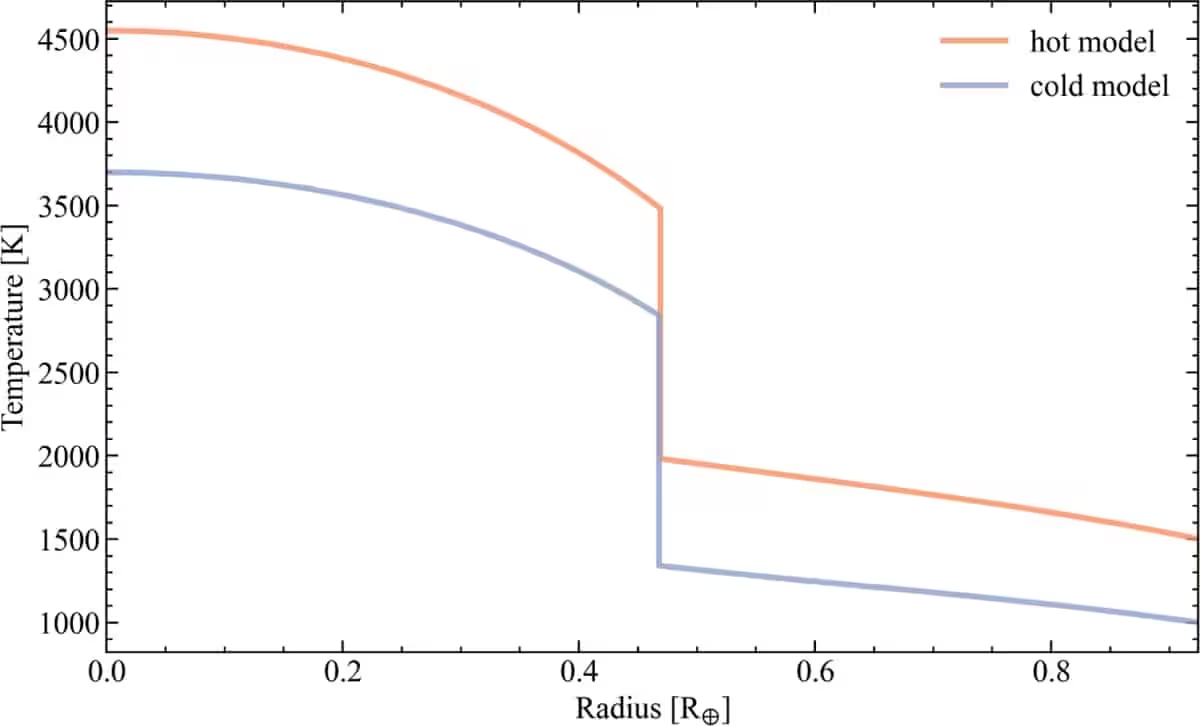
While this hypothesis remains theoretical, it provides a compelling framework for why Venus lacks a companion today. By modeling the early conditions of the planet, researchers explored whether a moon could have formed in the aftermath of the violent, high-energy collisions common during the early history of our solar system.
The Life and Death of a Lost Satellite
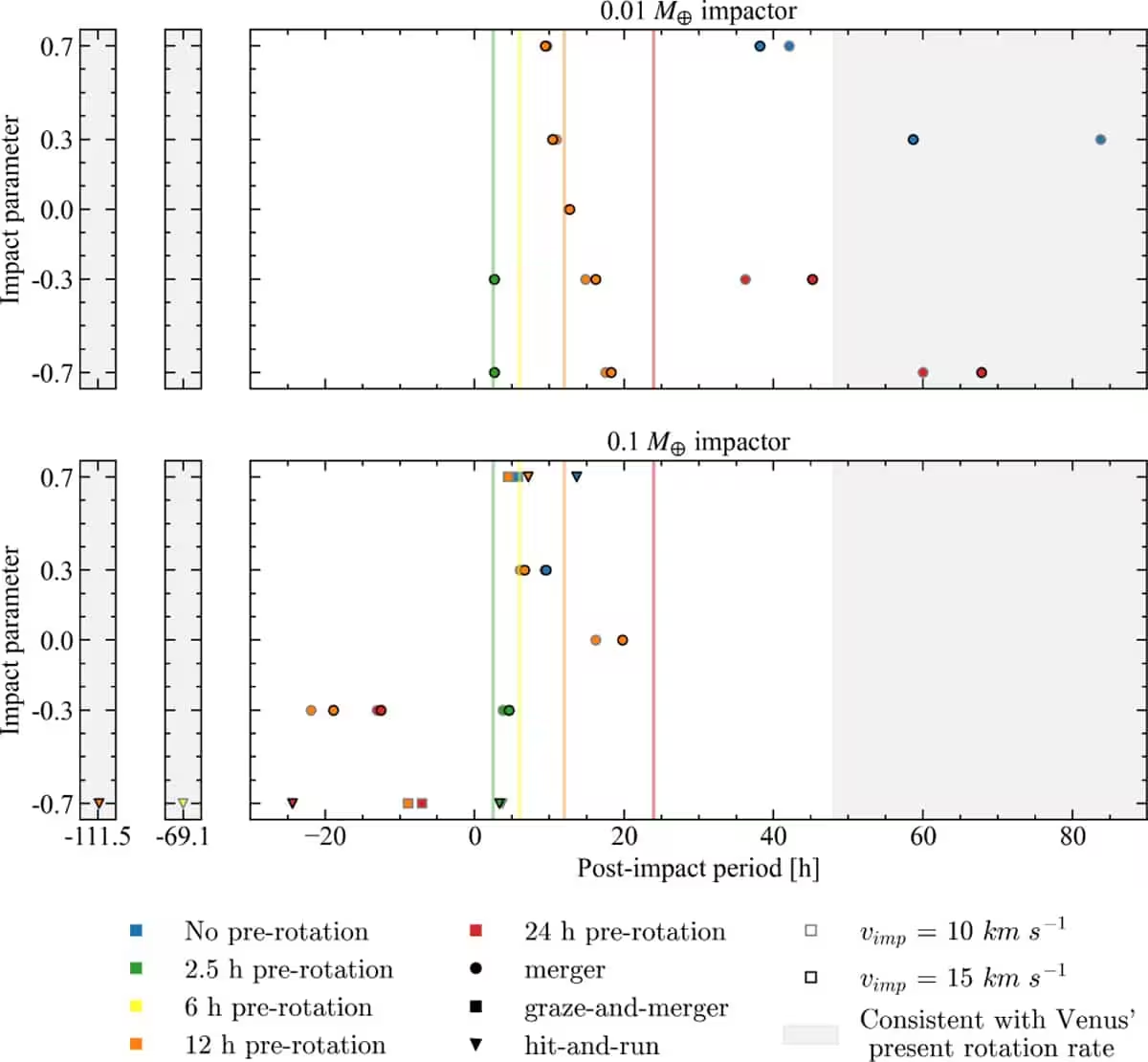
Early in its formation, Venus likely endured massive impacts that ejected enough debris into orbit to coalesce into a moon. However, the survival of such a satellite would depend heavily on the planet’s rotational dynamics. While the modern Venus rotates sluggishly—taking roughly 243 Earth days to complete one turn—a young, post-impact planet would have been spinning much faster.
Under these conditions, tidal interactions would have transferred energy from the planet’s rapid rotation to the moon, nudging it into a higher orbit. This is a process mirroring the current relationship between Earth and our own Moon. However, the simulation, published in a recent 2025 analysis, suggests that this outward migration was not destined to last.
As the planet lost rotational energy over time, the tidal exchange likely reversed. Instead of being pushed outward, the moon would have begun a slow, terminal descent toward the planet. Once the satellite breached the Roche limit—the distance at which a body’s own gravitational integrity is overcome by the tidal forces of a larger primary—it would have been shredded and eventually consumed by Venus.
“That’s where Venus’s gravity rips the moon apart and consumption occurs,” Kane noted. The modeling indicates that larger, heavier moons would have actually accelerated this process due to more intense tidal friction, with some disappearing within 30 million to 1.7 billion years.
Clues to a Lost Habitability
This potential moon-destruction scenario raises broader questions about the evolution of the Venusian environment. Although Venus is currently a hostile, pressure-cooked landscape, NASA climate modeling has previously suggested that the planet may have once maintained liquid water and more temperate conditions.
If a moon did play a role in the planet’s history, researchers are eager to understand how its destruction might have contributed to the runaway greenhouse effect that ultimately rendered the surface uninhabitable. “If there was an early habitable period of Venus, then the big question is what brought that to an end,” Kane added.
Finding definitive evidence of a pulverized moon will be an immense challenge, particularly because centuries of volcanic activity have repeatedly resurfaced the planet, masking its ancient history. Future exploration, such as NASA’s DAVINCI mission, may offer a path forward by analyzing the atmosphere for specific isotopic signatures that could serve as chemical footprints of a long-lost satellite.
This article has been fact checked for accuracy, with information verified against reputable sources. Learn more about us and our editorial process.
Last reviewed on .
Article history
- Latest version
Reference(s)
- Bussmann, M.., et al. “The possibility of a giant impact on Venus.” Astronomy & Astrophysics, vol. 702, October 13, 2025, pp. A106 EDP Sciences, doi: 10.1051/0004-6361/202555802. <https://doi.org/10.1051/0004-6361/202555802>.
- Cermak, Alicia. “NASA climate modeling suggests Venus may have been habitable - NASA Science.”, August 10, 2016 NASA <https://science.nasa.gov/earth/climate-change/nasa-climate-modeling-suggests-venus-may-have-been-habitable/>.
- Cermak, Alicia. “NASA's DAVINCI Mission.”, June 15, 2023 NASA <https://science.nasa.gov/mission/davinci/>.
Cite this page:
- Posted by Karan Das