Scientists Discover Mysterious Dark Oxygen Being Produced on the Deep Ocean Floor
Mysterious oxygen production in the deep Pacific is challenging scientific norms, as researchers investigate if metal-rich nodules spark hidden reactions.
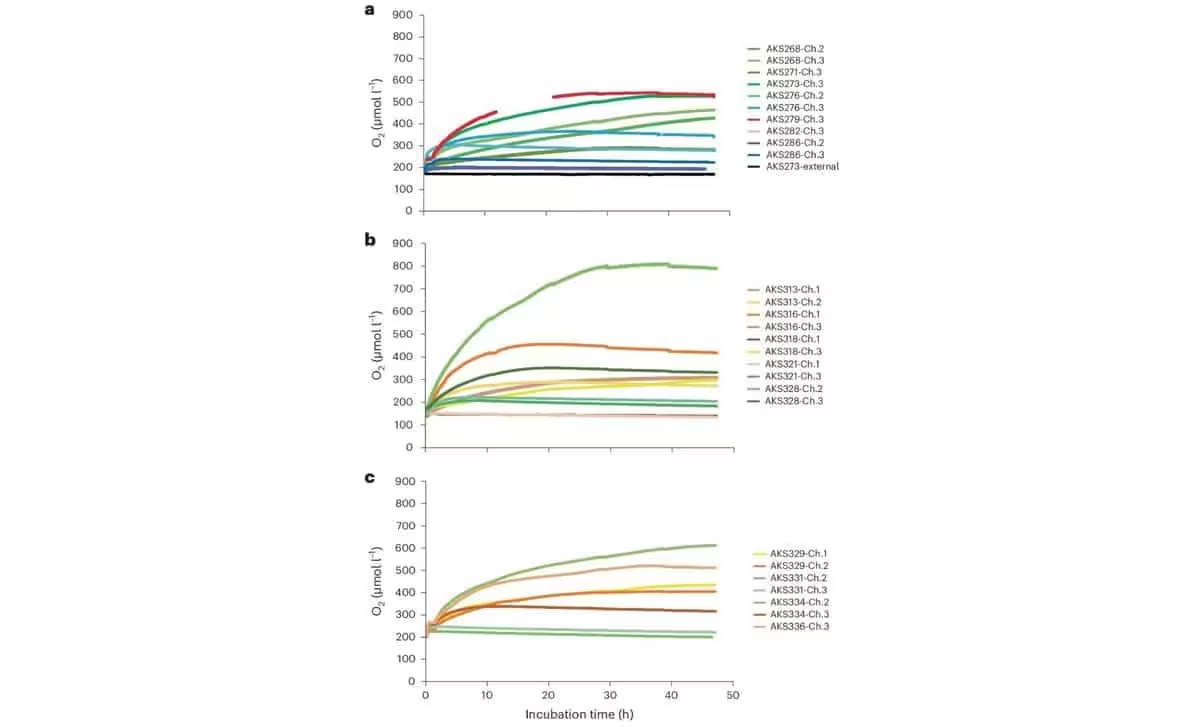
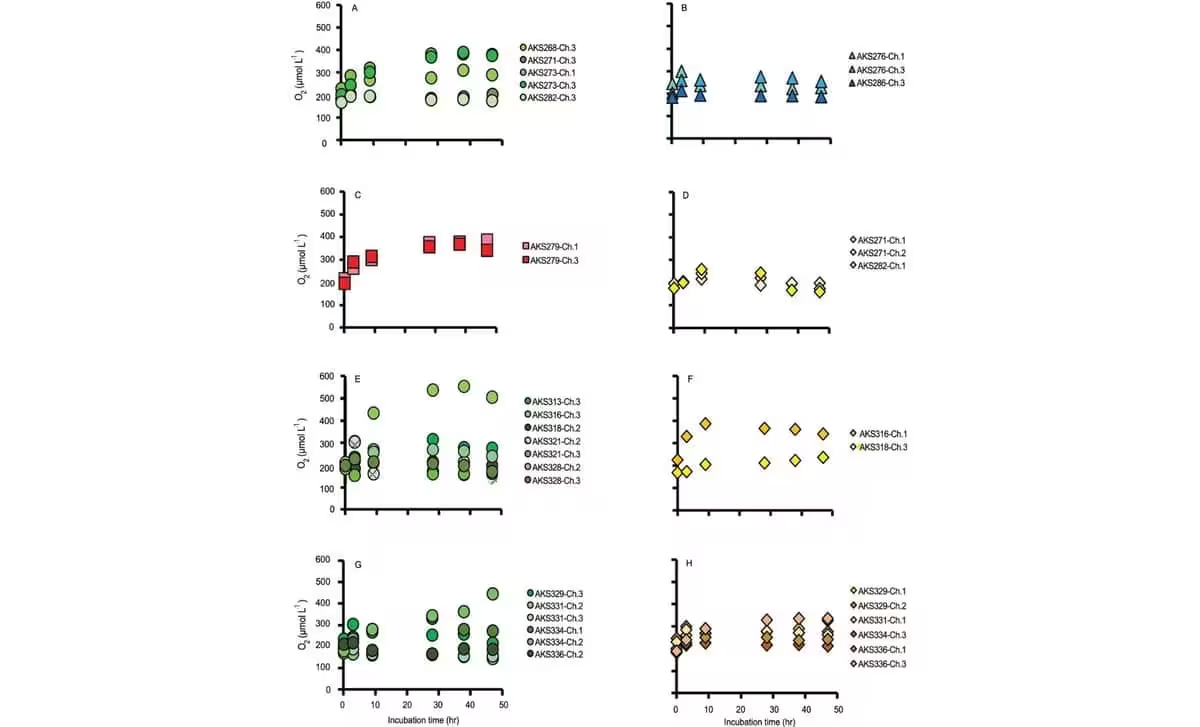
In 2012, deep-sea ecologist Andrew Sweetman of the Scottish Association for Marine Science placed equipment on the floor of the Pacific Ocean with a standard objective: measuring oxygen consumption. Instead of the expected decline in oxygen, his sensors recorded an inexplicable rise. Assuming a mechanical failure, Sweetman spent the next decade attempting to calibrate his instruments and troubleshoot what he believed was a faulty reading. Yet, time and again, the abyssal plains of the Clarion-Clipperton Zone—a vast, pitch-black region between Mexico and Hawaii—defied conventional biological expectations.
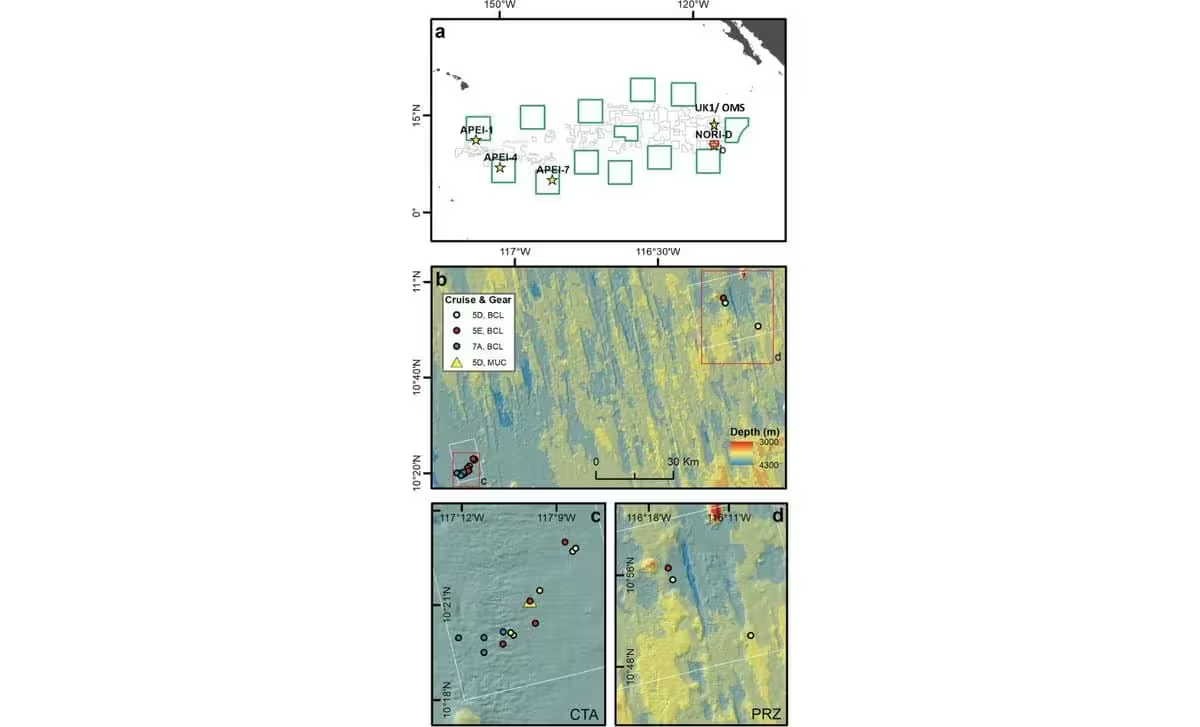
The region is blanketed in trillions of polymetallic nodules, mineral-rich clumps containing manganese, iron, cobalt, nickel, and copper. While photosynthesis has long been considered the exclusive engine for oxygen production on Earth, the complete absence of light in these depths made that impossible. The phenomenon, now being termed dark oxygen, suggested a chemical or physical mechanism previously unknown to science.
Challenging the Fundamentals of Ocean Biology
Sweetman initially dismissed the possibility that the seafloor was generating its own air, assuming his sensors had been miswired. However, further testing ruled out external contamination and radiation. The breakthrough arrived after a decade of frustration when, during a stay in São Paulo, Sweetman watched a documentary describing the nodules as batteries in a rock. This description of the mineral clusters as stores of metallic potential energy sparked a hypothesis: could these nodules be driving electrolysis, splitting seawater into oxygen and hydrogen through an electrochemical reaction?
To test this, he approached Franz Geiger, a chemist at Northwestern University. Geiger, who had previously studied energy conversion in metal nanolayers, was initially skeptical. His past research indicated that metal-driven electrical signals in such environments were typically measured in tiny fractions of a millivolt, far too low to initiate the splitting of water molecules.
However, when Geiger submerged the nodules in simulated seawater, the results were anything but subtle. The electrical potential recorded was massive compared to his expectations, allowing him to bypass ultra-sensitive equipment in favor of a standard voltmeter. The nodules, which form over millions of years through the accumulation of metal ions—much like a slow-motion game of Tetris—appeared to act as natural capacitors.
The Debate Over Seafloor Extraction
The study, published in Nature Geoscience in July 2024, has ignited a fierce debate regarding deep-sea mining. For half a century, these nodules have been eyed as a critical source of materials for electric-vehicle batteries. The Metals Company, which funded the initial research to help establish environmental guidelines, has disputed the findings and indicated that it intends to release a formal rebuttal.
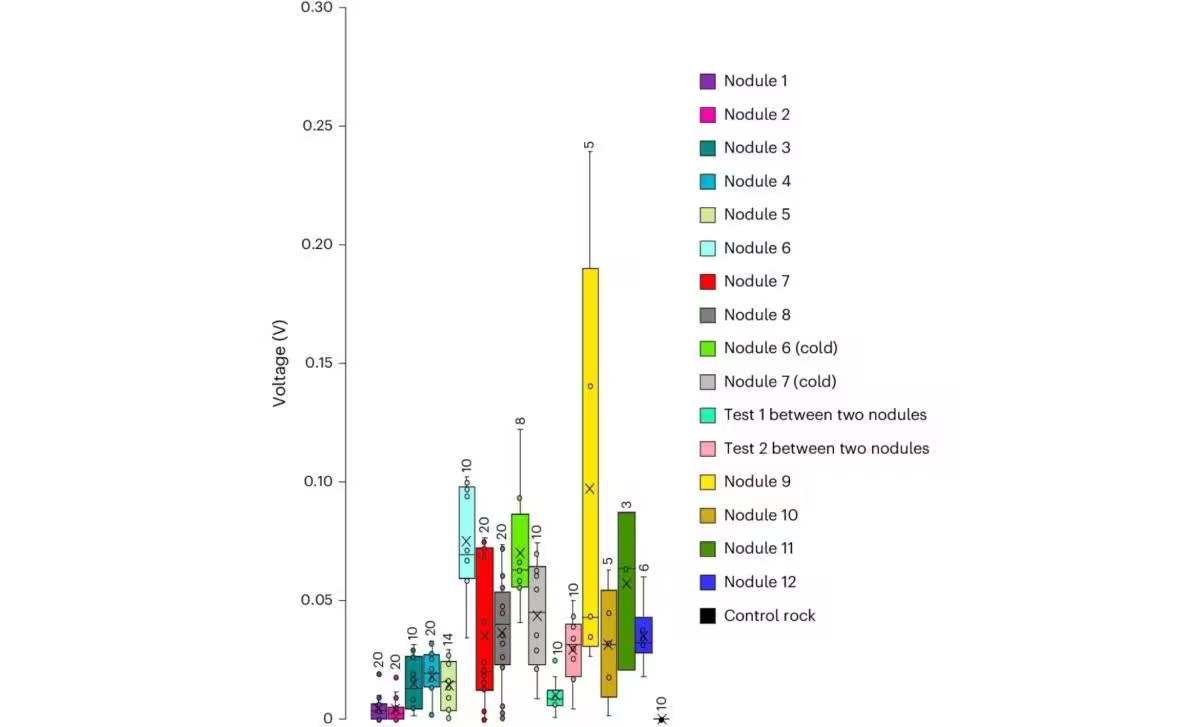
Scientists caution that the full implications remain unclear. While some samples show high reactivity, others appear inert, and the exact electrochemical mechanism requires further study. To address these gaps, Sweetman and Geiger are launching new, specialized landers capable of withstanding the crushing pressures of the abyss, roughly 1,200 times that of the surface, to determine if hydrogen is also being produced and to map why the oxygen output varies.
Reflecting on the decade of skepticism he faced, Sweetman remains grounded by the necessity of the scientific process. He notes that if the seafloor truly supports its own respiration, removing these nodules could have unforeseen consequences for abyssal ecosystems. For now, the team is committed to following the data, adhering to the principle that when all standard possibilities are exhausted, the remaining explanation—however improbable—must be true.
This article has been fact checked for accuracy, with information verified against reputable sources. Learn more about us and our editorial process.
Last reviewed on .
Article history
- Latest version
Reference(s)
- Sweetman, Andrew. “Evidence of dark oxygen production at the abyssal seafloor - Nature Geoscience.”, vol. 17, no. 8, pp. 737-739. Nature, doi: 10.1038/s41561-024-01480-8. <https://www.nature.com/articles/s41561-024-01480-8>.
Cite this page:
- Posted by Divya Iyer