The Moon May Have Formed Intact In Just Hours Following A Massive Planetary Collision
New simulations reveal the Moon may have formed almost intact within mere hours of a massive collision between Earth and the protoplanet Theia.
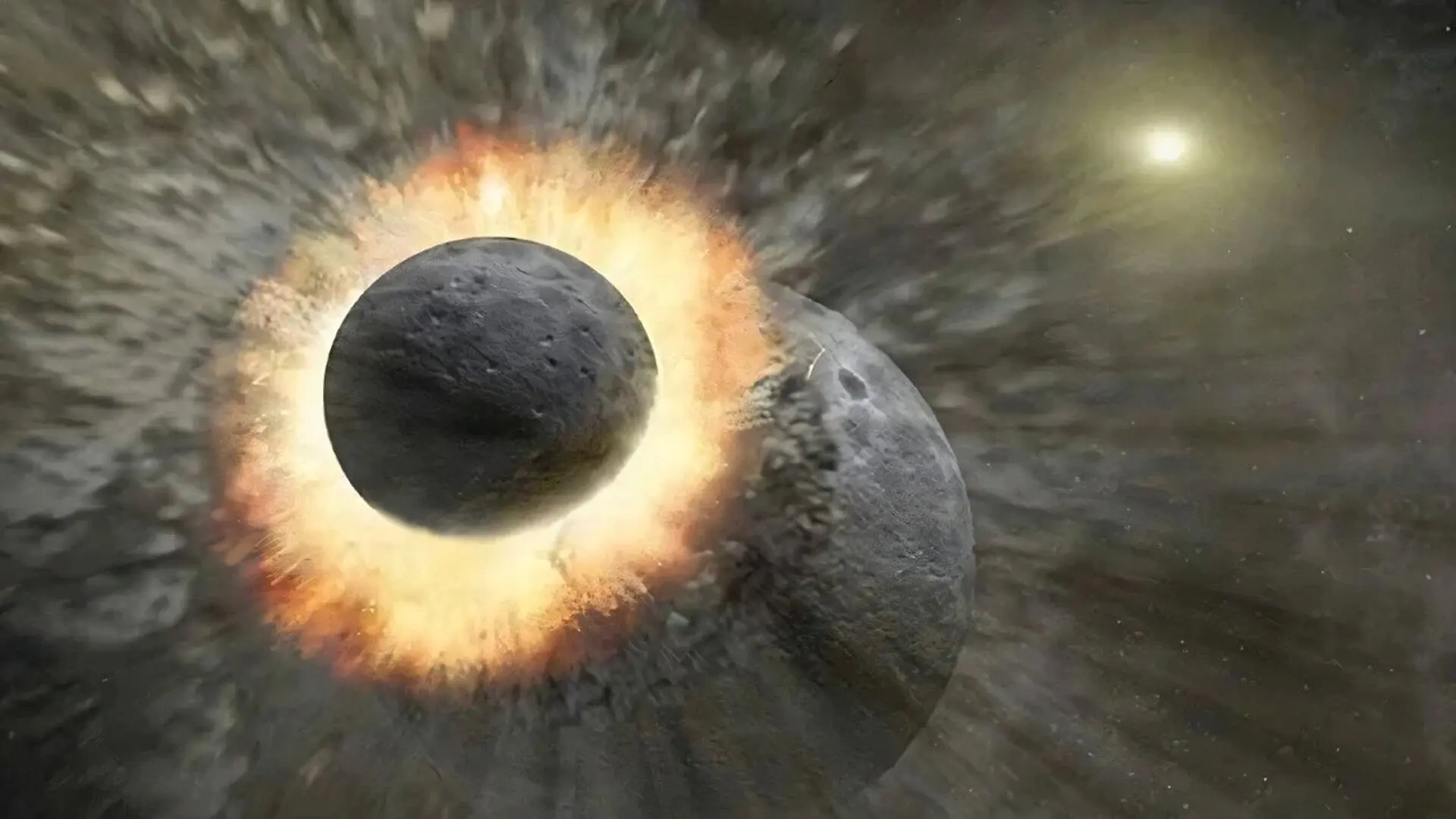
For decades, the dominant theory of lunar formation has painted a picture of a gradual, messy process: a Mars-sized world named Theia slams into the proto-Earth, creating a swirling ring of molten debris that slowly coalesces into our Moon. However, new high-fidelity simulations suggest this origin story may be missing a vital component: the structural integrity of the rocks themselves.
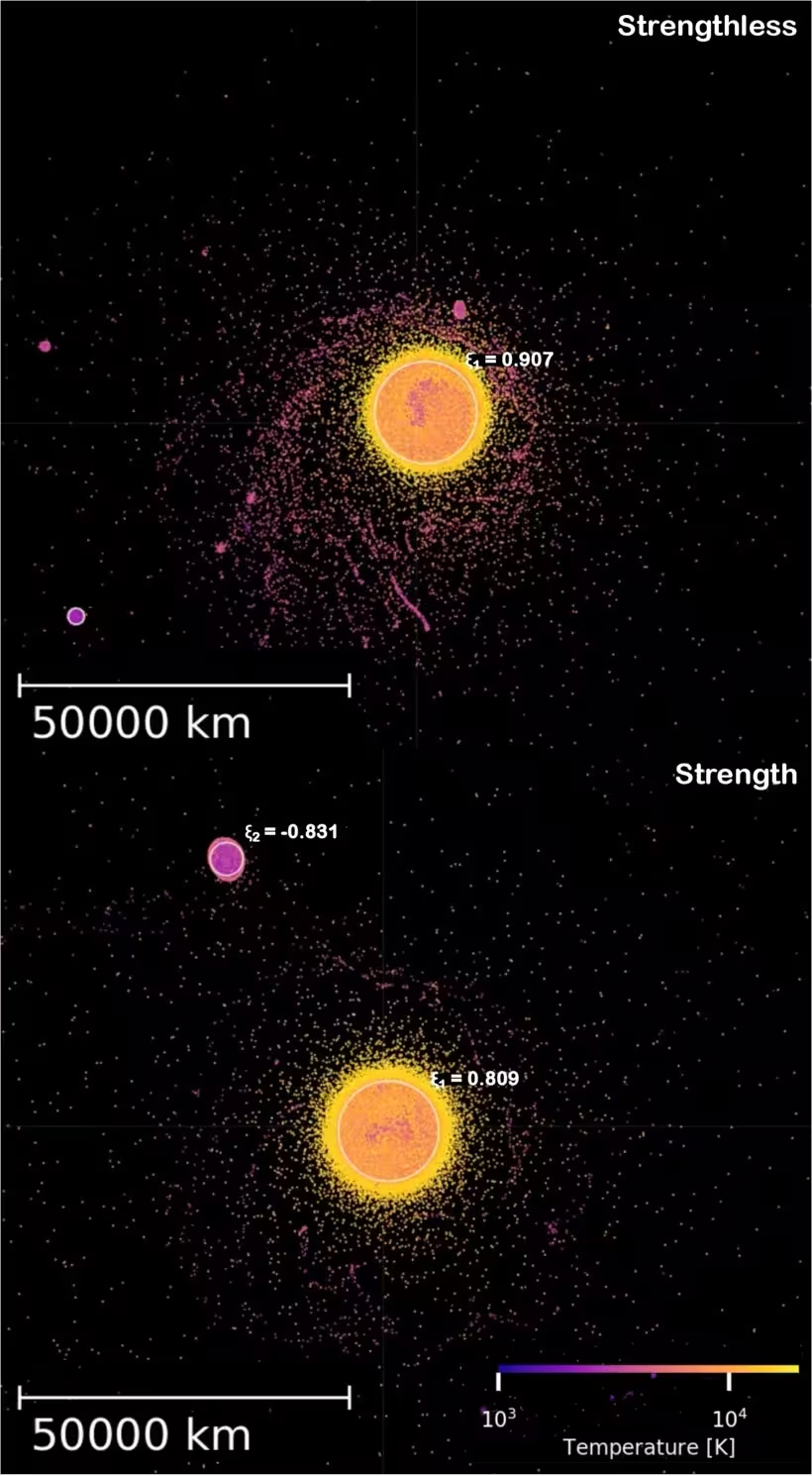
Research published in The Astrophysical Journal Letters challenges the long-standing assumption that early planetary bodies behaved like simple, uniform fluids during high-energy collisions. By accounting for the internal material strength of Earth and Theia, scientists at the Southwest Research Institute and the University of Arizona found that the Moon might have formed as a largely intact object in a matter of hours, rather than emerging from a gradual accumulation of orbiting rubble.
Rethinking Planetary Collisions
Historically, researchers have modeled the giant-impact hypothesis by treating planetary mantles and cores as fluids. This approach was driven by the sheer scale of the energy involved; because the impact generated enough heat to liquefy and vaporize vast quantities of rock, it was widely believed that geological strength played a negligible role.
Lead author Adeene Denton, who conducted the work while at the University of Arizona’s Lunar and Planetary Laboratory, argues that this oversight obscures the true complexity of the event. “We discovered that the preexisting geology of the Mars-sized proto-moon matters,” Denton noted. By incorporating temperature-dependent strength into their simulations, the team allowed the rocky components of the impactors to resist deformation until they reached temperatures near their melting points.
The Critical Role of Temperature
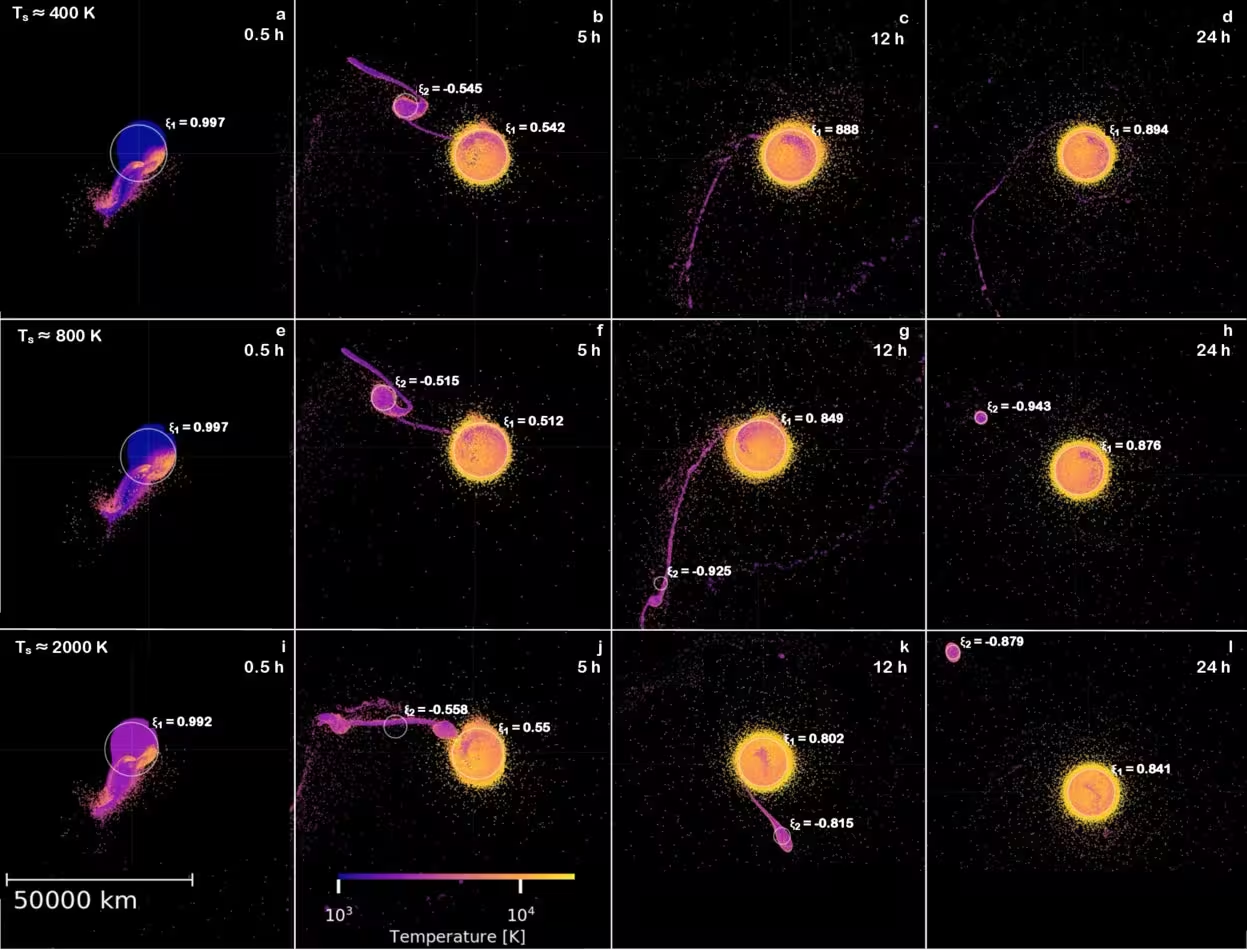
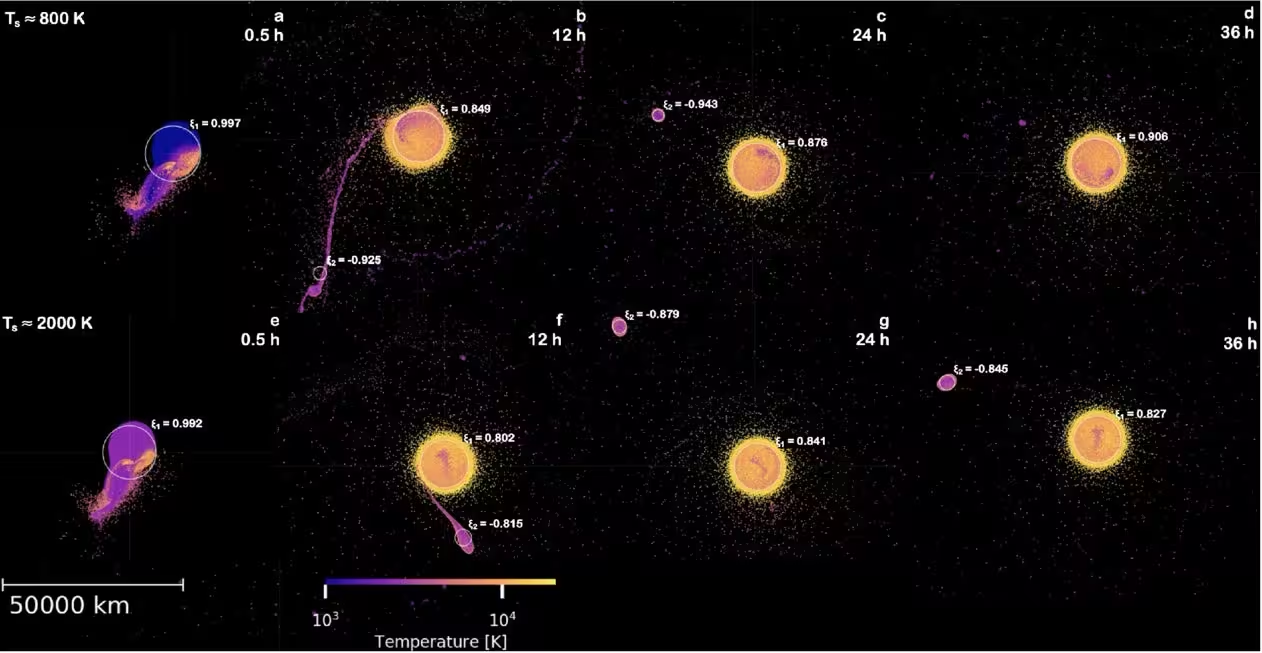
The researchers tested a variety of pre-impact temperature profiles, ranging from 400 kelvins (relatively cold and strong) to 2,000 kelvins (hot and near-melting). The results revealed a distinct sensitivity to the state of the material at the moment of impact.
In the high-temperature models, Theia did not simply disintegrate into a cloud of molten rock. Instead, the internal strength allowed for a cleaner separation of materials. A significant fragment of the impactor remained coherent and was propelled into orbit by gravitational interactions, essentially bypassing the long-lived debris disk phase. This process, which the team jokingly dubbed “walking the dog,” saw the proto-Moon stabilize within just five hours of the initial collision.
Conversely, colder, more rigid bodies tended to resist the forces required to enter a stable orbit. These cooler versions often collided with Earth a second time or disintegrated into rings that failed to form a significant, lasting satellite. The “Goldilocks” scenario—a body that is hot enough to be ductile but cool enough to maintain structural integrity—appears to be the most efficient path for creating a moon similar in size to our own.
A New Timeline for the Moon
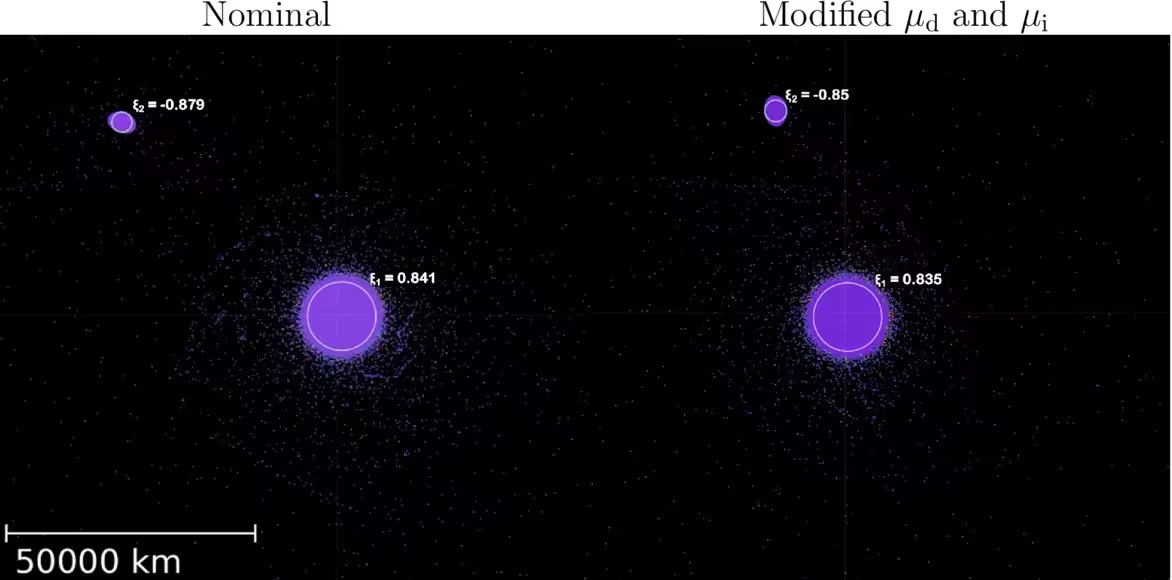
This discovery introduces a potential chronological link between the Moon’s formation and the thermal evolution of the early solar system. Because protoplanets were significantly hotter shortly after their formation, the “intact satellite” scenario is more probable if the impact occurred within the first 60 million years of the solar system’s history. A later collision, when the planets had more time to cool and solidify, would more likely favor the traditional, slow-growth model from a debris disk.
Robin Canup, a researcher at the Southwest Research Institute who was not part of the study, noted that these insights could eventually explain aspects of the Moon’s chemical composition. “These surprising and exciting new results imply a potential connection between the physical properties of the moon today, including perhaps its volatile content, and the thermal state of the Earth and Theia at the time of the giant impact,” Canup said.
Lingering Questions
Despite these advancements, the “isotopic mystery” persists. Geochemical analysis of lunar samples shows an uncanny similarity to Earth’s own composition, a fact that remains difficult to reconcile with a scenario where the Moon is formed almost entirely from the wreckage of a separate planet, Theia. While the new model does not immediately resolve this chemical riddle, it shifts the focus toward how the geological state of planetary bodies governs the mechanics of survival during catastrophic events.
As co-author Namya Baijal stated, the research makes one thing clear: the outcome of a planetary collision is not dictated by gravity and pressure alone. The internal, solid-state properties of worlds in their infancy hold the key to understanding the violent, rapid birth of the Moon.
Recommended Reading on Lunar Origins
- Origin of the Moon in a giant impact near the end of the Earth’s formation (Nature, 2001)
- Immediate origin of the Moon as a post-impact satellite (The Astrophysical Journal Letters, 2022)
- The Origin of the Moon Within a Terrestrial Synestia (Journal of Geophysical Research: Planets, 2018)
- Moon-forming impactor as a source of Earth’s basal mantle anomalies (Nature, 2023)
- On the origin of Earth’s Moon (Journal of Geophysical Research: Planets, 2016)
This article has been fact checked for accuracy, with information verified against reputable sources. Learn more about us and our editorial process.
Last reviewed on .
Article history
- Latest version
Reference(s)
- Denton, C. Adeene., et al. “Collisional Capture of an Intact Moon Depends on Strength.” The Astrophysical Journal Letters, vol. 1008, no. 1, September 1, 2026, pp. L30 American Astronomical Society, doi: 10.3847/2041-8213/ae91e9. <https://iopscience.iop.org/article/10.3847/2041-8213/ae91e9>.
- Canup, Robin. “Origin of the Moon in a giant impact near the end of the Earth's formation - Nature.”, vol. 412, no. 6848, pp. 708-712. Nature, doi: 10.1038/35089010. <https://www.nature.com/articles/35089010>.
- Kegerreis, J. A.., et al. “Immediate Origin of the Moon as a Post-impact Satellite.” The Astrophysical Journal Letters, vol. 937, no. 2, October 4, 2022, pp. L40 American Astronomical Society, doi: 10.3847/2041-8213/ac8d96. <https://doi.org/10.3847/2041-8213/ac8d96>.
- Lock, Simon J.., et al. “The Origin of the Moon Within a Terrestrial Synestia.” Journal of Geophysical Research: Planets, vol. 123, no. 4, April 16, 2018, pp. 910-951. American Geophysical Union (AGU), doi: 10.1002/2017JE005333. <https://doi.org/10.1002/2017JE005333>.
- Yuan, Qian., et al. “Moon-forming impactor as a source of Earth’s basal mantle anomalies.” Nature, vol. 623, no. 7985, November 1, 2023, pp. 95-99. Springer Science and Business Media LLC, doi: 10.1038/s41586-023-06589-1. <https://doi.org/10.1038/s41586-023-06589-1>.
- Barr, Amy C.. “On the origin of Earth's Moon.” Journal of Geophysical Research: Planets, vol. 121, no. 9, September 21, 2016, pp. 1573-1601. American Geophysical Union (AGU), doi: 10.1002/2016JE005098. <https://doi.org/10.1002/2016JE005098>.
Cite this page:
- Posted by Aisha Ahmed