Amateur Astrophotographer Captures Stunning Details of 5,200‑Light‑Year Lagoon Nebula
A faint Milky Way cloud looks like a haze, but reveals its intricate structure when observed under optimal conditions.
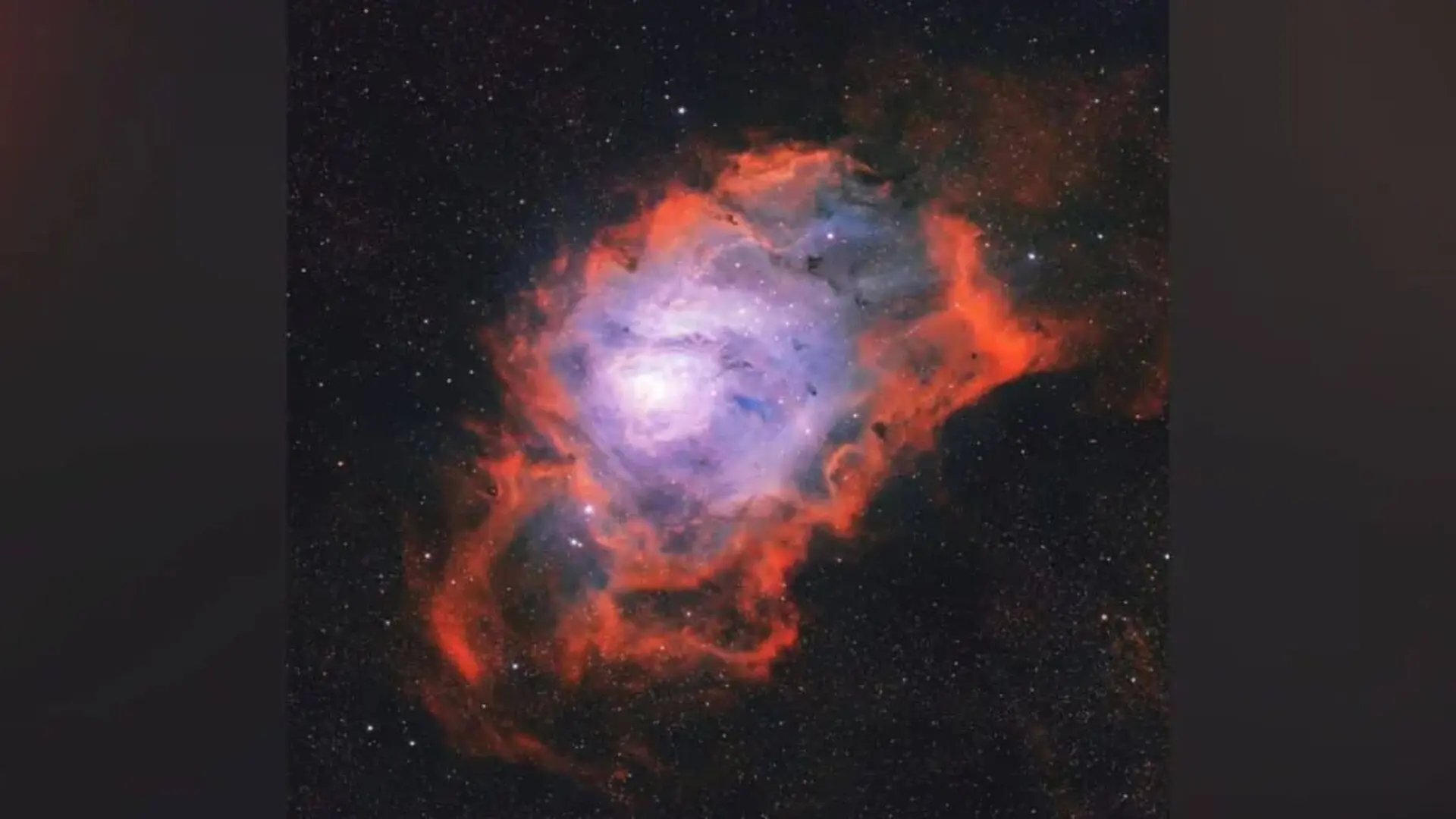
Amateur astrophotographer Noah Gyles has produced a strikingly detailed capture of the Lagoon Nebula, a massive cloud of gas and dust situated about 5,200 light‑years from Earth. The image, taken from Rockwell, Texas, highlights the nebula’s intricate glow created by its young stellar population.
The photograph was assembled from a series of long exposures using narrowband filters that isolate the faint emissions of ionized hydrogen—details that are normally invisible to the naked eye, according to Space.com.
Extended Night‑Time Imaging Yields Hidden Detail
Gyles recorded the nebula over two consecutive nights, July 18 and 19, 2025, employing an Askar FRA500 telescope coupled with a ZWO astronomy camera. The final dataset comprised 60 five‑minute exposures, amounting to more than six hours of total integration time. Each frame contributed subtle structure that only emerged after stacking and processing.
“The first five‑minute exposure already showed more detail than I was expecting,” he said. “After stacking all 60 frames, I was amazed by the amount of structure and faint detail in the nebula.”
The clear skies were both moonless and cloudless, encouraging Gyles to continue imaging throughout the session. Living on the outskirts of the Dallas–Fort Worth area, he routinely drives about an hour away to escape urban light pollution, a necessity for capturing such faint nebular light.
“I often drive about an hour outside the city to escape the light pollution,” Gyles explained. It is a routine shaped by necessity rather than preference, since faint nebular light is easily overwhelmed by urban brightness.
The final composition relies on narrowband filters that isolate specific wavelengths emitted by ionized hydrogen, enhancing the nebula’s delicate filaments and bright knots against darker dust lanes.
Star‑Forming Activity Illuminates the Nebula
The Lagoon Nebula, a prominent region of active star formation, consists of vast clouds of hydrogen gas sculpted by intense radiation from newly born, hot stars. This radiation ionizes the surrounding material, causing it to glow and form the luminous patterns captured in astrophotographs. NASA notes that such nebulae serve as cradles where fresh stars emerge from dense pockets of interstellar matter.
In Gyles’ image, layered filaments and bright emission knots stand out amid darker dust lanes, illustrating the ongoing tug‑of‑war between stellar winds and surrounding gas. These features evolve over long timescales as energy from newborn stars reshapes their environment.
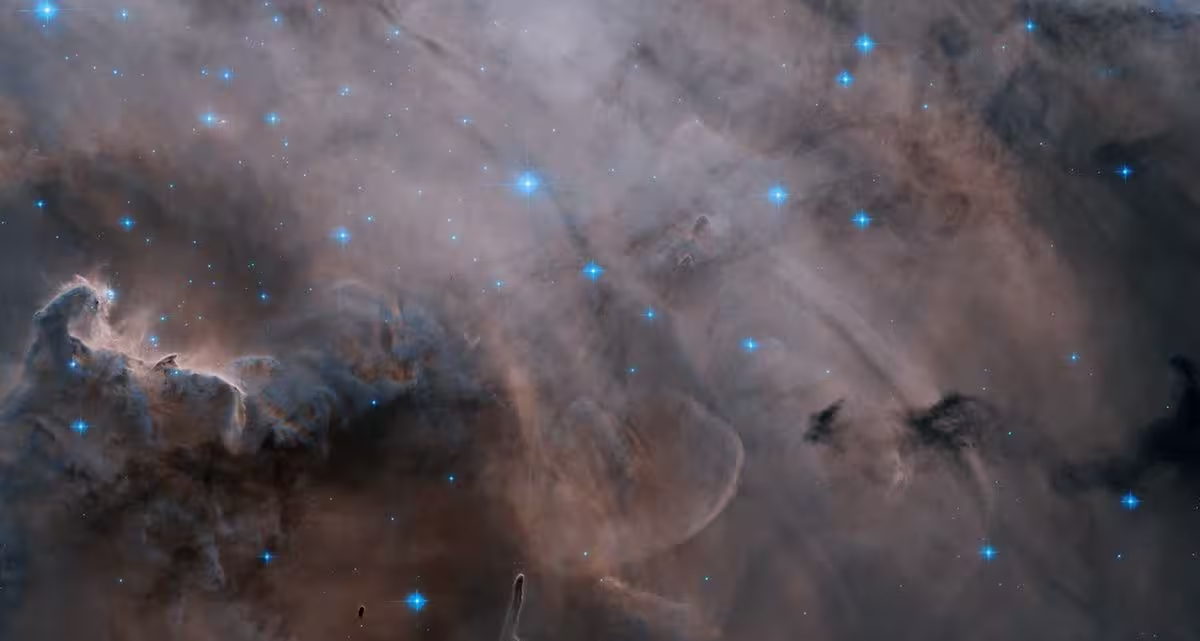
Because of its relative brightness, the Lagoon Nebula is one of the few deep‑sky objects that can be spotted with the naked eye under dark conditions. Small telescopes reveal a complex tapestry of glowing gas woven into the dense star fields of the Milky Way.
Finding the Nebula in Summer Skies
Astronomers locate the Lagoon Nebula within the constellation Sagittarius, using the well‑known Teapot asterism as a guide. By extending a line through the stars that form the Teapot’s spout—Kaus Australis, Alnasl and Kaus Media—observers can pinpoint the nebula’s position in the surrounding sky.
Another method references the stars Ascella and the binary system Sabik, which lie nearby. The Lagoon Nebula sits roughly between these markers, embedded in a dense Milky Way backdrop that can appear almost uniform to the unaided eye.
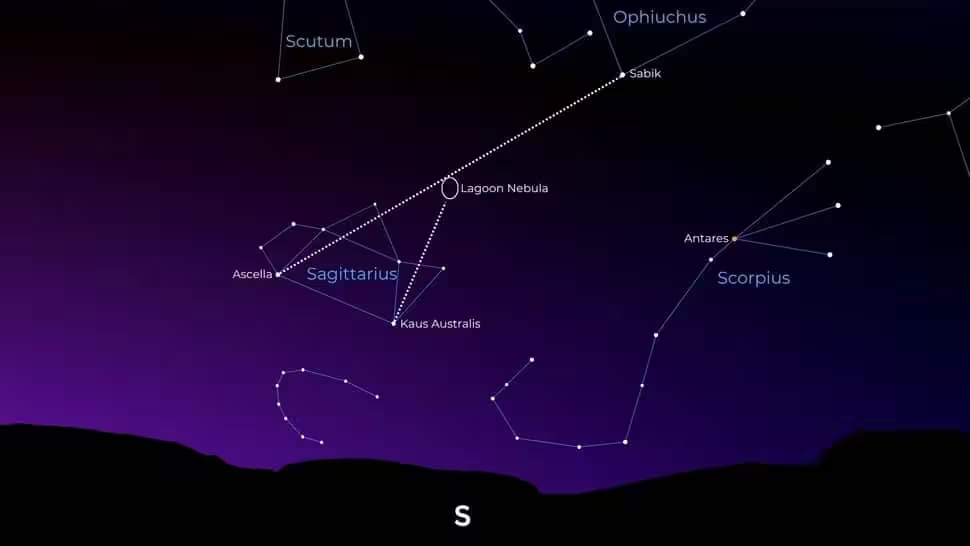
The nebula reaches its highest visibility in the months surrounding August, when Sagittarius climbs high in the southern sky for observers in the Northern Hemisphere.
This article has been fact checked for accuracy, with information verified against reputable sources. Learn more about us and our editorial process.
Last reviewed on .
Article history
- Latest version
Reference(s)
- Gianopoulos, Andrea. “Messier 8 (The Lagoon Nebula) - NASA Science.”, October 19, 2017 NASA <https://science.nasa.gov/mission/hubble/science/explore-the-night-sky/hubble-messier-catalog/messier-8/>.
Cite this page:
- Posted by Aisha Ahmed