New International Study Confirms Accelerating Universe—Dark Energy Still Holds Firm
New analysis confirms the universe’s accelerating expansion, bolstering evidence for dark energy and its role in cosmic growth.
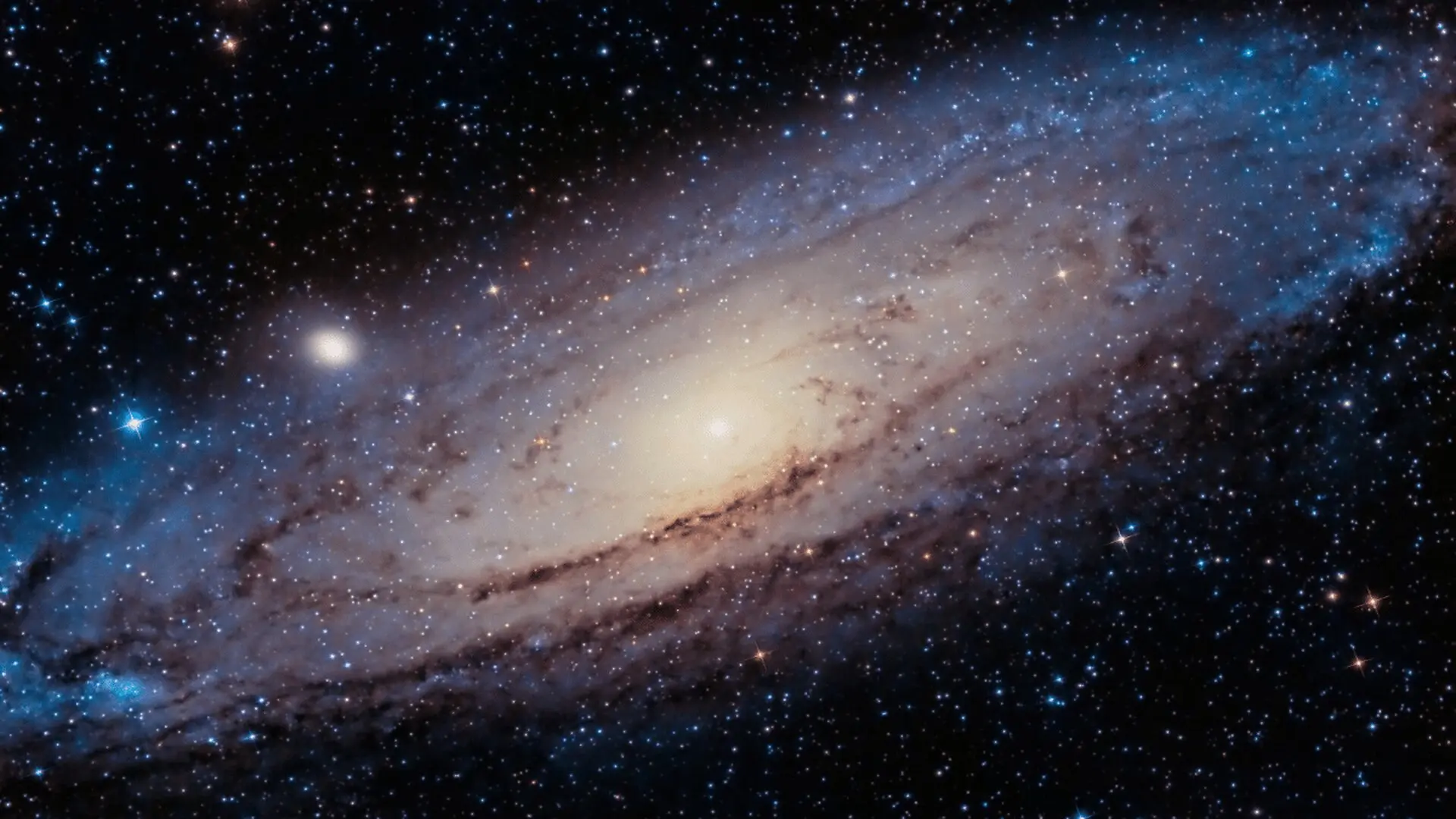
A fresh international study released in the Monthly Notices of the Royal Astronomical Society adds weight to one of the most profound insights of contemporary cosmology: space is not only stretching, it is doing so at an accelerating pace, a phenomenon attributed to a mysterious component commonly called dark energy. The analysis directly confronts recent suggestions that the observed acceleration could be a measurement artifact, demonstrating that the original conclusion holds up across a variety of independent data sets and modern correction techniques.
Accelerated Expansion Confirmed Under Rigorous Review
The late‑1990s discovery that distant stellar explosions appeared dimmer than a uniformly expanding universe would predict reshaped our understanding of cosmic history and earned a Nobel Prize in Physics. In the latest work, scientists revisited the arguments that this dimming might stem from subtle systematic effects in the brightness of supernovae. Their calculations reveal that such effects are already incorporated into prevailing cosmological analyses and do not meaningfully shift the inferred rate of expansion.
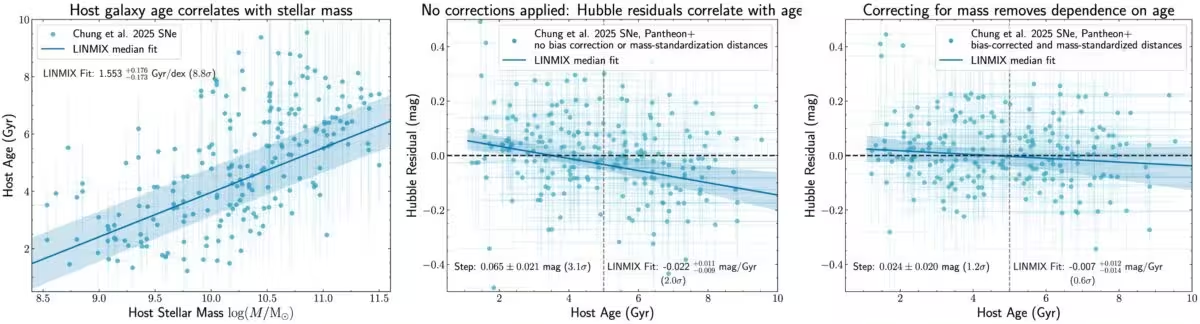
By comparing results from several large‑scale supernova surveys that employ distinct calibration strategies, the researchers found a consistent imprint of accelerating expansion. This agreement across different observational programs and galaxy environments reinforces confidence in the prevailing model of the cosmos.
Credit: Monthly Notices of the Royal Astronomical Society
Type Ia Supernovae as Cosmic Rulers
Type Ia supernovae continue to serve as the benchmark for gauging the expansion of the universe because their intrinsic luminosity can be standardized. These stellar explosions arise when a white dwarf accumulates enough material to trigger a thermonuclear runaway, briefly outshining an entire galaxy. The predictable light curve enables astronomers to compare observed brightness with the expected output, yielding precise distance estimates that originally revealed the unexpected dimness of far‑away galaxies.
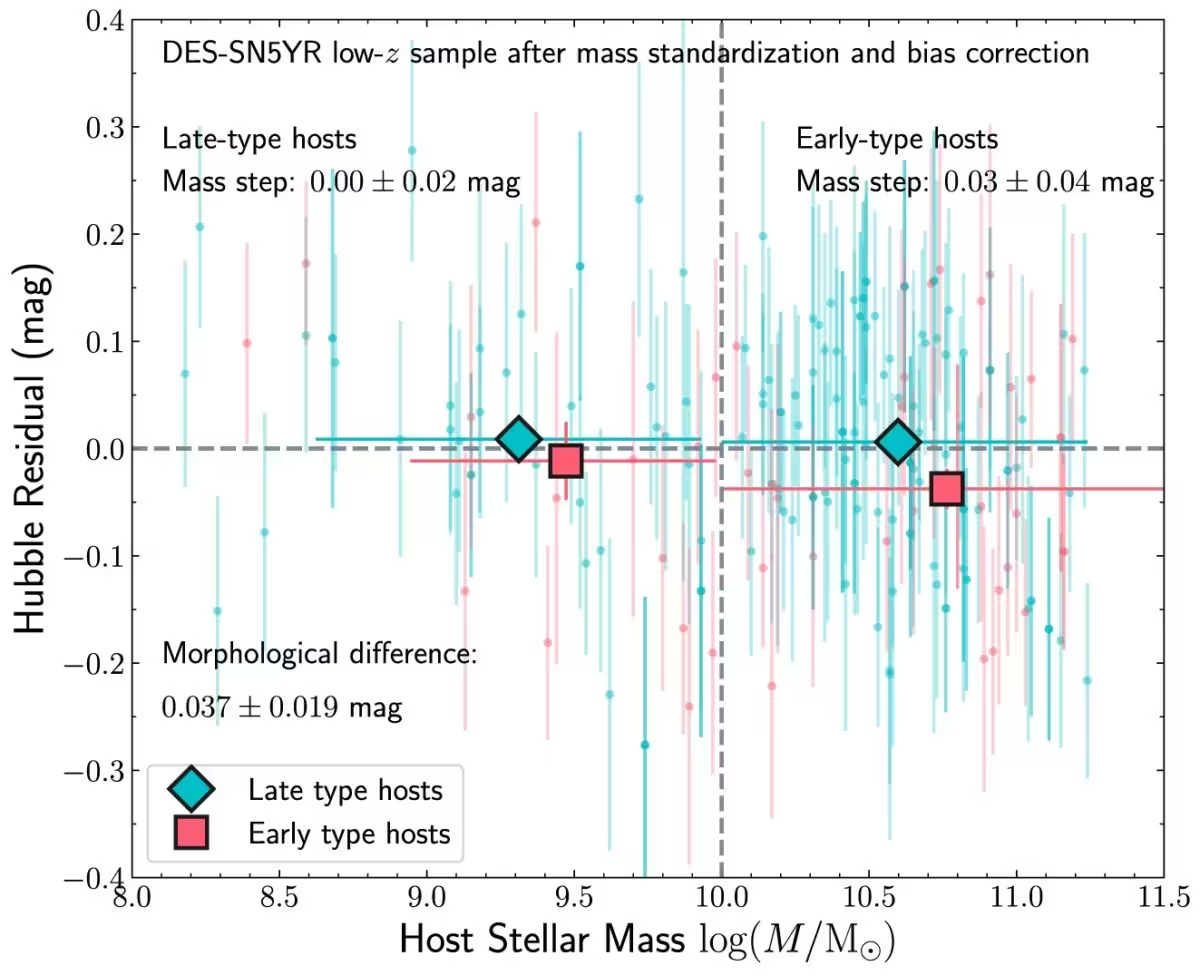
The new paper scrutinizes the possibility that variations in the properties of host galaxies could skew these distance calculations. The authors demonstrate that adjustments for factors such as stellar mass and galactic environment are already embedded in the analysis pipelines of major surveys. When these corrections are uniformly applied, the hypothesized systematic brightening trend across cosmic time diminishes, leaving the acceleration signature untouched.
Credit: Monthly Notices of the Royal Astronomical Society
Dark Energy Remains the Leading Explanation
The ongoing debate over whether an unknown energy component or observational quirks drive the speeding‑up of cosmic expansion leans heavily toward the former after this study. Simulated alternatives fail to reproduce the full suite of supernova observations spanning multiple epochs, bolstering the view that dark energy accounts for roughly seventy percent of the universe’s total energy density.
Renowned researcher Adam Riess, whose earlier work helped uncover the accelerating universe, cautioned, “Extraordinary claims require especially careful testing.” His comment reflects the meticulous approach of the analysis, which repeatedly probes whether subtle statistical or astrophysical influences could overturn the prevailing model. The findings consistently indicate that, while refinements are inevitable, no existing evidence erodes the core conclusion.
New Survey Results Tighten the Expansion Picture
Extensive observational campaigns that have cataloged over a thousand supernovae continue to exhibit a uniform acceleration trend across a broad range of distances. These data sets allow researchers to examine whether brightness adjustments evolve with cosmic time or differ across galactic populations. The latest measurements reveal only marginal fluctuations, far too slight to replace dark energy as the driving force.
The full report, published in Monthly Notices of the Royal Astronomical Society, also revisits prior claims that variations in stellar demographics could bias distance estimates. After applying all known galaxy‑related corrections, the residual signal still points toward a universe that is accelerating rather than decelerating. This concordance among independent observational programs reinforces the robustness of current cosmological models and narrows the room for rival explanations.
This article has been fact checked for accuracy, with information verified against reputable sources. Learn more about us and our editorial process.
Last reviewed on .
Article history
- Latest version
Cite this page:
- Posted by Aisha Ahmed