New Space Mission Could Give Earth Hours Of Extra Warning Before Solar Storms Strike
The new HENON CubeSat concept could significantly extend solar storm warning times, potentially revolutionizing how we monitor hazardous space weather.
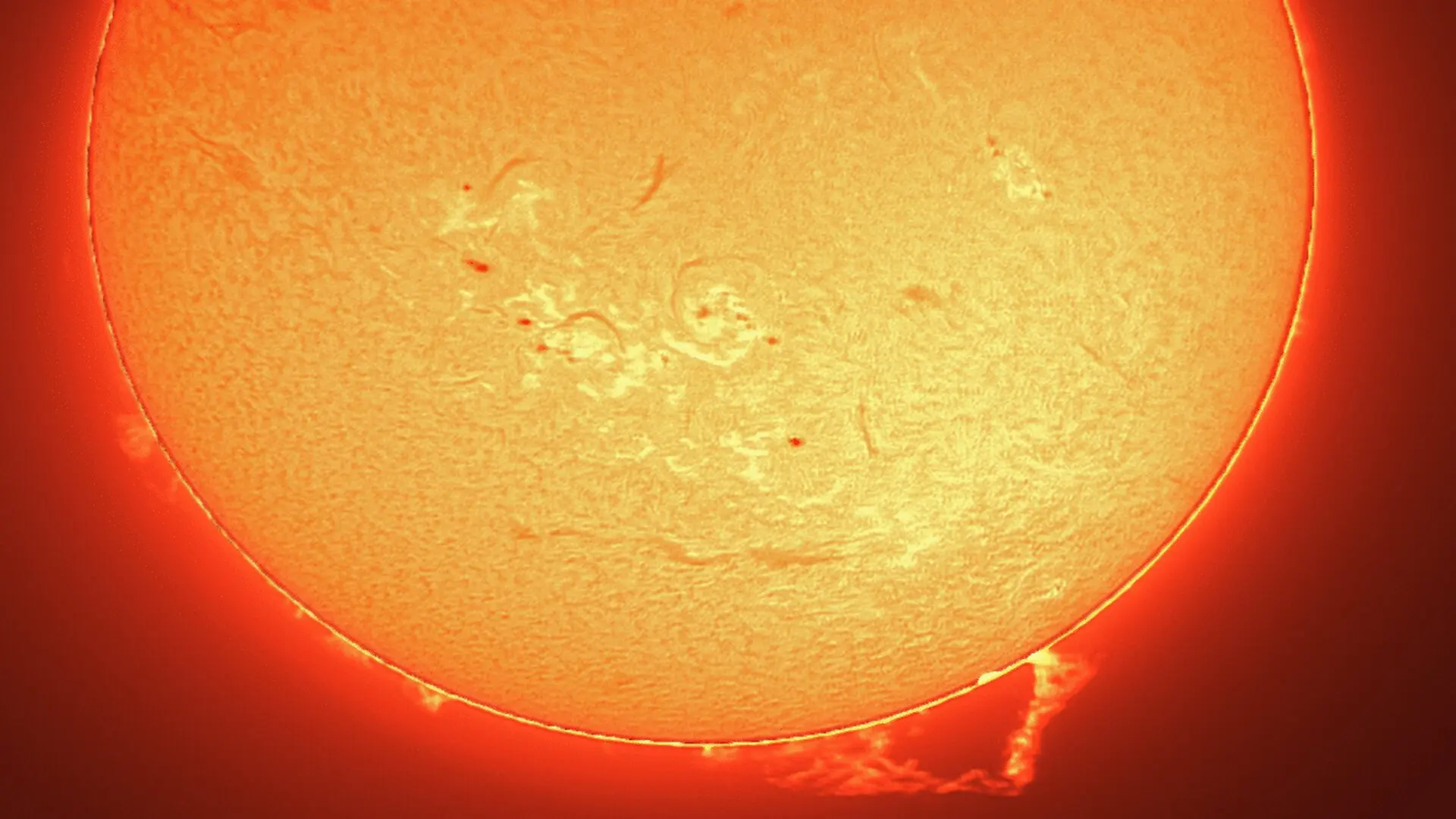
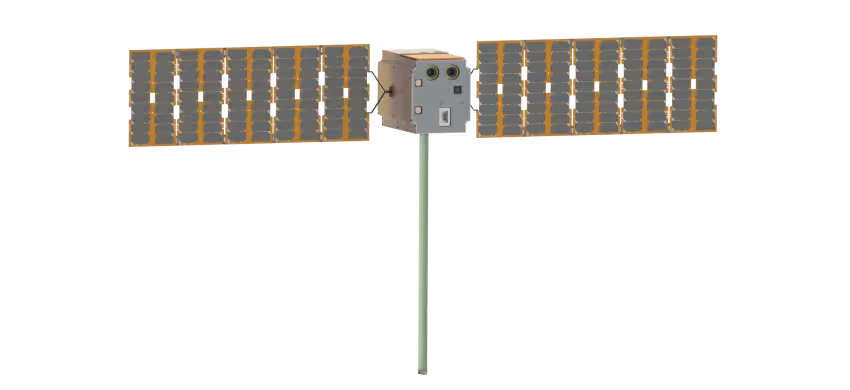
A pioneering CubeSat initiative is poised to revolutionize how humanity monitors the Sun, potentially offering a vital extension to the early warning systems currently protecting our planet’s power grids and satellite networks. Known as HENON, the Heliospheric pioneer for solar and interplanetary threats defence project aims to anchor its monitoring capabilities significantly further out in the solar wind than existing infrastructure allows.
The mission concept, which was detailed at the Royal Astronomical Society’s National Astronomy Meeting 2026, addresses a critical gap in space weather preparedness. Currently, the global scientific community relies on sensors positioned at the Sun-Earth L1 Lagrange point, situated roughly 1.5 million kilometers from our planet. By relocating this watch post to a position approximately 15 million kilometers away, researchers at Imperial College London believe they can substantially increase the time available to mitigate the impact of solar disturbances.
Current models provide a warning window of roughly 15 to 60 minutes before an event arrives. With the deployment of the HENON mission, this lead time could be extended to several hours, providing operators of power grids and telecommunications systems the precious time needed to transition infrastructure into a safe state.
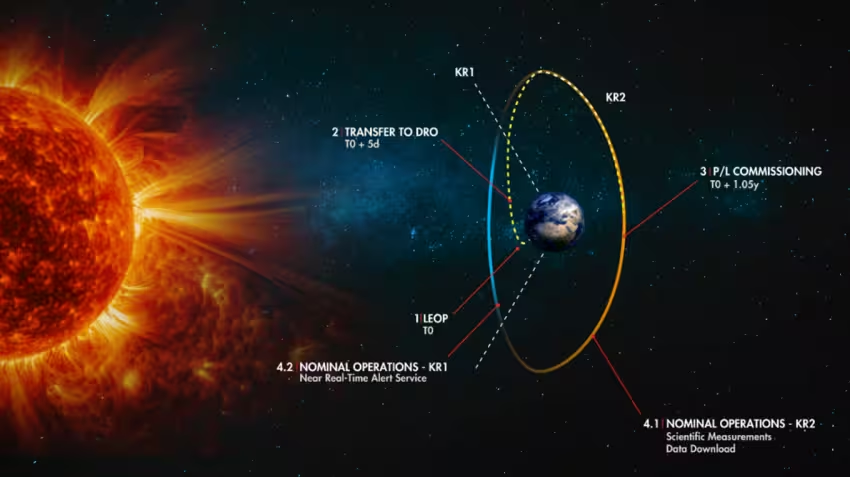
Advanced Instrumentation for Deep Space Monitoring
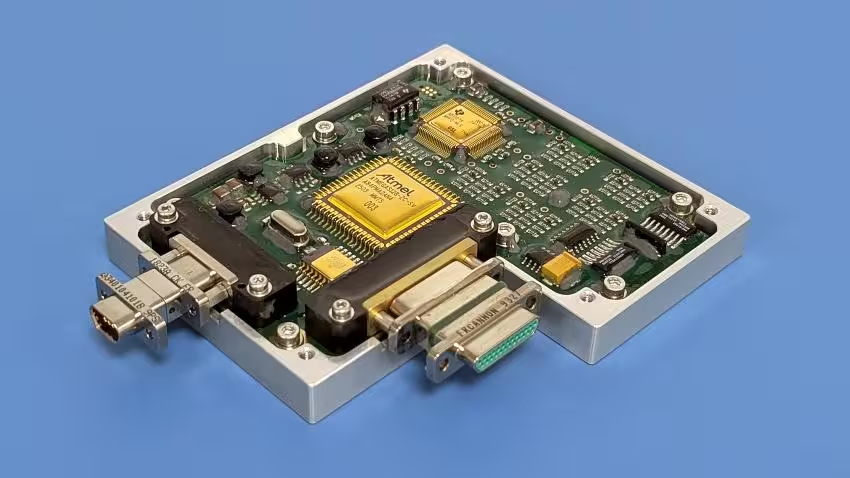
The heart of the spacecraft is the MAGIC (MAGnetometer from Imperial College) instrument. This specialized hardware is engineered to detect and analyze the magnetic fields embedded within the solar wind, offering a clear view of the structural integrity and intensity of incoming solar storms. These storms, which originate from solar flares, coronal mass ejections, and bursts of high-energy particles, have the potential to trigger geomagnetic activity that can disrupt navigation, communication, and energy distribution systems.
Paving the Way for Future Shielding Capabilities
Beyond its immediate utility, HENON serves as a vital technology demonstrator for a more robust endeavor: the European Space Agency’s (ESA) SHIELD mission. According to Dr. Jonathan Eastwood, Professor of Space Physics at Imperial College London, the success of this CubeSat project is a fundamental step toward building a permanent, operational defense architecture.
“The success of HENON will be a step change in our ability to forecast space weather and paves the way for a future operational space weather mission, SHIELD, that is being developed by the European Space Agency,” Dr. Eastwood stated.
The lessons learned from operating in the challenging environment of deep space will dictate how the larger, multi-purpose SHIELD mission is eventually deployed. By successfully testing autonomous, long-range observation platforms, agencies are looking to move away from reactive measures toward a more proactive, anticipatory framework for handling the Sun’s most volatile outbursts.
The Persistent Threat of Solar Activity
The urgency for such technology is underscored by the vulnerability of modern global infrastructure to space weather. History provides stark warnings, most notably the 1859 Carrington Event, which devastated telegraph networks worldwide. More recently, the G5-rated geomagnetic storm of May 2024—the highest tier on the NOAA Space Weather Scales—served as a sobering reminder that such events remain an ever-present risk.
As our reliance on complex satellite constellations and high-voltage power grids continues to grow, so does our need for advanced warning systems. HENON represents an essential shift in this endeavor, moving the vantage point of our scientific observers closer to the source of the danger, and in doing so, buying Earth the time it needs to weather the storm.
This article has been fact checked for accuracy, with information verified against reputable sources. Learn more about us and our editorial process.
Last reviewed on .
Article history
- Latest version
Reference(s)
- “8ab6b0b5b8dc4d8ab6861b39c4f3e494.” <https://airdrive.eventsair.com/eventsairwesteuprod/production-uobevents-public/8ab6b0b5b8dc4d8ab6861b39c4f3e494>.
- “NAM 2026: UK-built instrument could vastly improve space weather forecasts.”, July 20, 2026 The Royal Astronomical Society <https://ras.ac.uk/news-and-press/research-highlights/nam-2026-uk-built-instrument-could-vastly-improve-space-weather>.
Cite this page:
- Posted by Aisha Ahmed