Ancient Stellar Flyby Still Steering Comets Toward Earth, Gaia Data Shows
Gaia data reveals a distant stellar flyby that could still be directing long-period comets toward the inner Solar System.
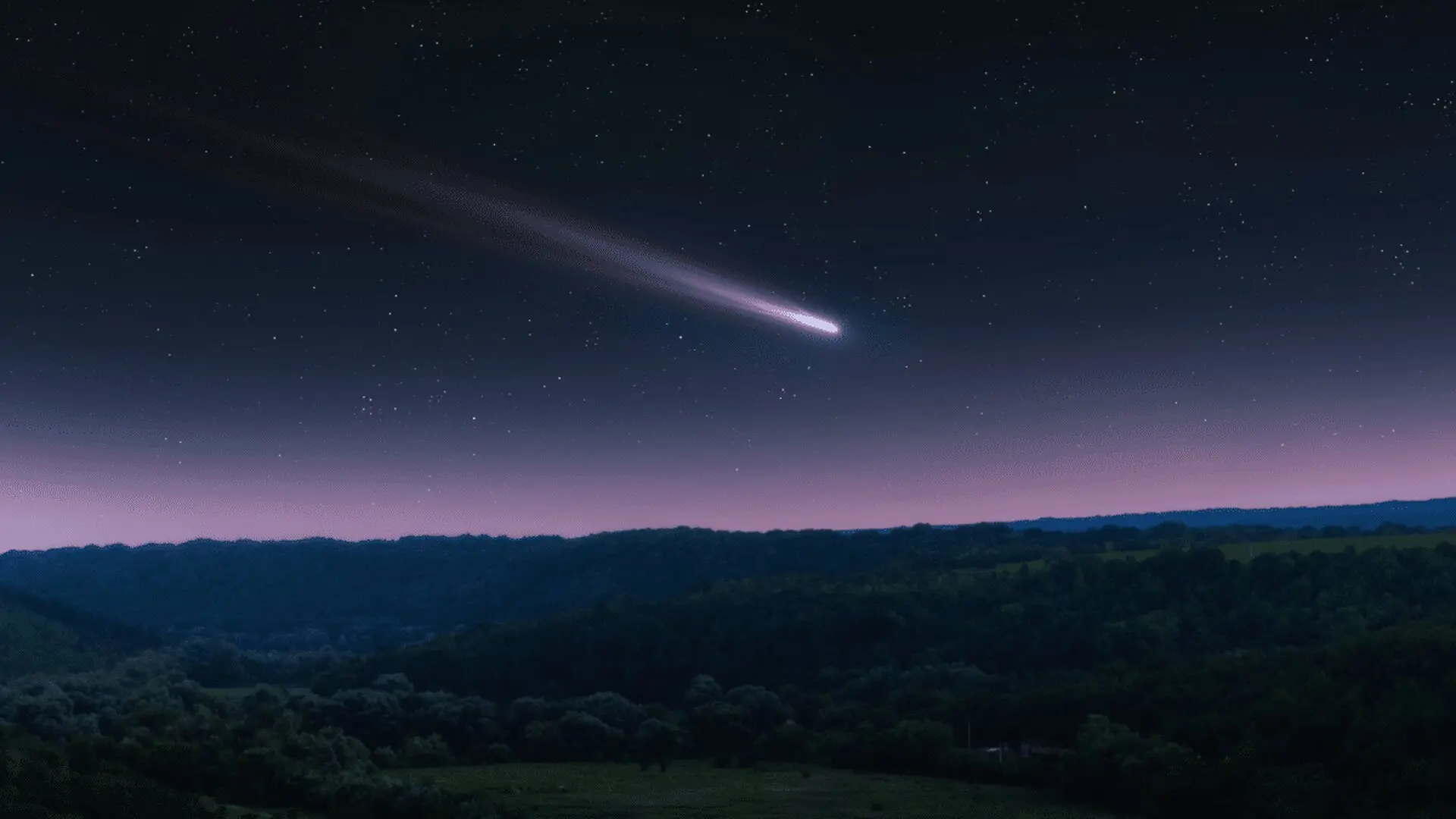
New calculations posted on arXiv suggest that a close encounter with the star HD 7977 roughly 2.5 million years ago could still be steering the trajectories of icy bodies that are now reaching the inner Solar System. The researchers argue that the distant Oort Cloud may have been perturbed by that flyby, sending a prolonged cascade of long‑period comets our way. If the model holds up, today’s cometary orbits would carry the imprint of a single stellar passage reconstructed from Gaia mission data.
Comet Paths May Bear the Mark of an Ancient Stellar Flyby
Advances in three‑dimensional stellar motion reconstructions have made it possible to link individual comet streams to past encounters. By tracing Gaia‑derived positions and velocities, scientists identified HD 7977 as a prime suspect for a close approach that could have brought the star within a few thousand astronomical units of the Sun, enough to disturb the loosely bound objects of the Oort Cloud. Rather than a brief spike, such a disturbance would generate a slow‑moving wave of comets that continues to arrive over millions of years.
In this view, long‑period comets act like a geological record, preserving evidence of ancient gravitational nudges. The outer reaches of the Solar System are constantly reshaped by the Milky Way’s tidal field, occasional stellar passages, and internal dynamics. A sufficiently close star can temporarily dominate these forces, reshuffling cometary orbits and funneling them inward. Simulations that incorporate HD 7977’s motion produce a distribution of comet trajectories that matches the pattern expected from such an event, hinting that the Solar System may still be riding the tail end of a comet shower launched millions of years ago.
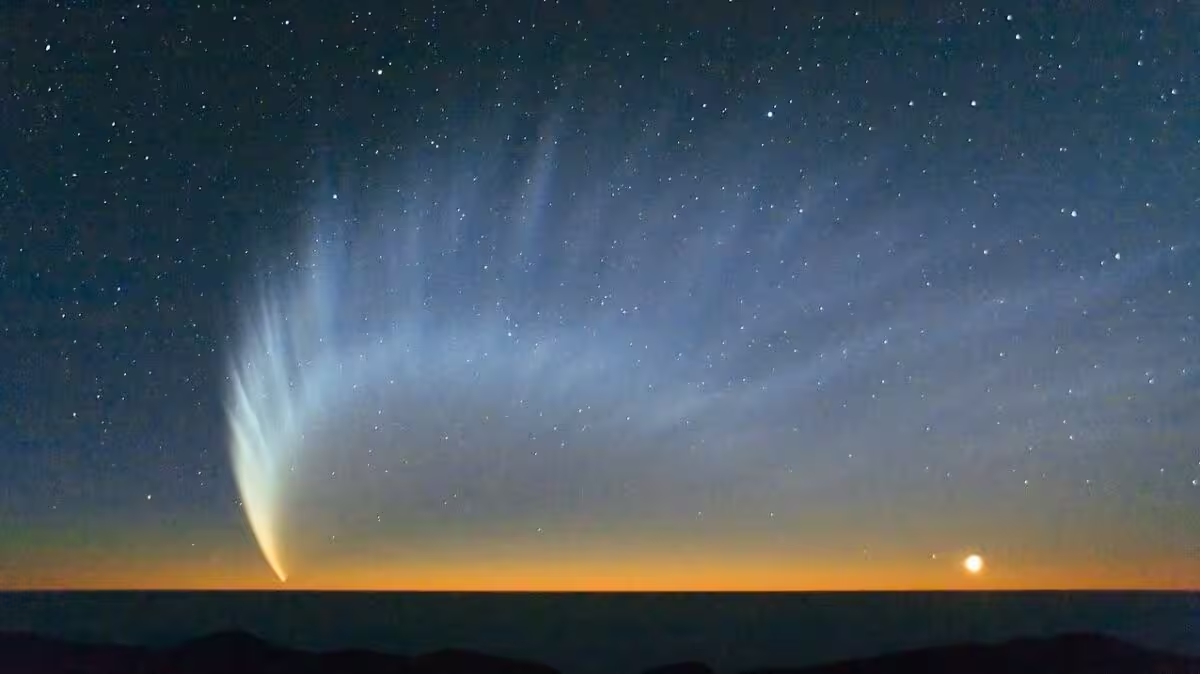
How Gaia Enables a Galactic Forensic Study
The full analysis appears on arXiv, where the team blends observed comet data with dynamical models of stellar flybys. Gaia’s high‑precision astrometry provides the essential framework for rewinding stellar motions to epochs far beyond direct observation. By comparing simulated comet clouds with the catalog of long‑period comets compiled since the late 20th century, the authors test whether a single stellar event can explain the current orbital distribution.
“The distribution of comet orbits suggests we are living through an unusual time where HD 7977 has dominated the generation of new comets and not the larger gravitational field of the Milky Way, as it usually would. This would also mean we’re living through the late stages of a pretty rare and powerful comet shower,” says Kaib.
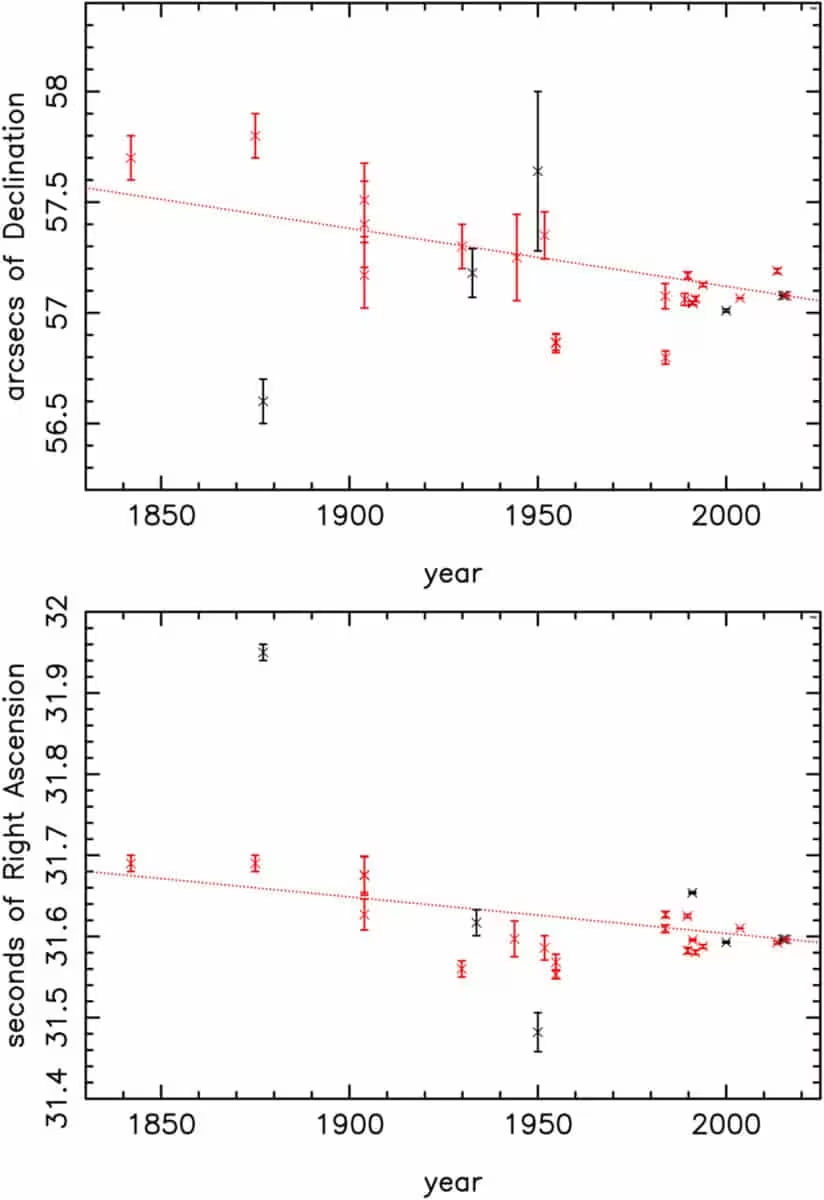
These results imply that the Solar System’s gravitational setting may be far from uniform, with rare stellar passages imposing pronounced, lingering disturbances. In this scenario, the present‑day comet swarm reflects a transitional state rather than a steady‑state equilibrium. Older, repeatedly returning comets appear to retain the broader galactic signature, while newer arrivals preserve the more localized imprint of the HD 7977 encounter.
Model Shortcomings and Open Questions
Despite encouraging correlations, the simulations do not perfectly reproduce the observed spread of comet orbital sizes. This mismatch points to missing physics or oversimplified assumptions about the Oort Cloud’s architecture. Modeling a distant, diffuse reservoir of icy bodies remains a formidable challenge, and uncertainties in its internal structure translate into ambiguities in reconstructing past perturbations.
“Like many other works that simulate long-period comet production, we find that our comets’ orbit sizes aren’t a great match for the observed distribution. It’s possible we’re missing some important physics from our simulations, and it’s conceivable that this has caused us to misinterpret comet orbit data,” said Raymond.
Alternative explanations include a more intricate Oort Cloud geometry, additional gravitational influences, or non‑gravitational forces such as outgassing jets and radiation pressure that can modify comet paths after they enter the inner Solar System. These complexities make it difficult to isolate the fingerprint of a single stellar passage from the overlapping effects accumulated over millions of years.
Future Tests with Upcoming Data
The authors outline a concrete prediction that can be examined as Gaia refines stellar motion measurements. Improved astrometry will sharpen the reconstructed trajectory of HD 7977, while an expanding catalog of long‑period comets from next‑generation sky surveys will provide a larger statistical sample. Together, these data sets should clarify whether the current orbital distribution stems from one dominant stellar encounter or from a blend of galactic forces.
“The nice thing about our prediction is that it will be testable pretty soon. Gaia is still publishing new data on the motions of stars, and in 6–12 months, it should be able to improve our understanding of HD 7977’s motion and tell us if we are right or wrong,” said Kaib.
Over the coming decade, wide‑field surveys are expected to dramatically increase the number of known long‑period comets. As the sample grows, patterns in orbital orientation and energy will become clearer, offering new avenues to trace their origins. Whether HD 7977 remains the primary suspect or is supplanted by another stellar passer‑by, the broader implication is clear: the distant comet reservoir is far more responsive to its galactic environment than previously appreciated.
This article has been fact checked for accuracy, with information verified against reputable sources. Learn more about us and our editorial process.
Last reviewed on .
Article history
- Latest version
Reference(s)
- Kaib, Nathan. “A Potential Signature of HD 7977's Passage Among Observed Long-Period Comet Orbits.” arXiv.org, doi: 10.3847/PSJ/ae7a65. <https://arxiv.org/abs/2606.25069>.
Cite this page:
- Posted by Divya Iyer