Your Guide to Seeing the 2026 Total Solar Eclipse From Iceland to Spain
A rare total solar eclipse in 2026 is just weeks away, with only a few locations set to experience the full spectacular sky show.
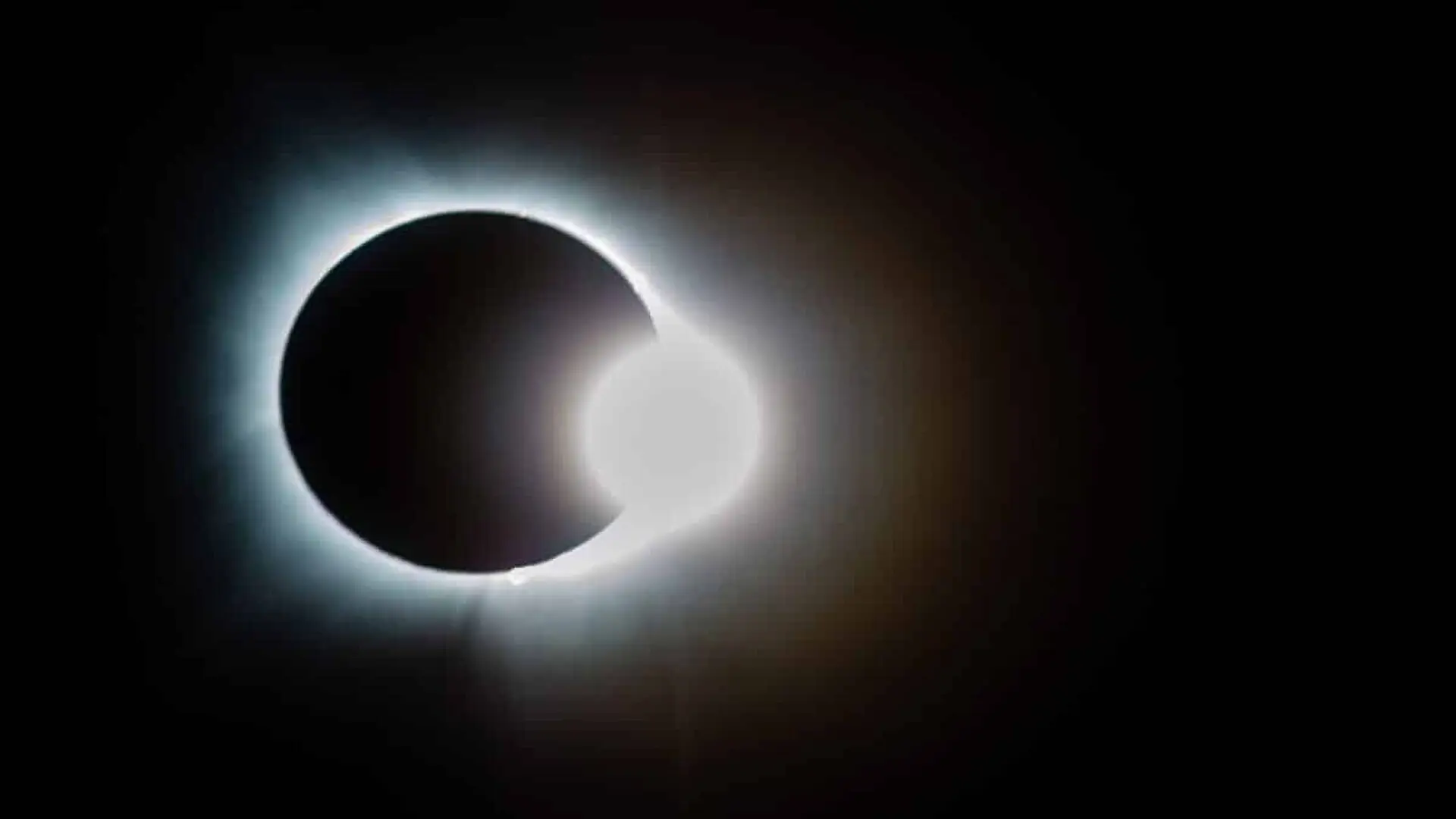
Astronomy enthusiasts are gearing up for a major celestial showcase on August 12, 2026. A total solar eclipse will sweep a slender corridor from the high Arctic down to the Mediterranean, granting viewers in Greenland, Iceland, Spain and a slice of Portugal a direct view of the Moon fully obscuring the Sun.
Even outside that narrow band, millions will still witness a striking partial eclipse, with the phenomenon visible across much of Europe, north‑western Africa, Canada and parts of the northern United States. For many of these regions, it will be the first opportunity in several decades to experience totality.
The event also carries historic significance for Europe. Forbes notes that Iceland has not seen a total solar eclipse since 1954 and Spain since 1905, while mainland Europe’s last total eclipse occurred in 1999.
A Sweeping Shadow Across the North
On the day of the eclipse, the Moon’s umbra will carve a track roughly 5,133 miles (8,260 kilometers) long and up to 182 miles (293 kilometers) wide. The path will cut through the Arctic, skim eastern Greenland, brush western Iceland, cross the Atlantic, and then pass over northern Spain before reaching a small corner of Portugal and terminating just east of the Balearic Islands.
Maximum totality will linger for about 2 minutes and 18 seconds near Iceland. In Spain the eclipse will occur just before sunset, casting the fully eclipsed Sun low over the north‑western horizon. Greenland is also highlighted as a prime viewing spot.
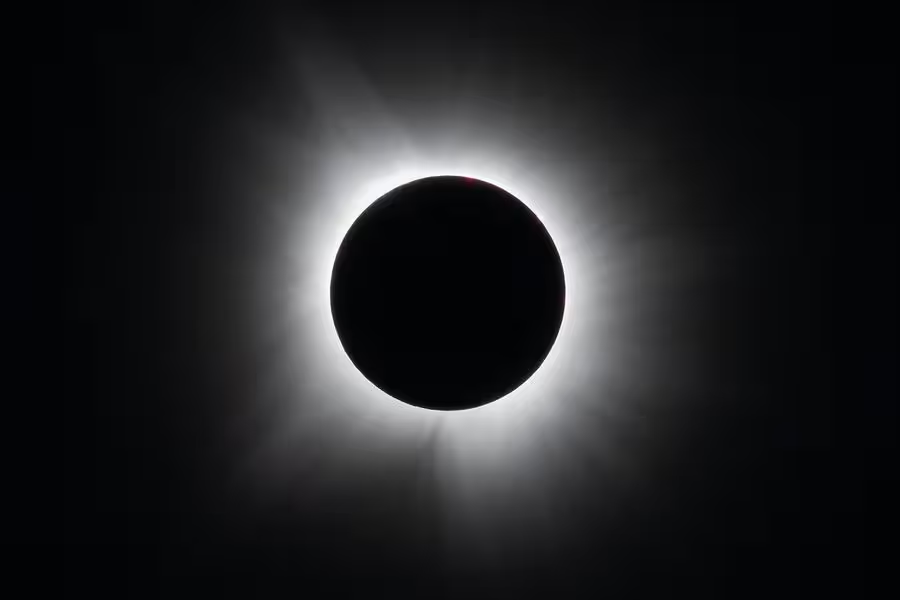
Beyond the totality corridor, the partial eclipse will still be observable across a broad swath of the globe. Residents of much of Europe, north‑western Africa, Canada and the northern United States will see the Moon cover only a portion of the solar disc.
Top Locations for Full Coverage
Travel planners are already mapping routes to the zones of total darkness. According to Forbes, Scoresby Sund in Greenland will enjoy one of the longest total phases, lasting up to 2 minutes and 17 seconds. In Iceland, the Snæfellsnes Peninsula will see about 2 minutes and 9 seconds of totality, Reykjavík around a minute, and the Reykjanes Peninsula close to 1 minute and 46 seconds.
Spain offers several promising sites along the eclipse line. León and Burgos are projected to receive roughly 1 minute and 44 seconds of totality, while Zaragoza will see about 1 minute and 22 seconds. A Coruña expects 1 minute and 16 seconds, the Ebro Delta about 1 minute and 36 seconds, and S’Arenal in Mallorca close to 1 minute and 35 seconds.
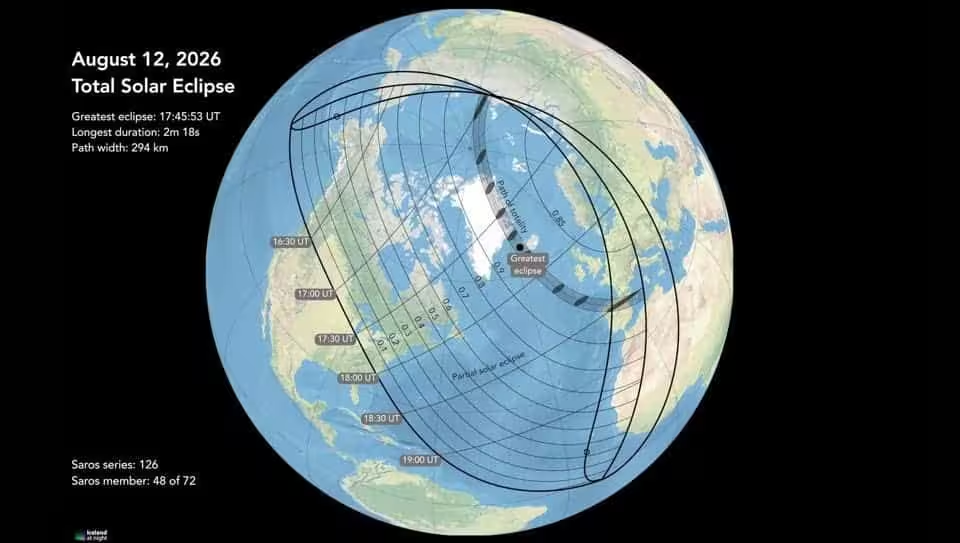
Spanish observers are advised to seek out open fields, coastal stretches, plateaus and elevated sites with an unobstructed view toward the north‑western horizon. Regions such as Castile and León, La Rioja, Aragón and the Balearic Islands are expected to provide optimal conditions.
Viewing Safely During the Eclipse
A total solar eclipse demands strict eye protection whenever any part of the Sun remains exposed. NASA advises using certified eclipse glasses or approved solar filters throughout the partial phases. Once totality begins and the Sun is completely covered, observers may safely remove the glasses to view the corona, but must replace them as soon as the bright edge reappears.
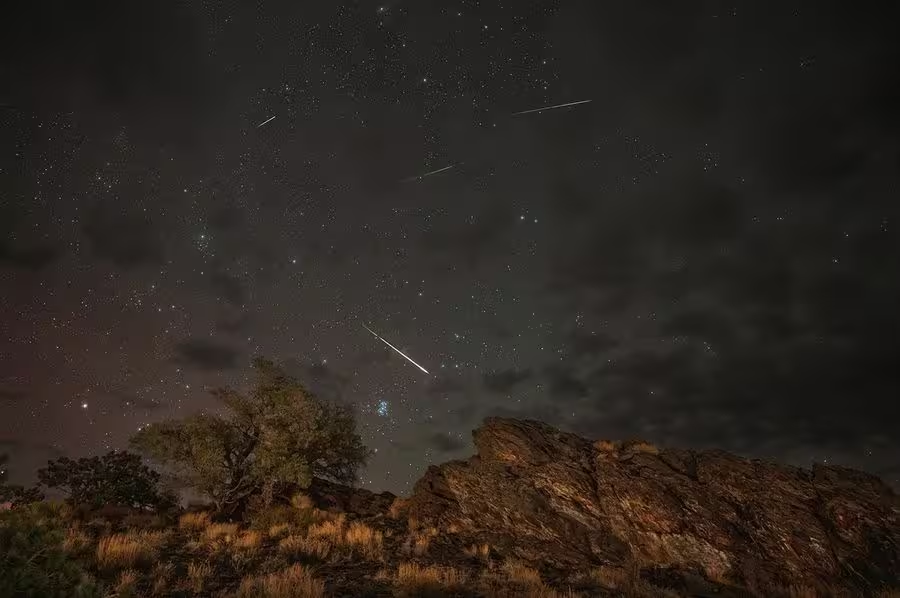
Forbes also points out that August 12 coincides with the peak of the Perseids meteor shower, which can produce up to 100 meteors per hour under favorable conditions. This offers eclipse watchers a secondary celestial spectacle later in the evening.
The mechanics behind total solar eclipses are rooted in the coincidence that the Sun, though about 400 times larger than the Moon, sits roughly 400 times farther away. This size‑distance ratio makes the Moon appear nearly the same angular size as the Sun, enabling a complete occultation during totality.
This article has been fact checked for accuracy, with information verified against reputable sources. Learn more about us and our editorial process.
Last reviewed on .
Article history
- Latest version
Reference(s)
- “50 Days To A Total Solar Eclipse — Where And When To Experience It.” Forbes <https://www.forbes.com/sites/jamiecartereurope/2026/06/23/50-days-to-a-total-solar-eclipse---where-and-when-to-experience-it/>.
- Thomas, Vanessa. “Total Solar Eclipse on August 12, 2026 - NASA Science.”, June 6, 2026 NASA <https://science.nasa.gov/eclipses/future-eclipses/total-solar-eclipse-on-august-12-2026/>.
Cite this page:
- Posted by Divya Iyer