Ice Age Boy Buried With Red Ochre Reveals Earliest Ritual Mourning
A 27,500‑year‑old bear attack on a teenage boy in Italy reveals unexpected survival tactics, reshaping views of Paleolithic life.
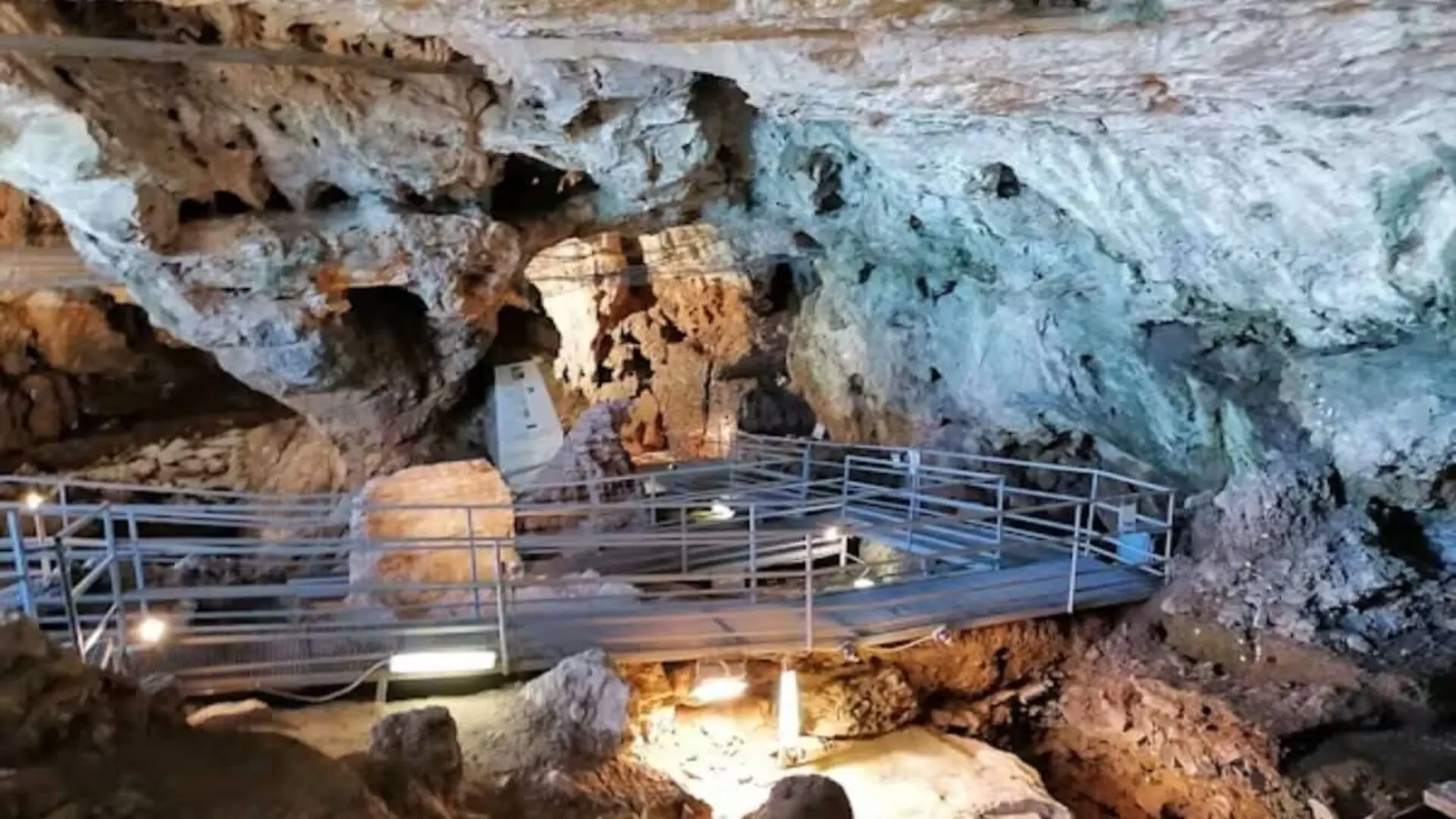
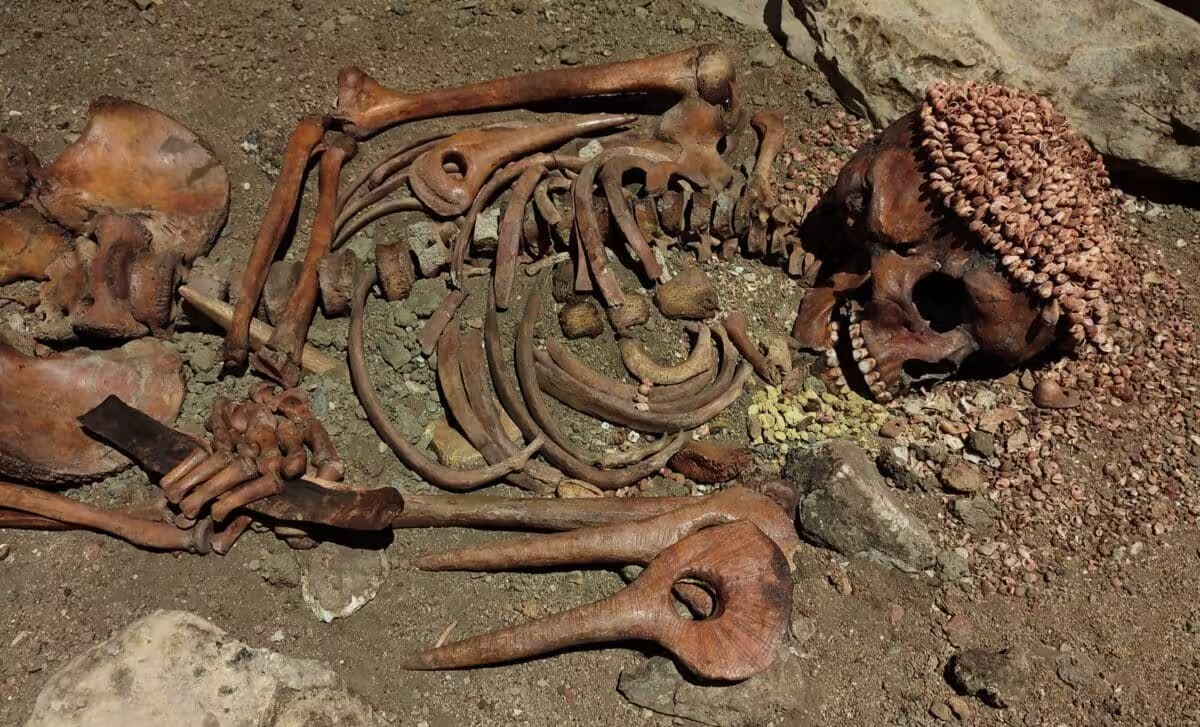
After the child fell, members of his group carried him to the Arene Candide cave, where they cared for his injuries, remained with him for several days until he passed, and then interred him with meticulous attention. Recent analysis describes this as the oldest known instance of a formal mourning ritual.
A Prehistoric Funeral That Challenges Ice‑Age Assumptions
When the remains were first uncovered in 1942, archaeologists found the boy lying on a layer of red ochre—a natural clay pigment—surrounded by dozens of perforated shells, a headdress made from deer canines, pendants of mammoth ivory, four elaborately carved elk‑antler batons, and a flint blade still gripped in his right hand. The richness of the assemblage prompted scholars to dub him “il Principe,” or “the Prince.”
A paper in the Journal of Anthropological Sciences reports microscopic examination of the fractured bones, revealing early stages of bone repair that indicate the youngster survived two to three days after the initial trauma before succumbing to a secondary brain injury, internal bleeding, or multi‑organ failure.
Biological anthropologist Vitale Stefano Sparacello of the University of Cagliari concluded that a bear—most likely a brown bear or the extinct cave bear—inflicted the wounds. The animal appears to have avoided severing major arteries, which would explain the brief period of survival.
Beyond the cause of death, researchers noted that fragments of ochre were placed directly into the boy’s wounds, apparently used as a rudimentary cauterising measure in an effort to halt bleeding. The same pigment that was applied during his final days later formed part of the burial preparation.
A Millennia‑Spanning Tradition of Mourning
The Arene Candide cave was not a habitation site. According to anthropology PhD candidate Layla Tiseo, writing for The Conversation, the cavern served as a dedicated burial venue from roughly 34,400 years ago through the Neolithic, a period spanning tens of thousands of years. Communities appear to have undertaken deliberate journeys to the cave to lay their dead to rest.
Approximately 15,000 years after the “Prince” was interred, a second major funerary episode occurred in the same chamber. Excavations revealed a collective grave in ochre‑stained soil, accompanied by more than 29 paired beach pebbles. The stones were elongated, similarly colored, and bore the same pigment as the surrounding earth.
Experimental breakage analysis demonstrated that the pebbles were split by intentional force rather than accidental fracture; clean, symmetrical breaks suggest purposeful blows. The prevailing interpretation is that one half of each pebble was used to apply ochre to the corpse, after which the stone was deliberately broken, leaving one fragment with the deceased and the other retained by the living as a personal memento.
The unbroken halves of the pebbles were never recovered at the site, reinforcing the idea that they were kept by community members as tangible links to their lost relatives.
Together, the two funerary episodes—separated by fifteen millennia yet united by the same cavern, pigment, and underlying impulse to honor the dead—illustrate a remarkably persistent cultural practice. The repeated use of ochre across such an extensive timespan signals deep‑rooted beliefs surrounding death, care, and remembrance.
Contrary to the harsh, solitary image often projected onto Ice‑Age societies, the evidence from Arene Candide portrays a group that valued its deceased, mourned collectively, and devised ways to make loss bearable—behaviors that echo in modern grieving rituals.
This article has been fact checked for accuracy, with information verified against reputable sources. Learn more about us and our editorial process.
Last reviewed on .
Article history
- Latest version
Reference(s)
- Formicola, Vincenzo., et al. “Tempo and mode of formation of the Late Epigravettian necropolis of Arene Candide cave (Italy): direct radiocarbon evidence.” Journal of Archaeological Science, vol. 32, no. 11, November 1, 2005, pp. 1598-1602. Elsevier BV, doi: 10.1016/j.jas.2005.04.013. <https://www.sciencedirect.com/science/article/abs/pii/S0305440305001032?via%3Dihub>.
- “Vitale Stefano Sparacello.” <https://scholar.google.com/citations?user=-CHiJnAAAAAJ&hl=en>.
Cite this page:
- Posted by Hassan Raza