Tiny Feathered Dinosaur With Four Wings and Peacock-Like Tail Discovered in China
China’s fossil sites reveal a tiny dinosaur with surprising evidence of a unique evolutionary experiment, reshaping our view of dinosaur evolution.
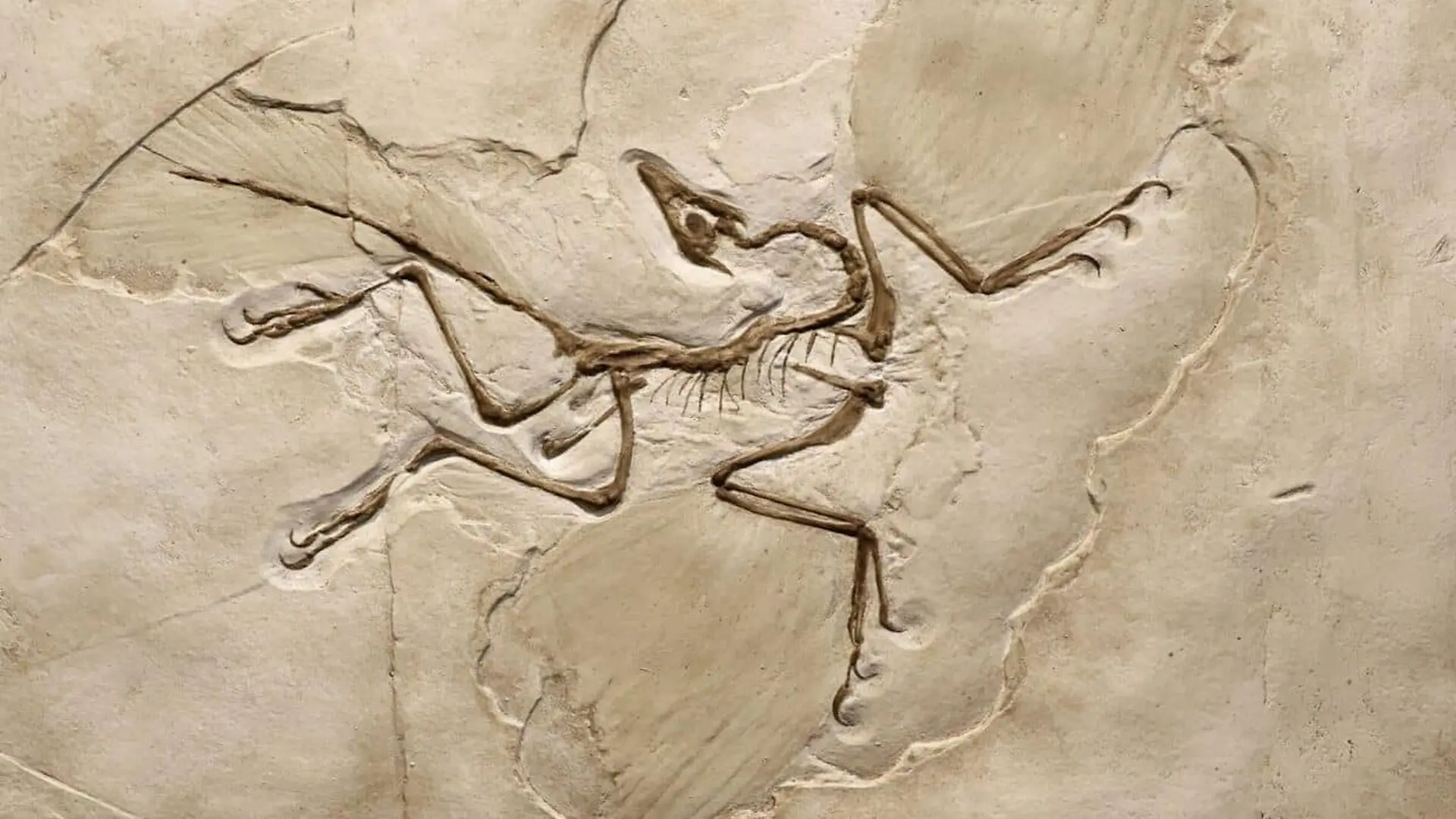
A newly unearthed feathered dinosaur from the Early Cretaceous Jiufotang Formation of Liaoning Province provides fresh insight into the diversification of bird‑like theropods. The exceptionally complete specimen, dating to roughly 120 million years ago, preserves a near‑full skeleton together with extensive plumage, allowing scientists to examine a rare mix of anatomical features.
The fossil was described by Dr. Xing Xu of the Chinese Academy of Sciences, who named the new taxon Changzhousaurus sinensis. The find adds to a growing list of feathered dinosaurs from northeastern China and highlights evolutionary traits that are uncommon in closely related groups.
Tiny Body, Broad Evolutionary Implications
Measuring only about 34 centimetres (13 inches) in length, Changzhousaurus sinensis is diminutive even among its pennaraptoran relatives. Dr. Xu suggests the animal occupies an early branch of the deinonychosaur clade, which includes both dromaeosaurs and troodontids, themselves part of the larger Pennaraptora assemblage that also contains avialans and other feathered lineages.
“Pennaraptora comprises several recently discovered small clades (e.g., Unenlagiinae, Microraptorinae, Scansoriopterygidae, Anchiornithinae, and Halszkaraptorinae) as well as four long‑recognized major groups (i.e., Oviraptorosauria, Dromaeosauridae, Troodontidae, and Avialae),”
The study, published in Vertebrata PalAsiatica, notes that recent discoveries have dramatically broadened our understanding of pennaraptoran diversity, revealing species with varied body plans and ecological roles.
A Tail Laden with Remarkable Feathers
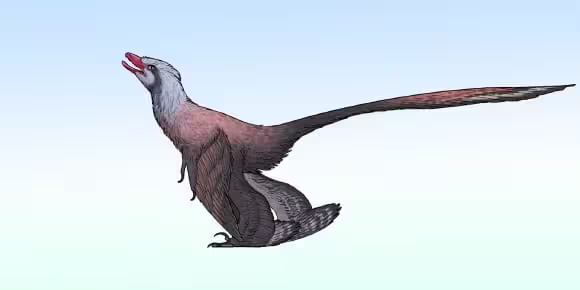
What immediately draws attention is the animal’s elongated tail, bearing roughly sixteen long feathers. Each feather extends to a length about four times the length of the femur, a proportion surpassing that of comparable taxa and giving the tail a display‑like appearance reminiscent of a peacock’s plume.
The specimen’s preservation is exceptional: the skeleton lies on a slab and counterslab, retaining a nearly complete framework together with detailed feather impressions across the torso, limbs, and tail.
Oversized Wings and a Quad‑Winged Morphology
In addition to its tail, the dinosaur sports relatively large forelimb feathers. Primary flight feathers reach about 12 centimetres (4.7 inches) in length, exceeding the size of wing feathers observed in other non‑avian pennaraptorans. This suggests that feather length and arm proportions did not always evolve in lockstep.
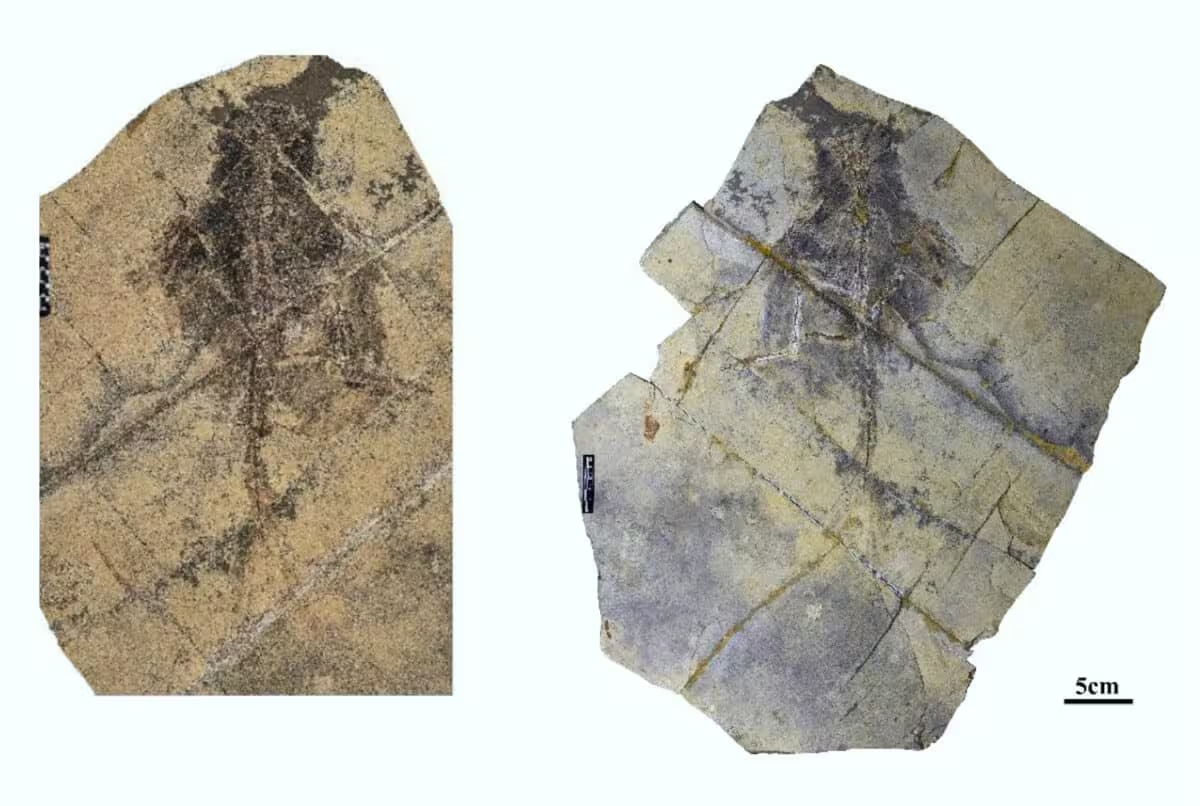
Feathers attached to the hindlimbs were also identified, reinforcing the notion that some early bird‑like dinosaurs employed a four‑winged configuration, with both fore‑ and hind‑limb plumage contributing to their aerodynamic profile.
“This discovery underscores the complexity of early pennaraptoran evolution and raises several conceptual and methodological issues in pennaraptoran research,” Dr. Xu wrote in the study.
The find fuels ongoing debates about the phylogenetic relationships within Pennaraptora and the functional roles of their diverse feather arrangements, prompting further investigation into the behavior and ecological niches of these early feathered dinosaurs.
This article has been fact checked for accuracy, with information verified against reputable sources. Learn more about us and our editorial process.
Last reviewed on .
Article history
- Latest version
Reference(s)
- “A new feathered dinosaur from Early Cretaceous of northern China highlighting the complexity of early pennaraptoran evolution and comments on several relevant conceptual and methodological issues.” Vertebrata Palasiatica, pp. 1, doi: 10.19615/j.cnki.2096-9899.260616. <https://www.vertpala.ac.cn/EN/10.19615/j.cnki.2096-9899.260616>.
Cite this page:
- Posted by Hassan Raza