NASA Starts Pedal To The Metal Phase As Psyche Spacecraft Speeds Toward Mysterious Asteroid
NASA’s Psyche spacecraft has begun an intense propulsion phase, testing its innovative engines as it journeys toward a mysterious metal-rich asteroid.
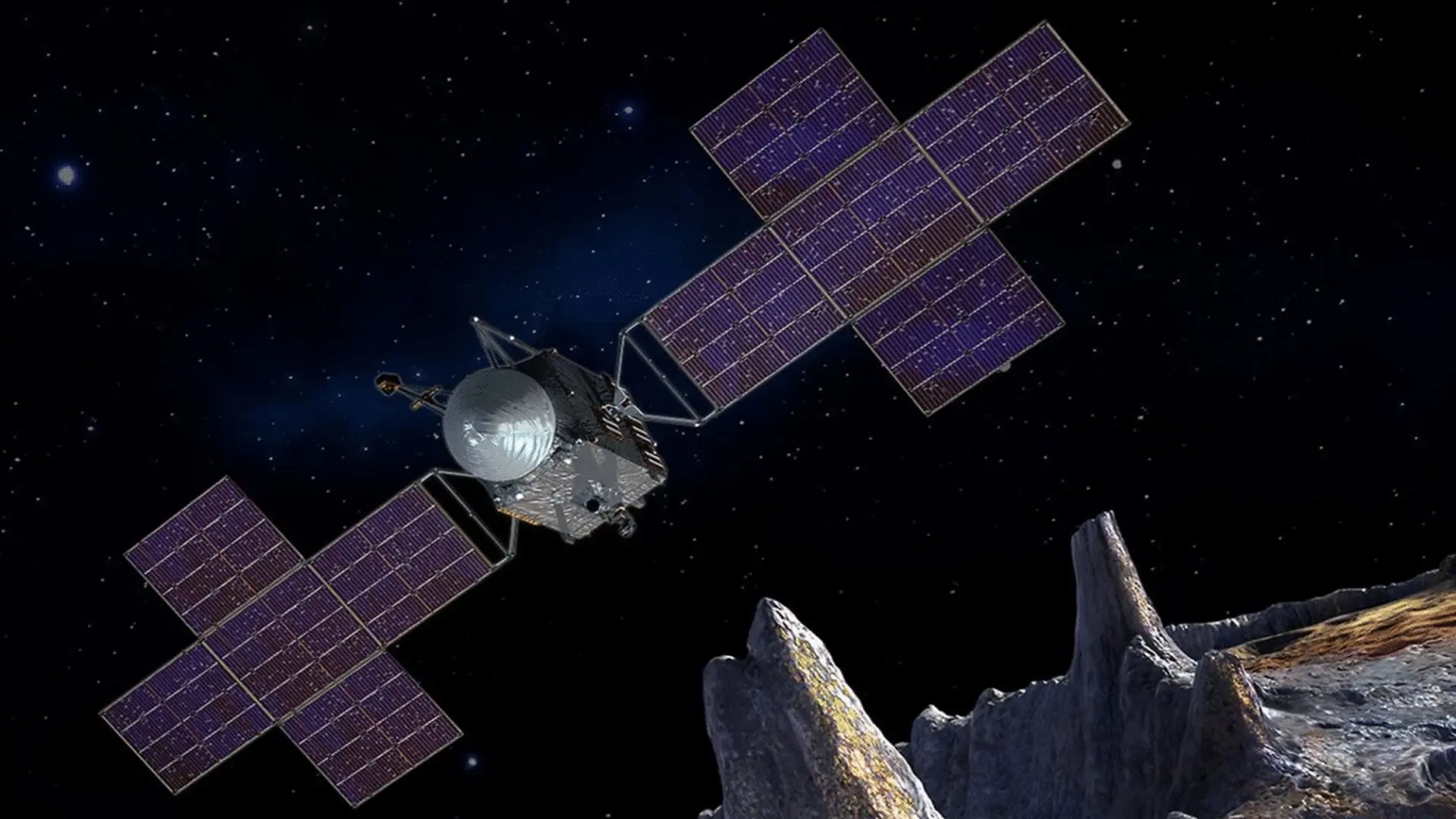
NASA’s Psyche spacecraft has shifted into a high-gear cruise phase, initiating a near-constant firing of its electric propulsion system as it tracks toward its target in the main asteroid belt. According to an update released by the agency on October 22, 2026, the probe will keep its thrusters active for approximately 90% of its travel time, marking a definitive transition into the most intensive leg of its multi-year journey.
Entering the Long-Haul Acceleration Phase
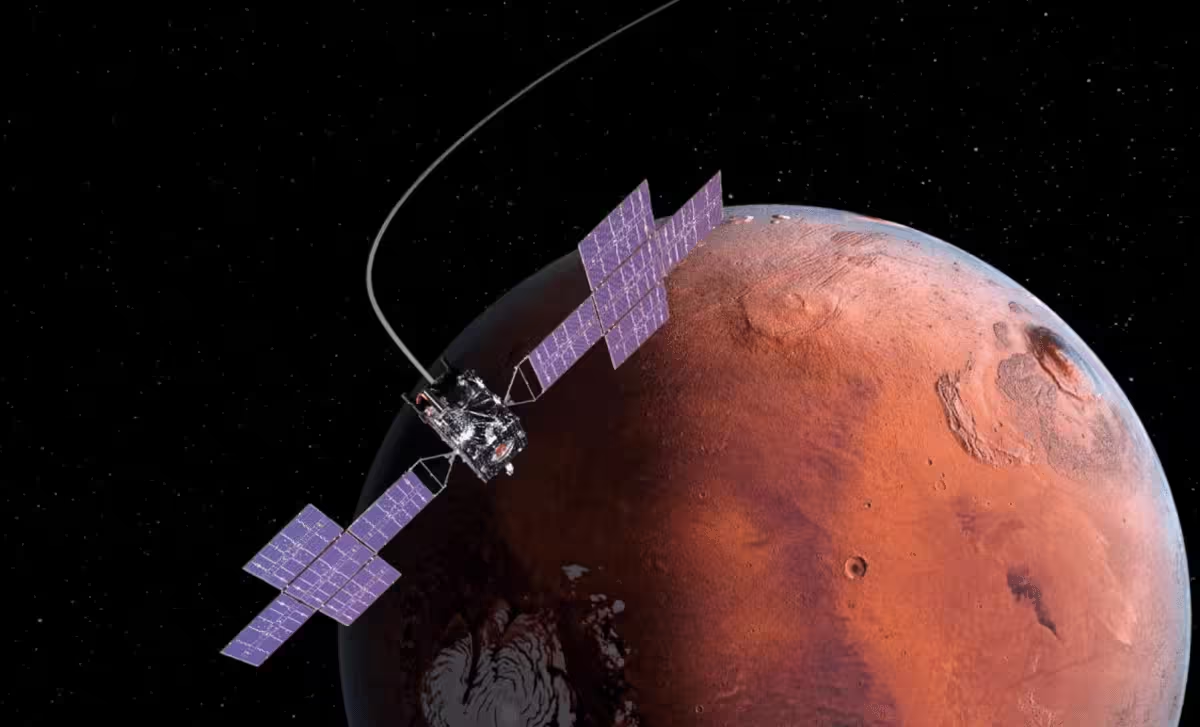
Since its launch in October 2023, the Psyche mission has successfully navigated a gravity-assist maneuver around Mars, setting its trajectory for a rendezvous with the unique metal-rich asteroid located between Mars and Jupiter. While earlier flight stages required only sporadic engine bursts for trajectory corrections, the mission entered a more rigorous acceleration campaign on September 28, 2026. This continuous thrust is interrupted only briefly each week to facilitate communication with ground control and perform essential system health checks.
Don Han, the mission’s navigation lead at NASA’s Jet Propulsion Laboratory (JPL), described the current state of the mission as a “pedal to the metal” approach. The goal of this sustained effort is to ensure the spacecraft arrives at its destination in the summer of 2029, where it will begin its study of one of the solar system’s most enigmatic bodies.
Efficiency Powered by Sunlight
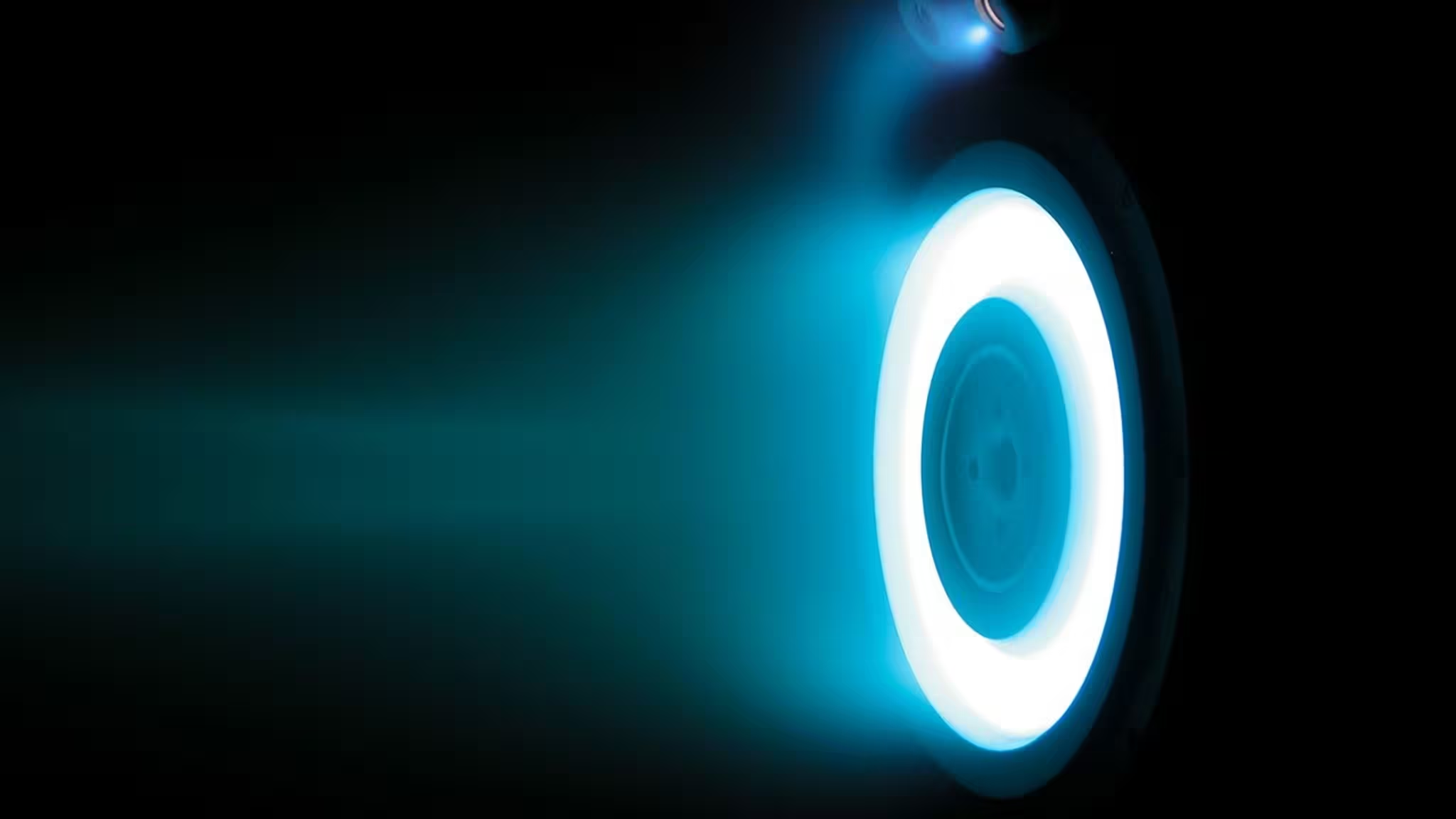
Unlike traditional chemical rockets that provide a sudden, violent burst of speed, Psyche utilizes a solar electric propulsion system. The craft captures sunlight using two massive solar arrays—spanning roughly 800 square feet—to generate electricity. This power is then used to accelerate charged xenon atoms through four Hall-effect thrusters. While the force produced is incredibly subtle—roughly the equivalent of the weight of a single AA battery—the ability to maintain this acceleration over years allows the spacecraft to reach impressive speeds, eventually topping 100,000 mph (160,900 km/h) relative to Earth.
Propulsion engineer Steve Snyder noted the practical constraints of this design. Because the spacecraft relies on solar energy, its power levels will gradually decrease as it travels further from the Sun. For the next three months, the thrusters will operate at full capacity before the team begins a slow reduction in power, eventually throttling down to half-power as the craft moves deeper into the solar system.
Studying the Subtle Mechanics of Deep Space
The long-duration flight is also serving as a unique laboratory for studying the behavior of Hall-effect thrusters. As the thrusters expel ions, they generate a minor twisting force, or torque, that can gradually shift the orientation of the spacecraft. Managing this requires constant adjustments from the probe’s reaction wheels. For engineers, this provides a rare opportunity to measure these forces over a long period in a vacuum, data that is impossible to replicate accurately on Earth. Insights gained here are expected to inform the design and navigation of future deep-space missions.
A Window into Planetary Origins
The ultimate destination, the asteroid 16 Psyche, measures approximately 173 miles (280 kilometers) across. Scientists believe the object may represent the exposed metallic core of a destroyed early planetesimal. By studying it, researchers hope to gain a better understanding of how planetary interiors formed, essentially providing a look at the “bones” of a rocky world without having to drill through a planet’s crust.
Following its 2029 arrival, the mission will enter a two-year science phase, orbiting the object at varying altitudes to map its composition. According to Principal Investigator Lindy Elkins-Tanton, the recent Mars flyby served as a crucial rehearsal for these upcoming operations, leaving the team well-prepared for the primary scientific phase of the mission.
This article has been fact checked for accuracy, with information verified against reputable sources. Learn more about us and our editorial process.
Last reviewed on .
Article history
- Latest version
Cite this page:
- Posted by Karan Das