Why Your Best Ideas Might Be An Illusion According To New Research
That “Aha!” moment in creative work may be an illusory sense of brilliance rather than a sign of accuracy, according to new research.
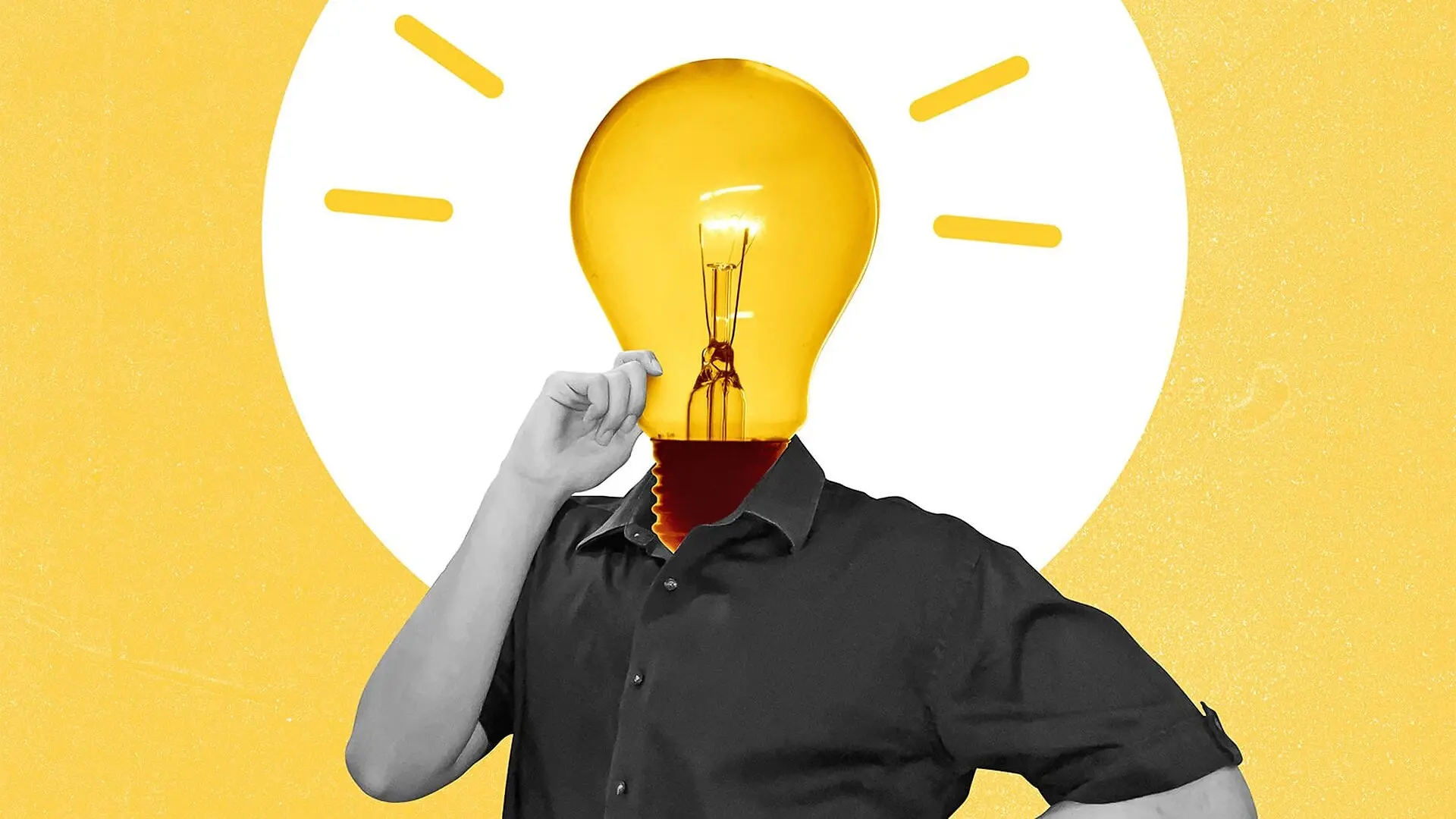
The “Aha!” Effect: Why Your Brightest Ideas Might Be Deceiving You
That sudden flash of inspiration—the classic “Aha!” moment—is often hailed as the gold standard of problem-solving. While this surge of clarity serves as a reliable compass for finding correct answers to logic puzzles or riddles, new research suggests that this same intuition can be misleading when applied to creative, open-ended endeavors.
A study published in the Journal of Intelligence, conducted by researchers at UC Santa Barbara, distinguishes between the “Eureka Heuristic” and what they call the “Aha! glow.” While the former acts as an accurate cognitive shortcut for verifiable problems, the latter appears to be an inflated sense of confidence that can distort our judgment of creative work.
“Insights tell us that an idea is promising, but primarily when there is a correct answer to be had,” explains Jacqueline McGuinness, manager of the META Lab at UCSB. “When we widen the solution space in creative contexts, the feeling of insight can inflate our perception of how good our ideas really are.”
To investigate this, researchers examined how professionals in different fields perceived their own breakthroughs. They tracked physicists—who typically navigate problems with single, objective solutions—and creative writers, who deal with subjective, open-ended outcomes. Participants logged their ideas alongside their initial sense of excitement, then re-evaluated the creativity of those same ideas six months later.
The results highlighted a stark contrast. Physicists tended to view their “Aha!” moments as increasingly valuable over time. Conversely, writers often felt that their initial spark of genius lost its luster as the months passed. Interestingly, ideas that were developed through systematic, step-by-step reasoning did not suffer from this post-insight letdown, suggesting that the “glow” is a specific by-product of sudden, intuitive breakthroughs.
In a secondary laboratory experiment, the team had participants engage in both definitive word puzzles and open-ended tasks, such as finding unique uses for everyday objects. The findings were consistent: while “Aha!” moments were highly accurate predictors of success in word puzzles, they were unreliable indicators of quality in creative tasks. Participants’ personal assessment of their creativity in these open-ended tasks was far more influenced by the intensity of their internal “Aha!” experience than by the actual quality of the ideas as judged by independent observers.
“For the very same person the experience of aha is well-calibrated to the quality of their ideas on the one task, but produces an Aha! glow on the other,” says Jonathan Schooler, a distinguished professor of psychological and brain sciences and director of UCSB’s Center for Mindfulness and Human Potential.
Despite this potential for self-deception, the researchers argue that the “Aha! glow” still plays a vital role. The sensation consistently predicted higher levels of motivation, confidence, and task enjoyment. In fields where it can take months or even years to determine the true value of a concept, this psychological boost might be the necessary fuel to keep creators engaged with their work.
Ultimately, while an “Aha!” moment may not be a definitive verdict on the quality of a creative idea, it serves as a powerful motivational tool. It provides the initial momentum needed to transform a fleeting thought into a finished piece of work, even if the sense of brilliance that accompanies it is more of a feeling than a fact.
This article has been fact checked for accuracy, with information verified against reputable sources. Learn more about us and our editorial process.
Last reviewed on .
Article history
- Latest version
Reference(s)
- McGuinness, Jacqueline E.., et al. “The Aha! Glow: Insight Experiences Bias Judgements of Idea Quality in Divergent Contexts.” Journal of Intelligence, vol. 14, no. 8, August 1, 2026, pp. 160 MDPI AG, doi: 10.3390/jintelligence14080160. <https://doi.org/10.3390/jintelligence14080160>.
Cite this page:
- Posted by Asif Iqbal