Ancient Yeast From Ötzi The Iceman Baked Into Modern Sourdough After 5,300 Years
Scientists find cold‑adapted yeast in Ötzi the Iceman, bake sourdough with it, and show the ancient mummy still harbors a dynamic microbial ecosystem.
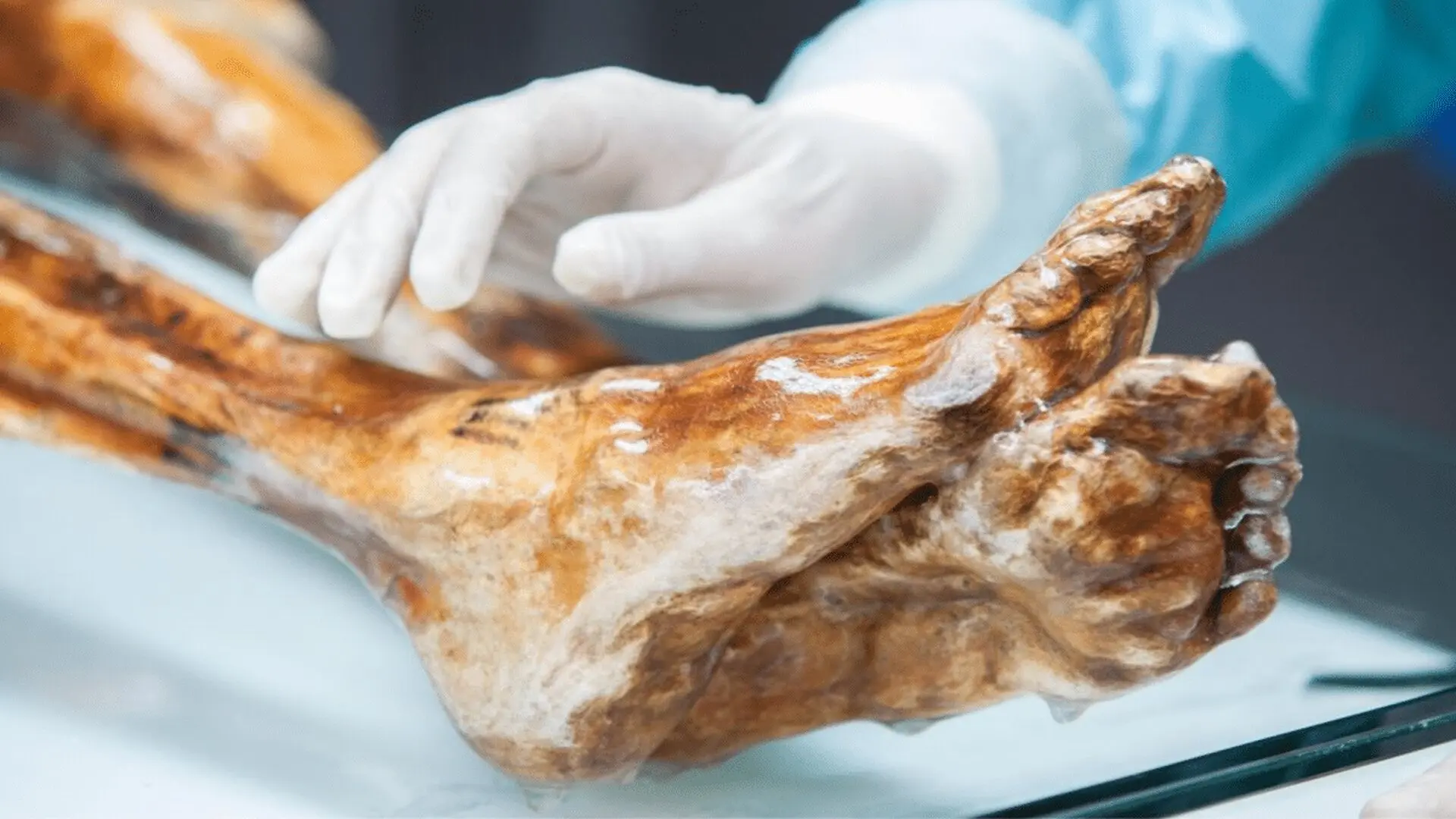
More than five millennia after the Alpine discovery of Ötzi the Iceman, scientists have identified an unexpected resident within his ancient remains. A recent article in Microbiome reports the isolation of cold‑adapted yeasts from the mummy, which were later cultivated to bake sourdough, providing a rare look at microbial endurance in one of archaeology’s most iconic specimens.
A Still‑Living Microbial Landscape Inside the Alpine Mummy
Since hikers uncovered Ötzi in the Italian Alps in 1991, the exceptionally preserved body has served as a window into Bronze‑Age life, revealing details about diet, health, genetics, clothing, and the violent circumstances of his death. Maintained at near‑glacial temperatures, the Iceman continues to yield surprises. In the latest investigation, published in Microbiome, researchers demonstrate that his corpse still hosts a surprisingly active microbial community.
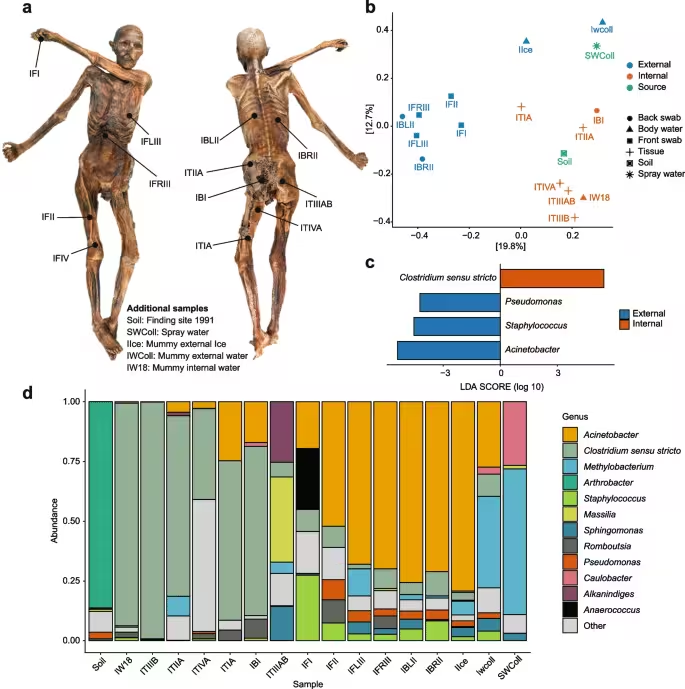
Sampling from gut, skin and meltwater surrounding the mummy, the team detected four psychrophilic yeast species—organisms normally found in permanently cold habitats such as Antarctica. “We did not anticipate finding yeast at all,” said lead author Mohamed Sarhan of the Eurac Research Institute in Bolzano in an interview with AFP. Genetic evidence indicates that these yeasts colonized the body shortly after death rather than during recent handling, suggesting a prolonged partnership spanning centuries. “These yeasts have accompanied Ötzi on his long journey through the millennia,” noted co‑author Frank Maixner in a statement, emphasizing the shift from viewing the mummy as a static artifact to recognizing it as a dynamic microbial ecosystem.
From Frozen Yeast to Sourdough Starter
The presence of viable yeast sparked a bold experiment. After cultivating the organisms under strict refrigeration, the researchers asked whether the strains could be harnessed for bread making. “If you tell anyone you have yeast, they immediately ask: Can we use it for bread?” Sarhan recalled. Initial attempts failed, and months of fine‑tuning were required to coax the cold‑adapted microbes into stable fermentation. Eventually, after three months of trial, the team reported a robust sourdough starter. The success not only captured public imagination but also confirmed that these ancient yeasts retain metabolic activity when provided suitable conditions.
Beyond culinary curiosity, the yeasts displayed an unexpected ability to degrade phenol—a chemical used during past preservation efforts to suppress fungal growth on the mummy. This trait hints at potential applications in bioremediation, where such organisms could be employed to break down phenolic pollutants in industrial settings.
Insights into Prehistoric Human Microbiota
The investigation also mapped the broader bacterial community within Ötzi. Researchers identified gut microbes that are scarce in modern industrialized populations but have been observed in isolated Indigenous groups across Africa and South America, as well as in ancient fecal samples from the Hallstatt salt mines in Austria. These findings suggest that high‑fiber, whole‑grain diets of the Bronze Age supported microbial assemblages that have largely vanished from contemporary human guts.
According to the authors, the Iceman should be viewed not as a static “frozen time capsule” but as a living, evolving ecosystem where ancient microbes, environmental organisms, and preservation conditions interact over millennia. This perspective opens avenues for exploring how microbial communities survive extreme environments and continue to change long after their host’s death.
Skepticism Over Millennial Yeast Persistence
Not all experts accept the claim that the yeasts have inhabited Ötzi’s body continuously for five thousand years. Nikolay Oskolkov, a scientist at the Latvian Institute of Organic Synthesis who was not involved in the study, pointed out that the relevant samples were collected only in 2010 and 2019. He argued that the data provide “very little evidence that the yeasts have been multiplying over millennia,” and suggested they may be relatively recent colonizers rather than ancient residents.
Regardless of this debate, the discovery underscores the dynamic nature of the Iceman’s microbiome. Future interdisciplinary research combining genetics, microbiology, and archaeology will aim to pinpoint the timing of yeast arrival and to unravel the mechanisms that allow such organisms to endure within one of humanity’s best‑preserved prehistoric bodies. As investigations proceed, Ötzi continues to reveal unforeseen facets of his ancient life, confirming that even after more than five thousand years, the frozen traveler still has stories to share.
This article has been fact checked for accuracy, with information verified against reputable sources. Learn more about us and our editorial process.
Last reviewed on .
Article history
- Latest version
Reference(s)
- Sarhan, Mohamed S.., et al. “The Iceman’s microbiome: unveiling millennia of microbial diversity and continuity.” Microbiome, vol. 14, no. 1, June 3, 2026 Springer Science and Business Media LLC, doi: 10.1186/s40168-026-02417-6. <https://link.springer.com/article/10.1186/s40168-026-02417-6>.
Cite this page:
- Posted by Vikram Desai