Laser Skin Boosters Improve Facial Scars in New Clinical Trial
Human and plant-derived topical formulations paired with fractional lasers significantly enhanced clinician-rated scar scores over control treatments.
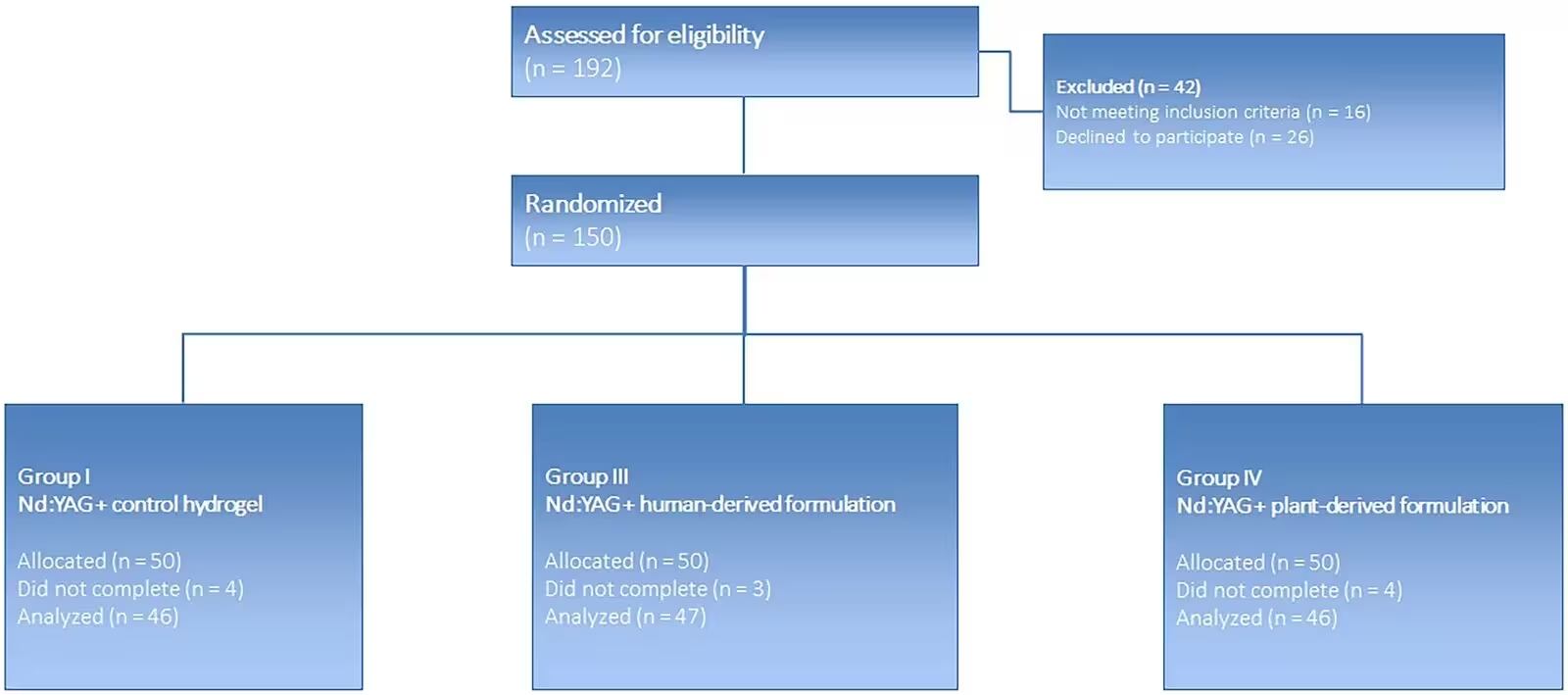
Facial scars resulting from recent surgeries or injuries can now heal with noticeably better texture when treated with a specialized laser combined with topical exosome products, according to a randomized controlled trial published in Lasers in Medical Science. Postoperative facial scars often create persistent psychological distress for patients because standard healing leaves behind uneven collagen and lingering inflammation. To test whether biological skin boosters could improve these outcomes, researchers at Seoul National University College of Medicine allocated 150 adult participants to receive either a control hydrogel, a human cell-derived topical formulation, or a plant-derived formulation immediately following fractional laser sessions.
How the Laser and Topical Treatments Were Tested
The clinical trial enrolled 150 adults aged 20 to 75 years who had single, visible facial scars aged between 3 and 8 weeks. Participants possessed Fitzpatrick skin types III to IV, meaning they have skin that tans moderately to burns minimally and carries a higher risk of pigmentation issues with aggressive treatments. The medical team divided the volunteers into three equal groups of 50 people each. All groups underwent five treatment sessions spaced two weeks apart using a non-ablative 1064-nm neodymium-doped yttrium aluminum garnet laser equipped with a microlens array. This specific laser wavelength delivers energy deep into the skin while protecting the outer epidermal layer, making it safer for patients with darker skin types.
Immediately after every laser pass, patients in the second and third groups received 1 mL of either the human-derived or plant-derived commercial topical formulation, gently spread across the treated zone. The human-derived product contained conditioned medium from human adipose-derived mesenchymal stromal cells, while the plant-derived product contained material from Centella asiatica and Lavandula angustifolia callus cultures. The control group received a plain carrageenan-based hydrogel that offered no biological activity. Out of the 150 initial participants, 139 completed the entire protocol and final evaluations, which took place two weeks after the fifth and final treatment session.
What the Quantitative Scar Assessments Revealed
The evaluation relied on multiple measurements, including the modified Vancouver Scar Scale, patient and observer components of the Patient and Observer Scar Assessment Scale, and grayscale intensity analyzed from high-resolution 3D optical images. Both groups receiving the biological topical formulations achieved significantly greater reductions in their modified Vancouver Scar Scale scores compared to the control group. Specifically, mean scores dropped from 5.7 to 2.8 in the human-derived group and from 5.6 to 3.1 in the plant-derived group, compared to a decrease from 5.4 to 4.1 in the control hydrogel group. However, direct statistical comparisons between the human-derived and plant-derived products showed no significant difference between them.
Observer-rated scar assessments by blinded plastic surgeons confirmed these improvements, showing major advantages for both exosome-boosted groups over the control treatment. Objective optical analysis using grayscale intensity, which measures surface reflectance and textural uniformity, showed that smoother and less conspicuous scars developed more frequently in the formulation groups. Despite these clear clinical improvements noted by expert physicians, patient-reported scores on the scar assessment scale improved over time across all three groups without demonstrating a statistically significant difference tied specifically to the exosome formulations.
What Are the Limitations and Future Directions
The researchers emphasized several important caveats regarding these findings. Because the commercial products contained various other active and inactive ingredients alongside the vesicular components, the observed clinical benefits cannot be exclusively attributed to exosomes alone. Furthermore, the trial did not test matched vehicles or depleted preparations to isolate exosome activity, and the follow-up period ended just two weeks after the final session. This short timeframe leaves open questions about whether the improvements persist over long-term scar maturation. The study population also consisted entirely of East Asian participants with specific skin phototypes, meaning broader trials across diverse populations and longer observation windows are necessary to confirm long-term safety and sustained efficacy.
The research was published in Lasers in medical science on November 14, 2026.
This article has been fact checked for accuracy, with information verified against reputable sources. Learn more about us and our editorial process.
Last reviewed on .
Article history
- Latest version
Reference(s)
- Park, Jun Ho., et al. “Exosome-based topical formulations as adjuncts to fractional Nd: YAG laser for postoperative facial scars.” Lasers in Medical Science, vol. 41, no. 1, November 14, 2026 Springer Science and Business Media LLC, doi: 10.1007/s10103-026-05098-7. <https://doi.org/10.1007/s10103-026-05098-7>.
Cite this page:
- Posted by William Moore