Urban Trees and Shrubs May Unintentionally Fuel City Ozone Pollution
Machine learning analysis of street-view imagery reveals how Hangzhou’s trees, shrubs, and grass exert distinct, localized effects on air pollution.
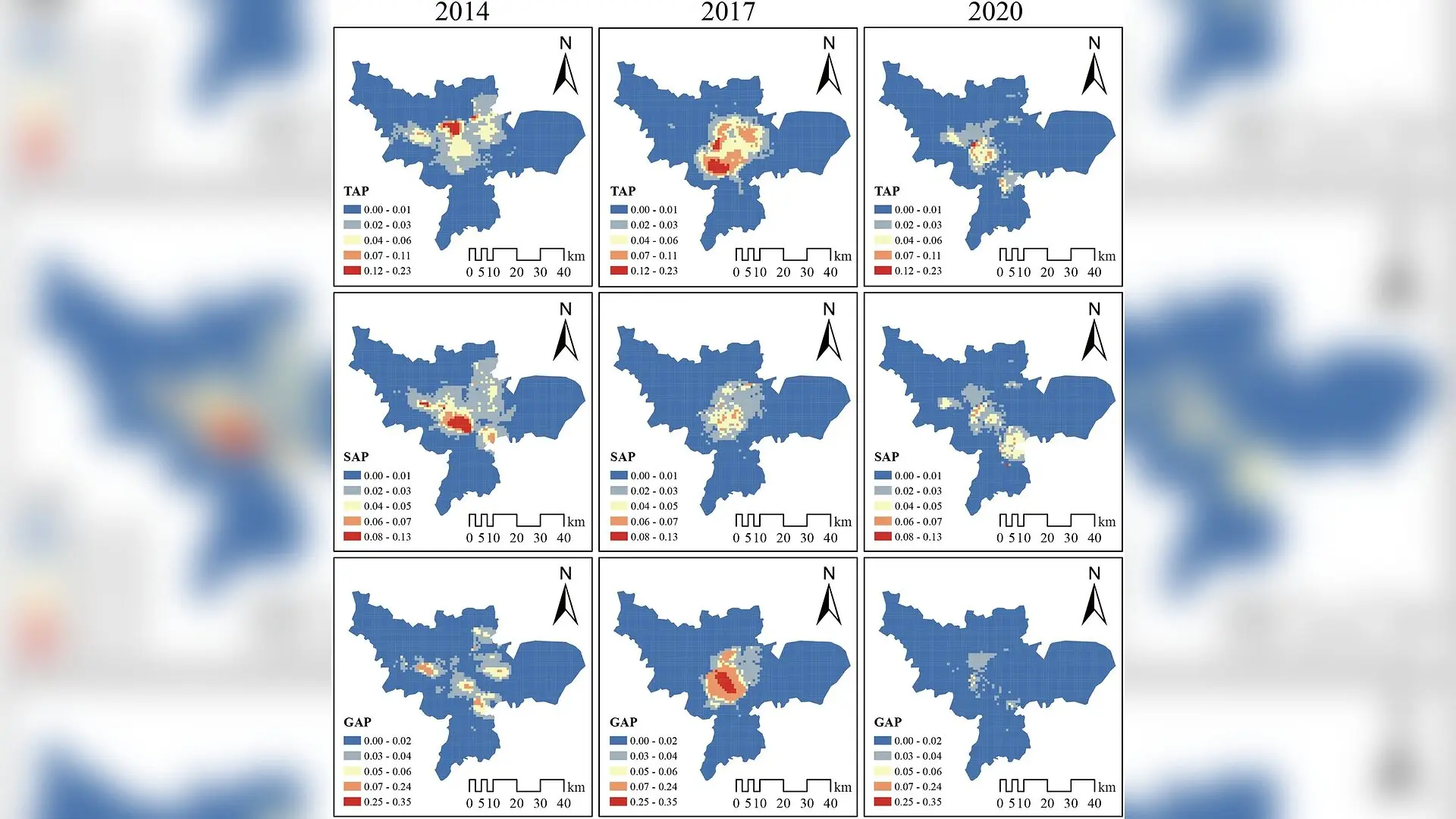
In the bustling urban corridors of Hangzhou, where a population of over 9 million people navigates daily life, a hidden chemical battle unfolds between city greenery and regional air pollution. Researchers investigating the hidden toll of atmospheric stressors found that early-summer concentrations of near-surface ozone, an invisible and harmful gas created when sunlight bakes industrial and traffic emissions, shifted dramatically across eight core districts between 2014 and 2020. While severe high-ozone zones shrank from 2,100 square kilometers down to zero by 2020, urban planners face a surprising paradox: the very trees and shrubs planted to clean the air can sometimes worsen the problem.
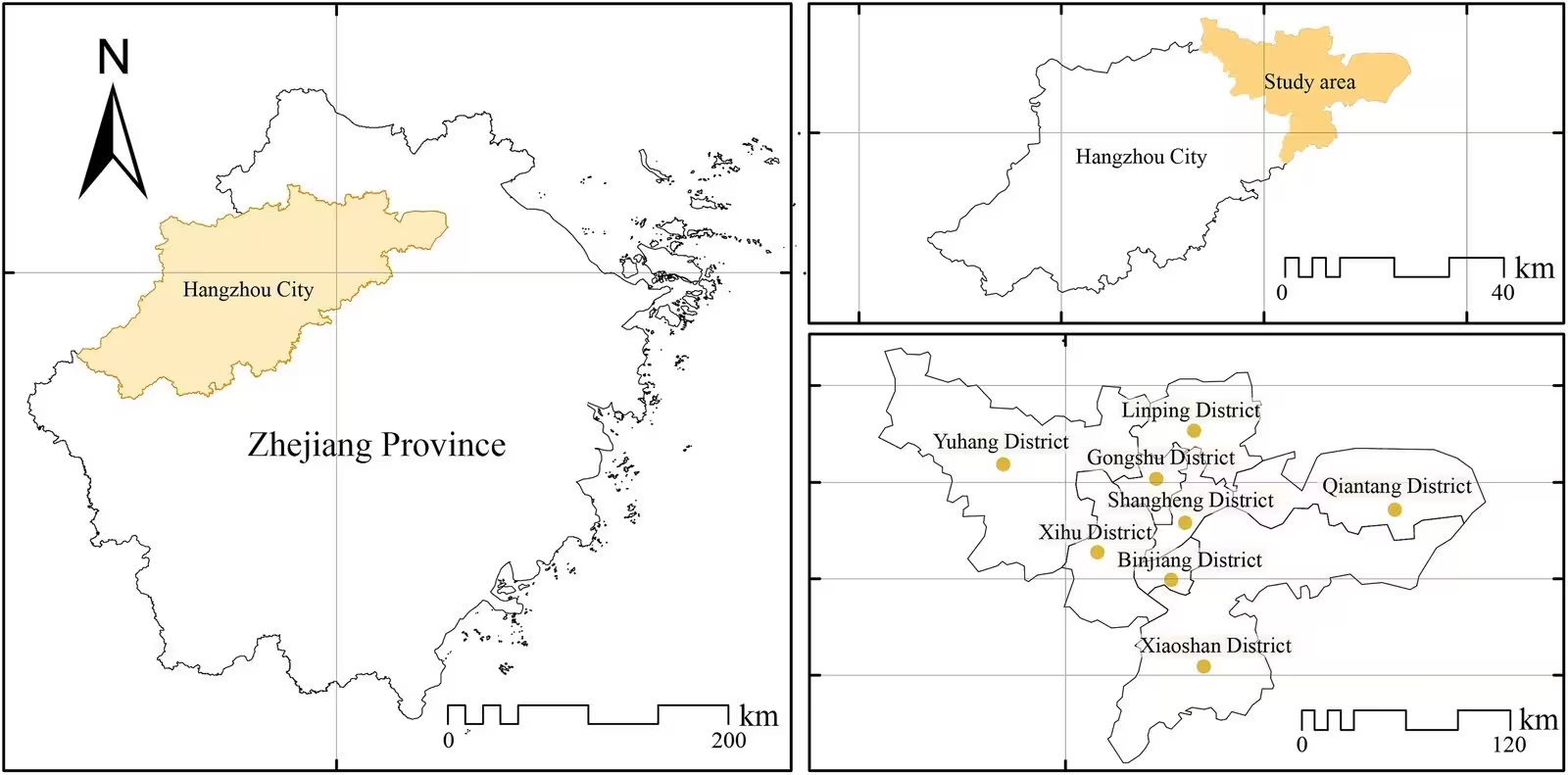
To uncover how micro-scale vegetation shapes local air quality, a team of scientists published in PloS one analyzed street-view imagery captured from Baidu Maps across districts like Xihu, Binjiang, and Xiaoshan. The authors, Meng Tang and Min Li, deployed an advanced computer vision tool known as a DeepLabV3+ semantic segmentation model trained on the ADE20K dataset to precisely calculate the area proportions of trees, shrubs, and grass visible from a pedestrian perspective. By combining these street-level greenery metrics with multi-source meteorological driving data, building density maps, nighttime lighting statistics, and land cover records, the team applied machine learning algorithms, including Bayesian-optimized Extreme Gradient Boosting and Geographically Weighted Random Forest models, to separate the independent effects of different plants from weather patterns and urban structures.
How Different Plants Drive Unique Chemical Shifts
The analysis revealed that while weather variables like wind speed and air temperature exert the strongest overall control on ozone fluctuations, distinct plant categories leave their own measurable footprint on urban air. Trees, despite their aesthetic appeal and shade, demonstrated a weak net impact characterized by spatial fluctuations that could either slightly increase or decrease pollutant levels. This occurs because broadleaf trees emit substantial amounts of biogenic volatile organic compounds, which are natural carbon-based chemicals that act as chemical building blocks for ozone when mixed with vehicle exhaust and industrial nitrogen oxides.
Furthermore, densely planted trees in narrow urban street canyons can reduce local wind speeds and hinder the natural dispersion of trapped pollutants. Shrubs also showed a tendency to elevate local ozone concentrations when planted at high densities, driven by heavy emissions from specific urban landscaping species. In contrast, grass coverage displayed a consistently negative association with ozone levels in high-density areas. Because lawns feature a much smaller total biomass and release fewer volatile organic compounds than woody plants, grass functions primarily as a surface for ozone absorption and deposition while helping cool local microclimates through moisture transpiration.
Spatial Shifts Across Districts Reveal Complex Urban Pressures
The spatial distribution of these plant impacts shifted significantly over the six-year study window as Hangzhou expanded its urban footprint. In 2014, areas where tree proportions heavily influenced local chemistry were clustered in older core districts like northern Xihu and Gongshu. By 2017, these high-importance zones shifted toward the tech-heavy commercial hubs of southern Xihu and Binjiang, where rising traffic and industrial activity intensified the photochemical reactions involving plant-emitted compounds. Meanwhile, regions dominated by heavy industrial activity, such as Xiaoshan District, showed intense pollution driven primarily by factory emissions rather than vegetation.
The authors emphasize that urban management strategies must evolve beyond a one-size-fits-all greening approach. In densely built environments where chemical conditions favor volatile organic compound limitations, reducing traffic and industrial precursor emissions remains paramount. For future urban planning, the team recommends adopting a stratified configuration featuring trees as the primary canopy component, complemented by carefully managed shrubs and expanded lawn spaces, alongside continuous green corridors designed to improve airflow and pollutant ventilation.
The research was published in PloS one on January 1, 2026.
This article has been fact checked for accuracy, with information verified against reputable sources. Learn more about us and our editorial process.
Last reviewed on .
Article history
- Latest version
Reference(s)
- Tang, Meng., et al. “Analysis of the global and local effects of urban green space vegetation types on early-summer near-surface O3 concentrations based on street view imagery – A case study of hangzhou.” PLOS One, vol. 21, no. 10, October 27, 2026, pp. e0358563 Public Library of Science (PLoS), doi: 10.1371/journal.pone.0358563. <https://doi.org/10.1371/journal.pone.0358563>.
Cite this page:
- Posted by Raj Joshi